Ingredients
Equipment
Method
Instructions
- Prepare the appliance safely. Check that the basket is clean and that the air fryer sits on a heat-resistant surface with the manufacturer's required clearance. Preheat to 390°F / 200°C if your model calls for preheating. Do not place loose parchment in an empty operating basket.
- Season the frozen vegetables. Break apart large frozen clusters. Toss vegetables with their measured oil, garlic powder, salt, and pepper. Place in the basket in a loose layer. A few overlapping florets are manageable, but a deep compact mound will cook more like steamed vegetables.
- Cook the vegetables first. Air-fry for 8 minutes, shake carefully, then continue for another 7–12 minutes, shaking once more if needed. Follow the package directions and check that stems and carrot centers are hot and tender. Browned tips are useful texture cues; do not stop while thick pieces remain cold.
- Prepare the salmon while they cook. Pat thawed salmon dry and cut into 1¼-inch pieces. Toss gently in a separate bowl with its oil, paprika, garlic powder, salt, pepper, and zest. Keep raw fish and its utensils separate from the finished vegetables and the cold sauce.
- Hold the vegetables briefly. Transfer cooked vegetables to a shallow oven-safe dish. If you have an oven available, hold them in a low oven and keep them at 140°F or above. Otherwise, cover loosely for the short fish-cooking stage; they may soften a little. Do not leave them sitting while you perform unrelated tasks.
- Air-fry the fish in one layer. Reduce or set the appliance to 390°F. Place salmon pieces with space around them. Cook for 5 minutes, then check carefully. If the pieces release easily, turn with a thin spatula; delicate pieces can remain unturned. Continue in 1–2-minute increments.
- Use the center temperature. Insert a thin thermometer from the side into the center of several of the largest pieces. Cook to at least 145°F / 63°C. The outside should look opaque and the flakes separate readily, but temperature is the most useful check. Depending on size and model, the salmon may take roughly 7–10 minutes.
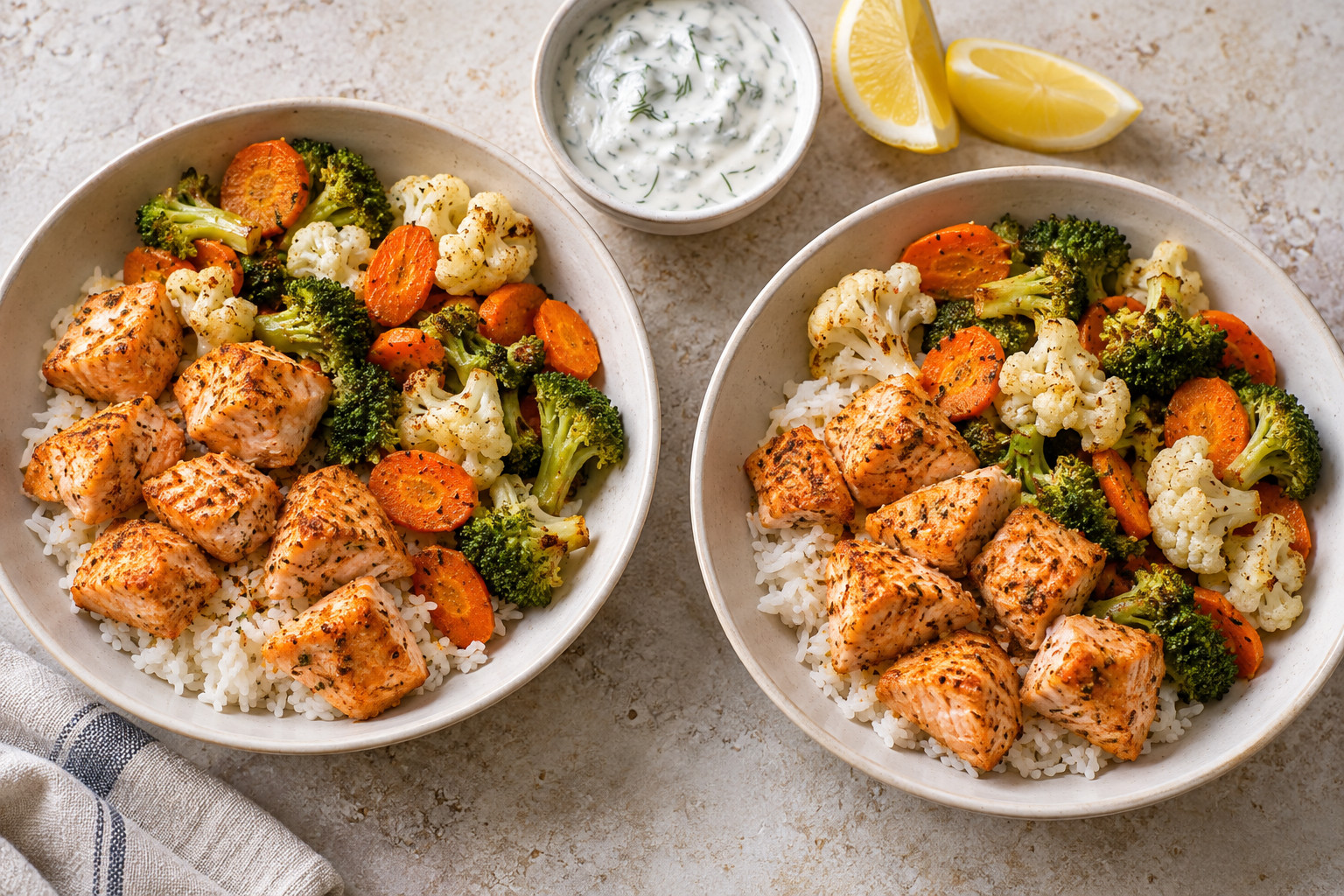
- Mix the sauce and assemble. Stir yogurt, lemon juice, herbs, and enough water for a spoonable sauce. Divide optional hot rice and the vegetables between two plates. Add salmon and spoon the sauce alongside rather than coating every browned surface. Offer lemon wedges at the table.
Notes
Basket and timing: Use a 5–6-quart basket air fryer, keeping salmon in one uncrowded layer. Allow 10 minutes to prep and approximately 25–30 minutes to air-fry, about 40 minutes total. Extra batches need more time. Cook vegetables first, then salmon; hold cooked vegetables at 140°F or above if not serving promptly.
Frozen vegetables: Choose a plain broccoli, cauliflower and carrot blend. Follow its full package cooking and safe-handling directions. Thick stems and carrot centers must be hot and tender; browned tips alone are insufficient.
Fish: Use thawed, skinless salmon. Start checking after 5 minutes and continue in 1–2-minute increments. Insert a thin thermometer from the side into several larger pieces; each must reach at least 145°F/63°C. Keep raw-fish utensils separate from cooked food and sauce.
Leftovers: Refrigerate fish, vegetables, rice and sauce separately in shallow containers within 2 hours, or 1 hour above 90°F. Store at 40°F or below for 3–4 days. Reheat cooked leftovers to 165°F; add cold yogurt sauce afterward.
Serving and allergens: Rice is optional, cooked separately, and excluded from the stated cooking time. This recipe contains fish and milk from yogurt. Check packaged ingredients for other relevant allergens.