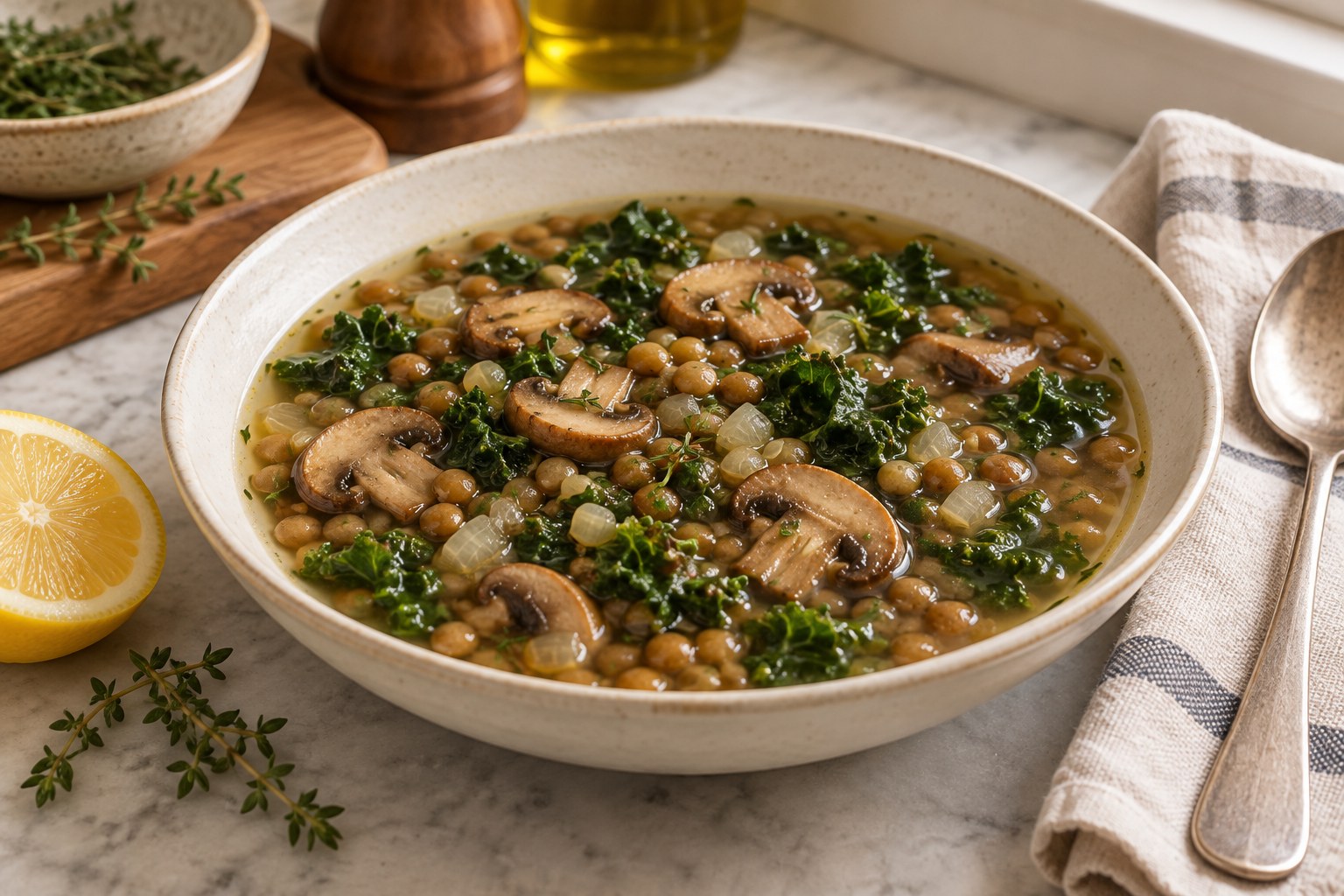
Ingredients
Equipment
Method
Cook the soup
- Slice the mushrooms, dice the onion and mince the garlic. Drain and rinse the canned lentils. Read the frozen-kale package and measure the broth and lemon juice before heating the pan.
- Heat the olive oil in the broad saucepan over medium to medium-high heat. Spread the mushrooms over the bottom and leave them undisturbed for about 3 minutes. Turn them, then continue cooking until their obvious surface liquid evaporates and some edges are golden. Lower the heat if dark patches develop rapidly.
- Add the onion and cook for 3 to 4 minutes, stirring it among the mushrooms, until the pieces soften and look translucent. Add the garlic and thyme and stir for about 30 seconds, just until aromatic.
- Pour in the broth and scrape up the golden residue from the bottom. Add the drained lentils and frozen kale, following the applicable package directions for the kale. If the package requires separate preparation, cook the kale accordingly before adding it to the soup.
- Bring the soup back to a gentle simmer after the cold ingredients go in. Once it is simmering, cook for 7 to 10 minutes or as required by the kale package, including any specified internal temperature or standing time. Fold through occasionally so no frozen clump remains. Avoid a hard boil that can break the tender canned lentils.
- Cool a representative spoonful before tasting. The kale should be fully cooked and tender without a tough stem center, the mushrooms should be soft and the lentils should be hot throughout. Add a small splash of broth if the soup has reduced more than expected.
- Remove the saucepan from the heat and stir in the lemon juice. Wait about 1 minute, then taste a spoonful containing broth, lentils and mushroom before adding salt and black pepper. Divide the solids and broth evenly among three bowls.
Notes
Timing: The card uses an approximate 10-minute preparation, 25-minute cooking time and 35-minute total. Mushroom moisture, the time needed to return the soup to a simmer and the exact frozen-kale directions can extend the schedule.
Frozen kale: Follow the applicable instructions on the package, including any specified internal temperature or standing time, not merely a universal minute count. If the product requires separate preparation, cook it accordingly before combining it with the soup.
Texture: Let mushroom moisture evaporate before adding broth. Once the canned lentils are hot, keep stirring gentle so they retain their shape.
Refrigerated leftovers: Cool promptly in shallow containers and refrigerate within 2 hours, or within 1 hour above 90°F / 32°C. Keep at 40°F / 4°C or below and use within 3–4 days. To reheat, bring the soup to a rolling boil, stirring so it heats evenly, and verify that the reheated portion reaches 165°F / 74°C with a food thermometer. Remove it from the heat once thoroughly hot instead of boiling it for a prolonged period. See USDA leftover guidance.