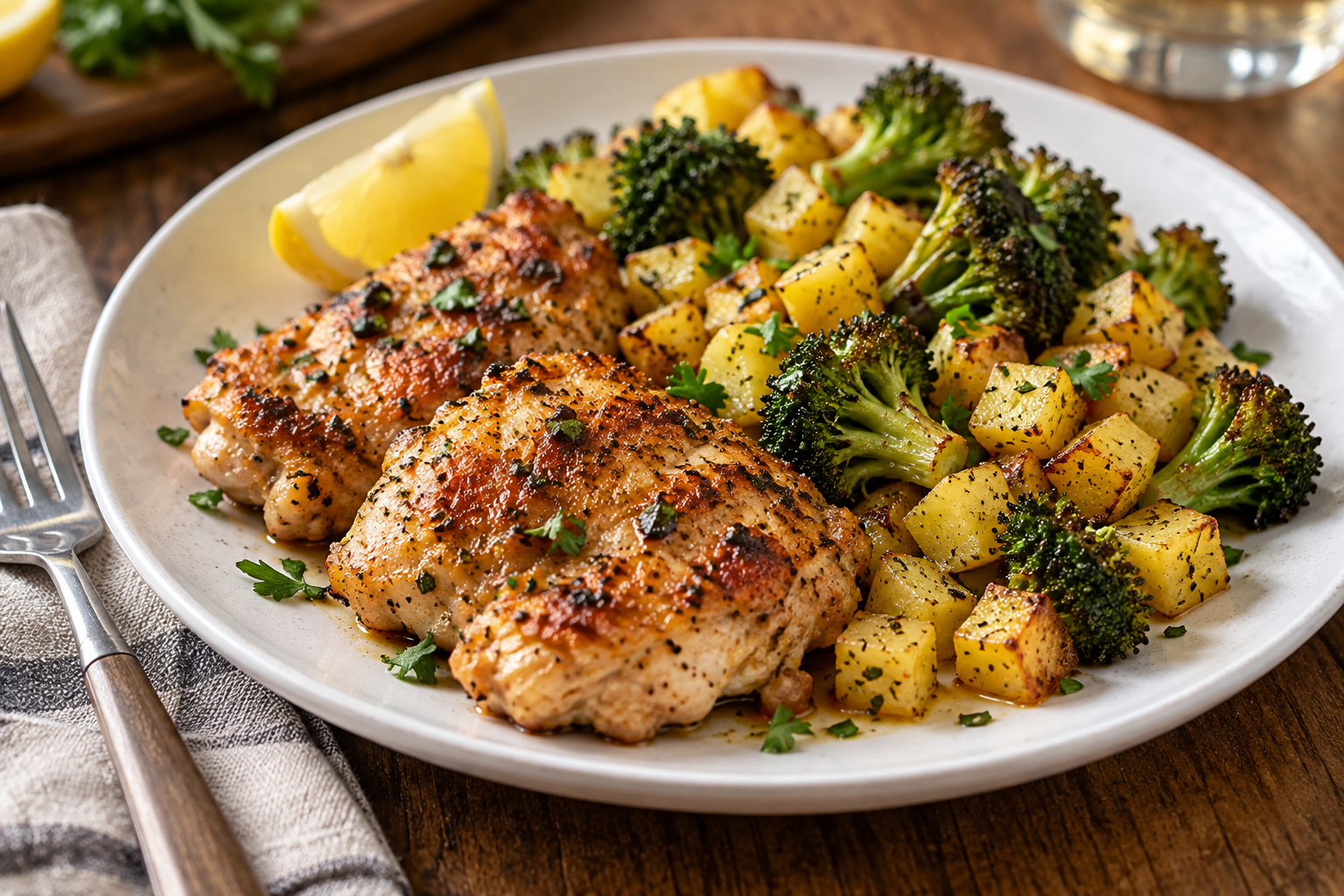
Ingredients
Equipment
Method
Roast in stages
- Position racks in the upper and lower thirds of the oven and preheat to 425°F / 220°C. Line two rimmed sheets with parchment rated for this temperature if desired.
- Toss the potatoes with 1 tablespoon oil, ⅜ teaspoon salt, ¼ teaspoon garlic powder and ⅛ teaspoon pepper. Spread on one sheet with cut sides down and roast on the lower rack for 20 minutes.
- Pat the thawed thighs dry; do not rinse raw poultry. Toss with 1 tablespoon oil, paprika, oregano, ½ teaspoon garlic powder, ⅜ teaspoon salt, ¼ teaspoon pepper and half the lemon zest. Open folded thighs so the thick portions are reasonably even.
- Turn the potatoes and move them toward the edges. Place the thighs in the open spaces with room between pieces. Return the pan to the oven; the potatoes continue roasting throughout this second stage. Wash hands and clean tools and surfaces that touched raw chicken.
- Shake loose large ice crystals. Toss the frozen florets with the remaining 1 tablespoon oil, ¼ teaspoon salt, ¼ teaspoon garlic powder and ⅛ teaspoon pepper. Spread on the second sheet and place it on the upper rack when the chicken goes into the oven.
- After 12 minutes, turn the broccoli and rotate both sheets front to back. Swap rack positions if one pan is browning faster, and separate any clumped florets.
- Begin checking the chicken after about 20 minutes of its cooking time. Before removing any thigh to rest, insert the thermometer into its thickest part and confirm at least 165°F / 74°C; check several pieces because thickness varies. Potatoes should yield to a knife; pieces exposed to raw chicken juices must also reach 165°F / 74°C. Keep them on the pan until the chicken is fully cooked, then continue roasting if their centers are still firm. Broccoli should be tender and cooked through according to its package directions, including any specified internal temperature. Browning alone does not confirm that a frozen floret is fully cooked. Continue cooking any component that needs another 3–8 minutes.
- Move the cooked chicken to a clean plate and rest for 5 minutes. Toss the vegetables with the remaining zest and 1 tablespoon lemon juice. Add parsley if using, taste before adding more salt, and serve.
Notes
Timing: The 45-minute cook estimate includes the potatoes’ 20-minute head start and approximately 20–28 minutes after the chicken and broccoli are added. Use doneness cues rather than the clock alone.
Food safety: Chicken thighs must reach at least 165°F / 74°C. Refrigerate leftovers within 2 hours, or within 1 hour above 90°F / 32°C, and use within 3–4 days. Reheat to 165°F.
Ingredient limits: Use thawed boneless thighs and plain frozen broccoli for the written schedule. Bone-in or frozen chicken requires a different timing plan.
Scaling: Halve ingredients for two servings while keeping the same cut sizes. Do not double the food onto the same two pans; crowding reduces browning.