Ingredients
Equipment
Method
Prepare, cook, and finish
- Prepare. Heat the oven to 275°F (135°C) with a rack near the center. Set foil in a rimmed metal pan, leaving enough to seal around the ribs. Pat the ribs dry with paper towels; do not rinse raw meat. If the membrane remains on the bone side, loosen an edge with a blunt dinner knife and peel it away with a paper towel. Cut the rack between two bones if needed to fit, keeping the pieces in one layer.
- Season and seal. Mix the brown sugar, smoked paprika, garlic powder, salt, and pepper. Rub over both sides of the rack. Place the ribs bone-side down in the pan. Pour the 2 tablespoons water beside the ribs, then crimp the foil tightly to make a covered packet. Keep the packet on the rimmed pan to catch any leaks.
- Bake. Cook at 275°F, allowing roughly 2½–3½ hours for the covered stage. Start checking at about 2 hours, especially with a smaller rack. Thickness and oven performance can extend the time. When checking, place the pan on a stable heatproof surface and open the foil away from your face to release steam.
- Check several meaty spots. Insert the thermometer into thick meat between bones, away from bone and the pan. Whole pork must reach at least 145°F (63°C), followed by a minimum 3-minute rest, but ribs usually need more cooking for tenderness. Check the meat with a narrow probe: it should slide through with little resistance. Many barbecue-style racks finish around 195–203°F (91–95°C), but do not chase that range if the meat is already safely cooked and tender. If still firm, reseal and continue cooking, checking about every 15–20 minutes when close.
- Prepare the glaze. Stir together the ⅓ cup barbecue sauce and optional vinegar. Keep any extra table sauce in a separate clean bowl. Once the ribs are tender, carefully uncover and support them underneath while transferring to a clean, foil-lined, broiler-safe metal pan, bone-side down. Leave pooled cooking liquid behind. Use clean utensils for the cooked meat.
- Glaze briefly. Brush the meaty side with a thin coat of the sauce mixture. Broil according to your oven's instructions, usually with the ribs about 6 inches from the element, for approximately 3–5 minutes, just until tacky and lightly bubbling. Watch continuously and stop sooner if the glaze begins to scorch. Use only broiler-safe metal equipment; do not put parchment under the broiler.
- Rest and slice. Rest the ribs for 10 minutes before cutting; this exceeds the minimum 3-minute rest for whole pork. Transfer to a clean board, locate the bones, and slice between them. Divide into four modest portions and serve promptly with prepared sides and the reserved table sauce.
Notes
Portions: One 2–2½-pound rack makes about two generous portions or four smaller portions with substantial sides. The recipe card lists four modest servings.
Timing: The card's 3-hour-30-minute total is a planning estimate: 15 minutes prep, about 3 hours 5 minutes cooking including the glaze, and a 10-minute rest. A 2½–3½-hour covered stage makes the overall window roughly 3–4 hours; a thick rack can take longer. Temperature and tenderness determine completion.
Cut and quantity: Use one fully thawed 2–2½-pound baby back rack. This schedule is not interchangeable with frozen ribs, spare ribs, country-style ribs, or beef ribs. For two racks, double the rub and glaze, cook in separate covered packets without stacking, and check each rack independently. Do not double the cooking time automatically.
Texture choice: For neat slices, finish when the safely cooked meat is tender but still holds together. For a softer texture, continue the covered stage in short intervals, checking the meat. Support very soft racks underneath during transfer.
Leftovers: Refrigerate in shallow containers at 40°F (4°C) or below within 2 hours, or 1 hour when the surrounding temperature exceeds 90°F (32°C). Use within 3–4 days. For oven reheating, place portions in a baking dish with a small splash of water or sauce, cover tightly, and reheat in a 325°F (163°C) oven until several thick meaty areas reach 165°F (74°C). A whole rack and small portions take different amounts of time; use the thermometer to confirm. Refresh the glaze briefly at the end.
Thawing: Start fully thawed. Thaw in the refrigerator on a tray, or in a leakproof bag submerged in cold water, changing the water every 30 minutes and cooking immediately after thawing. Do not thaw on the counter.
Why only 2 tablespoons water? A tightly sealed packet holds moisture and the meat releases juices as it cooks. Add the measured water beside the ribs rather than pouring it over the rub; do not fill the pan with water.
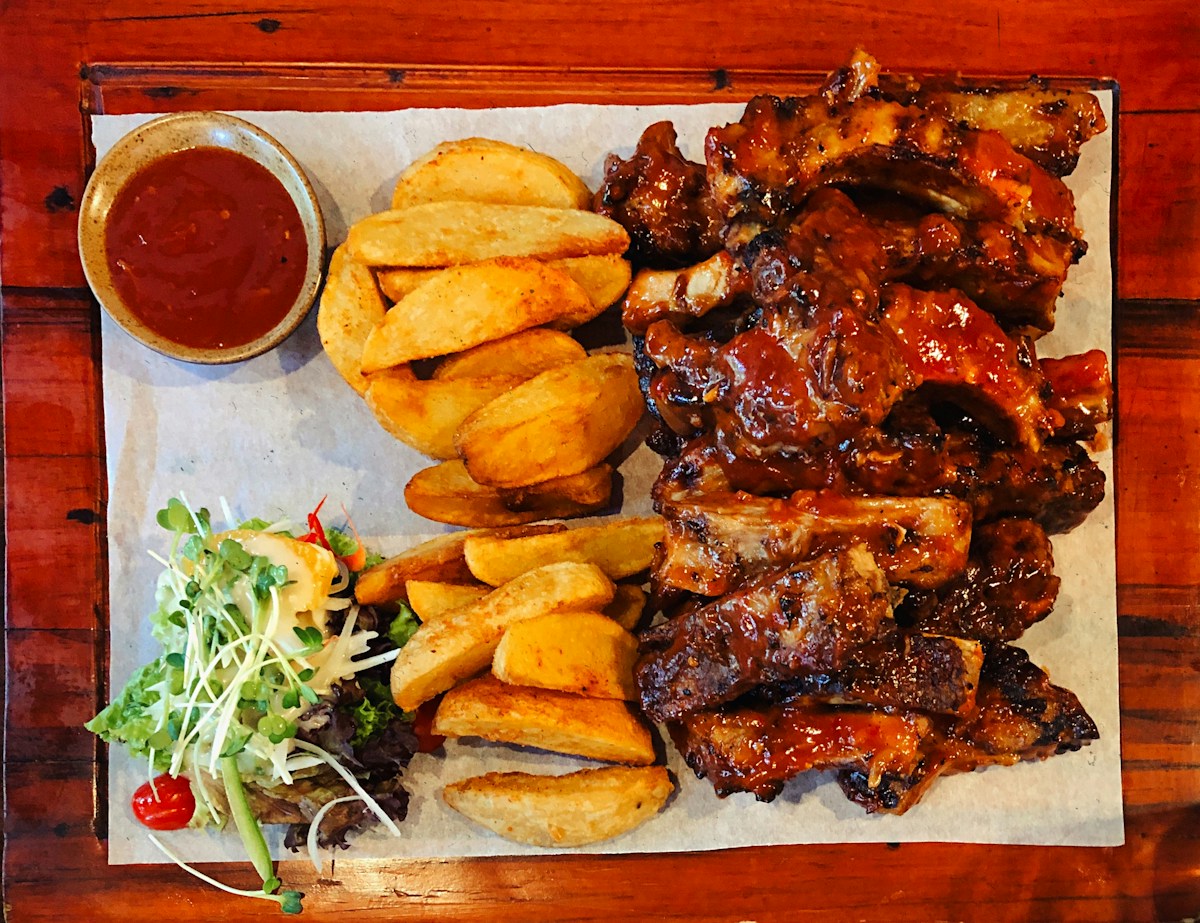
Serving photo: Tiffany Nguyen / Unsplash; shown as a serving illustration.