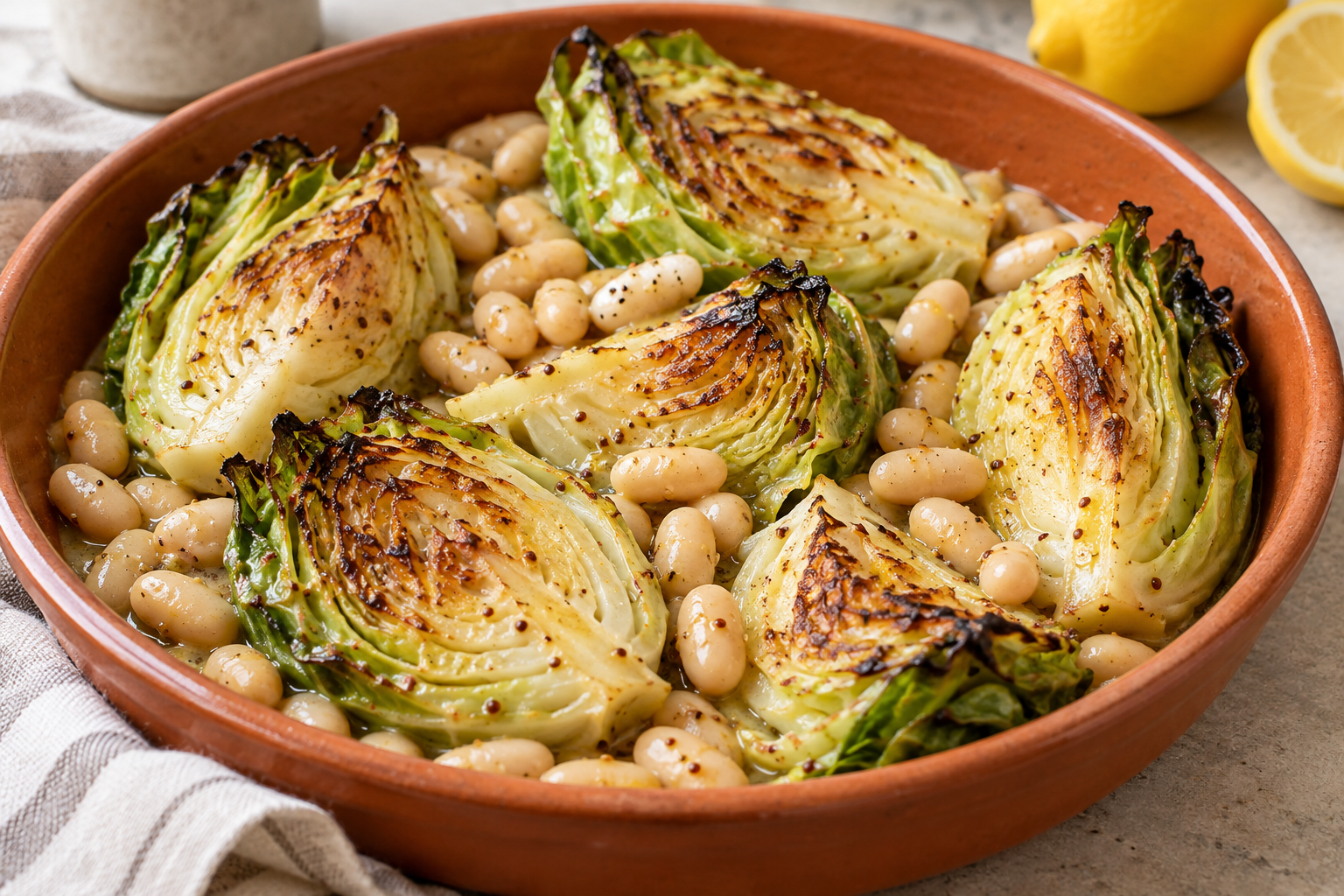
Ingredients
Equipment
Method
Instructions
- Heat the oven and prepare the cabbage. Set the oven to 425°F. Cut the small cabbage into six core-attached wedges as described above. Dry the cut surfaces if water remains between the outer leaves, so the oil can coat them rather than slide over moisture.
- Measure and distribute the oil. Set out the full 2 tablespoons of olive oil. Use a small amount from it to grease the cabbage contact areas on the rimmed pan. Brush about 1 tablespoon over the cut faces and outside leaves of the wedges, retaining the rest for the beans.
- Season and arrange. Sprinkle the cabbage with garlic powder, the quarter teaspoon of black pepper and salt to taste. Set each wedge on a broad cut face with space around it. If the six wedges overlap or leave no space for beans later, use a second pan instead of squeezing them together.
- Roast the first side. Cook for 18–22 minutes. Lift the edge of a wedge with the spatula to inspect the underside. It should be developing browned patches, while the thick base is beginning to soften. Avoid repeatedly lifting every wedge during the first few minutes.
- Prepare the beans and turn carefully. Drain and blot the cannellini beans, then coat them with the remaining measured oil. Slide the spatula fully beneath each wedge and turn it onto its other broad face. Use a second utensil to steady the leaves if needed rather than squeezing them with narrow tongs.
- Add the short bean roast. Scatter beans in the open spaces and roast another 8–10 minutes. Test the thick cabbage leaf base near the core with a fork. The leaves should be tender enough to eat while the wedge still lifts together, and the beans should be thoroughly hot.
- Manage any uneven finishing. If the tips are dark but the base is firm, loosely cover the affected wedge with foil and give it more time. Remove finished beans or smaller wedges to a clean dish so they do not dry while a larger piece finishes.
- Dress the hot vegetables. Whisk the teaspoon of Dijon with the tablespoon of lemon juice. Transfer the cabbage with support underneath, spoon the beans around it, and drizzle the dressing over both. Taste a cooked bean and a piece of cabbage, adjust salt if needed, and serve with a knife for trimming the firm core at the table.
Notes
Portions and timing: Six wedges with beans make about 2–3 light mains with a starch, or 3–4 small sides. Allow 10–15 minutes prep and 26–40 minutes roasting, about 40–55 minutes overall.
Keep wedges intact: Use a small 1 1/2-pound cabbage and leave a narrow piece of core on each wedge. Support it with a wide spatula. The 2 tablespoons oil cover the pan, cabbage and beans; the Dijon-lemon finish uses no additional oil. Check the thick leaf base for tenderness, and trim any tough core at the table.
Leftovers: Refrigerate in shallow containers within 2 hours, or 1 hour above 90°F. Keep at 40°F or below for up to 3–4 days and reheat to 165°F.