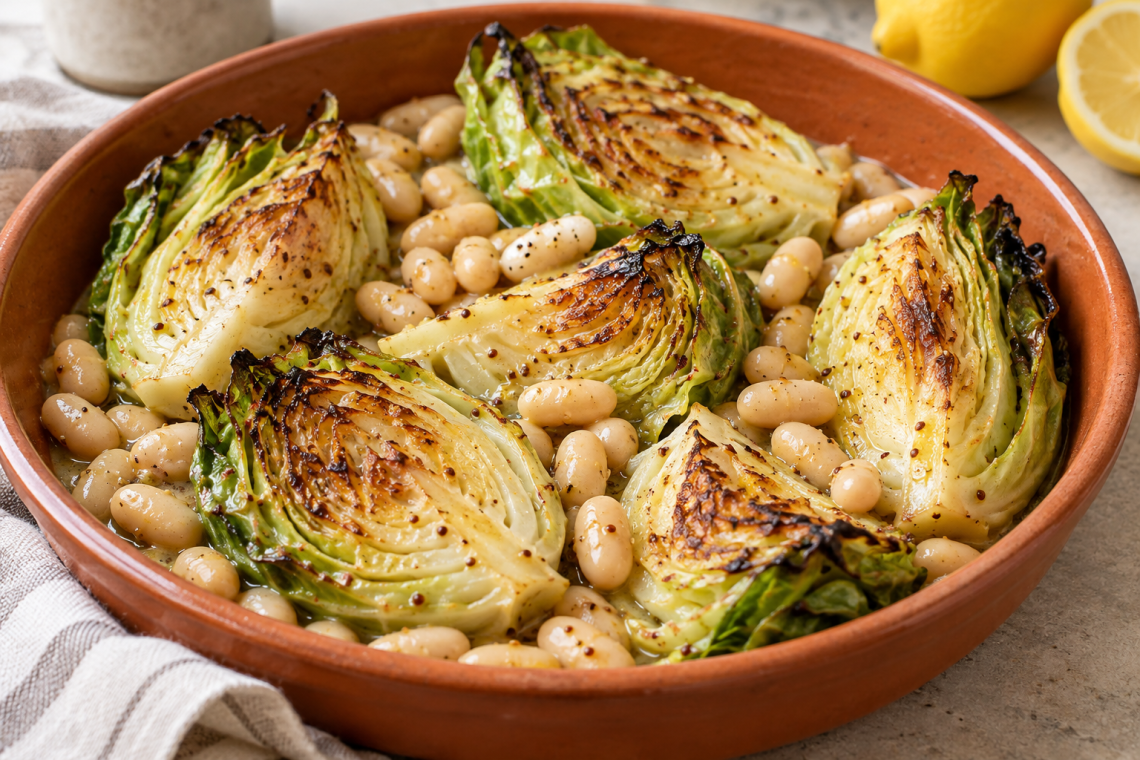
These roasted cabbage wedges with cannellini beans pair browned cabbage layers with creamy white beans and a sharp Dijon-lemon finish. A small piece of core keeps each wedge together on the tray, and the beans join near the end so they stay tender. The savory flavor comes from roasting, garlic and mustard, with no bacon needed.
The core has a practical role: a narrow attached piece keeps the leaves together while you turn and serve them. The outer tips will brown before the thick base softens, so the method includes a center check and a way to protect dark edges. Beans join later and the mustard stays out of the oven until the roasting is finished.
Roast cabbage wedges that stay together
Leave the core attached
A small piece of core keeps each wedge together during turning while the cut surfaces brown.
Add beans after turning
Cannellini beans need enough time to become thoroughly hot while keeping creamy centers, but not the full cabbage roasting time.
Finish mustard off heat
Whisk the teaspoon of Dijon with the tablespoon of lemon juice, then spoon it over the hot vegetables. The measured oil is used for roasting.
The cabbage is ready when the outer leaves are browned and the thick center can be pierced without falling apart. If loose leaves darken early, remove them and return the supported wedges to the oven rather than letting the smaller pieces burn.
Start with six supported wedges
Choose the small green cabbage specified in the ingredient list, about one and a half pounds. A much larger cabbage cut into only six wedges produces thicker portions and will not follow the same schedule. Remove damaged or loose outer leaves, rinse the exterior and dry it before cutting.
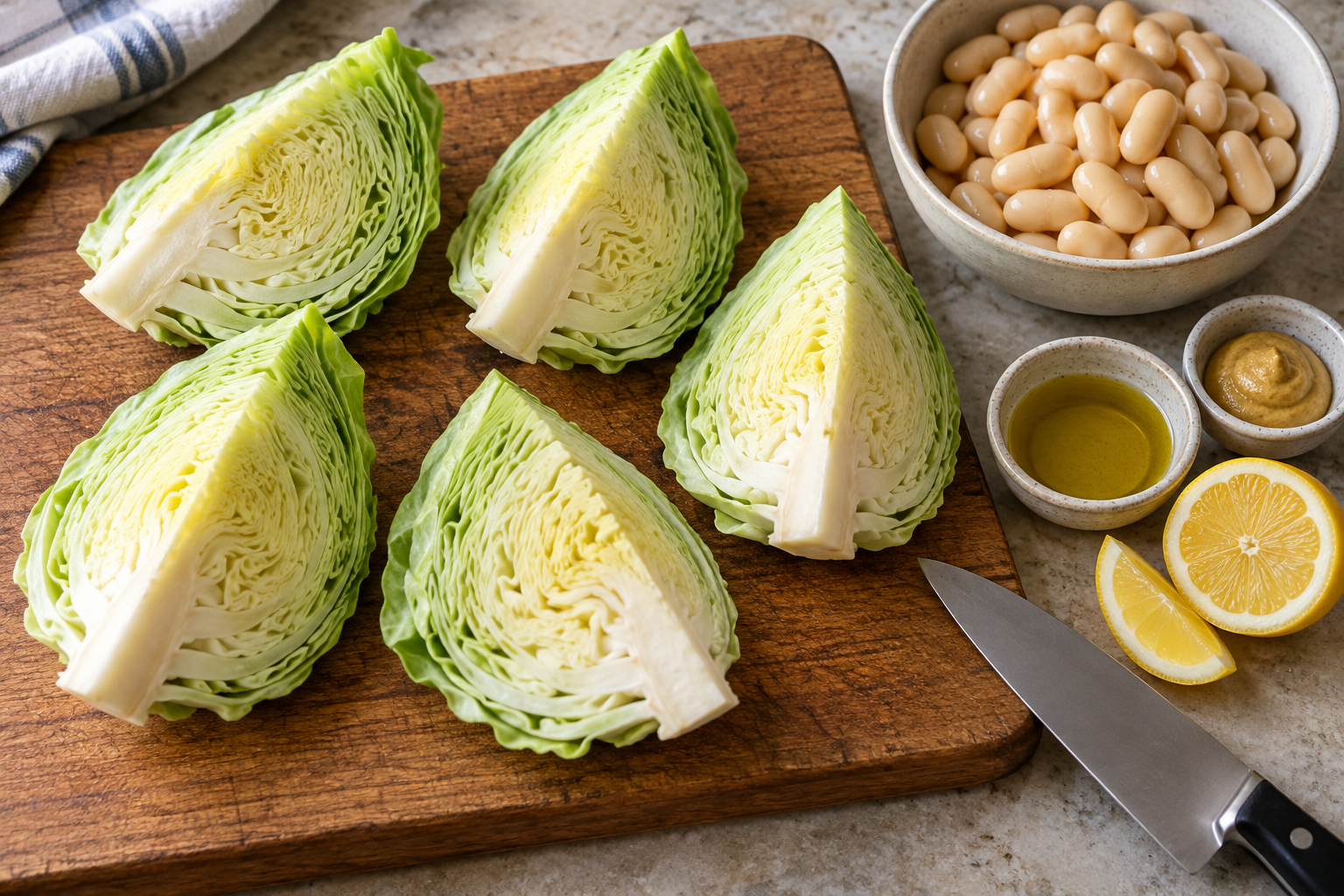
Set the cabbage on a stable surface, halve it through the core, and divide each half into three wedges. Keep a narrow piece of core attached to every wedge. Cut through that base deliberately instead of pulling the leaves apart. Each wedge needs a broad cut face that can rest against the pan and enough structure to lift with a spatula.
Recipe size, equipment and timing
Yield: 6 cabbage wedges with beans, approximately 2–3 light main portions with a separate starch or 3–4 small side portions. Prep: 10–15 minutes. Roast: about 26–32 minutes for the two stated stages, with up to about 40 minutes allowed for thicker wedges. Total: approximately 40–55 minutes. Oven: 425°F / 220°C.
Use an 18-by-13-inch rimmed metal sheet, a sharp large knife, a broad thin spatula, a small bowl for the dressing, and a pastry brush or spoon for spreading oil. Have foil available to shield a wedge if its tips darken before the thick base becomes tender.
Ingredients
Cabbage and beans
- 1 small green cabbage, about 1 1/2 pounds, cut into 6 wedges with a narrow piece of core attached to each
- 1 can (15 ounces) cannellini beans, drained and patted dry
- 2 tablespoons olive oil in total, divided between the pan, cabbage and beans
- 1/4 teaspoon garlic powder
- 1/4 teaspoon black pepper
- Salt, to taste
Dijon-lemon finish
- 1 teaspoon Dijon mustard
- 1 tablespoon lemon juice
Use the measured roasting oil for both vegetables. The mustard and lemon are whisked together separately and spooned over the finished dish.
Keep the oil and dressing separate
The two tablespoons of oil cover the whole recipe, including lightly greasing the pan where the cabbage sits. Use a little from the measured oil for those contact areas, then distribute the rest between the wedges and beans as directed. Do not add an unmeasured extra pour simply because the pan also needs oil.
Dijon and lemon form a thin, sharp finish rather than a creamy sauce. The wedges already carry roasting oil, so the dressing does not need another oil addition. Garlic powder and pepper season the cabbage before roasting; salt can be adjusted to taste because canned beans and Dijon vary in saltiness.
Roasted cabbage wedges with cannellini beans: the roasting order
- Heat the oven and prepare the cabbage. Set the oven to 425°F. Cut the small cabbage into six core-attached wedges as described above. Dry the cut surfaces if water remains between the outer leaves, so the oil can coat them rather than slide over moisture.
- Measure and distribute the oil. Set out the full 2 tablespoons of olive oil. Use a small amount from it to grease the cabbage contact areas on the rimmed pan. Brush about 1 tablespoon over the cut faces and outside leaves of the wedges, retaining the rest for the beans.
- Season and arrange. Sprinkle the cabbage with garlic powder, the quarter teaspoon of black pepper and salt to taste. Set each wedge on a broad cut face with space around it. If the six wedges overlap or leave no space for beans later, use a second pan instead of squeezing them together.
- Roast the first side. Cook for 18–22 minutes. Lift the edge of a wedge with the spatula to inspect the underside. It should be developing browned patches, while the thick base is beginning to soften. Avoid repeatedly lifting every wedge during the first few minutes.
- Prepare the beans and turn carefully. Drain and blot the cannellini beans, then coat them with the remaining measured oil. Slide the spatula fully beneath each wedge and turn it onto its other broad face. Use a second utensil to steady the leaves if needed rather than squeezing them with narrow tongs.
- Add the short bean roast. Scatter beans in the open spaces and roast another 8–10 minutes. Test the thick cabbage leaf base near the core with a fork. The leaves should be tender enough to eat while the wedge still lifts together, and the beans should be thoroughly hot.
- Manage any uneven finishing. If the tips are dark but the base is firm, loosely cover the affected wedge with foil and give it more time. Remove finished beans or smaller wedges to a clean dish so they do not dry while a larger piece finishes.
- Dress the hot vegetables. Whisk the teaspoon of Dijon with the tablespoon of lemon juice. Transfer the cabbage with support underneath, spoon the beans around it, and drizzle the dressing over both. Taste a cooked bean and a piece of cabbage, adjust salt if needed, and serve with a knife for trimming the firm core at the table.
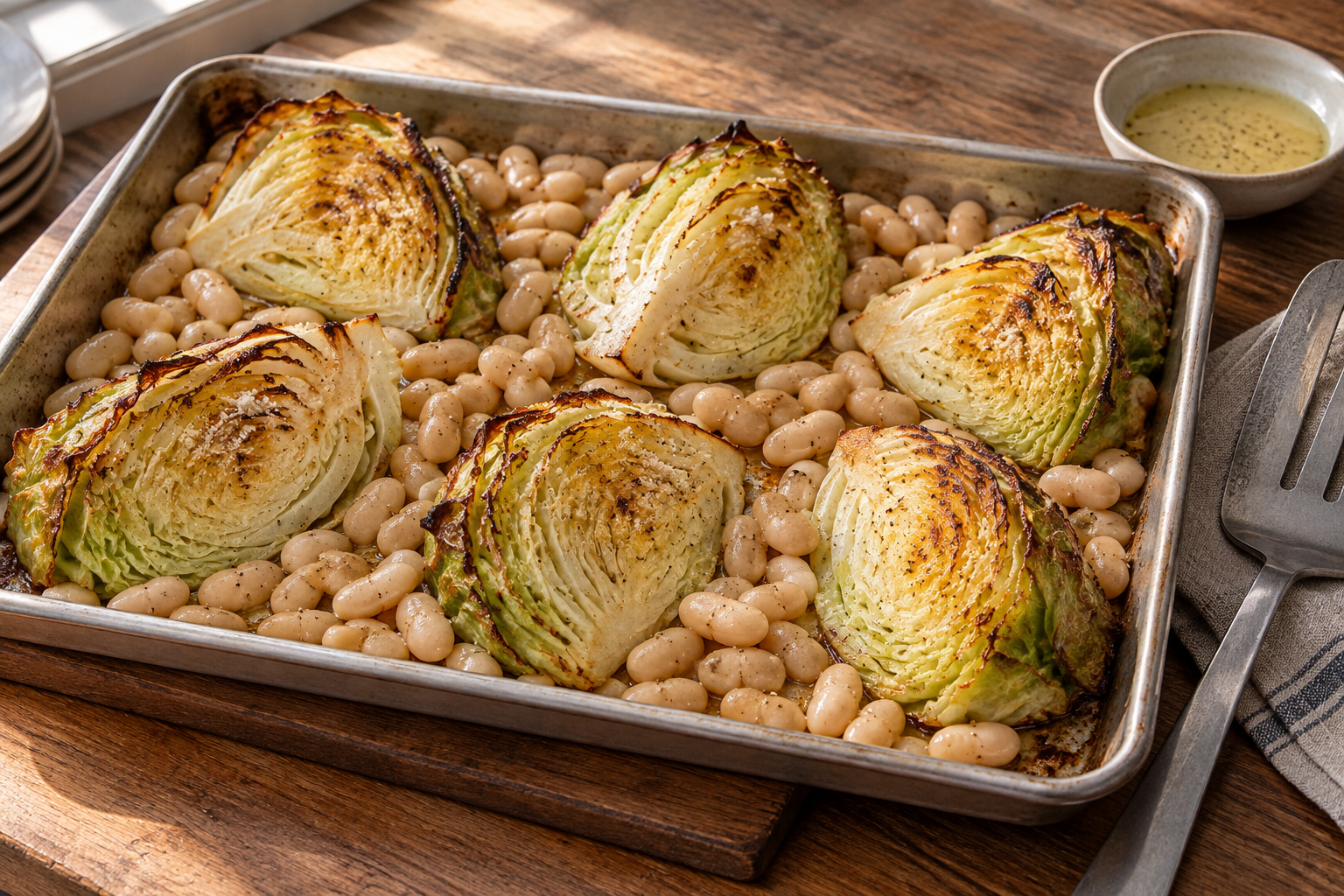
Turn the wedges without losing the leaves
| Moment | Helpful handling |
|---|---|
| Before roasting | Leave a narrow attached core and set each wedge on a broad cut face. |
| At the turn | Slide a wide spatula under the entire wedge; steady loose leaves with another utensil. |
| At serving | Lift from the base and spoon beans around the wedge rather than pressing them under it. |
| At the table | Trim any tough central core and cut through the tender layers with a knife. |
A few outer leaves may separate during roasting. Gather them with the spatula and serve them alongside if they are pleasantly browned. Discard bitter blackened fragments rather than stirring them through the beans. The goal is a supported roasted wedge, not a perfectly sealed cabbage parcel.
What the finished cabbage should feel like
Check the thick leaf base just beside the firm core. A browned outer tip does not prove that this area is soft, and the toughest central core is not the part to judge as a tender leaf. A fork should enter the cooked base with manageable resistance, and the layers should separate readily when cut on the plate.
If the pan is pale and wet, check spacing and use more pan area. If the beans are becoming wrinkled, remove them as soon as they are hot. Neither problem is solved by stirring the cabbage repeatedly; frequent handling can break the wedges before their second side has a chance to color.
Serve the wedges as portions
For a light main, offer two or three wedges with a share of beans and separately boiled potatoes, warm bread or another starch. For a smaller side, serve one or two wedges according to appetite. The six-wedge count is a practical serving guide, while the original two-to-three-main or three-to-four-side yield depends on what else is on the plate.
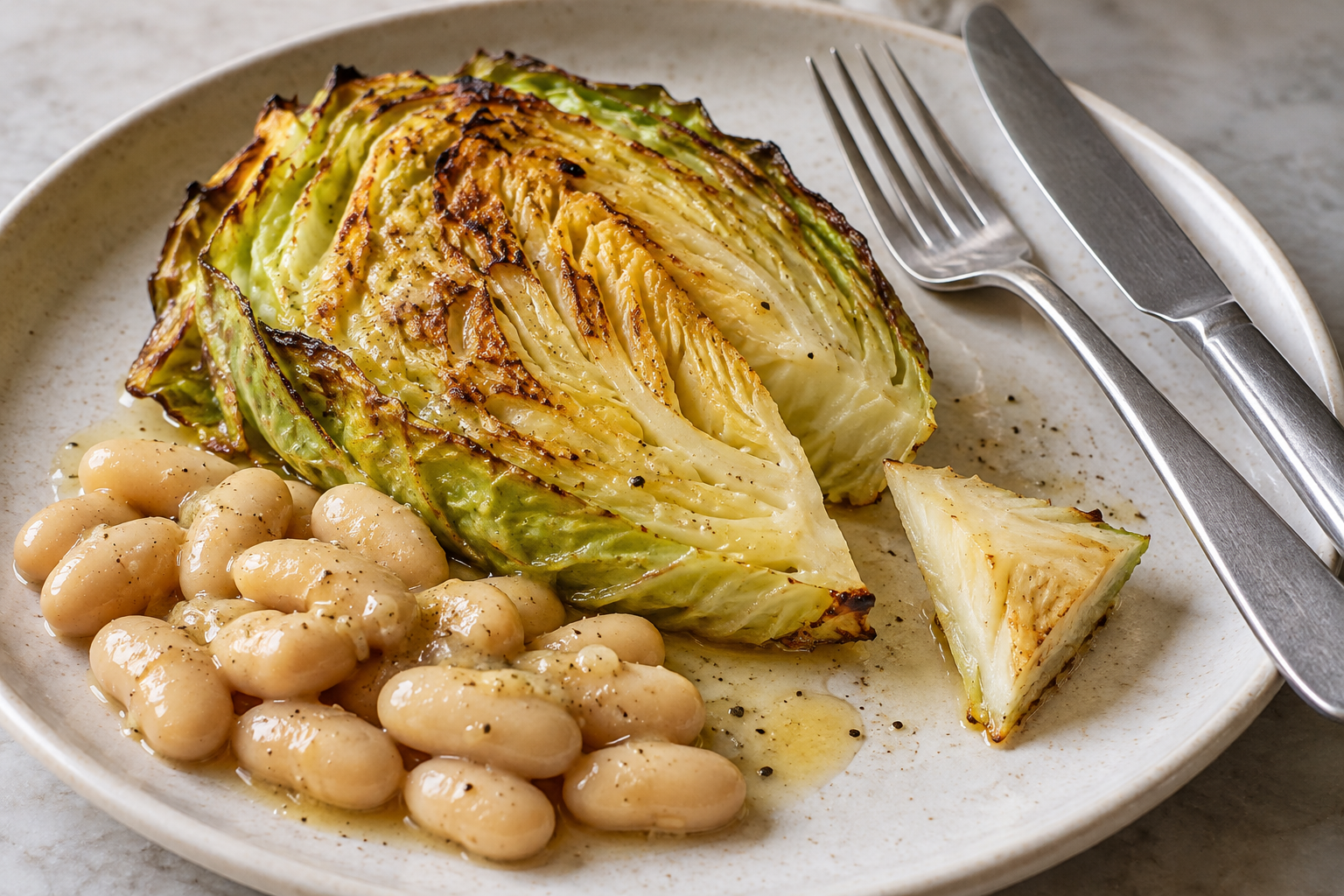
Spoon the Dijon-lemon finish across the cabbage layers so it reaches more than the tips. Keep the beans visible beside the wedges and give diners a knife as well as a fork. The recipe’s savory character comes from browned cabbage, garlic, mustard and beans; no bacon addition is needed to complete the stated version.
Frequently asked questions
Is the cabbage core edible?
The center can be edible but is often firm and fibrous in a roasted wedge. Here it stays attached for support during cooking. Trim any tough portion on the plate and eat the tender layers rather than extending the roast until every bit of core becomes soft.
Can I use Savoy cabbage?
Savoy has looser, more delicate leaves and may cook faster. Keep the wedges supported, watch their tips earlier and check the base before adding the beans. Treat the timing as a variation rather than assuming the same result as a small firm green cabbage.
Can great northern beans replace cannellini?
Yes, as a drained cooked white-bean option. Add them late and check when hot. The beans may be smaller or firmer than cannellini, so their appearance can differ; they still do not need the full cabbage roasting time.
Why is the mustard added after roasting?
The small amount of Dijon is part of the lemon finish. Adding it after the oven keeps that sharp flavor distinct and avoids putting a thin mustard coating on exposed leaf tips during a hot roast. The oil and dry seasoning handle the roasting stage.
What if one wedge falls apart?
Use a broad spatula to gather the tender leaves and serve them with beans as a loose portion. Do not keep moving them in an attempt to rebuild the wedge. For the remaining pieces, support the whole base during turning and retain an attached core.
Can I cut the cabbage a day ahead?
Yes. Keep the cut wedges covered in the refrigerator, with the core pieces still attached. Pat away surface moisture before adding oil. Drain and refrigerate beans separately, and whisk the lemon and mustard near serving so the dressing is easy to distribute.
Store and reheat without crushing the layers
Refrigerate leftovers in shallow containers within 2 hours, or within 1 hour above 90°F. Keep at 40°F or below and use within 3–4 days, following USDA leftovers guidance. Reheat to 165°F, checking the middle of the reheated portion.
Lay wedges in a shallow oven dish or skillet rather than pressing them into a deep pile. Cover briefly if the outer leaves are drying before the center warms, then uncover only as needed. The beans and cabbage will be softer after storage, so lift portions gently and expect a reheated vegetable dish rather than a newly crisp tray.
Plan the tray before cutting the cabbage
Place the empty roasting tray beside the cabbage before cutting. Six wedges need enough room to lie on their broad sides, with spaces left for the beans. A cabbage much larger than the specified one can fill the tray even when it is cut into six pieces. Use the stated weight as your guide and save surplus cabbage for another recipe.
Start by cutting the cabbage through its core into halves, then divide each half into three wedges. Look at the base of every piece before moving it. A narrow connection of core keeps the leaves together; cutting it all away makes a pile of loose leaves that browns and softens at a different rate.
Turn with a wide spatula supporting the whole wedge. If an outer leaf loosens, lay it flat beside the wedge rather than repeatedly trying to tuck it back into place. Check loose leaves sooner, since their thinner edges can finish before the thick base. The goal is tender cabbage with browned surfaces, not identical shapes.
Serve the wedges with a knife and fork, and put the beans around rather than on top of the cabbage. This keeps the browned faces visible and makes the portions easy to share. A small grain side or bread can round out the meal; a heavily salted topping is usually unnecessary because the mustard and lemon already provide a clear finish.
More recipes for your table
Choose a companion dish or another recipe for the ingredients you have. Each link opens its own instructions and printable recipe.
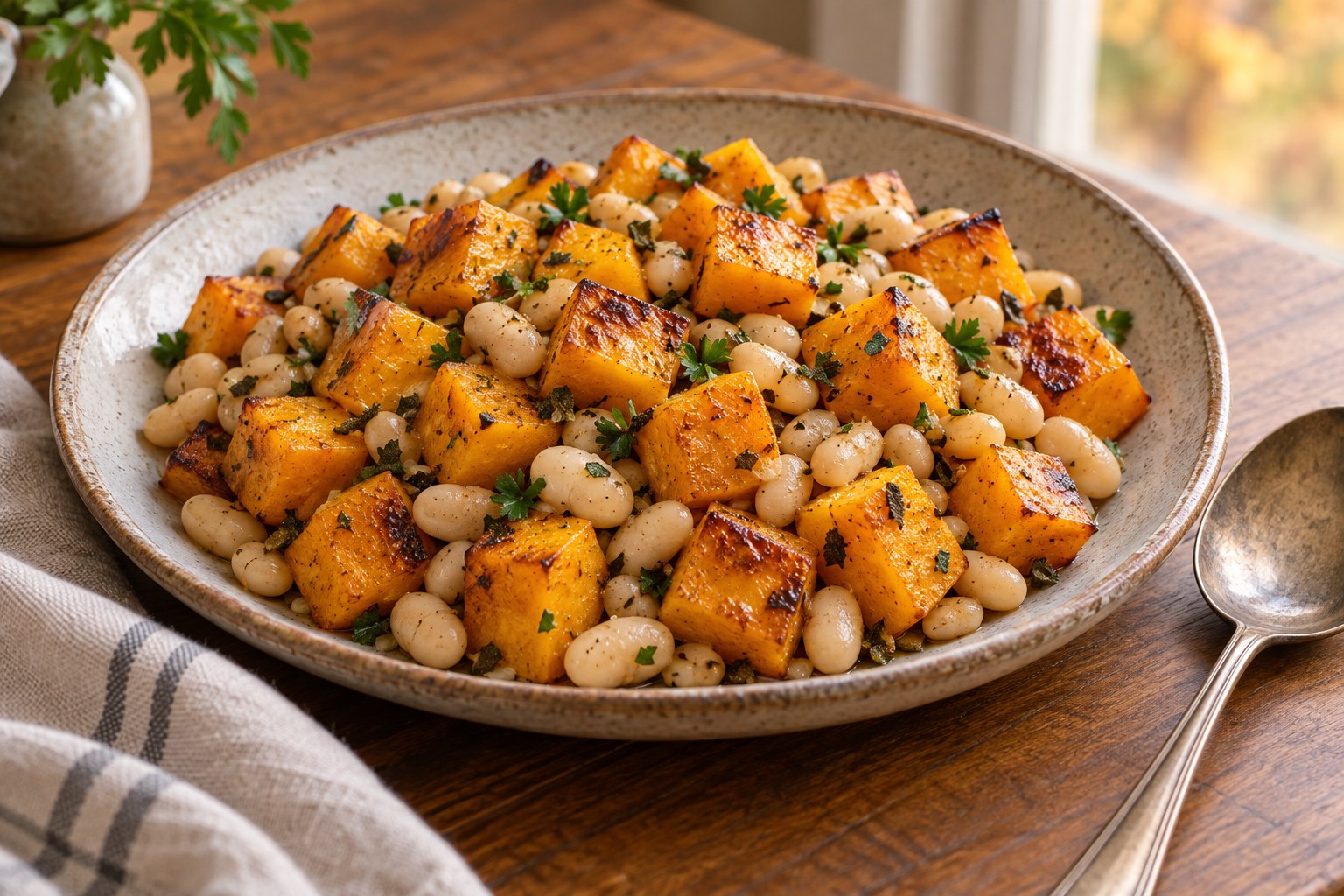
A second sheet-pan meal using tender white beans.
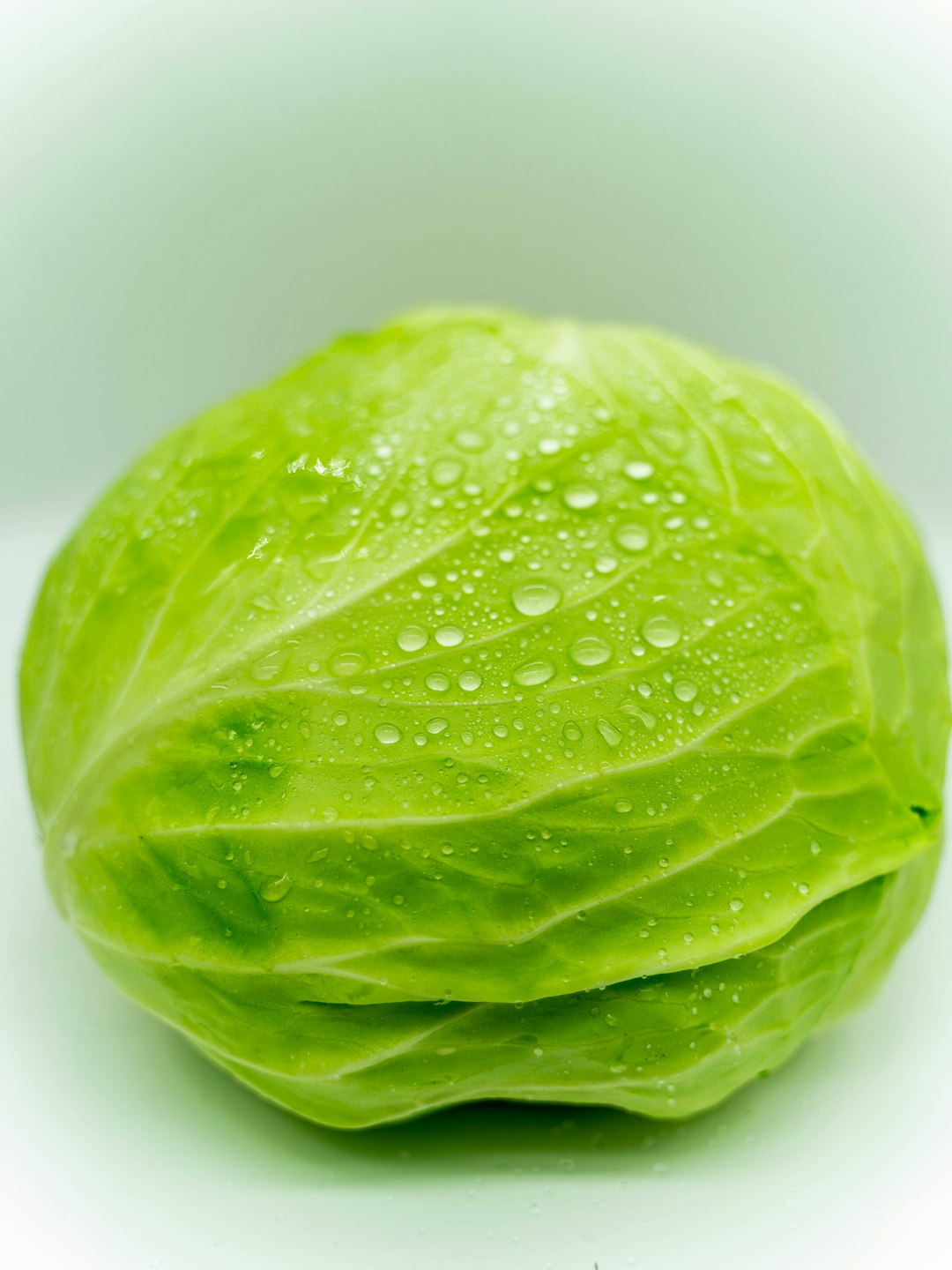
Another simple way to cook cabbage with white beans.
Equipment for this recipe
Affiliate disclosure: As an Amazon Associate I earn from qualifying purchases.
Use the tools you already have when they match the method. If you need an item, these links open matching Amazon search results.
- Rimmed baking sheet on Amazon — Choose a tray that fits your oven and leaves the food room to spread.
- Wide spatula or turner on Amazon — Support the food underneath when turning; choose a material suitable for your pan.
Check the size, material, and manufacturer’s use instructions against the recipe before choosing.
Useful kitchen references
- FoodSafety.gov leftover guidance — A practical reference for chilling and reheating.
Serve the browned wedges with their beans
For roasted cabbage wedges with cannellini beans, keep the core attached during cooking, support each wedge when turning and add the beans late. Spoon the Dijon-lemon finish over both parts just before serving. A knife at the table lets everyone trim the firm core and enjoy the tender cabbage layers.
Serving roasted cabbage wedges with cannellini beans
Decide how you want to serve roasted cabbage wedges with cannellini beans before the tray leaves the oven. The supported wedges make attractive individual portions, while the tender leaves can also become a more casual bowl with beans and a separate starch. Both arrangements use the same cooked recipe. The difference is how you cut and position the cabbage after roasting, rather than a change to its cooking formula.
For a plated vegetable centerpiece
Choose plates large enough for a wedge to lie on a broad side without hanging over the edge. Slide the spatula underneath the thick base and support the thinner tip during transfer. Place the beans beside the cabbage so they are easy to collect with a fork. Drizzle some of the mustard-lemon finish across the cut layers, leaving portions of the browned surface visible.
Offer a knife so diners can cut across the tender leaves and leave any tough core behind. A fork alone can pull long layers away from the supported base, which makes the wedge harder to eat neatly. If you are serving two wedges per person, angle them slightly apart. This leaves room for beans and a separate accompaniment without stacking the cabbage into a steamy heap.
For a grain or potato bowl
Prepare the chosen grain or potatoes independently using their own recipe. After the cabbage is roasted, trim away any tough core and cut the leaves into broad, manageable pieces on a clean board. Add those pieces to the bowl with a share of the cannellini beans. Keep the cuts large enough to preserve some layered texture rather than chopping the cabbage into tiny shreds.
Add the measured dressing across the cabbage and beans before deciding whether the separately prepared base needs another condiment. A lightly seasoned accompaniment is useful because the mustard and lemon already provide a distinct finish. Serve the base beneath or beside the vegetables, not stirred through the roasting tray. That keeps the original batch easy to divide and lets diners choose the balance they prefer.
For a table with different appetites
Put the six wedges on a wide platter and spoon the beans into the spaces between them. A broad serving spatula and a separate spoon make it easier to take a wedge without crushing the beans. Smaller appetites can begin with one wedge, while others can take more vegetables or an additional side. Keep the recipe’s stated yield in mind when planning the rest of the meal.
If one wedge broke during turning, gather its cooked leaves into a loose portion at the edge of the platter. There is no need to hide them underneath the intact wedges. Remove any burned fragments, but serve pleasantly browned loose leaves with their share of beans. Their irregular shape does not prevent them from contributing the same roasted cabbage flavor to the meal.
Keep the last-minute work simple
Set out the dressing bowl, serving dish, and utensils during the short bean-roasting stage. Stir the Dijon and lemon again before spooning because a small mixture is easy to leave unevenly combined. Taste a bean and a piece of cooked cabbage together before adding final salt. The bean brand and mustard can change that decision even when every other ingredient has been measured consistently.
For a later meal, keep the storage and reheating directions already given with the recipe. Reheated wedges may be easier to serve as broad pieces in a bowl than as intact portions. Heat them thoroughly first, then cut them for serving and add a freshly prepared accompaniment. Do not expect the chilled leaves to regain exactly the same texture as the first tray; choose a presentation that suits their softer finish.
Printable recipe
Use the recipe card’s Print control for a kitchen copy. Follow the ingredient quantities and cooking checks in the card when preparing the dish.
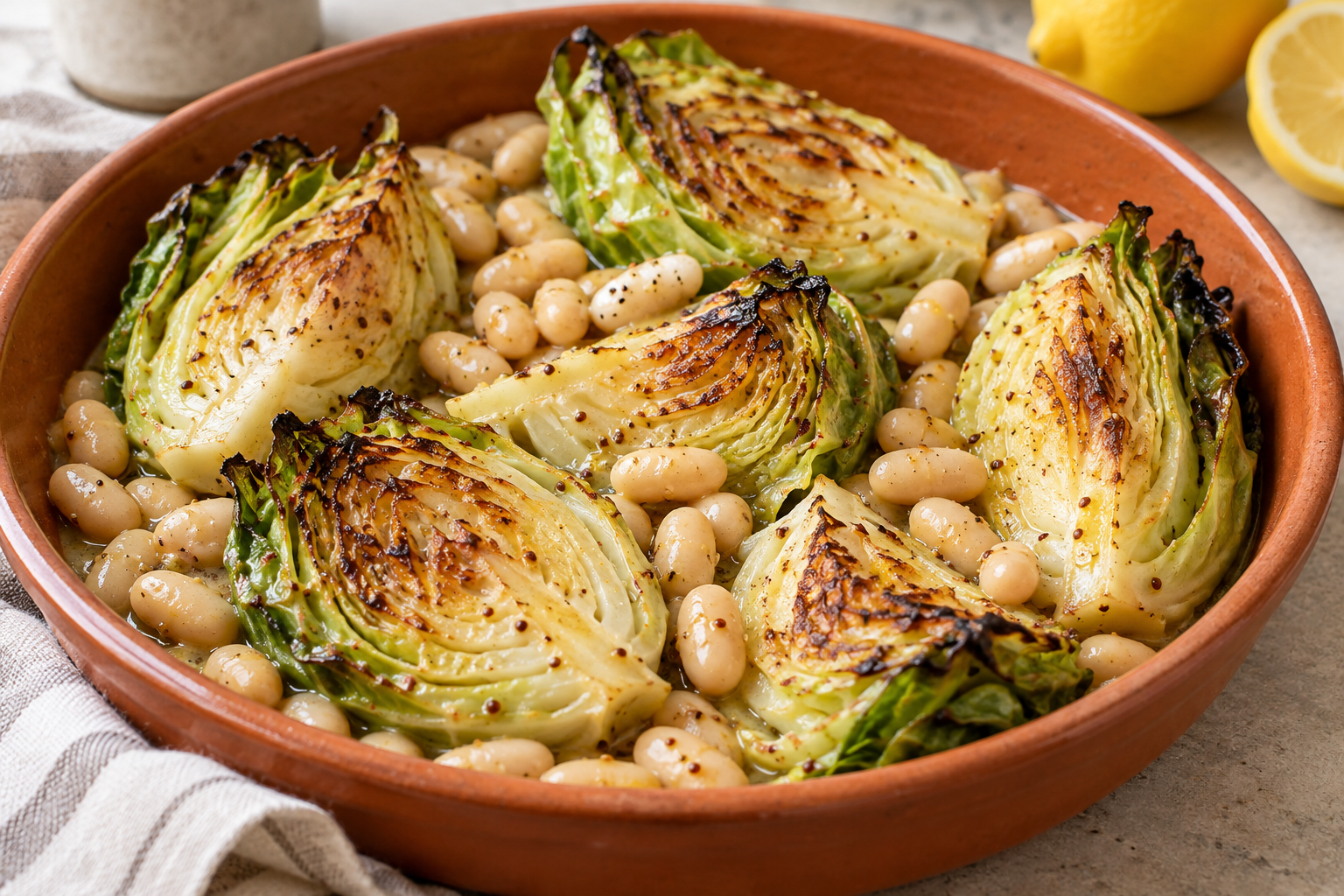
Roasted Cabbage Wedges with Cannellini Beans and Mustard
Ingredients
Equipment
Method
- Heat the oven and prepare the cabbage. Set the oven to 425°F. Cut the small cabbage into six core-attached wedges as described above. Dry the cut surfaces if water remains between the outer leaves, so the oil can coat them rather than slide over moisture.
- Measure and distribute the oil. Set out the full 2 tablespoons of olive oil. Use a small amount from it to grease the cabbage contact areas on the rimmed pan. Brush about 1 tablespoon over the cut faces and outside leaves of the wedges, retaining the rest for the beans.
- Season and arrange. Sprinkle the cabbage with garlic powder, the quarter teaspoon of black pepper and salt to taste. Set each wedge on a broad cut face with space around it. If the six wedges overlap or leave no space for beans later, use a second pan instead of squeezing them together.
- Roast the first side. Cook for 18–22 minutes. Lift the edge of a wedge with the spatula to inspect the underside. It should be developing browned patches, while the thick base is beginning to soften. Avoid repeatedly lifting every wedge during the first few minutes.
- Prepare the beans and turn carefully. Drain and blot the cannellini beans, then coat them with the remaining measured oil. Slide the spatula fully beneath each wedge and turn it onto its other broad face. Use a second utensil to steady the leaves if needed rather than squeezing them with narrow tongs.
- Add the short bean roast. Scatter beans in the open spaces and roast another 8–10 minutes. Test the thick cabbage leaf base near the core with a fork. The leaves should be tender enough to eat while the wedge still lifts together, and the beans should be thoroughly hot.
- Manage any uneven finishing. If the tips are dark but the base is firm, loosely cover the affected wedge with foil and give it more time. Remove finished beans or smaller wedges to a clean dish so they do not dry while a larger piece finishes.
- Dress the hot vegetables. Whisk the teaspoon of Dijon with the tablespoon of lemon juice. Transfer the cabbage with support underneath, spoon the beans around it, and drizzle the dressing over both. Taste a cooked bean and a piece of cabbage, adjust salt if needed, and serve with a knife for trimming the firm core at the table.