Ingredients
Equipment
Method
Instructions
- Heat the oven and prepare the potatoes. Set the oven to 425°F. Scrub the pound of potatoes, trim damaged areas and cut the batch into approximately eight to ten comparable wedges. Pat the cut faces dry with a clean towel and set out the rimmed metal sheet.
- Season the wedges. Toss potatoes with 1 tablespoon olive oil, the sweet paprika and half the quarter teaspoon of salt. Move the wedges through the bowl so their cut faces receive a light coating. Do not leave a puddle of oil under only the last few pieces.
- Arrange the first layer. Set the wedges cut-side down on the pan with space around them. Keep the skin side tilted upward or to the side so a broad flesh surface touches the metal. Plan where the frozen beans will go later, using a second pan if there is not enough clear surface.
- Give potatoes twenty minutes. Roast for 20 minutes. Lift one large wedge with the spatula and inspect its underside. The center may still need time. If a cut face is browning, turn that wedge onto its other cut face before the next stage.
- Coat the frozen beans. Take the beans from the freezer when you are ready to add them. Toss the measured 10 ounces with the remaining tablespoon of oil, garlic powder, thyme and remaining salt. Shake off loose surface ice if necessary without thawing or rinsing the beans.
- Add beans beside the potatoes. Spread them in the clear area of the hot tray, not over the wedges. Return to the oven for another 12–16 minutes. Keep the beans in a thin layer so released moisture has room to evaporate. Follow any additional cooking requirements printed on the frozen bean package.
- Check the two textures separately. A thin knife should pass through the center of the largest potato wedge without a hard core. Beans should be thoroughly cooked and hot, with no icy clusters, and should meet their package's cooking endpoint. If one ingredient is ready first, remove it to a clean serving dish and continue the other in short intervals.
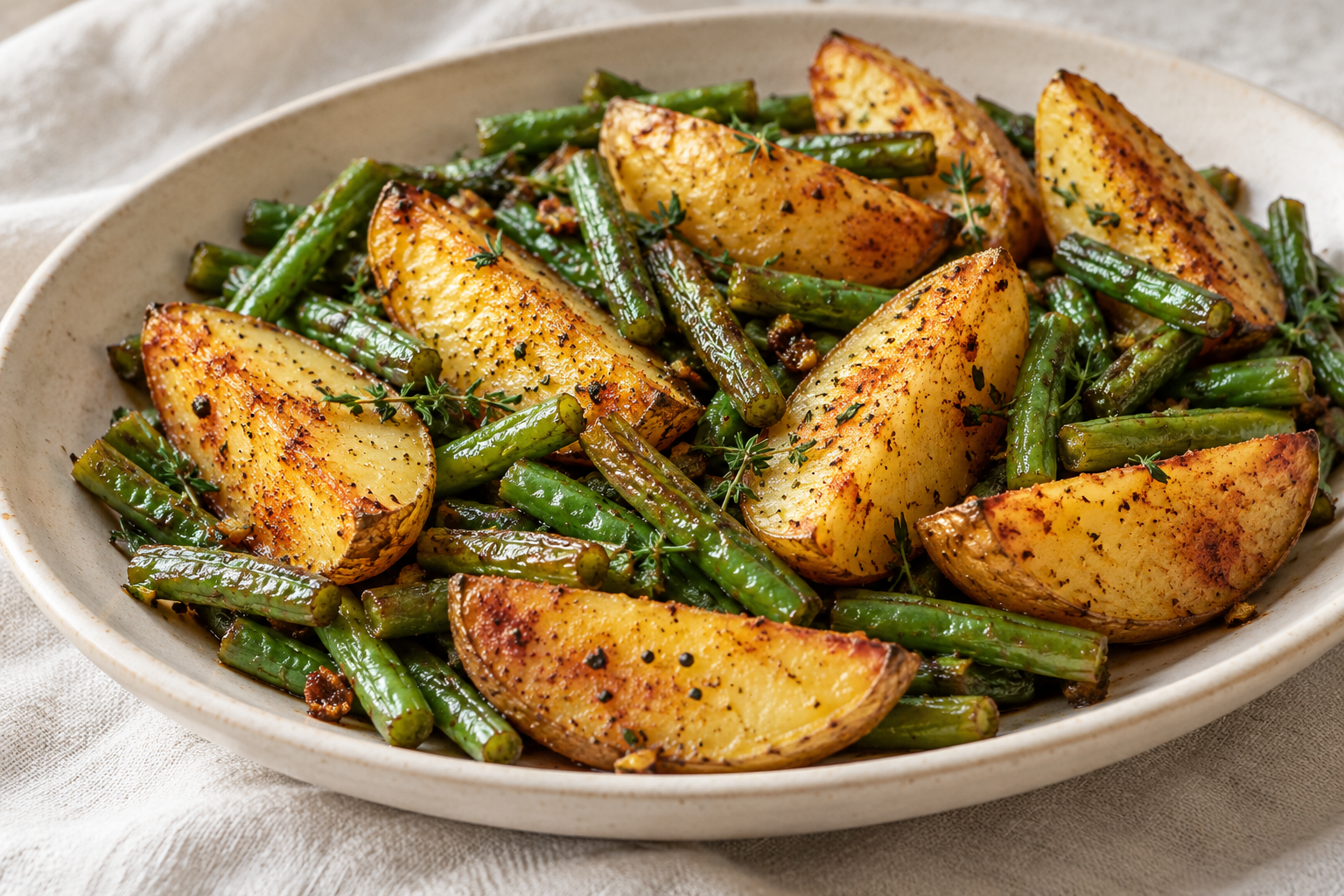
- Finish and serve. Remove the pan, season with black pepper and drizzle over the teaspoon of lemon juice. Turn the beans and wedges gently to distribute the finish without breaking soft potato centers. Serve with the wedges visible above or beside the beans rather than buried under a steaming pile.
Notes
Portions and timing: One batch makes about 3–4 small sides, or 2–3 portions alongside another dish. Allow 10–15 minutes prep and 32–40 minutes roasting, about 45–55 minutes overall.
Pan plan: Cut the full pound into about 8–10 similar wedges. Use 1 tablespoon oil and half the salt for the potatoes; reserve the rest for the beans. Keep frozen beans beside the potatoes, using another metal tray if needed, and follow their package’s cooking instructions.
Leftovers: Refrigerate in shallow containers within 2 hours, or 1 hour above 90°F. Keep at 40°F or below for up to 3–4 days; reheat to 165°F. Expect a softer texture after chilling.