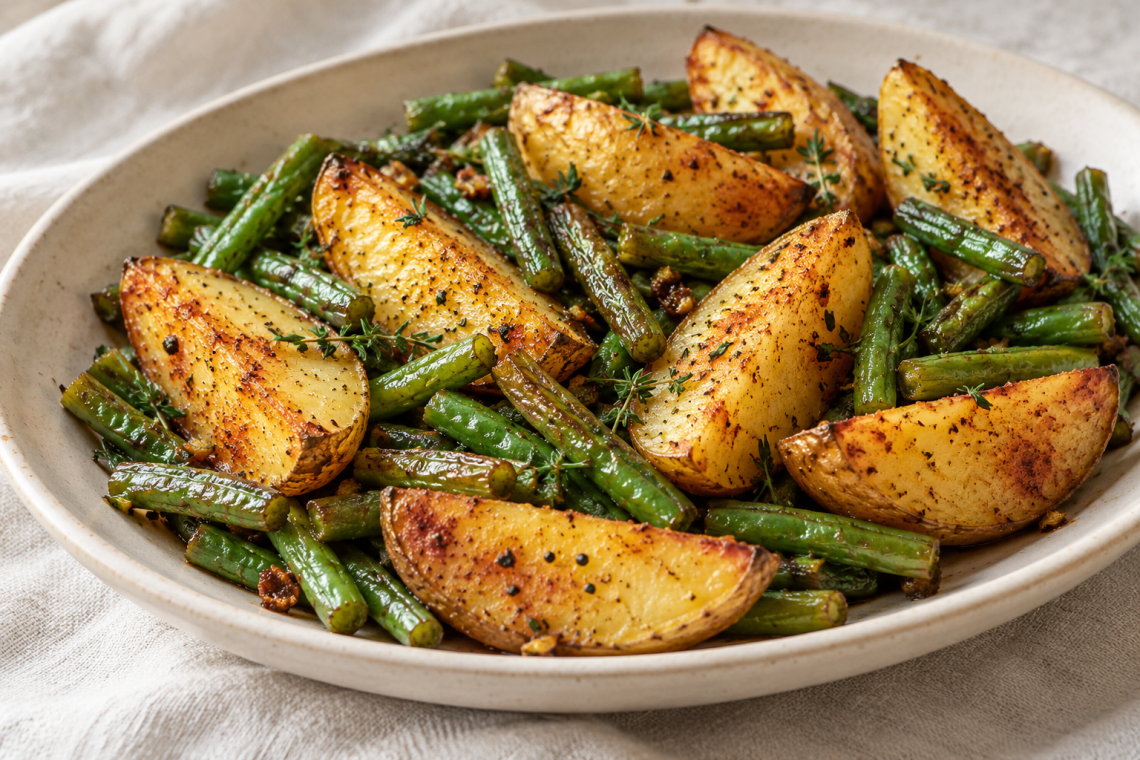
These roasted frozen green beans and potato wedges share one tray but start at different times. Give the potatoes twenty minutes in the oven before adding the beans beside them, so the wedges can brown while the frozen beans release their moisture. Paprika seasons the potatoes; garlic powder and thyme coat the beans, and a teaspoon of lemon juice finishes both.
Expect tender potato centers with some golden cut faces and hot green beans with a little roasted color. Frozen beans can release water as they cook, so the method keeps them beside the wedges instead of pouring them over the top. A small lemon finish brings the two parts together after the oven. For another potato preparation, see this mashed potato waffle recipe, which turns cooked mashed potatoes into crisp-edged waffles.
Give the potatoes a head start
| Stage | What to watch |
|---|---|
| Potatoes first | Place cut sides down and roast until the bottoms begin to color and the centers start softening. |
| Frozen beans second | Spread them apart while still frozen; their surface ice must evaporate before browning can begin. |
| Garlic powder with the beans | Toss the listed garlic powder with the frozen beans, oil and thyme before the shorter bean-roasting stage. |
Use two doneness checks: pierce the largest potato wedge, then check that the thickest beans are thoroughly cooked and meet their package’s instructions before tasting. If one component finishes first, move it to a clean plate and continue cooking the other. Recombine the vegetables and finish with the measured lemon juice and black pepper.
A dry start and a frozen addition
Yield: approximately 3–4 small side portions, or 2–3 portions as part of a larger meal. Prep: 10–15 minutes. Roast: about 32–36 minutes for the stated stages, allowing up to about 40 minutes when wedges need longer. Total: approximately 45–55 minutes. Oven: 425°F / 220°C.
Use an 18-by-13-inch rimmed metal sheet, a mixing bowl, a clean towel, a sharp knife, a thin spatula and oven mitts. The pan needs a clear area for the beans after the potato head start. If the wedges already fill every part of the sheet, prepare a second pan for the frozen beans rather than covering the potatoes.
Ingredients
For the potatoes
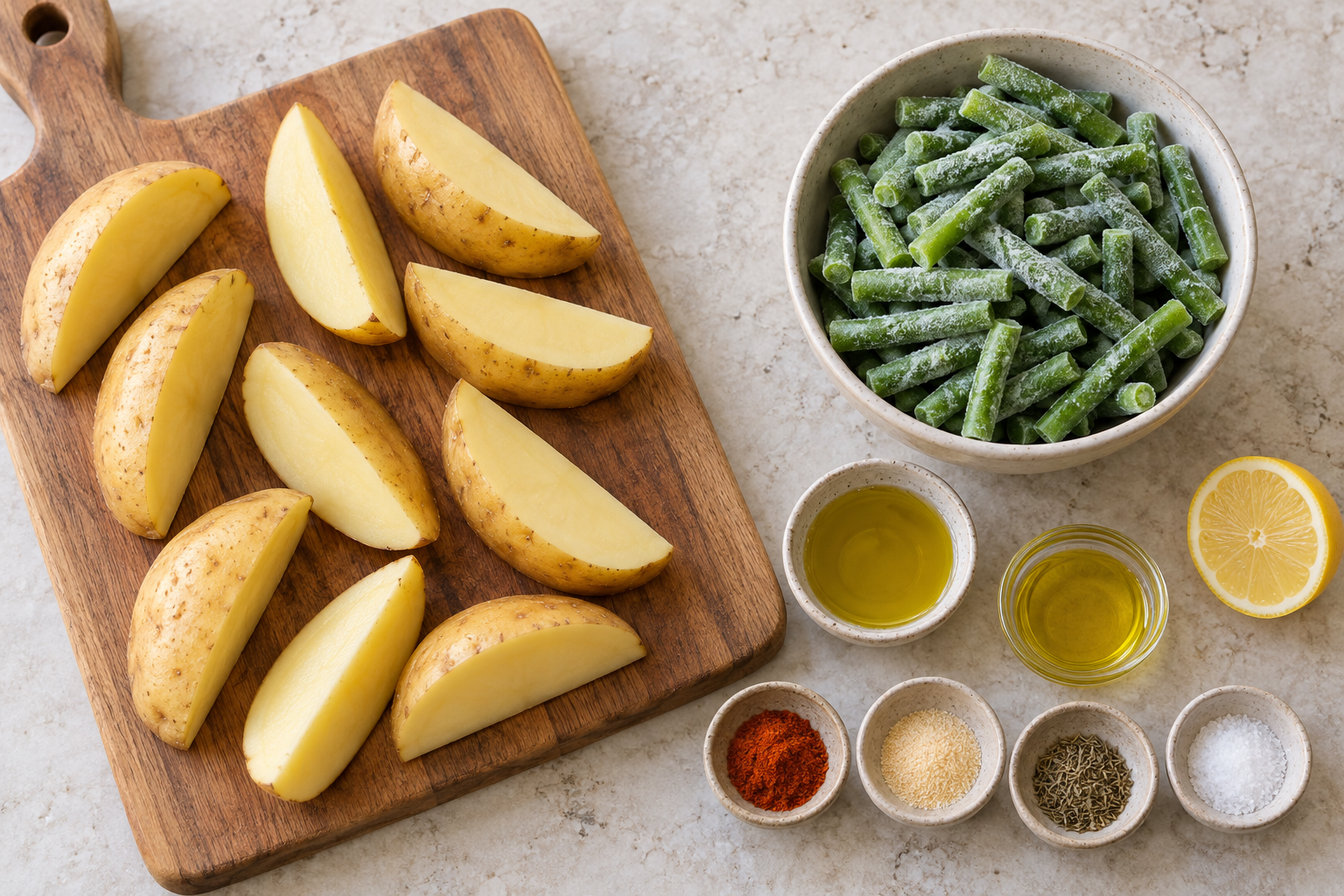
- 1 pound Yukon Gold potatoes, scrubbed and cut into 8–10 similar wedges across the whole batch
- 1 tablespoon olive oil
- 1/2 teaspoon sweet paprika
- 1/8 teaspoon fine salt
For the frozen beans
- 10 ounces plain frozen cut green beans, kept frozen
- 1 tablespoon olive oil
- 1/2 teaspoon garlic powder
- 1/4 teaspoon dried thyme
- 1/8 teaspoon fine salt
To finish
- 1 teaspoon lemon juice
- Black pepper, to taste
Total measured oil and salt: 2 tablespoons oil and 1/4 teaspoon salt, divided between the two components above.
Read the potato quantity as one batch
The full pound of potatoes is cut into approximately eight to ten wedges total, not eight to ten from every small potato. Choose potatoes of reasonably similar size and compare the thick centers of the wedges after cutting. If some are much wider than others, adjust the pieces so one very large wedge does not control the whole pan’s finishing time.
Scrub the potatoes, trim damaged areas and dry the cut faces thoroughly. The skin can remain on sound Yukon Gold potatoes. Keep the green beans frozen while the potatoes are prepared; do not thaw them in a bowl or add rinsing water. Plain frozen cut beans suit the stated recipe, while sauced or seasoned products need their own directions.
Divide the seasonings before roasting
| Ingredient group | Measured coating |
|---|---|
| Potato wedges | 1 tablespoon olive oil, 1/2 teaspoon sweet paprika, and half the salt. |
| Frozen green beans | Remaining tablespoon olive oil, 1/2 teaspoon garlic powder, 1/4 teaspoon thyme, and remaining salt. |
| Finished tray | Black pepper to taste and 1 teaspoon lemon juice. |
Keeping garlic powder with the shorter bean stage avoids giving it the potato’s entire oven time. The lemon quantity is small because this is a light finish, not a pool of dressing. Measure it into a spoon before drizzling so a large lemon does not accidentally supply far more than the recipe calls for.
How to cook roasted frozen green beans and potato wedges
- Heat the oven and prepare the potatoes. Set the oven to 425°F. Scrub the pound of potatoes, trim damaged areas and cut the batch into approximately eight to ten comparable wedges. Pat the cut faces dry with a clean towel and set out the rimmed metal sheet.
- Season the wedges. Toss potatoes with 1 tablespoon olive oil, the sweet paprika and half the quarter teaspoon of salt. Move the wedges through the bowl so their cut faces receive a light coating. Do not leave a puddle of oil under only the last few pieces.
- Arrange the first layer. Set the wedges cut-side down on the pan with space around them. Keep the skin side tilted upward or to the side so a broad flesh surface touches the metal. Plan where the frozen beans will go later, using a second pan if there is not enough clear surface.
- Give potatoes twenty minutes. Roast for 20 minutes. Lift one large wedge with the spatula and inspect its underside. The center may still need time. If a cut face is browning, turn that wedge onto its other cut face before the next stage.
- Coat the frozen beans. Take the beans from the freezer when you are ready to add them. Toss the measured 10 ounces with the remaining tablespoon of oil, garlic powder, thyme and remaining salt. Shake off loose surface ice if necessary without thawing or rinsing the beans.
- Add beans beside the potatoes. Spread them in the clear area of the hot tray, not over the wedges. Return to the oven for another 12–16 minutes. Keep the beans in a thin layer so released moisture has room to evaporate. Follow any additional cooking requirements printed on the frozen bean package.
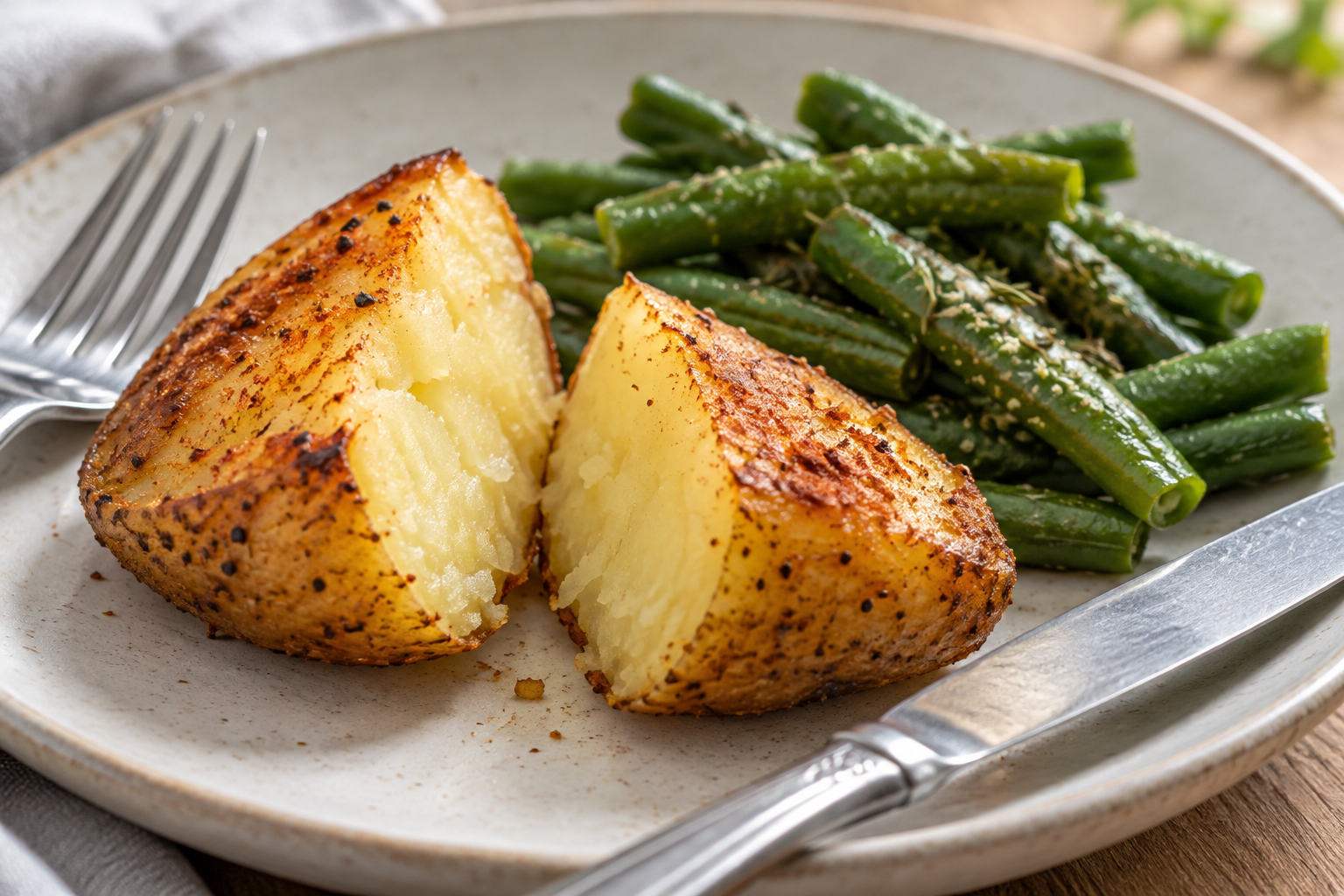
- Check the two textures separately. A thin knife should pass through the center of the largest potato wedge without a hard core. Beans should be thoroughly cooked and hot, with no icy clusters, and should meet their package’s cooking endpoint. If one ingredient is ready first, remove it to a clean serving dish and continue the other in short intervals.
- Finish and serve. Remove the pan, season with black pepper and drizzle over the teaspoon of lemon juice. Turn the beans and wedges gently to distribute the finish without breaking soft potato centers. Serve with the wedges visible above or beside the beans rather than buried under a steaming pile.
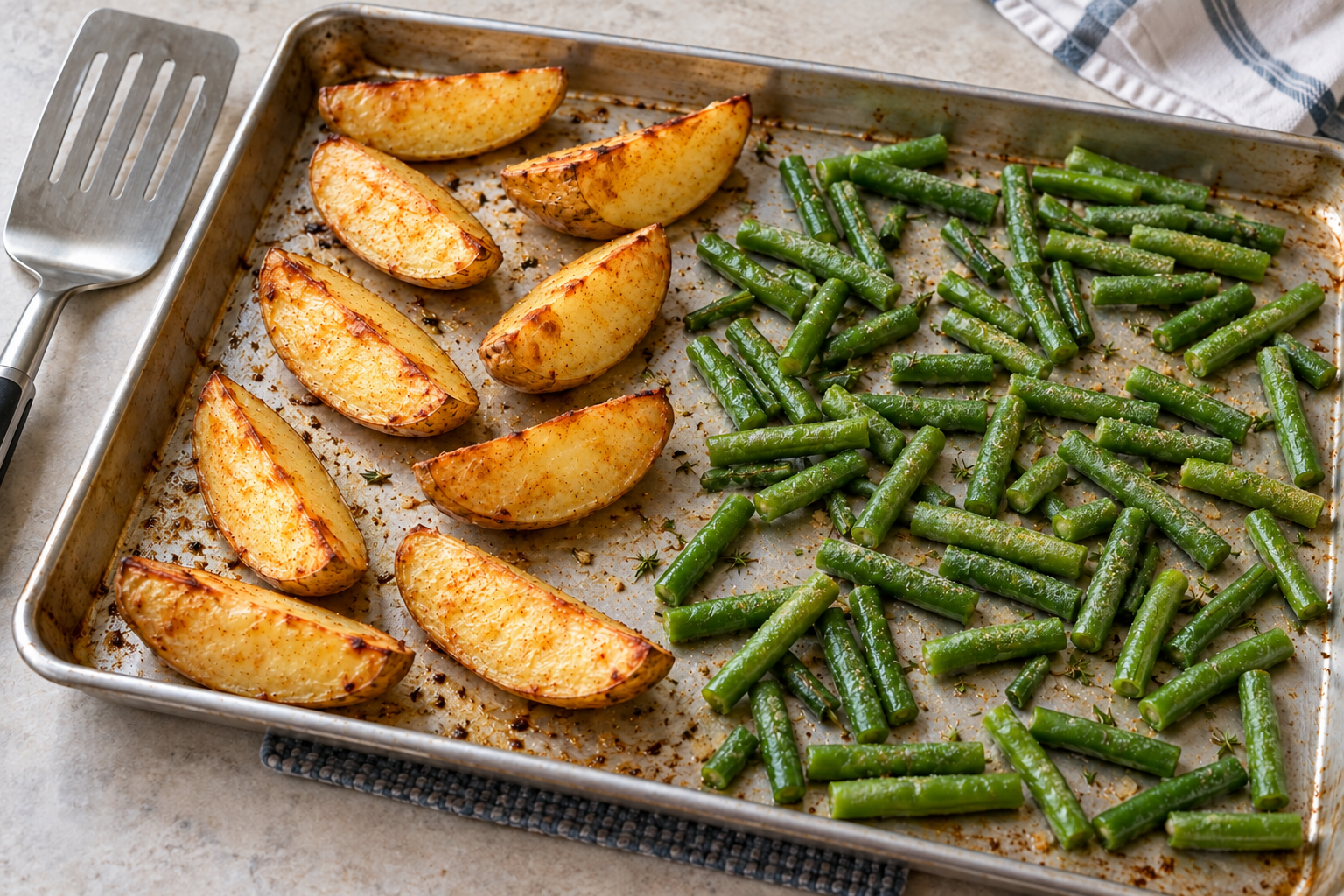
Check the potatoes and beans separately
Use a large wedge as the potato check
The skin and corners can brown while a thick center remains firm. Test through the thickest flesh with a thin knife, then check another wedge from a different area of the pan. If only a few need more time, keep those in the oven instead of reheating every finished bean.
Separate frozen clusters before judging the beans
After the beans have warmed enough to separate with a spatula, spread any cluster into individual pieces. A cold cluster in the center of an otherwise hot tray needs more cooking. The University of Maine Extension advises following frozen vegetable package instructions; the color of a few browned ends is not a substitute for the package’s preparation requirements.
Small fixes for a wet or uneven tray
| Problem | Practical response |
|---|---|
| Potatoes are pale underneath | Place a broad cut face against the metal and give it time without repeated lifting. |
| Bean moisture pools around wedges | Move beans to their own pan or a clearer area; keep them in a thin layer. |
| Small wedges finish early | Lift them to a clean plate and continue checking the larger pieces. |
| Garlic seasoning gathers in one spot | Toss the beans thoroughly in their bowl before spreading them on the tray. |
Do not raise the oven sharply to force color when a center is still firm. Keep checking the slow pieces at the stated setting and protect any overly dark area if necessary. A well-cooked tender wedge with moderate browning is more useful than a dark exterior surrounding a hard middle.
Make this a useful side dish
Serve beside sandwiches, burgers, a bean-based main or another separately cooked protein. A small bowl of mustard can accompany the potatoes for dipping. Keep that optional condiment off the pan so the garlic-thyme beans and paprika potatoes retain their own seasoning.
For a larger family meal, divide the tray into smaller side portions and add another dish rather than stretching the potato quantity into a complete dinner by itself. If doubling the recipe, use more sheet-pan space and check the trays individually. A larger oven load and different rack positions can change browning even when each pan is arranged well.
Frequently asked questions
Should the frozen beans be defrosted first?
No. The stated method adds plain cut beans directly from frozen after the potato head start. Keep them frozen until that point, spread them thinly, and follow the cooking requirements on their package. Thawed beans need a different moisture and timing assessment.
Does eight to ten wedges mean per potato?
It refers to the approximate total for the full pound in this recipe. The number from each potato depends on its size. Compare the thickness of the final pieces, and check the largest center rather than relying on the wedge count alone.
Can red potatoes replace Yukon Gold?
Red potatoes are a practical variation when cut to a similar size. Their skin and flesh may feel different after roasting, so check the centers with a knife. Keep the same total potato weight and avoid mixing tiny pieces with very large wedges.
Can I use fresh minced garlic?
The stated recipe uses garlic powder during the bean stage. Small pieces of fresh garlic can darken quickly in a hot oven and do not behave as an identical swap. A fresh-garlic variation needs its own placement and timing adjustment rather than the same half-teaspoon substitution.
Can frozen broccoli replace the green beans?
It changes the shape, water release and thickness of the frozen addition. Follow the broccoli package directions and assess a separate timing variation. Large broccoli stems should not be assumed to finish with the same twelve-to-sixteen-minute bean interval.
Can I cut the potatoes ahead?
Freshly cut and dried potatoes give the most direct preparation for this method. If preparing them ahead using another storage approach, keep them safely refrigerated and dry the surfaces thoroughly before oiling. Do not put wet wedges straight onto the roasting pan and expect the same browning.
Cool leftovers and reheat to the center
Move leftovers into shallow containers and refrigerate within 2 hours, or within 1 hour above 90°F. Keep at 40°F or below and use within 3–4 days, following USDA leftovers guidance. Reheat to 165°F, checking a thick potato center as well as the mixed portion.
Use a skillet or oven for a drier surface, separating wedges from a deep pile of beans. A microwave can reheat a small portion more conveniently, but rotate or rearrange it and verify the temperature. Frozen beans and potatoes may both soften further after chilling; reheating should restore safe heat without promising the texture of the fresh tray.
Arrange the potatoes and beans for easy checking
Think of the sheet pan as two adjacent cooking areas. The wedges need broad contact with the metal, while the frozen beans need a loose, shallow layer with space for moisture to escape. Keep beans out from underneath the potatoes so both ingredients remain accessible when you check them.
Cut the pound of potatoes into roughly eight to ten similar wedges across the whole batch. The number of potatoes in that pound can vary, so cutting every potato into the same number of wedges may produce pieces of very different thickness. Compare the thickest part of the wedges instead of focusing only on their length.
Before adding the beans, place the hot tray on a stable heatproof surface and turn the wedges with a spatula. Add the beans with a utensil, then spread them promptly. A planned landing place is useful because the tray is heavier and more awkward once it holds hot potatoes.
Serve the vegetables in a wide dish instead of a deep covered bowl when they will be eaten immediately. A tight pile traps steam and softens browned surfaces. If one ingredient finishes before the other, move the finished portion to a clean dish rather than keeping everything in the oven until the slowest piece is ready.
Use a simply seasoned main dish alongside the garlic and paprika. If adding a sauce, offer it separately so readers who enjoy browned potato edges can control how much moisture reaches them.
More recipes for your table
Choose a companion dish or another recipe for the ingredients you have. Each link opens its own instructions and printable recipe.
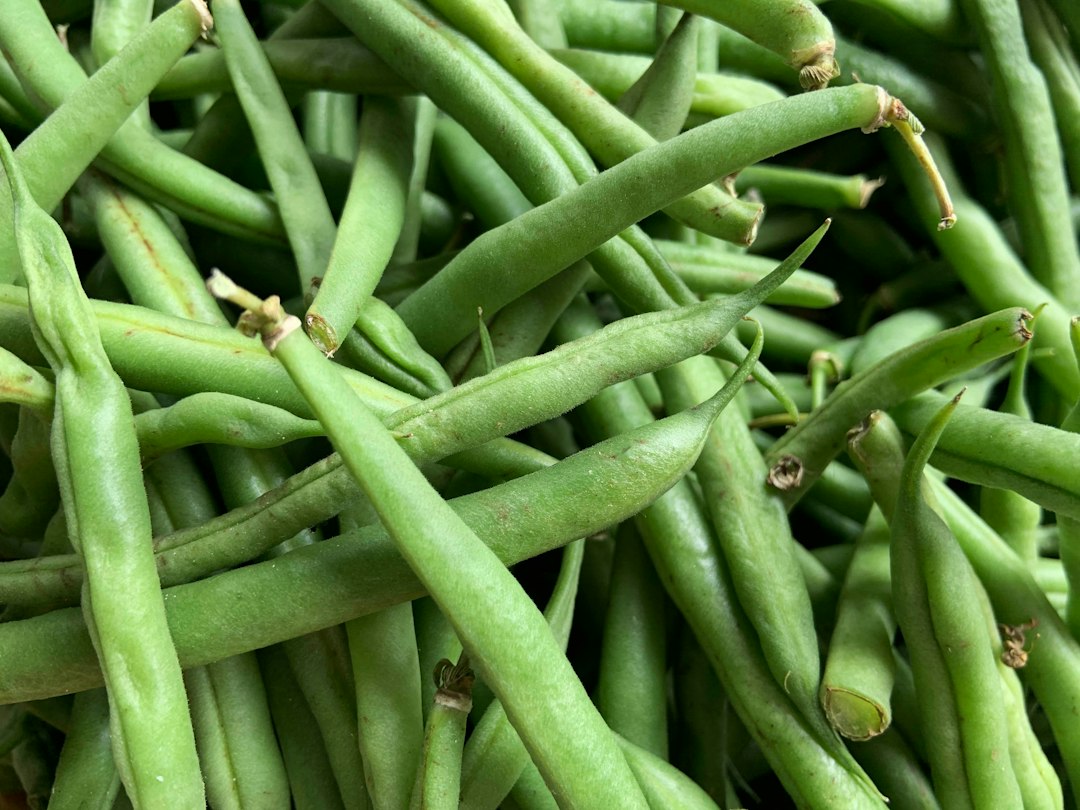
A potato and bean side with a fresh, mayonnaise-free finish.
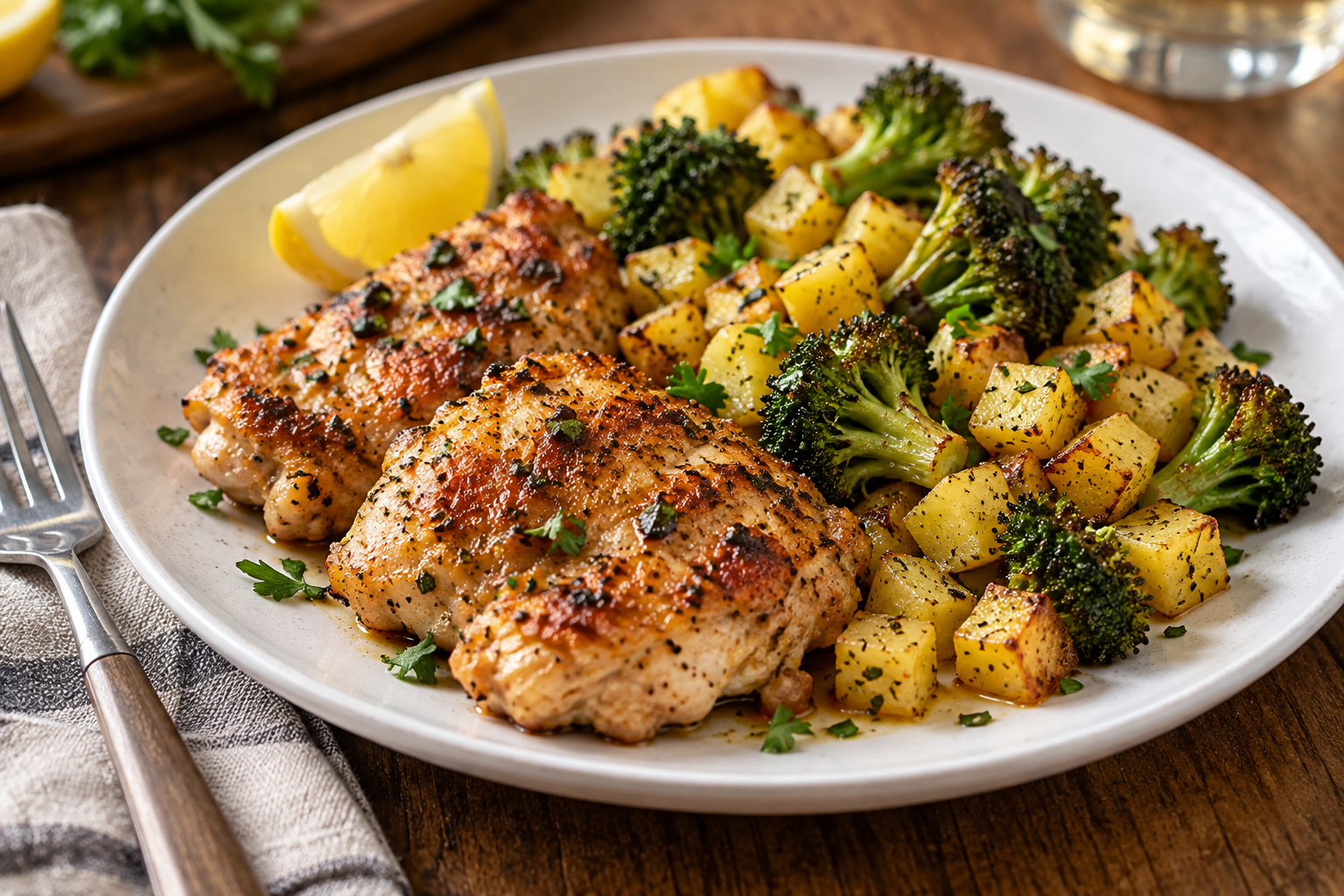
A chicken tray meal with potatoes and broccoli.
Equipment for this recipe
Affiliate disclosure: As an Amazon Associate I earn from qualifying purchases.
Use the tools you already have when they match the method. If you need an item, these links open matching Amazon search results.
- Rimmed baking sheet on Amazon — Choose a tray that fits your oven and leaves the food room to spread.
- Wide spatula or turner on Amazon — Support the food underneath when turning; choose a material suitable for your pan.
Check the size, material, and manufacturer’s use instructions against the recipe before choosing.
Useful kitchen references
- USDA frozen-food preparation guidance — Use alongside the directions on your product.
- FoodSafety.gov leftover guidance — A practical reference for chilling and reheating.
Bring the two parts to the table together
For roasted frozen green beans and potato wedges, the useful habits are a potato head start, space for the beans and separate doneness checks. Keep the garlic seasoning with the beans, add the small lemon finish after roasting, and serve while the potatoes still have their freshly roasted texture.
Reading the pan for roasted frozen green beans and potato wedges
The useful final check for roasted frozen green beans and potato wedges is a comparison between several pieces, not a single glance at the tray. A wedge near an exposed edge can look different from one beside the beans. Build a small checking routine around that variation: inspect the potato underside, test a thick center, and then assess the beans separately before deciding what stays in the oven.
Choose contact points deliberately
A wedge has two cut faces and a curved skin side. Begin with one broad cut face against the metal rather than balancing the piece on its skin. At the scheduled turn, use the spatula to roll it onto the other cut face when practical. This creates two opportunities for direct contact without requiring repeated tossing that can damage softened corners or scatter the seasoning.
If a wedge resists the spatula, approach from a wider edge and slide underneath rather than pulling upward on a narrow tip. Check whether the blade is lifting the potato or only scraping its surface. A few broken corners are harmless, but preserving the main pieces makes it easier to compare their centers. Use utensils suited to your pan, especially when its manufacturer cautions against metal tools.
Separate moisture from a need for more oil
When the frozen beans first enter the hot tray, their melting surface ice can make the pan look wetter than it did during the potato stage. That does not automatically mean the vegetables need more oil. Keep the measured coating and give the beans their planned clear space. Adding oil to a watery patch does not remove the water or correct a tightly packed layer.
Look again when you make the next doneness check. If the beans are piled in a narrow strip, redistribute them with the utensil while the tray rests safely on its landing surface. If the tray is simply too small, use the second pan described in the method. Follow the bean package’s complete cooking directions even when the visible edges already have the roasted color you wanted.
Use the finishing minute for an accurate taste
Let a sampled potato piece cool enough to taste comfortably after checking that its center is tender. After the beans meet their package’s cooking requirements, try a combined bite rather than judging the two seasonings entirely separately. The paprika belongs mainly to the potatoes and the garlic and thyme mainly to the beans, so the combined bite is the best guide to how the finished side will eat.
Distribute the measured lemon juice around the tray rather than pouring it onto one small cluster. A spoon gives more control than squeezing directly from a wedge. Turn gently once, then taste before reaching for extra salt or a strong sauce. The purpose is a light finish that reaches both vegetables without creating a wet dressing underneath the potatoes.
Fit the side into the rest of dinner
If the main dish also needs the oven, check its required temperature before starting these wedges. A dish that must cook at a substantially different setting cannot be assumed to share this schedule. Plan one component separately, or serve a main that can finish on the stovetop while the vegetables roast. Keep the stated oven setting for this tray instead of improvising a compromise temperature.
Bring the serving dish to the counter before removing the final tray. A wide platter lets you keep the potato faces visible and spread the beans alongside them. Portion with a spatula and spoon rather than tipping the entire heavy hot sheet. That small preparation makes the transfer easier and helps preserve the separate textures you developed during the two roasting stages.
Printable recipe
Use the recipe card’s Print control for a kitchen copy. Follow the ingredient quantities and cooking checks in the card when preparing the dish.
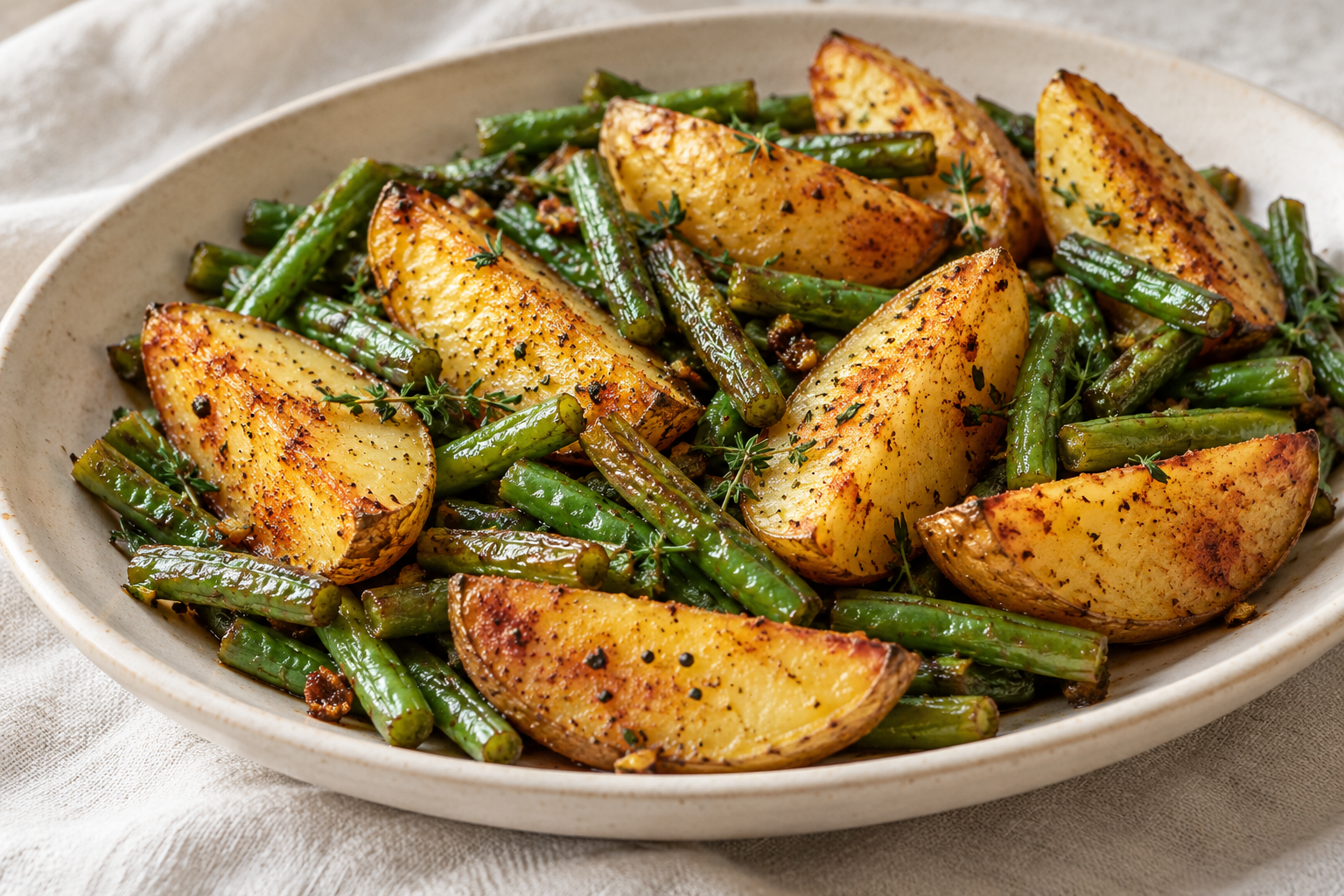
Roasted Frozen Green Beans and Potato Wedges with Garlic
Ingredients
Equipment
Method
- Heat the oven and prepare the potatoes. Set the oven to 425°F. Scrub the pound of potatoes, trim damaged areas and cut the batch into approximately eight to ten comparable wedges. Pat the cut faces dry with a clean towel and set out the rimmed metal sheet.
- Season the wedges. Toss potatoes with 1 tablespoon olive oil, the sweet paprika and half the quarter teaspoon of salt. Move the wedges through the bowl so their cut faces receive a light coating. Do not leave a puddle of oil under only the last few pieces.
- Arrange the first layer. Set the wedges cut-side down on the pan with space around them. Keep the skin side tilted upward or to the side so a broad flesh surface touches the metal. Plan where the frozen beans will go later, using a second pan if there is not enough clear surface.
- Give potatoes twenty minutes. Roast for 20 minutes. Lift one large wedge with the spatula and inspect its underside. The center may still need time. If a cut face is browning, turn that wedge onto its other cut face before the next stage.
- Coat the frozen beans. Take the beans from the freezer when you are ready to add them. Toss the measured 10 ounces with the remaining tablespoon of oil, garlic powder, thyme and remaining salt. Shake off loose surface ice if necessary without thawing or rinsing the beans.
- Add beans beside the potatoes. Spread them in the clear area of the hot tray, not over the wedges. Return to the oven for another 12–16 minutes. Keep the beans in a thin layer so released moisture has room to evaporate. Follow any additional cooking requirements printed on the frozen bean package.
- Check the two textures separately. A thin knife should pass through the center of the largest potato wedge without a hard core. Beans should be thoroughly cooked and hot, with no icy clusters, and should meet their package's cooking endpoint. If one ingredient is ready first, remove it to a clean serving dish and continue the other in short intervals.
- Finish and serve. Remove the pan, season with black pepper and drizzle over the teaspoon of lemon juice. Turn the beans and wedges gently to distribute the finish without breaking soft potato centers. Serve with the wedges visible above or beside the beans rather than buried under a steaming pile.