Ingredients
Equipment
Method
Instructions
- Combine the egg and sugar off the heat. Crack the egg into the cold saucepan and whisk it with the sugar until the white and yolk are fully combined. Scrape around the base of the pan. Add the measured grapefruit juice, lemon juice, zest, and salt, then whisk again.
- Warm gradually. Put the pan over low heat and stir continuously with the spatula, tracing the base and corners. If the burner is strong, briefly lift the pan away whenever the mixture heats too quickly. Do not leave the pan to answer another kitchen task; a small amount of egg mixture changes quickly.
- Cook until it coats the spoon. Continue stirring until the curd visibly thickens and reaches 170°F 77°C, usually 7–12 minutes depending on the pan and burner. It should coat the back of the spatula, with a line staying visible briefly when drawn through it. Keep it below a boil.
- Finish with butter. Remove the pan from the heat. Add the butter in two additions and stir until each disappears. The curd should look glossy, although it will still be softer than the refrigerated result. If small egg flecks have formed, do not beat the mixture aggressively to hide them.
- Strain into a shallow bowl. Pour the warm curd through the fine strainer, pressing gently with the spatula. This removes zest and any small cooked egg particles for a smoother spread. Scrape the underside of the strainer into the bowl, then discard what remains in the mesh.
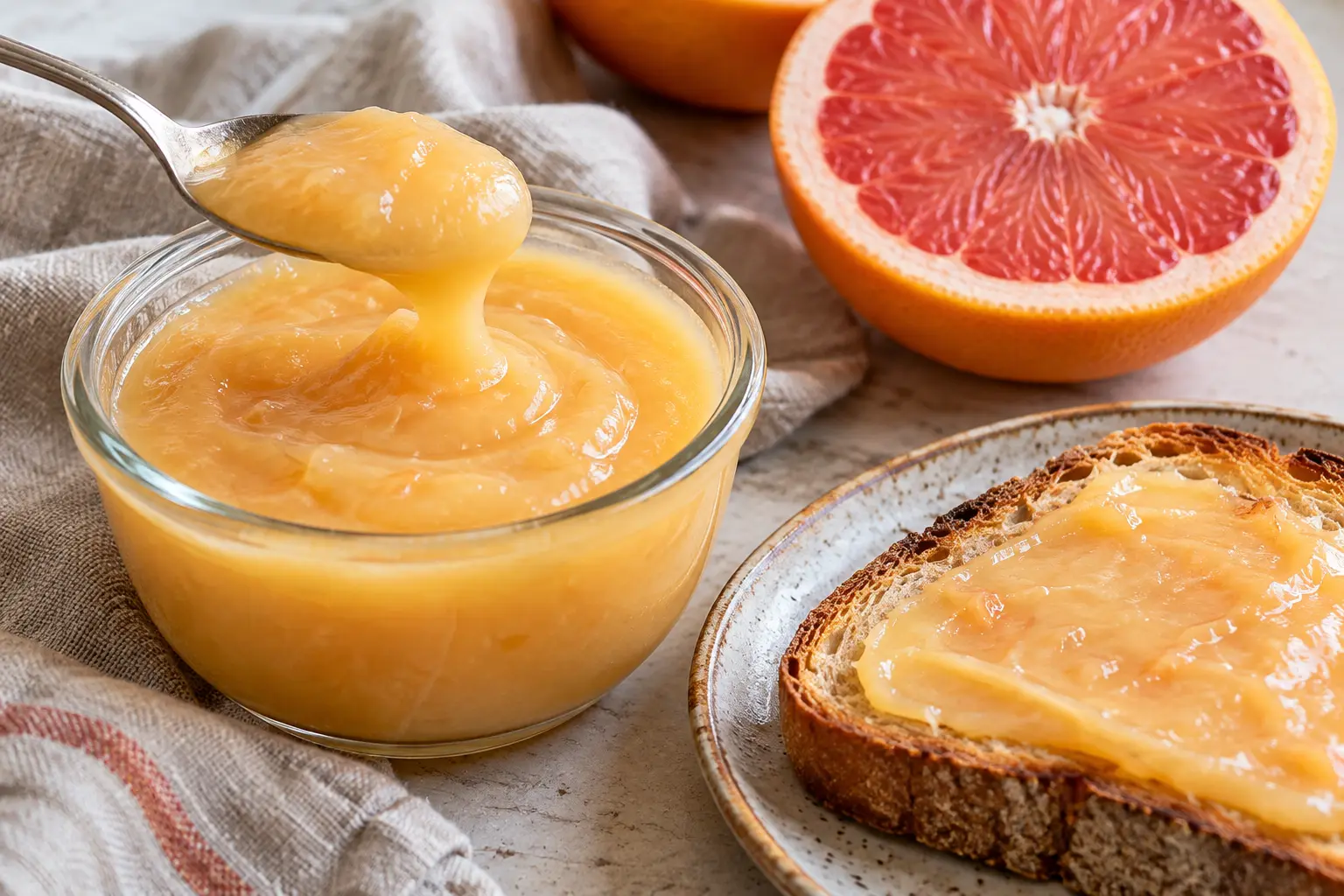
- Cover and refrigerate. Cover the bowl and refrigerate promptly for at least 2 hours, until cold throughout. Use a covering suitable for the warm food and container. Stir the chilled curd once before serving. It should mound softly on a spoon rather than pour like juice.
Notes
Yield: about⅔ cup, enough for roughly 10–11 tablespoon portions. Prep:10 minutes. Cook and finish:10–15 minutes. Chill: at least 2 hours. Total: about 2 hours 20–25 minutes.
Plan around these estimated times and follow the doneness checks in the instructions. Allow extra time if your equipment or ingredients require it.
Check the set after chilling
Warm curd is fluid enough to move through a strainer. That is expected. The egg thickens during cooking, and the butter adds more body as the mixture chills. Judge the recipe in two stages: a cooked mixture that coats the spoon, then a cold mixture that spreads without running immediately off the food.
The 170°F cooking target also takes the egg mixture above the 160°F safe minimum listed for egg dishes in the FoodSafety.gov temperature chart. A thermometer is useful in such a small batch: tilt the pan carefully so the tip reaches the curd without touching the metal base. Do not rely on a bubbling edge as a reading for the whole pan.
Refrigerate promptly and label the batch
Keep the curd covered at 40°F or below and use within 3–4 days. Use a clean spoon each time and return the bowl to the refrigerator promptly. This is a fresh egg-and-butter spread, not a canning recipe. A reused jam jar is a convenient container only after it is clean; the jar itself does not preserve the contents.
Follow FoodSafety.gov advice for perishable leftovers about refrigerating within 2 hours, or 1 hour when the surroundings are above 90°F. Freeze small portions if you will not finish the batch in time, leaving a little room in the container. Aim to use frozen portions within a month for texture, thaw in the refrigerator, and stir before serving.
Equipment: small heavy stainless-steel saucepan, whisk, flexible spatula, fine strainer, instant-read thermometer, and a shallow heatproof bowl. Avoid a very wide pan, which spreads the tiny batch across too much hot surface.
| After the curd is fully cold | Likely explanation | Practical next step |
|---|---|---|
| Soft but spreadable | Normal for this whole-egg, small-batch spread | Use for toast, yogurt, or spooned dessert portions |
| Thin enough to run immediately | Too much juice or insufficient cooking | If the curd reached 170°F and was promptly refrigerated, use it as a citrus sauce. If that cooking temperature was not reached, return it to gentle heat, stirring until it reaches 170°F, then refrigerate promptly. Discard any batch left out for more than 2 hours, or 1 hour above 90°F. |
| Firm and a little heavy | A longer cook or a very cold serving temperature | Stir gently and let only the serving portion soften briefly |
| Grainy or eggy | The mixture heated too fast or boiled | Straining may remove small flecks, but a badly scrambled batch will not become a smooth curd |