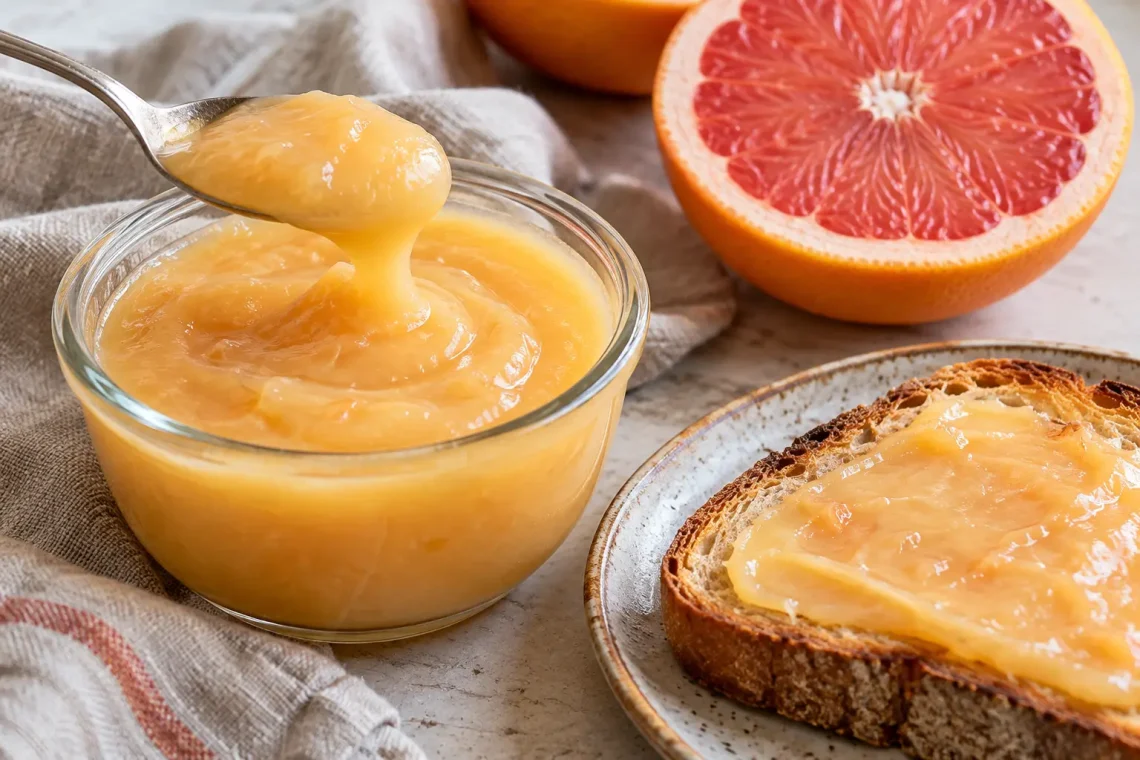
This small batch grapefruit curd with whole egg makes a modest bowl of citrus spread without leaving spare whites or yolks in the refrigerator. Grapefruit supplies the main flavor, a little lemon sharpens it, and butter rounds the finish. The curd is meant for spooning over yogurt, spreading on toast, or filling a few small pastries after it has chilled.
A measured quantity of juice matters more than the size of the grapefruit. One fruit can produce much more liquid than another, and extra juice changes how firmly a one-egg curd sets. Start with the amounts below, cook gently, and judge the final texture after refrigeration rather than expecting a hot curd to be stiff.
Use low heat for a smooth whole-egg grapefruit curd
| Zest and juice | Zest before juicing, then strain seeds and coarse pulp for a smoother finished curd. |
| Whole egg | Whisk until uniform and combine gradually so no streaks of white cook separately. |
| Heat | Cook gently while scraping the bottom and corners; high heat can create scrambled bits. |
| Finish | Strain while warm if needed, then chill with the surface covered to prevent a skin. |
The curd thickens further in the refrigerator. Grapefruit bitterness varies, so balance sweetness only after tasting the measured juice and zest together.
Juice first, then decide what to do with the rest
Wash and dry the grapefruit before zesting it. Grate only the colored skin; the thick white pith is not part of this recipe. Squeeze the fruit and strain out seeds and large pieces of pulp. Measure ¼ cup 60 ml juice for the curd and put any extra juice aside for another use. Do not pour the entire fruit’s juice into the pan simply because it is already squeezed.
A pink or red grapefruit gives a gentler flavor and warmer color than many white varieties, but the finished curd will still be pale because it contains egg and butter. The recipe is intentionally a little bitter in the way grapefruit is bitter. More sugar can soften that impression, but it cannot remove pith that has been grated into the mixture.
Small batch grapefruit curd with whole egg: recipe
Yield: about⅔ cup, enough for roughly 10–11 tablespoon portions. Prep:10 minutes. Cook and finish:10–15 minutes. Chill: at least 2 hours. Total: about 2 hours 20–25 minutes.
- 1 large whole egg, about 50 g without the shell
- ¼ cup granulated sugar,50 g
- ¼ cup strained grapefruit juice,60 ml
- 2 teaspoons fresh lemon juice,10 ml
- ½ teaspoon finely grated grapefruit zest
- 2 tablespoons unsalted butter,28 g, cut into small cubes
- A small pinch of fine salt
Equipment: small heavy stainless-steel saucepan, whisk, flexible spatula, fine strainer, instant-read thermometer, and a shallow heatproof bowl. Avoid a very wide pan, which spreads the tiny batch across too much hot surface.
The gentle-heat sequence
- Combine the egg and sugar off the heat. Crack the egg into the cold saucepan and whisk it with the sugar until the white and yolk are fully combined. Scrape around the base of the pan. Add the measured grapefruit juice, lemon juice, zest, and salt, then whisk again.
- Warm gradually. Put the pan over low heat and stir continuously with the spatula, tracing the base and corners. If the burner is strong, briefly lift the pan away whenever the mixture heats too quickly. Do not leave the pan to answer another kitchen task; a small amount of egg mixture changes quickly.
- Cook until it coats the spoon. Continue stirring until the curd visibly thickens and reaches 170°F 77°C, usually 7–12 minutes depending on the pan and burner. It should coat the back of the spatula, with a line staying visible briefly when drawn through it. Keep it below a boil.
- Finish with butter. Remove the pan from the heat. Add the butter in two additions and stir until each disappears. The curd should look glossy, although it will still be softer than the refrigerated result. If small egg flecks have formed, do not beat the mixture aggressively to hide them.
- Strain into a shallow bowl. Pour the warm curd through the fine strainer, pressing gently with the spatula. This removes zest and any small cooked egg particles for a smoother spread. Scrape the underside of the strainer into the bowl, then discard what remains in the mesh.
- Cover and refrigerate. Cover the bowl and refrigerate promptly for at least 2 hours, until cold throughout. Use a covering suitable for the warm food and container. Stir the chilled curd once before serving. It should mound softly on a spoon rather than pour like juice.
Check the set after chilling
Warm curd is fluid enough to move through a strainer. That is expected. The egg thickens during cooking, and the butter adds more body as the mixture chills. Judge the recipe in two stages: a cooked mixture that coats the spoon, then a cold mixture that spreads without running immediately off the food.
The 170°F cooking target also takes the egg mixture above the 160°F safe minimum listed for egg dishes in the FoodSafety.gov temperature chart. A thermometer is useful in such a small batch: tilt the pan carefully so the tip reaches the curd without touching the metal base. Do not rely on a bubbling edge as a reading for the whole pan.
| After the curd is fully cold | Likely explanation | Practical next step |
|---|---|---|
| Soft but spreadable | Normal for this whole-egg, small-batch spread | Use for toast, yogurt, or spooned dessert portions |
| Thin enough to run immediately | Too much juice or insufficient cooking | If the curd reached 170°F and was promptly refrigerated, use it as a citrus sauce. If that cooking temperature was not reached, return it to gentle heat, stirring until it reaches 170°F, then refrigerate promptly. Discard any batch left out for more than 2 hours, or 1 hour above 90°F. |
| Firm and a little heavy | A longer cook or a very cold serving temperature | Stir gently and let only the serving portion soften briefly |
| Grainy or eggy | The mixture heated too fast or boiled | Straining may remove small flecks, but a badly scrambled batch will not become a smooth curd |
Ways to protect the grapefruit flavor
Add only the measured zest at first. More zest is not always a stronger pleasant flavor, especially if the grater reaches the pith. A sharp citrus grater lets you remove a thin colored layer with light pressure. Rotate the fruit as soon as a patch turns pale, and avoid repeatedly scraping the same area.
Keep the lemon at 2 teaspoons in the base recipe. It makes the grapefruit taste clearer without turning this into lemon curd. If using a very sour grapefruit, resist adding more lemon before cooking; taste the finished chilled curd and serve it with something mild. Yogurt, plain custard, and a buttery biscuit all soften the impression of acidity.
Butter should be unsalted so the small pinch of salt stays under your control. If only salted butter is available, omit the extra pinch. Soft spreadable margarine and reduced-fat spreads have different water contents and are not direct replacements in this formulation.
Use the small bowl in practical portions
Spread 1 tablespoon on a piece of toast or spoon the same amount over ½ cup plain yogurt. For two simple desserts, divide ¼ cup curd between two small dishes and add sliced strawberries or a crumble of plain biscuit. Keep the curd cold until serving rather than holding a bowl on the table through a long meal.
For another measured small dessert, the site’s canned pear crisp with oats gives a baked-fruit option. The guide to softening butter without melting it is helpful when you are preparing cookies or toast toppings alongside the curd. Choose a mild companion rather than layering several sharp citrus flavors in the same bite.
Make a larger batch without rushing the eggs
For double the yield, double every measured ingredient and use a slightly larger heavy saucepan. The process is the same, but the cooking time does not simply double. Stir over low heat and check the temperature and coating cue. A larger quantity takes longer to warm through and can retain more heat after it leaves the burner.
Do not add a second egg without increasing the other ingredients if the goal is merely a firmer curd. That creates a different ratio and may make the texture eggy. For a pastry filling that must hold a sharply cut slice, use a filling recipe designed and tested for that purpose instead of assuming this soft spread will behave like a firm tart custard.
Refrigerate promptly and label the batch
Keep the curd covered at 40°F or below and use within 3–4 days. Use a clean spoon each time and return the bowl to the refrigerator promptly. This is a fresh egg-and-butter spread, not a canning recipe. A reused jam jar is a convenient container only after it is clean; the jar itself does not preserve the contents.
Follow FoodSafety.gov advice for perishable leftovers about refrigerating within 2 hours, or 1 hour when the surroundings are above 90°F. Freeze small portions if you will not finish the batch in time, leaving a little room in the container. Aim to use frozen portions within a month for texture, thaw in the refrigerator, and stir before serving.
Questions about the one-egg method
Can I use bottled grapefruit juice?
Yes, if it is 100% juice and not a sweetened grapefruit drink. Measure ¼ cup and keep the lemon amount unchanged initially. Fresh zest gives the most obvious grapefruit aroma, but you can omit it if unavailable and accept a less fragrant result.
Do I need to separate the egg?
No. The recipe uses one whole egg, with the white and yolk whisked together before heating. That is the main convenience of this small batch. Replacing the egg with only a yolk changes both the amount of liquid and the thickening behavior.
Why does my curd taste more bitter than expected?
The grapefruit itself may be quite bitter, or some white pith may have entered with the zest. Taste the juice before combining it with the raw egg so you know its starting character. Straining removes solid zest but cannot remove bitterness already dissolved into the curd.
Can I leave out the lemon juice?
You can omit the 2 teaspoons, but the result will taste rounder and less bright. Do not replace it with a large splash of grapefruit juice; keeping the total liquid controlled matters in a one-egg batch. This substitution does not create a shelf-stable product.
Can I make the curd in a microwave?
This article gives a stovetop method only. A small egg mixture can overheat in patches in the microwave, and timing depends heavily on the appliance and bowl. Use the gentle pan method when you want the temperature and spoon-coating cues described here.
Will small batch grapefruit curd with whole egg become firm enough to pipe?
It should hold a soft spoonful after chilling, but it is designed as a spread. A narrow piping bag can dispense it into a small cup or onto a dessert, yet it should not be expected to hold tall decorative shapes or support cake layers.
Choose a serving that suits a soft curd
This curd works best where a small spoonful can add a bright citrus accent. Spread it on cooled toast, spoon it beside a plain muffin, or swirl a little into an individual serving of yogurt. These are serving ideas rather than changes to the cooked recipe. Start with a tablespoon: a small bowl goes farther when it is used as a condiment instead of a full dessert filling.
Let a baked item cool before adding curd if you want a distinct layer. A warm surface softens the butter in the spread and can make it appear thinner than it was in the refrigerator. For a dessert cup, keep the curd and any crumb topping separate until serving so the crumbs retain their texture.
Use the color of the finished spread as a description, not a cooking test. Grapefruit variety, yolk color, and the butter can make a batch pale yellow, golden, or lightly peach colored. A vivid pink grapefruit does not guarantee pink curd. The measured juice and the thermometer reading are more useful than trying to reproduce a particular shade.
Before zesting, wash and dry the whole fruit and set a small bowl beneath the grater. Remove only the colored skin with light passes, then measure the zest before juicing. Strain the juice and measure it in a liquid measure; the amount squeezed from one fruit is too variable to use as the recipe quantity.
Small details that make the method easier
Set the strainer over the receiving bowl before you turn on the burner. Check that the bowl is stable and that the strainer sits above its base, leaving space for the curd to collect. Place the cubed butter nearby and keep a heatproof resting spot clear for the saucepan. This small setup matters because the finish is a continuous sequence: stop the cooking, stir in the butter, strain, cover, and refrigerate.
Use a spatula that can reach the curve where the pan wall meets the bottom. Stirring only around the middle can leave a thin layer of egg mixture heating against the corners. Sweep across the whole base and around the edge in slow, repeated passes. If the pan shifts on the burner, hold its handle securely with your free hand; do not compensate by whisking so vigorously that the small quantity splashes up the sides.
When reading the thermometer, make sure the sensing area is immersed in curd rather than resting against the saucepan. A tiny batch may be shallower than the probe needs. Carefully tilt the pan off the active burner to collect the mixture, keeping the handle steady, then take the reading. Follow the thermometer manufacturer's directions for its sensing area. The metal pan itself can give a misleadingly high reading.
A useful batch label includes the preparation date and the words grapefruit curd, plus a reminder that it contains egg and milk. Use a container from which a clean spoon can reach the corners easily. Several tiny jars are convenient for sharing, but each still needs refrigeration and the same storage guidance. Present it as a fresh homemade spread, with storage instructions, rather than as a shelf-stable preserve.
More recipes for your table
Choose a companion dish or another recipe for the ingredients you have. Each link opens its own instructions and printable recipe.
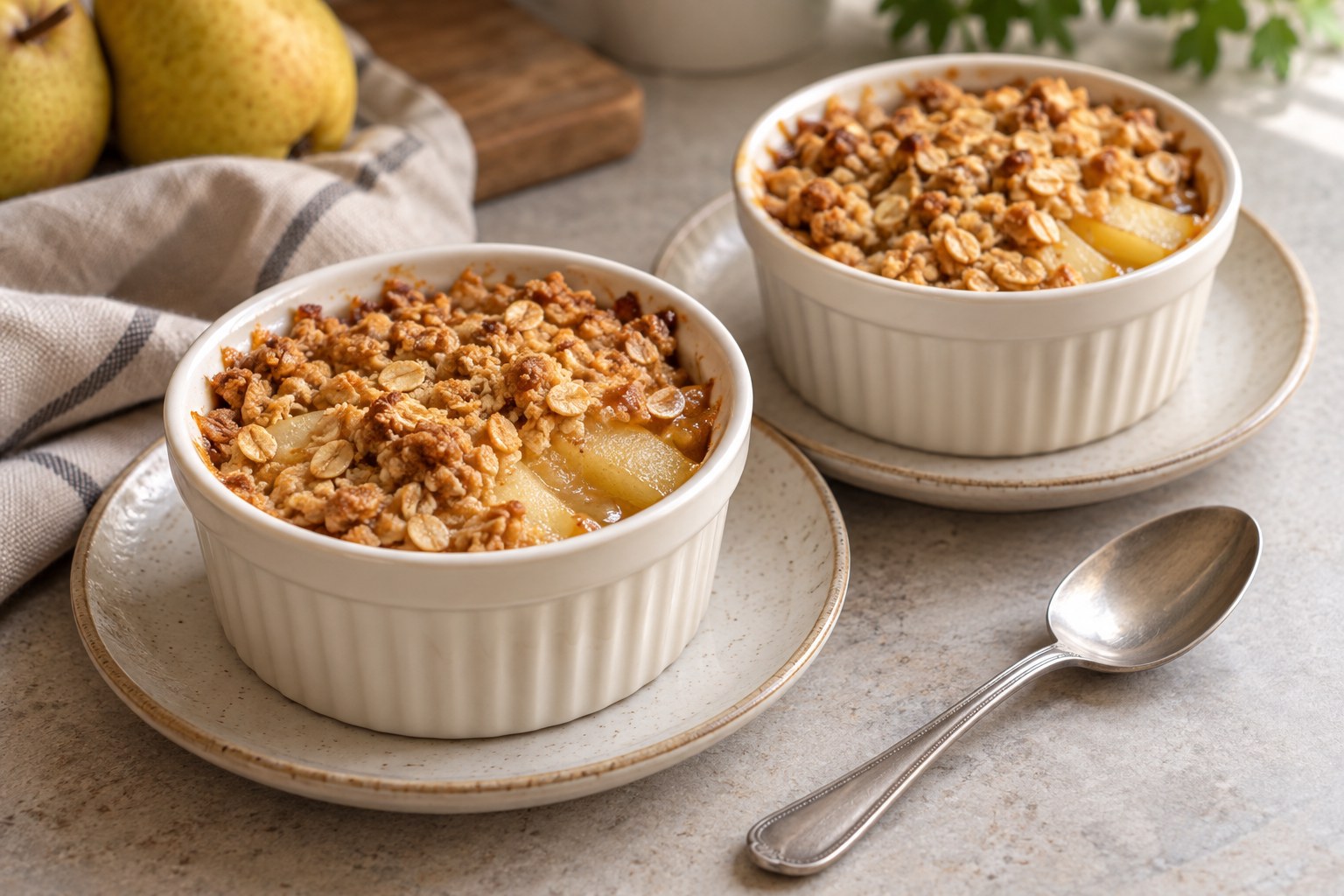
A small fruit dessert to serve with a spoonful of citrus curd.
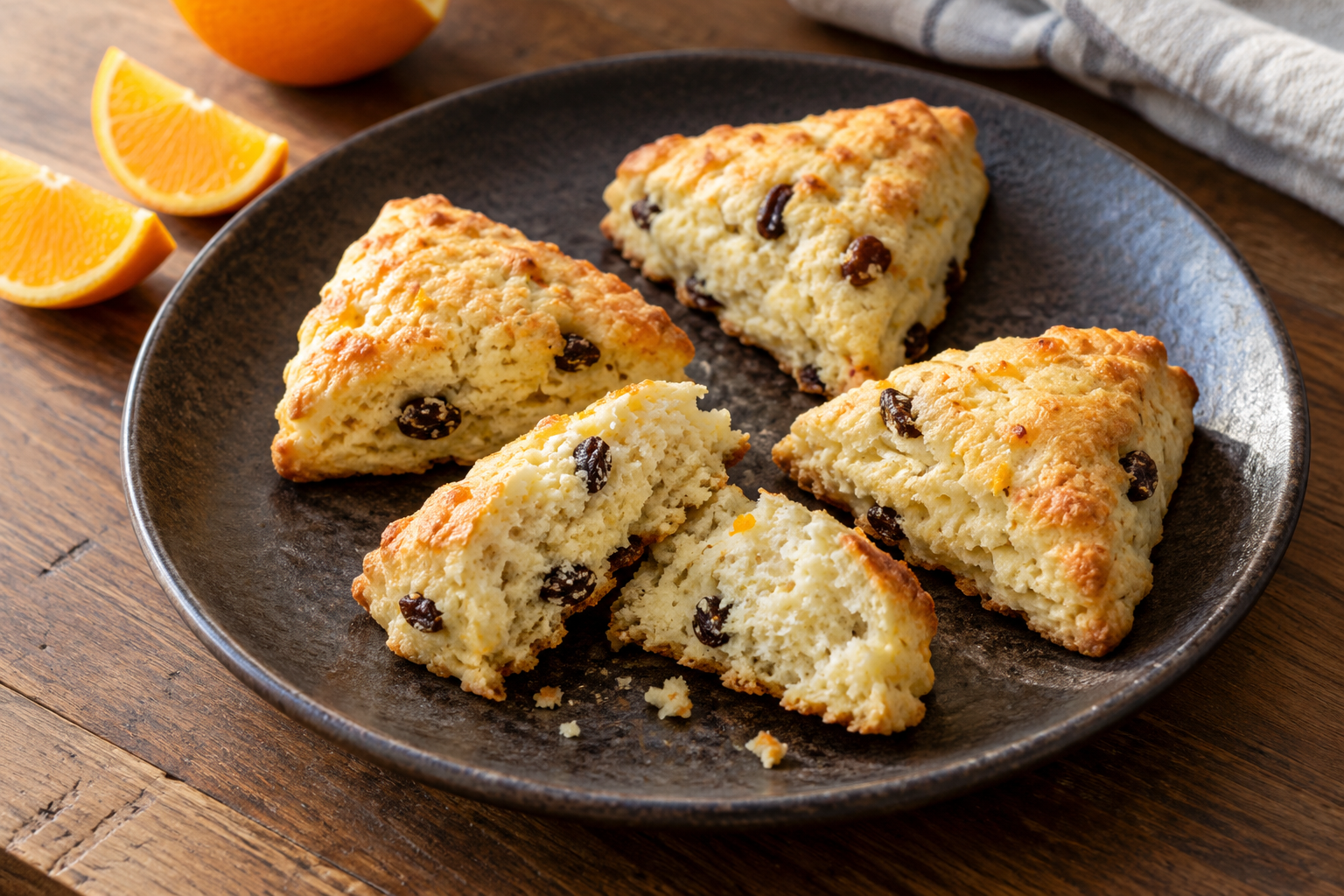
A small citrus bake for another breakfast or snack.
Equipment for this recipe
Affiliate disclosure: As an Amazon Associate I earn from qualifying purchases.
Use the tools you already have when they match the method. If you need an item, these links open matching Amazon search results.
- Fine-mesh kitchen strainer on Amazon — Drain or strain ingredients without losing small pieces.
- Instant-read food thermometer on Amazon — Check the center temperature using the target in the recipe.
Check the size, material, and manufacturer’s use instructions against the recipe before choosing.
Useful kitchen references
- FoodSafety.gov temperature chart — Minimum cooking and reheating temperatures.
- FoodSafety.gov leftover guidance — A practical reference for chilling and reheating.
Printable recipe
Use the recipe card’s Print control for a kitchen copy. Follow the ingredient quantities and cooking checks in the card when preparing the dish.
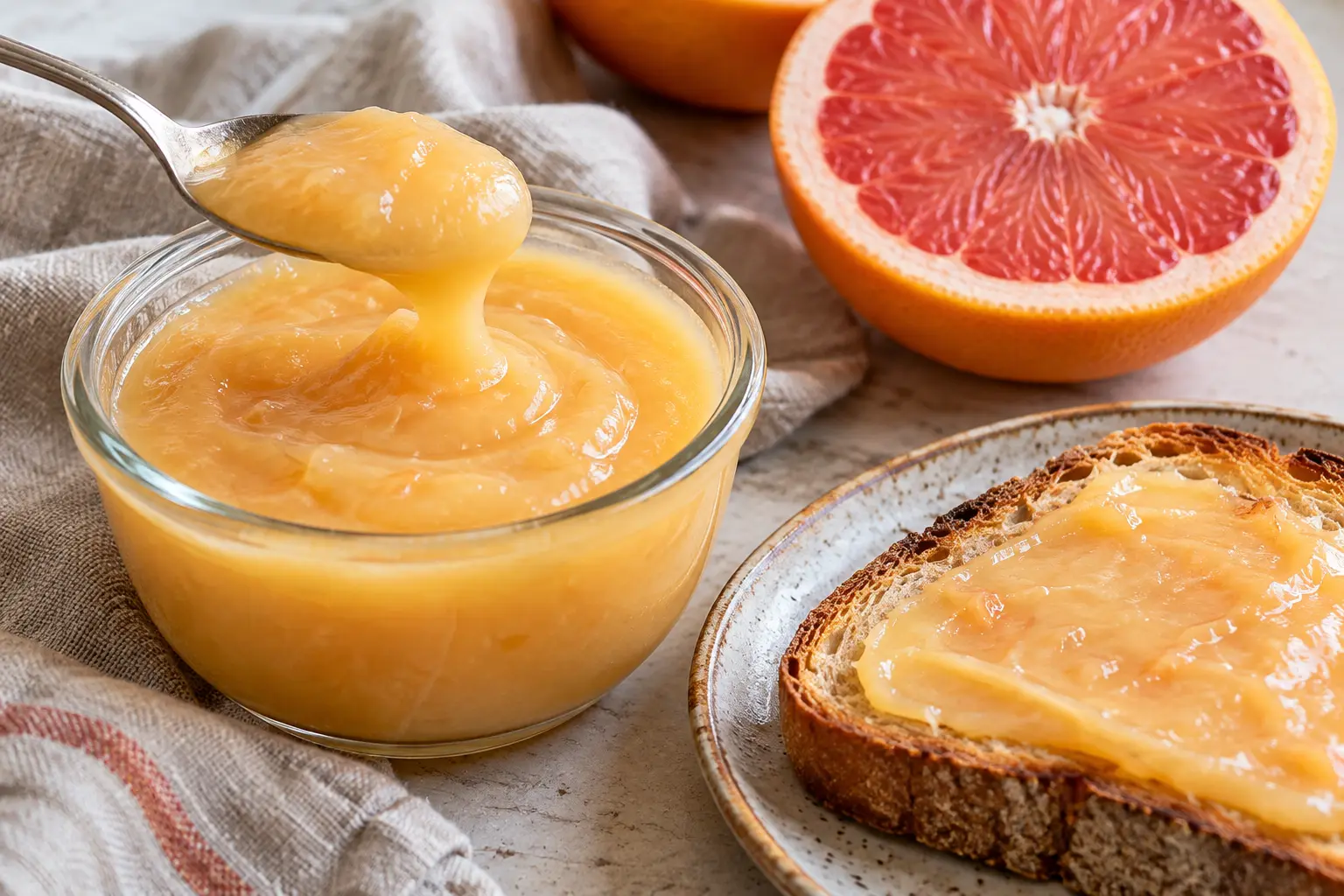
Small Batch Grapefruit Curd with a Whole Egg
Ingredients
Equipment
Method
- Combine the egg and sugar off the heat. Crack the egg into the cold saucepan and whisk it with the sugar until the white and yolk are fully combined. Scrape around the base of the pan. Add the measured grapefruit juice, lemon juice, zest, and salt, then whisk again.
- Warm gradually. Put the pan over low heat and stir continuously with the spatula, tracing the base and corners. If the burner is strong, briefly lift the pan away whenever the mixture heats too quickly. Do not leave the pan to answer another kitchen task; a small amount of egg mixture changes quickly.
- Cook until it coats the spoon. Continue stirring until the curd visibly thickens and reaches 170°F 77°C, usually 7–12 minutes depending on the pan and burner. It should coat the back of the spatula, with a line staying visible briefly when drawn through it. Keep it below a boil.
- Finish with butter. Remove the pan from the heat. Add the butter in two additions and stir until each disappears. The curd should look glossy, although it will still be softer than the refrigerated result. If small egg flecks have formed, do not beat the mixture aggressively to hide them.
- Strain into a shallow bowl. Pour the warm curd through the fine strainer, pressing gently with the spatula. This removes zest and any small cooked egg particles for a smoother spread. Scrape the underside of the strainer into the bowl, then discard what remains in the mesh.
- Cover and refrigerate. Cover the bowl and refrigerate promptly for at least 2 hours, until cold throughout. Use a covering suitable for the warm food and container. Stir the chilled curd once before serving. It should mound softly on a spoon rather than pour like juice.
Notes
| After the curd is fully cold | Likely explanation | Practical next step |
|---|---|---|
| Soft but spreadable | Normal for this whole-egg, small-batch spread | Use for toast, yogurt, or spooned dessert portions |
| Thin enough to run immediately | Too much juice or insufficient cooking | If the curd reached 170°F and was promptly refrigerated, use it as a citrus sauce. If that cooking temperature was not reached, return it to gentle heat, stirring until it reaches 170°F, then refrigerate promptly. Discard any batch left out for more than 2 hours, or 1 hour above 90°F. |
| Firm and a little heavy | A longer cook or a very cold serving temperature | Stir gently and let only the serving portion soften briefly |
| Grainy or eggy | The mixture heated too fast or boiled | Straining may remove small flecks, but a badly scrambled batch will not become a smooth curd |