Ingredients
Equipment
Method
Cook, mash, and season
- Soften the onion thoroughly. Heat 1 tablespoon olive oil in the saucepan over medium-low heat. Add the onion and 1/4 teaspoon salt. Cook for 7–9 minutes, stirring regularly, until very soft and translucent. Avoid deep browning, which would make a darker, sweeter dip. Stir in the garlic for 30 seconds.
- Add peas and water. Pour in the rinsed split peas and 2 1/2 cups water, then add the bay leaf. Bring just to a boil. If foam collects on top, skim it with a spoon so you can see the simmer clearly.
- Simmer gently. Reduce the heat to low and leave the lid slightly ajar. Cook for 45–60 minutes, stirring every 10 minutes at first and more often as the mixture thickens. Add hot water in 1/4-cup amounts whenever the peas look dry before becoming soft.
- Check the center of several peas. Remove a spoonful and let it cool enough to handle. Press a few pieces against a plate with a fork. They should flatten easily into paste, without a pale, firm center. Continue simmering if they resist; do not begin the final mashing stage just because the timer rang.
- Reduce excess liquid if necessary. If the peas are completely soft but the pot still looks soupy, uncover and simmer gently for a few minutes, stirring frequently along the bottom. Leave the mixture slightly looser than your preferred serving texture because it thickens as it cools.
- Mash off the heat. Remove and discard the bay leaf. Use a potato masher or sturdy fork to mash the peas against the base and sides of the saucepan. Stir vigorously with a wooden spoon between passes. Continue until the texture is cohesive and only soft flecks remain.
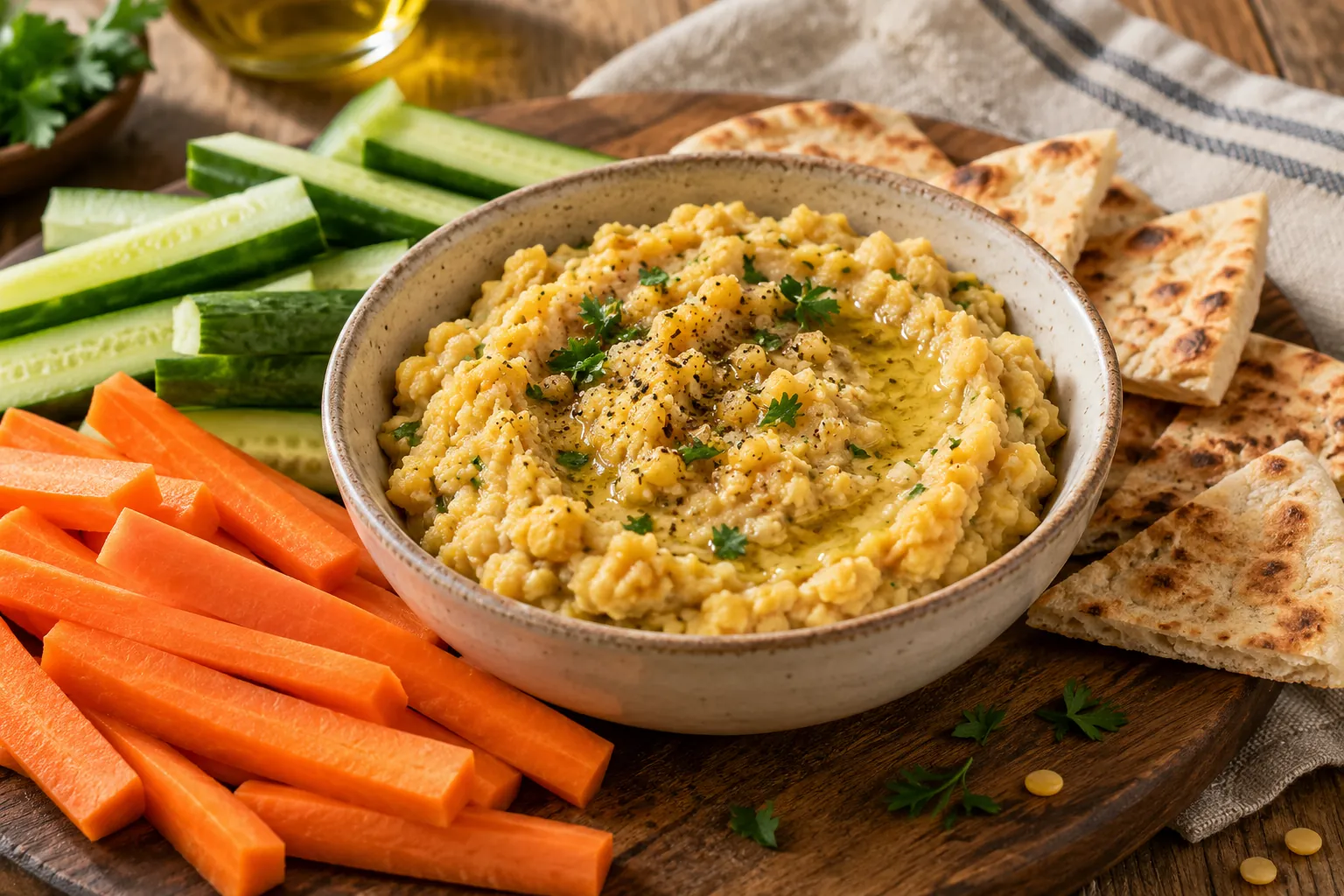
- Finish with lemon and oil. Stir in the remaining tablespoon olive oil, lemon juice, remaining 1/4 teaspoon salt, and pepper. Taste and adjust gradually. Transfer to a shallow serving bowl, scatter with parsley, and serve warm or let it cool briefly until comfortably spoonable.
Notes
- Yield and timing: Makes approximately 2 cups for 6 appetizer portions. Allow 10 minutes to prepare and about 60–70 minutes to cook, roughly 70–80 minutes total. Older peas may need longer.
- Peas and equipment: Use dried yellow split peas, picked over and rinsed, in a heavy 2-quart saucepan. Whole peas, chickpeas and fava beans need different cooking methods. A sturdy fork or potato masher works once the split peas are completely soft.
- Tenderness: Cool and press several peas against a plate. They should mash into paste without firm centers. Add hot water in the stated ¼-cup amounts if needed during cooking; harder mashing cannot fix undercooked peas.
- Consistency: Remove the bay leaf before mashing. Leave the warm mixture slightly loose because it thickens as it cools. Reduce excess liquid gently or loosen a stiff finished dip with warm water by the tablespoon. Add the remaining oil and lemon off heat.
- Leftovers: Refrigerate shallow portions within 2 hours, or 1 hour above 90°F (32°C), at 40°F (4°C) or below. Use within 3–4 days and reheat to 165°F (74°C). FoodSafety.gov storage guidance.