Choosing the best pancake mix for camping starts with your setup: a homemade dry mix works when you can measure the ingredients and keep perishable additions cold. Measure this mix at home and pack the liquid instructions with the bag. This version has an optional milk-powder branch; the liquid you add at camp depends on which branch you choose.
- Pack 2-cup mix portions
- Choose water or milk branch
- Cook one trial pancake
Cook a small trial batch before your trip. Flour, milk powder, the optional egg, and your measuring technique change how much liquid the batter needs. At camp, use the spoon-flow and cooking cues below instead of trying to force one exact thickness.
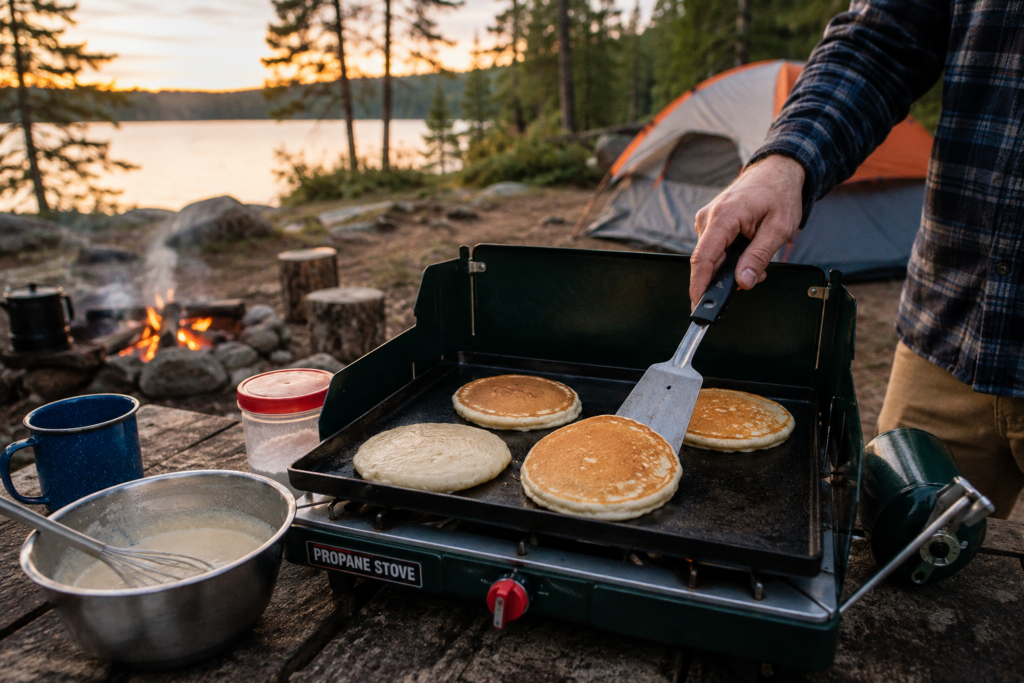
Dry mix to prepare at home
- 4 cups all-purpose flour
- 2 tablespoons baking powder
- 2 tablespoons granulated sugar
- 1 teaspoon salt
- 1 cup nonfat dry milk powder, optional
- Optional: 1 teaspoon cinnamon; add fresh lemon zest only when cooking
The full mixture measures roughly 4¼ cups without milk powder or 5¼ cups with it. Whisk thoroughly before measuring each 2-cup portion so the salt and baking powder do not settle unevenly. Pack in sealed, dry containers and label with the mixing date and any milk ingredient.
The label to pack with each 2-cup portion
| Dry mix version | Starting liquid | Add to either version |
|---|---|---|
| With milk powder | 1 cup drinking water | 2 tablespoons vegetable oil or melted butter; 1 egg, optional |
| Without milk powder | 1 cup milk | 2 tablespoons vegetable oil or melted butter; 1 egg, optional |
Add more of the same liquid 1 tablespoon at a time until the batter flows slowly from a spoon. The initial cup is a starting measurement, not a maximum. Keep fresh milk, eggs, and mixed batter chilled until needed.
Mix and cook at the campsite
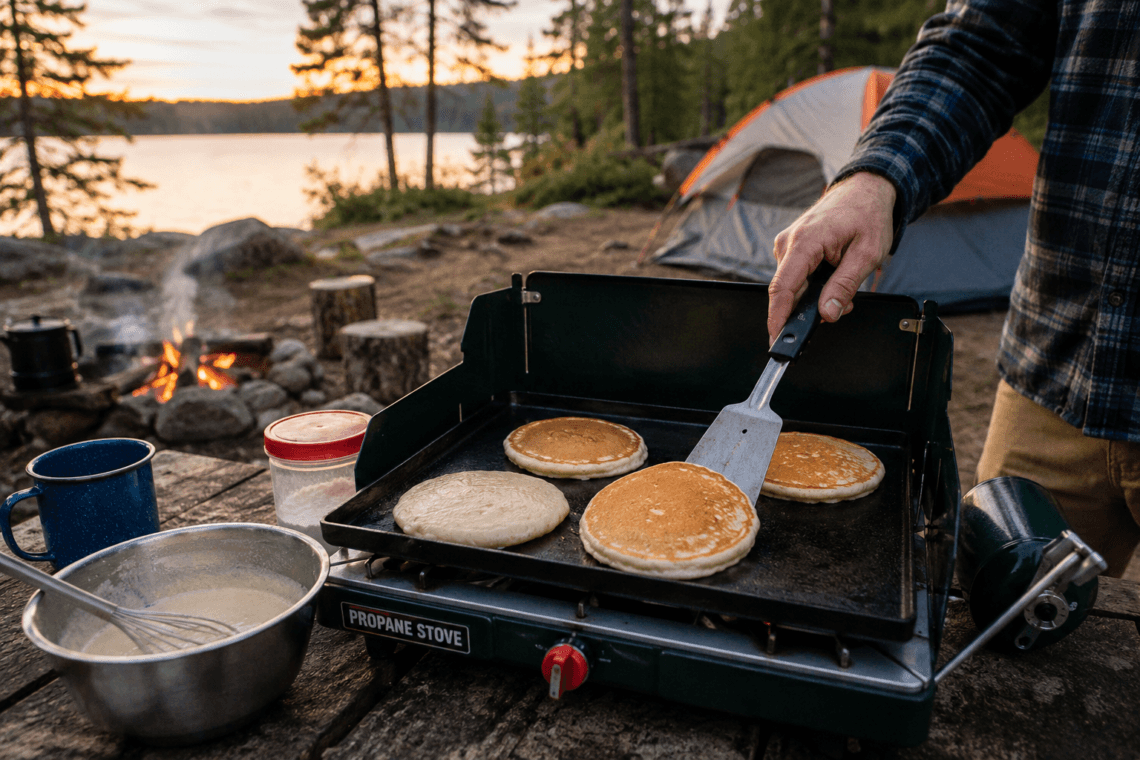
- Set up before mixing. Put a skillet or portable griddle on a stable camp stove. Have oil, a spatula, a mixing bowl, a measuring cup, and a plate ready.
- Combine. Stir 2 cups mix with the liquid for your version, 2 tablespoons oil, and the optional egg. Stop when no dry pockets remain; a few small lumps are fine.
- Rest briefly. Allow 5–10 minutes while you heat the pan. If the batter becomes too thick to pour, add the matching liquid a tablespoon at a time.
- Check the heat. Warm the pan over medium heat and add a thin film of oil. Cook one small pancake first. Adjust the burner before filling the pan.
- Portion. Use about ¼ cup batter per pancake, leaving room to slide a spatula underneath.
- Flip once. Watch for bubbles across the surface and edges that begin to look dry. Turn and cook the second side until golden and the center is set. Cut open the trial pancake if unsure; do not serve raw batter in the middle.
- Serve promptly. Mix only the amount you can cook and eat promptly. Keep remaining dry mix sealed and protected from dampness.
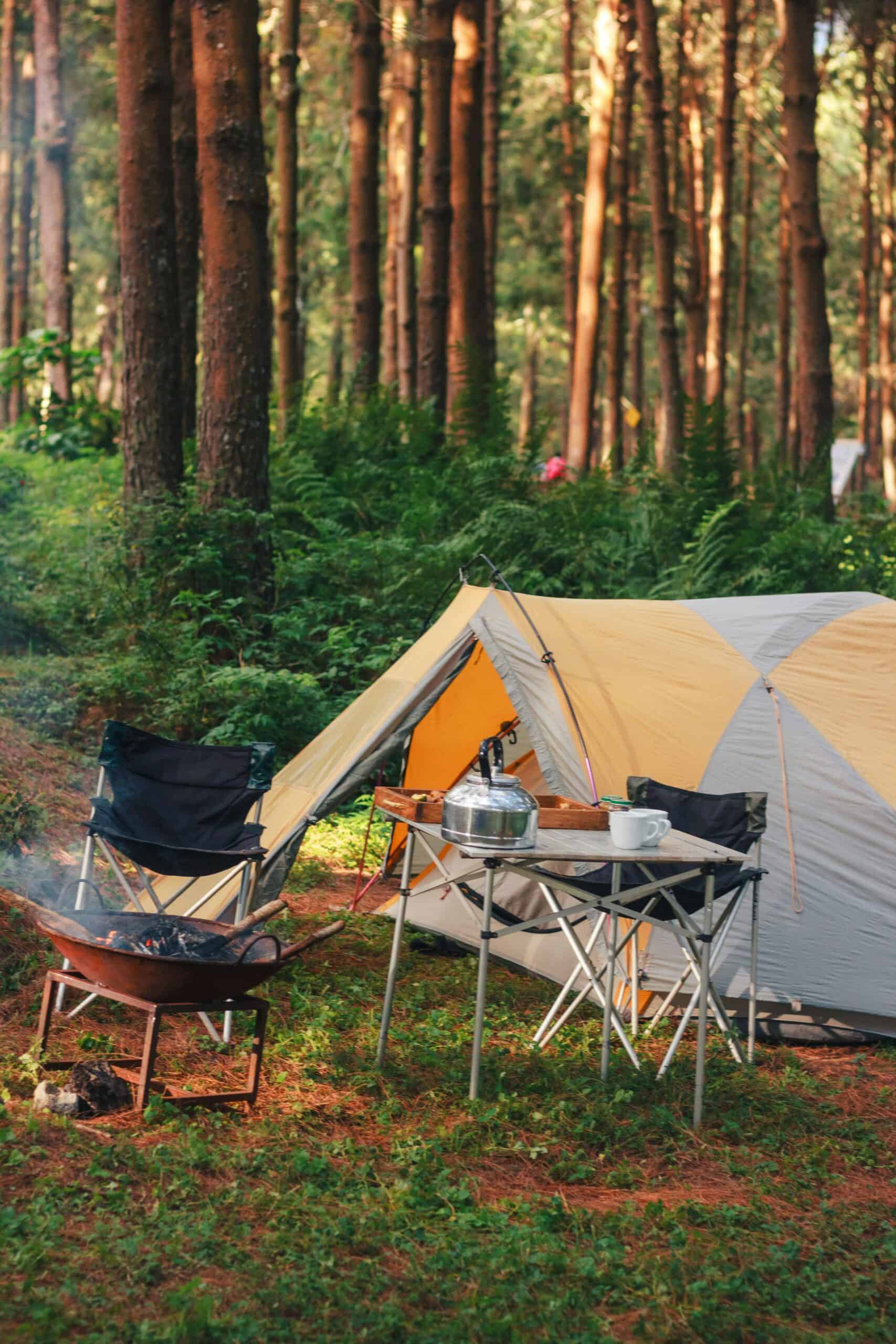
Camp stove or campfire?
A stove gives you a controllable burner and a stable place for the pan. If cooking over a permitted campfire, wait for a bed of embers and position the pan over gentler heat. Rotate it as needed to compensate for hot spots. Open flames can brown the outside before the center cooks.
Check the campsite’s current fire rules before you travel and keep a stove option available when appropriate. The same heat-zone principle appears in our fire-pit hot dog guide.
Fix the first pancake before cooking the rest
| What happens | Next adjustment |
|---|---|
| Batter stays in a mound | Add the matching liquid 1 tablespoon at a time, then stir gently. |
| Outside browns before the middle sets | Lower the heat and let the pan cool briefly before the next pancake. |
| Pancake sticks or tears | Allow the surface to set before flipping; check the oil film and use a thin spatula. |
| Pancakes stay flat | Check the baking powder’s age and avoid repeatedly mixing or holding wet batter. |
Pack and store the mix safely
Keep the dry mix sealed, cool, and dry. Follow the storage directions and earliest best-before date of its ingredients. Discard damp or moldy mix. If frozen, let the sealed container warm before opening so condensation does not wet the powder.
Carry fresh milk, eggs, and batter in a cooler at 40°F or below, checked with a thermometer. Perishable food should not sit out for more than 2 hours, or 1 hour above 90°F. Bring drinking water for mixing and cleaning, and never taste raw batter. See USDA outdoor food-safety guidance.
Without reliable chilling, use a commercially prepared just-add-water mix with the directions and storage instructions printed on its package. This homemade mix still calls for oil; choosing the milk-powder version does not make it identical to a commercial complete mix.
Toppings and substitutions
Add a few blueberries, chocolate chips, or banana slices to each pancake after portioning it. Serve with maple syrup or homemade jelly made from a tested recipe. Pack toppings that need refrigeration in the cooler.
Whole-wheat, high-protein, gluten-free, and vegan formulas need different ingredient balances. Choose a recipe written for that purpose and try it at home before the trip. For a breakfast prepared in your home kitchen, sheet pan bacon for a crowd can be cooked and chilled separately.