Few kitchen disappointments are as frustrating as lifting the lid off your pot only to discover a sticky, clumpy mess. If you’ve ever asked yourself, “why is my rice gummy?”, you’re not alone. Gummy rice is one of the most common cooking problems, but the good news is that it’s also one of the easiest to prevent.
Understanding why is my rice gummy starts with knowing what happens during the cooking process. Rice grains contain starch that absorbs water and expands when heated. If too much starch is released or too much water is used, the grains stick together, creating a gummy texture instead of light, fluffy rice.
In this guide, you’ll learn the most common reasons rice becomes gummy, how to fix it if it happens, and the best methods to cook perfect rice every time.
Why Is My Rice Gummy?
There are several reasons rice turns gummy. Often, it’s a combination of small mistakes rather than one major problem.
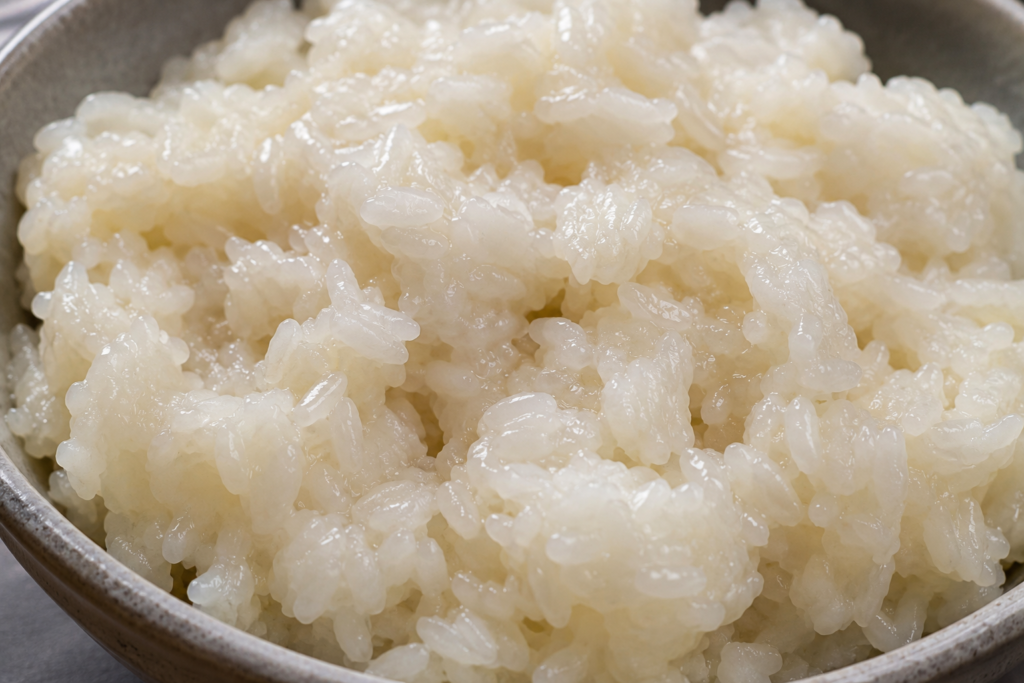
The most common causes include:
- Using too much water
- Overcooking the rice
- Not rinsing the rice beforehand
- Stirring too much during cooking
- Using the wrong type of rice
- Letting rice sit in water too long
Let’s examine each cause in detail. Below you can find what may be causing your rice to be gummy…
1. Too Much Water
The number one reason people wonder, why is my rice gummy, is using more water than necessary.
Rice absorbs moisture as it cooks. Once it has absorbed all it can, any extra water continues breaking down the starches, making the rice sticky and mushy.
Typical Water Ratios
- White long-grain rice: 1 cup rice to 2 cups water
- Jasmine rice: 1 cup rice to 1½ cups water
- Basmati rice: 1 cup rice to 1½ cups water
- Brown rice: 1 cup rice to 2¼ cups water
Always check the package instructions since different brands vary slightly.
2. Not Rinsing the Rice
Rice is naturally coated with loose starch.
If you skip rinsing, that starch dissolves into the cooking water. As the rice cooks, the starch thickens into a glue-like coating around every grain.
How to Rinse Rice
- Place rice in a bowl.
- Cover with cold water.
- Swirl with your hand.
- Drain.
- Repeat 3–5 times until the water becomes mostly clear.
This simple step dramatically reduces gumminess.
3. Overcooking
Even if you use the correct amount of water, cooking too long can ruin the texture.
As rice continues cooking:
- Grains split open.
- More starch escapes.
- Rice begins breaking apart.
- Everything sticks together.
Always remove rice from the heat as soon as the water has been absorbed.
4. Stirring Too Often
Unlike risotto, most rice should be left alone while cooking.
Frequent stirring causes:
- Grains to rub together
- Starch to release
- Rice to become sticky
Once the rice begins simmering, resist the urge to stir.
5. Wrong Rice Variety
Different rice varieties contain different amounts of starch.
Low-Starch Rice
- Long-grain white rice
- Basmati
- Jasmine
These stay fluffy.
High-Starch Rice
- Arborio
- Sushi rice
- Glutinous rice
- Sticky rice
These naturally become sticky and are designed for recipes like sushi or risotto.
If you’re expecting fluffy rice, make sure you’re using a long-grain variety.
6. Cooking at the Wrong Temperature
High heat boils water too aggressively.
This causes the rice to:
- Cook unevenly
- Break apart
- Release excess starch
Instead:
- Bring water to a boil.
- Reduce immediately to low heat.
- Cover with a tight-fitting lid.
- Simmer gently.
7. Letting Rice Soak Too Long
Some recipes recommend soaking rice before cooking, but soaking for several hours can soften the grains too much.
Over-soaked rice is more likely to:
- Burst
- Become mushy
- Release starch
For most white rice, soaking is optional. If you do soak it, 20–30 minutes is usually enough.
How to Fix Gummy Rice: A Beginner’s Guide to Saving Sticky Rice
There’s nothing more disappointing than spending time cooking a pot of rice only to discover it’s sticky, mushy, or clumped together. If you’re a beginner in the kitchen, don’t worry—this is a very common problem. The good news is that gummy rice can often be improved, and you can easily prevent it from happening the next time you cook.
In this beginner-friendly guide, you’ll learn how to fix gummy rice, why it happens, and the simple steps to make light, fluffy rice every time.
What Is Gummy Rice?
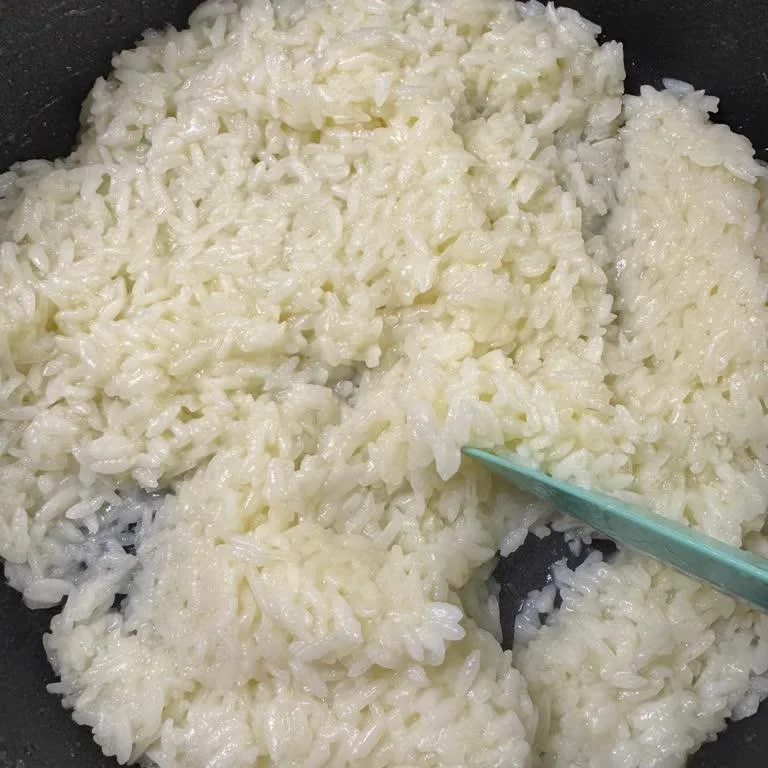
Gummy rice is rice that has become overly sticky and soft because it released too much starch during cooking. Instead of separate, fluffy grains, the rice sticks together in clumps and may even have a paste-like texture.
Gummy rice is still safe to eat, but it usually isn’t ideal as a side dish.
Why Does Rice Become Gummy?
Understanding the cause makes it much easier to fix the problem.
Here are the most common reasons:
- Too much water was added.
- The rice was cooked for too long.
- The rice wasn’t rinsed before cooking.
- The rice was stirred too often while cooking.
- The wrong type of rice was used.
- The rice continued steaming after it finished cooking.
Fortunately, most of these mistakes are easy to avoid.
Can You Fix Gummy Rice?
Yes—although you can’t completely reverse overcooked rice, you can improve its texture enough to make it enjoyable.
The sooner you notice the problem, the better your chances of saving it.
Method 1: Let Excess Moisture Escape
If the rice is only slightly gummy, this is the easiest solution.
Steps
- Remove the lid immediately.
- Turn off the heat.
- Spread the rice gently with a fork.
- Let it sit uncovered for 10–15 minutes.
This allows excess steam to evaporate instead of continuing to soften the rice.
Method 2: Fluff the Rice with a Fork
Many beginners use a spoon to stir rice after cooking.
Instead, use a fork.
A fork gently separates the grains without crushing them together.
Insert the fork into the rice and lift gently rather than stirring vigorously.
Method 3: Spread the Rice on a Baking Sheet
This method works well if the rice is very moist.
Instructions
- Line a baking sheet or large tray with parchment paper (optional).
- Spread the rice into a thin layer.
- Let it cool for 15–20 minutes.
The larger surface area helps moisture evaporate quickly.
Method 4: Refrigerate the Rice
Cooling rice helps firm the grains.
Place the rice in a shallow container and refrigerate it for about 30 minutes.
Cold rice works especially well for:
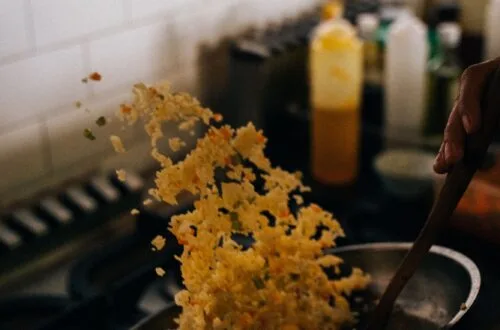
- Fried rice
- Rice bowls
- Stuffed peppers
- Rice casseroles
Many restaurants intentionally use day-old rice because it fries better than freshly cooked rice.
Method 5: Use a Fan
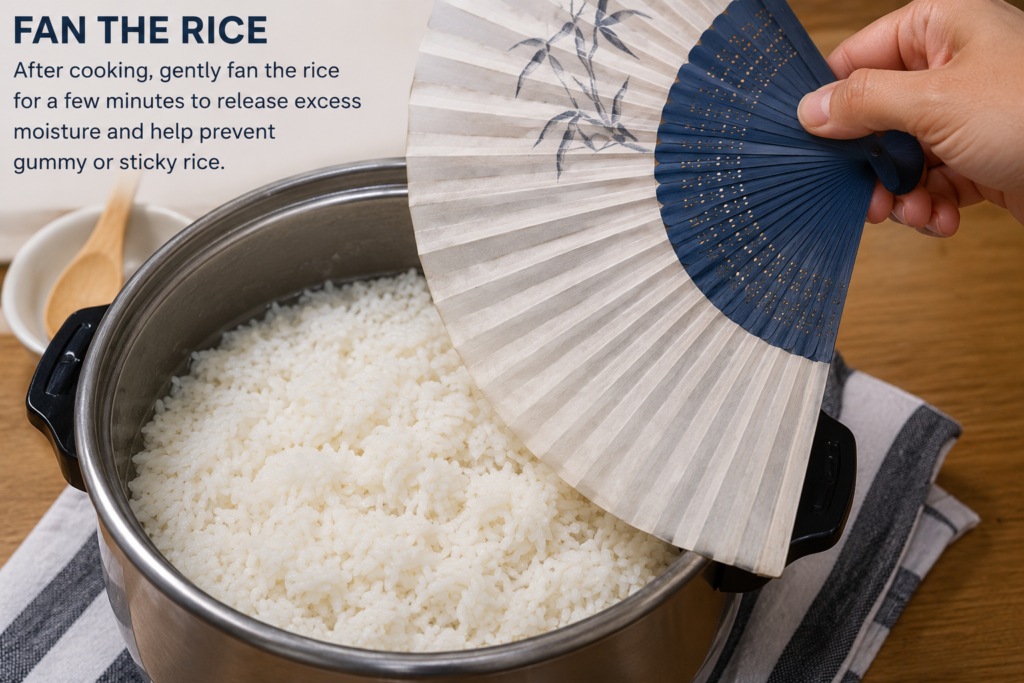
If you’re in a hurry, gently fan the rice while fluffing it with a fork.
Moving air speeds up moisture evaporation and helps reduce stickiness.
Best Rice-to-Water Ratios
Using accurate measurements makes a huge difference.
| Rice Type | Water Ratio |
|---|---|
| Long-grain white | 1:2 |
| Jasmine | 1:1.5 |
| Basmati | 1:1.5 |
| Brown rice | 1:2.25 |
| Wild rice | 1:3 |
Using a measuring cup instead of estimating helps ensure consistent results.
Tips for Perfect Rice Every Time
If you’re still wondering, why is my rice gummy, these simple habits can prevent the problem before it starts.
Measure Carefully
Guessing almost always leads to inconsistent results.
Rinse Thoroughly
Removing excess starch is one of the easiest ways to improve texture.
Keep the Lid Closed
Every time you lift the lid, steam escapes.
That changes the cooking temperature and can lead to unevenly cooked rice.
Let It Rest
Once cooking is finished:
- Remove from heat.
- Keep covered.
- Let sit for 10 minutes.
The resting period allows moisture to distribute evenly.
Fluff Before Serving
Use a fork instead of a spoon.
Separate the grains gently.
Can You Eat Gummy Rice?
Absolutely.
Gummy rice isn’t unsafe—it simply has an undesirable texture.
As long as it was cooked properly and hasn’t been left at room temperature for too long, it’s perfectly fine to eat.
Many cuisines intentionally prepare sticky rice for specific dishes.
What Can You Make with Gummy Rice?
Instead of throwing it away, repurpose it into another meal.
Great options include:
- Fried rice
- Rice pudding
- Rice fritters
- Stuffed peppers
- Soup
- Burritos
- Casseroles
- Rice cakes
The sticky texture often works in your favor for these recipes.
Frequently Asked Questions
Why is my rice gummy even though I used the correct amount of water?
Excess starch is often the culprit. Not rinsing the rice, stirring during cooking, or cooking it too long can all make rice gummy even with the proper water ratio.
Can I fix gummy rice after cooking?
Yes. Spread it out to release steam, fluff it gently with a fork, and allow excess moisture to evaporate. If it’s still sticky, chill it and use it for fried rice or casseroles.
Should I rinse every type of rice?
Most white rice benefits from rinsing to remove excess starch. Brown rice can also be rinsed, though it usually has less surface starch. Specialty rice such as risotto or sushi rice may be prepared differently depending on the recipe.
Why does restaurant rice stay fluffy?
Restaurants measure ingredients precisely, rinse rice thoroughly, use consistent cooking times, and let the rice rest before fluffing and serving.
Conclusion
If you’ve been asking, “why is my rice gummy?”, the answer usually comes down to excess starch, too much water, overcooking, or stirring too much. Fortunately, these are all easy problems to avoid with a few simple techniques.
Measure your water carefully, rinse the rice until the water runs mostly clear, cook over low heat with the lid on, and let the rice rest for about 10 minutes before fluffing it with a fork. By following these steps, you’ll consistently enjoy rice that’s tender, separate, and fluffy instead of sticky and gummy.