Roasted asparagus with Parmesan cheese works best when the spears have room to roast and the cheese goes on near the end. For 1 pound of asparagus, use 1 tablespoon olive oil and 1/4 cup finely grated Parmesan. Roast at 425°F, begin checking after 6 to 10 minutes depending on spear thickness, then add the Parmesan for the final 2 to 3 minutes.
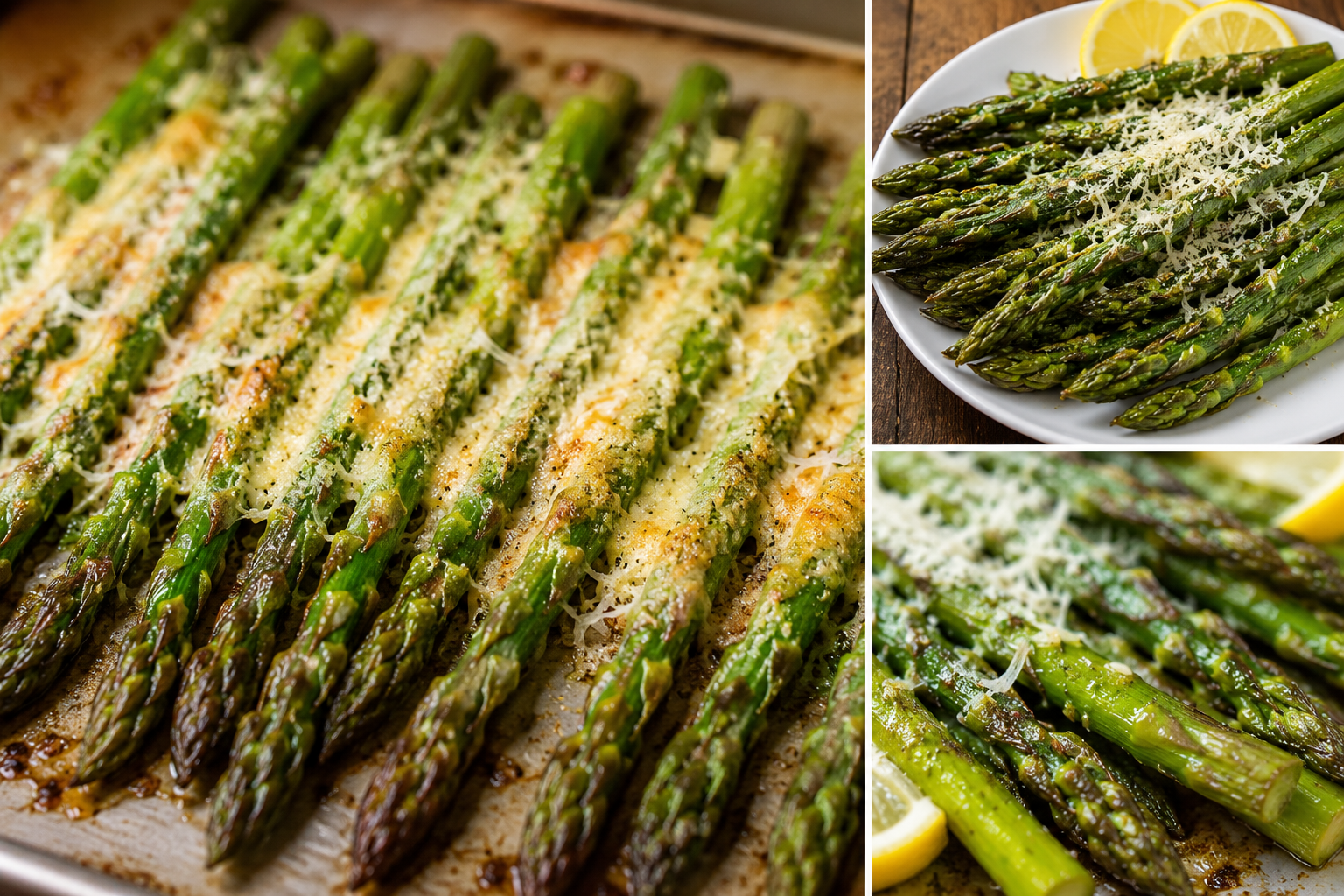
The asparagus is ready when a fork enters the lower stalk with slight resistance, the tips show light browning, and the cheese is melted with a few golden spots. This makes about 4 side servings. Plan on 10 minutes of preparation and roughly 8 to 15 minutes in the oven.
Recipe at a glance
- Yield: about 4 side-dish servings
- Preparation: about 10 minutes
- Oven time: about 8 to 15 minutes, depending on thickness
- Oven: 425°F (220°C), middle rack
- Pan: one 13-by-18-inch rimmed sheet pan, or another pan large enough to prevent overlap
Ingredients and what they do
- 1 pound fresh asparagus
- 1 tablespoon olive oil
- 1/4 teaspoon kosher salt, plus more after roasting only if needed
- 1/4 teaspoon black pepper
- 1/2 teaspoon garlic powder
- 1/4 teaspoon onion powder
- 1/2 teaspoon Italian seasoning, optional
- 1/4 cup finely grated Parmesan cheese
- 1 teaspoon finely grated lemon zest, optional
- Chopped parsley and lemon wedges, optional for serving
One tablespoon of oil gives dry asparagus a thin coat without leaving a greasy puddle on the pan. Finely grated Parmesan clings and melts more evenly than thick shreds. Because Parmesan already contributes salt, start with 1/4 teaspoon kosher salt and adjust only after tasting the finished dish. Garlic and onion powders season evenly without the scorching risk of minced garlic during the full high-heat roast.
Pan size and preparation
Use a rimmed sheet pan that lets the spears lie side by side without overlap. A 13-by-18-inch half-sheet pan gives a one-pound batch ample room. If a smaller pan forces the asparagus into a pile, divide it between two pans. Crowding traps steam and makes browning less likely.
Line the pan with parchment for easier cleanup, or use a lightly oiled bare metal pan for more direct contact browning. Do not use waxed paper as an oven liner.
How to make Parmesan roasted asparagus

1. Heat the oven and prepare the pan
Place a rack in the middle of the oven and heat to 425°F. Line a rimmed sheet pan with parchment, or lightly oil a bare metal pan.
2. Trim and dry the asparagus
Rinse the asparagus under cool running water. Cut off the pale, dry base of each stalk. If the lower portion of a thick stalk still feels fibrous, peel the bottom inch or two instead of discarding more of the spear. Pat the asparagus completely dry; surface water encourages steaming.
3. Season in a thin coat
Put the asparagus on the pan. Add the olive oil, salt, pepper, garlic powder, onion powder, and optional Italian seasoning. Toss until every spear is lightly coated, then arrange the spears in one layer with space between them. The oil should coat the vegetables, not pool underneath them.
4. Roast until almost tender
Roast the asparagus before adding the cheese. Use spear diameter as the first guide:
| Spear thickness | Begin checking | Likely total time after cheese |
|---|---|---|
| Pencil-thin | 6 minutes | 8–9 minutes |
| Medium | 8 minutes | 10–13 minutes |
| Thick | 10 minutes | 12–15 minutes |
Move to the cheese step when the asparagus is bright green, the tips are beginning to brown, and a fork enters the lower stalk but still meets noticeable resistance.
5. Add Parmesan for the final minutes
Slide the pan out and sprinkle the Parmesan evenly over the spears. Return it to the oven for 2 to 3 minutes. Remove the pan when the cheese has melted and developed a few golden spots and the lower stalk is tender with slight resistance. Do not wait for every patch of cheese to turn dark brown; thin tips and finely grated cheese can burn first.
6. Finish and serve
Add lemon zest after roasting so its aroma stays fresh. Finish with parsley, lemon wedges, or a small amount of extra Parmesan. Serve promptly because roasted asparagus softens as it sits.
Doneness cues
- Lower stalk: a fork enters with slight resistance; it should not feel raw and woody or collapse into mush.
- Tip: lightly browned edges are desirable, but blackened tips mean the pan stayed in too long.
- Cheese: melted with scattered golden spots rather than a uniformly dark crust.
- Pan: moisture should evaporate quickly. A puddle points to wet asparagus, excess oil, or crowding.
Troubleshooting
Pale or watery asparagus
Dry the spears thoroughly, preheat the oven fully, and give the asparagus more room. If the pan is crowded, use a second pan.
Cheese burns before the stems soften
The Parmesan went on too early or the stalks were unusually thick. Roast until nearly tender before adding cheese, then check after 2 minutes. Peel the fibrous lower portion of thick stalks and extend the cheese-free stage rather than the cheese stage.
Parmesan falls off
Coat the asparagus with oil first, use finely grated cheese, and sprinkle it onto the hot spears. Do not toss again after the cheese is added.
The finished dish tastes too salty
Parmesan varies in saltiness. Start with the measured 1/4 teaspoon kosher salt and add more only after roasting.
Useful substitutions
- Pecorino Romano or aged Asiago: either works, but both may taste saltier or sharper. Keep the starting salt modest.
- Pre-shredded Parmesan: usable, though it may melt less evenly than freshly grated cheese.
- Nutritional yeast: adds savory flavor but does not melt or brown like Parmesan.
- Fresh garlic: add minced garlic with the Parmesan for the final minutes so it is less likely to scorch.
- Lemon juice: add it after roasting. Lemon zest adds aroma without extra surface moisture.
Storage and reheating
Refrigerate leftovers in a shallow, covered container within 2 hours, or within 1 hour when the surrounding temperature is above 90°F. Keep the refrigerator at 40°F or colder and use the asparagus within 3 to 4 days.
For better texture, spread the spears on a sheet pan and reheat in a 400°F oven, checking after 4 minutes. An air fryer can restore some crispness; check after 2 minutes at 350°F. Times vary with quantity and thickness. Reheated leftovers should reach 165°F. A microwave is faster but softer; cover loosely, heat in short intervals, and rotate the portion for even heating. See the FDA safe-food-handling guidance for prompt chilling and reheating temperatures.
Related asparagus methods
For a brighter oven version without the Parmesan finish, use the site’s lemon roasted asparagus method. For outdoor cooking, see the grilled asparagus timing guide.
For general preparation and trimming advice, see Illinois Extension’s asparagus guide. The quantities and late Parmesan stage above belong to this recipe; thickness and tenderness determine when your batch is ready.