Family Recipe HQ • Kitchen guide
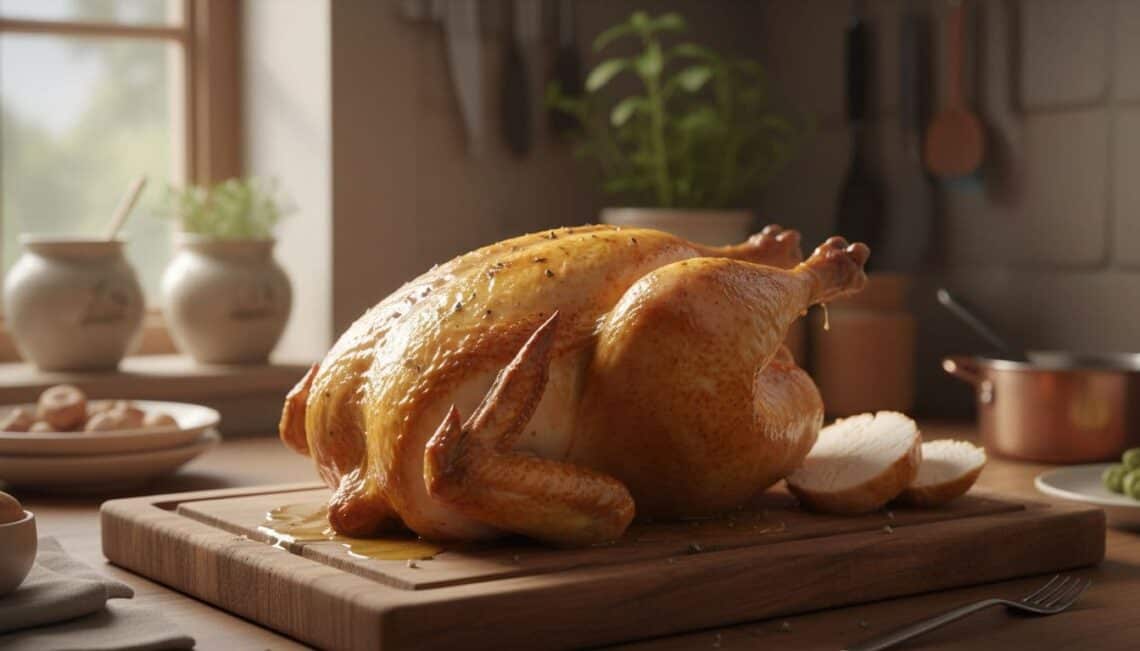
How to tell when a whole chicken is done: check 165°F (74°C) in the thickest breast, innermost thigh, and innermost wing. If the bird contains bread stuffing, its center also needs to reach 165°F. Skin color, clear juices, and a loose leg cannot verify those temperatures.
| Location | Where the sensing tip belongs | Minimum |
|---|---|---|
| Breast | Thickest meat, away from bone and the cavity | 165°F / 74°C |
| Thigh | Innermost meaty portion near the body, clear of bone | 165°F / 74°C |
| Wing | Innermost meaty portion | 165°F / 74°C |
| Bread stuffing, if present | Center of the stuffing | 165°F / 74°C |
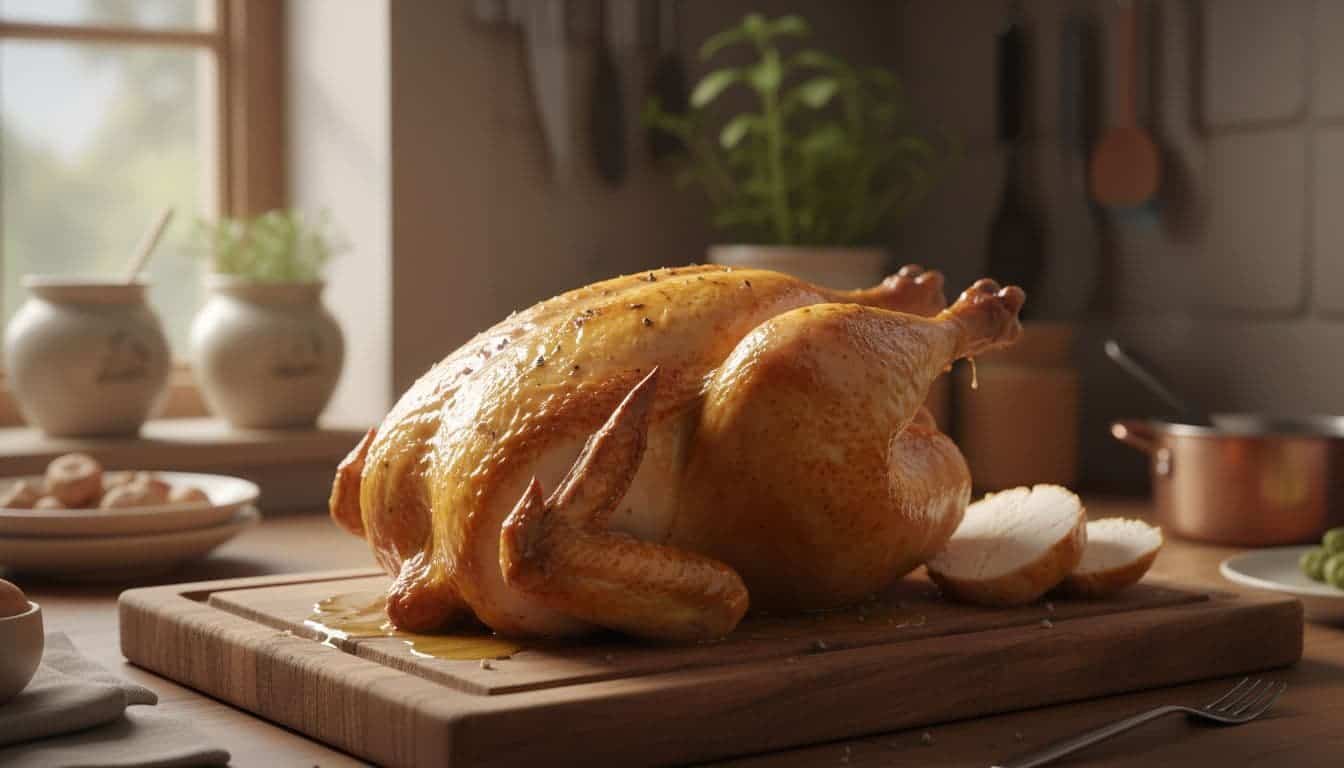
How to check a whole chicken with a thermometer
Begin checking shortly before your recipe’s estimated finish time. Oven heat, bird size, pan shape, and whether the chicken is stuffed or trussed all affect cooking time.
- Check the breast. Insert the probe into the thickest part of the breast. Keep the tip in the meat, away from bone and the body cavity.
- Check the thigh. Place the probe into the innermost part of the thigh where it joins the body. Avoid touching bone.
- Check the wing. Measure the innermost part of the wing. If a reading seems uncertain, reposition the probe and check again.
- Check any bread stuffing separately. Insert the thermometer into its center. Stuffing inside the bird must also reach 165°F.
- Continue cooking if any required spot is below 165°F. Put the chicken back in the oven and check that spot again after several minutes. The lowest reliable reading determines whether it is ready.
An automatic pop-up timer can tell you when to begin checking, but use your thermometer for the final decision. For the full USDA placement instructions, see Chicken from Farm to Table.
Breast versus thigh: safety and texture
The minimum safe temperature is 165°F in every required location. Dark thigh meat may feel more tender when cooked somewhat beyond 165°F, while breast meat can become dry if it cooks much higher. That texture preference does not replace the safety minimum for the breast or wing.
Some roast-chicken recipes suggest removing the bird when the breast reads 160°F and counting on heat remaining in the meat to raise the temperature during its rest. That rise, called carryover cooking, varies with the size of the bird and how it was roasted. For a simple, dependable home-kitchen check, confirm 165°F in all three locations with a thermometer. Resting improves carving and texture; it does not make an unmeasured bird safe.
Can you tell when a whole chicken is done without a thermometer?
You can use appearance to decide when to start checking, but you cannot confirm the safe internal temperature by sight or touch. Golden skin, clear juices, a leg that moves freely, and opaque-looking meat are imperfect clues. If you do not have a food thermometer, get one before relying on the roast for dinner; it is the only practical way to verify the 165°F minimum.
Chicken can also remain slightly pink near a bone even after every required part has reached 165°F. The USDA’s color guidance explains why color alone is unreliable in either direction.
What if the breast cooks before the thigh?
Cover the breast loosely with foil and continue roasting. Check the thigh again after several minutes, and recheck the breast and wing before serving. If the skin is browning too quickly, the foil can also protect it while the interior finishes cooking.
How long should the chicken rest?
After all required spots measure at least 165°F, let the bird rest for about 10 to 15 minutes before carving. This gives you time to finish the sides and makes carving easier. Do not use a projected rise during that rest in place of measuring the safe temperature.
Store and reheat leftovers safely
Carve leftover chicken into smaller pieces and refrigerate it in shallow covered containers within 2 hours, or within 1 hour when the temperature is above 90°F. Use refrigerated leftovers within 3 to 4 days and reheat them to 165°F. See USDA leftovers guidance.
Common questions
Do the juices have to run clear?
No. Juice color does not prove that the thickest meat has reached 165°F. Use the thermometer readings instead.
Is pink chicken always undercooked?
No. Poultry may retain some pink color after it is safely cooked. Check the breast, innermost thigh, and innermost wing with a thermometer rather than judging by color.
Does stuffing change the check?
Yes. If you put bread stuffing inside the bird, measure its center separately and cook it to 165°F. A fixed number of extra minutes per pound cannot replace that measurement. USDA stuffing guidance explains the added check. Lemon halves and herbs used as aromatics are not bread stuffing, though a filled cavity can still change cooking time.
Can I rely on minutes per pound?
Use a trusted recipe’s estimate to plan when to start checking, then rely on measured temperature. The exact time changes with bird size, starting temperature, oven, pan, and preparation.
A good roast chicken deserves a confident finish. Check the breast, innermost thigh, and innermost wing for 165°F, check stuffing if present, then give the bird a short rest before carving.