Turkey tenderloin
The safe temperature for turkey tenderloin is 165°F (74°C). Check the thickest center of every piece before it leaves the heat. Let the cooked turkey rest 5–10 minutes for slicing, and treat the oven setting and the internal temperature as different numbers.
Start with the right cut and package
A turkey tenderloin is a boneless, skinless muscle from the underside of the breast. Packages often contain two long pieces. It is different from a whole turkey breast, a rolled breast roast, or thin turkey cutlets, so their cooking schedules are not interchangeable.
Look at the weight and thickness of each piece, rather than only the total package weight. Two separated 12-ounce tenderloins will cook differently from one thick 1½-pound roast. If one piece is noticeably smaller, expect to remove it first.
Read the ingredient label before seasoning. A package described as “all natural” may still contain a salt-and-water solution; Jennie-O’s All Natural Turkey Breast Tenderloin is one example. Reduce or omit added salt for enhanced, brined, or pre-seasoned meat, and use its package cooking directions when they differ from a general recipe.
How to check turkey tenderloin temperature correctly
A reading is only useful if the thermometer’s sensing area reaches the center of the meat. The surface and tapered end usually heat faster, so checking those spots alone can give a misleading result.
- Find the thickest section. Look for the plumpest part of the tenderloin, away from the narrow tail.
- Insert the probe toward the center. For a shallow piece, entering from the side makes it easier to keep the sensing area inside the meat. Avoid touching the hot pan or pushing the probe through the other side.
- Wait for a stable reading. Follow your thermometer’s instructions for insertion depth and response time. Different models sense temperature over different lengths of the probe.
- Check a second thick spot and every tenderloin. If any checked center is below 165°F, continue cooking that piece. A hotter reading in one location does not cancel a cooler reading elsewhere.
- Clean the probe after each use. Wash it as directed by the manufacturer, keeping electronic parts out of water unless they are rated for immersion.
The USDA’s food thermometer guide explains why placement, sensing depth, and checking individual pieces matter. An oven-safe leave-in probe can help you monitor progress, but only leave a thermometer in the oven if it is designed for that use.
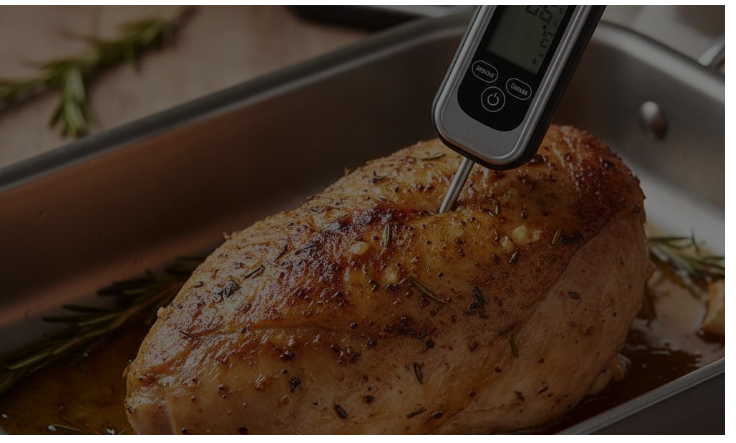
Should you take turkey tenderloin out at 160°F?
For this home-oven method, confirm 165°F before removing the turkey. Heat can continue moving inward after cooking, but the amount of carryover varies with the cut, pan, and cooking temperature. A predicted five-degree rise is not a dependable safety check. Resting is a texture and slicing step after the measured endpoint.
How long does turkey tenderloin take to cook?
There is no single time that works for every tenderloin. A recipe that begins with a hot skillet has already started cooking the center before the meat reaches the oven. A large, enhanced tenderloin baked straight from the refrigerator can need a substantially different schedule.
The examples below show why you should match the timing to the specific product and method. They are separate preparation instructions, not a temperature-conversion chart.
| Product or method | Oven | Published estimate |
|---|---|---|
| Butterball Rotisserie Turkey Breast Tenderloins | 325°F | 50–60 minutes |
| Jennie-O All Natural Turkey Breast Tenderloin | 350°F | 60–70 minutes |
| 101 Cooking for Two’s sear-then-roast method | 400°F conventional | 4–6 minutes searing, then about 20–25 minutes in the oven |
For the unseared method below: allow roughly 30–40 minutes of roasting for two fully thawed tenderloins weighing about 12 ounces each, and begin checking at 20 minutes. This planning range is inferred from 101 Cooking for Two’s guidance to add about 10 oven minutes when skipping the sear, with extra allowance for variation. Thickness and your equipment may move the finish earlier or later. The thermometer determines when to stop.
At 375°F, cooking will generally take longer than the same preparation at 400°F, but do not assume a fixed extra number of minutes. Likewise, an air fryer or convection setting is a different setup: follow a method written for that appliance and check the internal temperature.
Simple garlic-and-herb oven turkey tenderloin
This straightforward preparation uses a little oil, dried herbs, and lemon zest. It works well with mashed potatoes, green beans, or a grain salad. Start dense vegetables such as potato chunks separately so the turkey does not have to overcook while you wait for the sides.
Serves: about 4 with sides
Prep: about 10 minutes
Roast: roughly 30–40 minutes; start checking at 20
Rest: 5–10 minutes
Oven: 400°F (205°C), conventional bake
Ingredients
- 2 plain turkey tenderloins, about 1½ pounds total, fully thawed
- 1 tablespoon olive oil
- ½ teaspoon fine salt, reduced or omitted for salted or enhanced turkey
- ½ teaspoon garlic powder
- ½ teaspoon dried thyme
- ¼ teaspoon dried rosemary, crushed finely
- ¼ teaspoon freshly ground black pepper
- 1 teaspoon finely grated lemon zest, optional
- Lemon wedges or prepared gravy, for serving
Step-by-step instructions
- Heat the oven and prepare the pan. Preheat to 400°F. Lightly oil a shallow baking dish or rimmed metal pan large enough to hold both tenderloins with space between them.
- Dry and inspect the turkey. Remove the packaging and pat the meat dry with disposable paper towels. Do not rinse raw poultry. Trim any easily accessible tough white membrane if needed, taking off as little meat as possible. Wash your hands and clean surfaces that contacted raw juices.
- Season evenly. Mix the oil, salt, garlic powder, thyme, rosemary, pepper, and optional zest. Rub over both tenderloins. Set them apart in the pan without overlapping; cook them directly after preparation rather than leaving them on the counter to warm up. Wash your hands and clean utensils after handling the raw turkey.
- Roast uncovered. Place the pan on the middle rack. Set a reminder to check after 20 minutes, especially if the pieces are thin. Allow roughly 30–40 minutes as a planning estimate, but use the thermometer to determine doneness.
- Check and finish each piece individually. Measure the thickest center and another thick section. Continue roasting any piece below 165°F, checking again in a few minutes as it approaches the target. Transfer each finished tenderloin to a clean board or platter; leave a larger unfinished piece cooking.
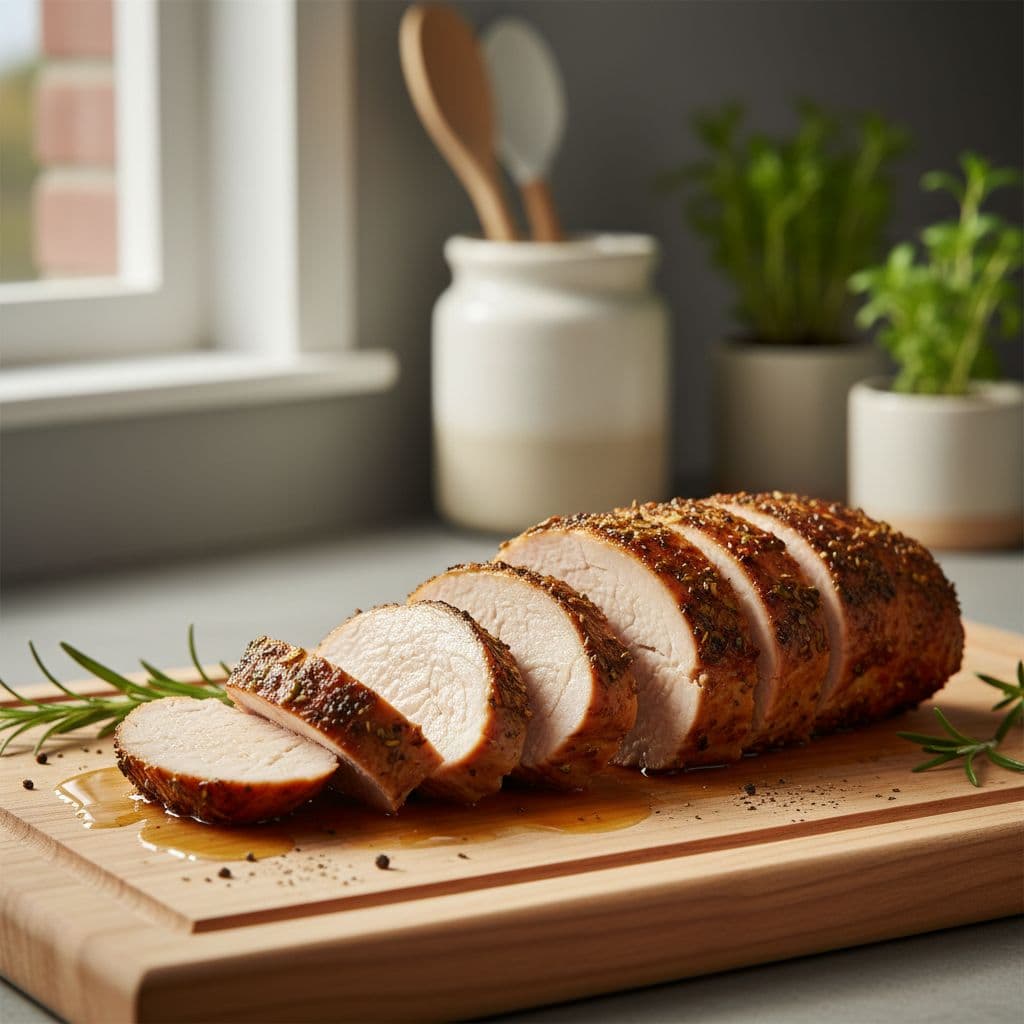
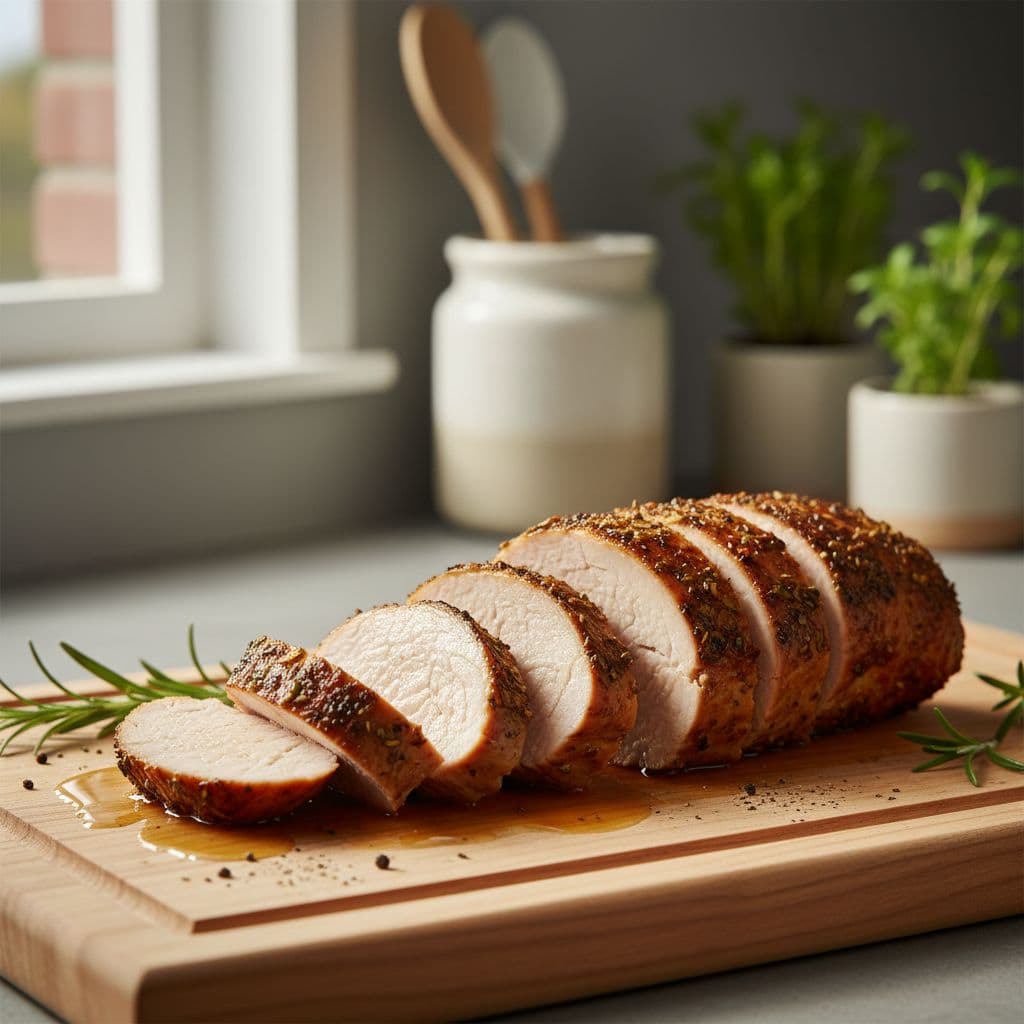
- Rest, then slice. Loosely tent with foil for 5–10 minutes. Cut across the grain into approximately ½-inch slices. Spoon over resting juices and serve with lemon or gravy.
Using a pre-marinated package? Its seasoning may already be complete. Skip this rub if it would make the meat too salty, and use the package’s oven setting and preparation instructions. Keep the thermometer check for every piece.
Resting and slicing for a better texture
Move the finished turkey out of the hot cooking pan to a clean board or platter. A loose foil tent helps retain warmth without wrapping the surface tightly. Jennie-O recommends a 5–10 minute rest for its tenderloins; that is also a practical serving window for the method above.
Look for the direction of the visible muscle fibers and cut across them. Shortening those fibers makes each bite easier to chew. Keep the slices moderately thick rather than shaving the entire tenderloin thin, and spoon any juices collected during resting over the serving platter.
When the turkey is not cooking as expected
The outside is browned, but the center is still under temperature
Loosely shield the top with foil and continue cooking. Recheck the thickest center. Browning can happen quickly with sweet marinades or a hot pan, so it cannot tell you whether the middle is ready. Do not slice and serve the browned exterior while assuming the entire piece is safe.
One tenderloin is done before the other
Remove the finished piece to a clean platter and loosely cover it. Keep cooking the other piece until its thickest sections reach the target. Uneven sizes are common; keeping both in the oven until the larger one finishes can dry out the smaller one.
The meat is dry even though you followed the timing
The piece may have been thinner than the recipe expected, or the oven may run hot. Next time, begin temperature checks sooner and confirm the probe is centered. For this meal, serve the slices with warm gravy, broth, or a sauce. Added moisture improves the eating experience, though it cannot undo overcooking.
The thermometer gives different readings
Small changes in probe placement can move the sensing area from a hot outer layer to a cooler center. Reposition carefully, wait for the display to stabilize, and check from another angle. If readings seem implausible, check the thermometer’s accuracy using its manufacturer’s instructions.
Safe thawing, storage, and reheating
Before cooking
Thaw frozen tenderloins in the refrigerator at 40°F (4°C) or below, on a tray that catches drips. Allow enough time for the thickest part to thaw completely. USDA guidance allows refrigerator-thawed turkey another 1–2 days before cooking.
For faster thawing, seal the meat in a leakproof bag, submerge it in cold water, and change the water every 30 minutes. Cook immediately after cold-water or microwave thawing; do not thaw poultry on the counter. See the USDA’s safe thawing guidance. The recipe above assumes fully thawed meat.
After dinner
Refrigerate leftovers in shallow containers within 2 hours, or within 1 hour when the surrounding temperature is above 90°F (32°C). Do not wait for a whole platter to cool on the counter. Food left out beyond those limits should be discarded, following USDA leftovers guidance.
Use refrigerated cooked turkey within 3–4 days. For longer storage, freeze meal-size portions with a little cooking juice. The FoodSafety.gov storage chart lists 2–6 months for the best quality of frozen cooked meat or poultry; that freezer range concerns quality, provided food remains continuously frozen at 0°F (−18°C) or below.
Reheat without drying the edges
Arrange slices in a small oven-safe dish, add a splash of broth, and cover. Reheat in an oven set to at least 325°F until the turkey reaches 165°F internally, as recommended in the USDA’s reheating guidance. Check the meat rather than only the surrounding liquid.
For a small portion, use a covered, vented microwave-safe dish. Heat in short intervals, rearrange the slices, allow the appliance’s recommended standing time, and check several spots for 165°F. Reheat only what you plan to eat.
Common turkey tenderloin questions
Can cooked turkey tenderloin still be pink?
Yes. The USDA explains that turkey can remain pink after safe cooking. Color and clear juices cannot confirm doneness. For properly handled turkey, check the required internal temperature in several thick locations.
Does a marinade replace careful temperature control?
No. A marinade adds flavor, but it does not make an undercooked center safe or prevent all moisture loss. Marinate in the refrigerator. If you want a sauce, reserve a clean portion before it touches raw turkey and discard the used marinade.
Can I cook it without a thermometer?
You cannot reliably confirm the safe endpoint using time, firmness, or appearance alone. Use a food thermometer before serving. The same approach applies to our guide to checking chicken-breast doneness.
For juicy, safely cooked slices: match the cooking method to your package, check the thickest center of every piece, and stop cooking once the required temperature is confirmed. The right temperature for turkey tenderloin is 165°F; early checks, a short rest, and slicing across the grain help you make the most of this lean cut.