Dry ham usually comes from one thing, too much heat. The right ham temperature keeps it safe to eat, but it also protects the texture that makes each slice tender instead of stringy.
That matters most at holidays, when a big glazed ham can sit in the oven longer than it needs to. The fix is simple once you know whHam Internal Temperature: When It’s Done and Safe
For a fast answer, uncooked ham is done at 145°F, then it needs a 3-minute rest before you slice it. If your ham is fully cooked, you can eat it cold, or warm it to the right reheating temperature.
That sounds simple, but ham labels can be confusing. Some hams are raw, some are “cook-before-eating,” and some are already fully cooked. Once you know which kind you have, the rest gets much easier.
The short answer for ham doneness
When people search for the internal temperature of ham when it’s done, they usually want one clear number. The truth is that ham has a few different rules, because “ham” can mean raw pork leg, a cured ham that still needs cooking, or a fully cooked ham that only needs reheating.
The USDA’s safe temperature chart is the best quick reference, but the everyday version is easy to remember: raw or cook-before-eating ham needs 145°F, plus a short rest. Fully cooked ham is already safe, so temperature matters only if you’re reheating it.
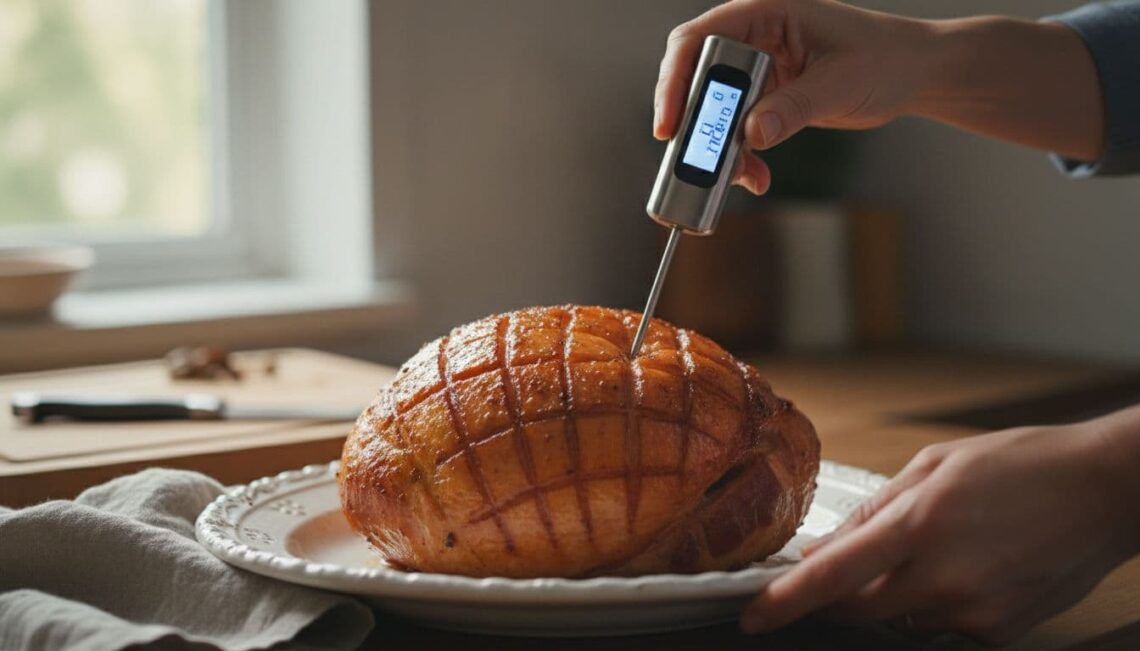
A thermometer is the only dependable way to tell when ham is done. Color can fool you, and cook times vary by size, bone, and whether the ham is sliced.
Uncooked ham needs 145°F plus a short rest
Fresh ham, and smoked hams labeled “cook before eating,” should reach 145°F in the thickest part. Check the center of the meat, not the surface. Then rest it for at least 3 minutes before carving.
That short pause matters. The heat keeps moving through the meat, and the juices settle back in. As a result, the ham stays safer and tastes better.
Fully cooked ham is already safe, but reheating has its own target
A fully cooked ham can go straight from the package to the table cold. Many families still like to warm it, especially for holidays. If it came packaged in a USDA-inspected plant, reheat it to 140°F.
If it’s a leftover, a ham repackaged somewhere else, or ham you’ve already opened and stored, reheat it to 165°F.
Quick rule: raw or cook-before-eating ham needs 145°F plus 3 minutes. Fully cooked ham can be served cold, or reheated to 140°F or 165°F, depending on the package.
How to check ham temperature the right way
Ham can look done before it truly is. Glaze turns dark, edges brown, and the kitchen smells ready. None of that tells you the internal temperature.
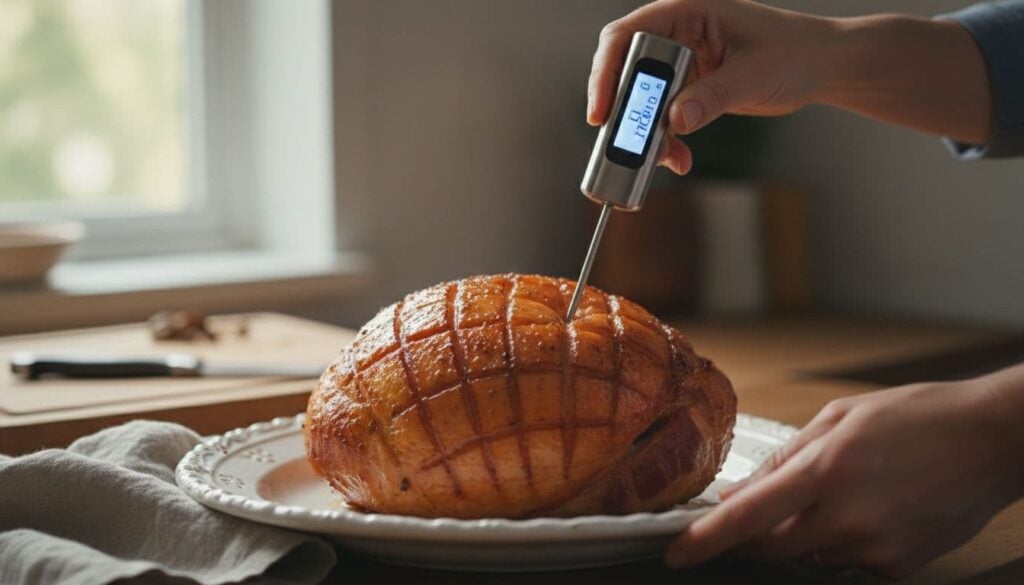
A digital food thermometer makes this simple. You don’t need fancy gear, but you do need to place the probe in the right spot.
Where to place the thermometer for an accurate reading
Insert the probe into the thickest part of the ham. Keep it away from the bone, thick fat seams, and the hot pan. Bone can make the reading look higher than the meat around it, which can trick you into pulling the ham too soon.
For a bone-in half ham, aim toward the center from the side. For a boneless ham, go into the middle of the thickest section. With spiral-cut ham, slide the probe into a solid section rather than between slices, because those gaps don’t give a true reading.
If you get two different numbers, check again in a second spot. That’s a smart habit with large roasts.
Why the rest time matters after cooking
Ham keeps cooking for a few minutes after it leaves the oven. That carryover heat helps finish the center, which is why the USDA includes a rest time for raw ham.
Resting also helps with texture. If you cut too soon, juices run onto the board instead of staying in the slices. Then the ham looks dry, even when you cooked it well.
Set the ham on a cutting board or platter, tent it loosely with foil if you want, and wait the full 3 minutes. For a large roast, a bit longer is fine.
Different kinds of ham do not cook the same way
Ham confuses home cooks because the word covers several products. One ham acts like raw pork. Another is cured but still needs cooking. A third is fully cooked and only needs gentle heat. The label matters as much as the recipe.
The USDA’s FSIS ham safety guide also shows why timing can vary so much. At 325°F, a fresh bone-in ham may take about 22 to 26 minutes per pound, while a fully cooked whole ham may need only 15 to 18 minutes per pound to warm through. Time helps you plan, but temperature tells you when it’s done.
Fresh ham or cook-before-eating ham
Fresh ham is an uncured pork leg. It behaves more like a pork roast than a holiday ham, so treat it like raw meat. Cook it to 145°F, then let it rest for 3 minutes.
Cook-before-eating ham is different from fresh ham, but the safety rule is similar. These hams are cured or smoked, yet they still need heat before serving. If the package says “cook before eating,” believe it. Don’t treat it like deli ham.
Most USDA oven guides use 325°F for ham. That’s a steady temperature that warms the center without drying the outside too fast. Still, minutes per pound are only a guide. A bone-in ham, a boneless half, and a shoulder cut won’t finish at the same pace.
Country ham can fall into this camp too. Some types need soaking first because they are heavily salted. Others need a simmer or long oven cook. Read the label before you start, because the cure style changes the method.
Fully cooked ham, spiral ham, and sliced ham
Fully cooked ham is the easiest one to serve. You can slice it cold for sandwiches, a brunch board, or a quick dinner. If you want it hot, warm it gently and check the center near the end.
Spiral ham needs a little extra care because the cuts expose more surface area. That makes it handy for serving, but it also makes it dry out faster. Cover it with foil, keep the heat moderate, and avoid chasing a higher number than you need. For a factory-packaged, fully cooked spiral ham, 140°F is enough for reheating.
Sliced ham works much the same way. Since the pieces are thinner, they heat fast. A skillet, covered baking dish, or microwave can all work. Once the ham is a leftover, though, reheat it to 165°F.
If your ham is glazed, add some of the glaze late in cooking. Sugar burns quickly, and a black crust can fool you into thinking the whole ham is overdone.
Country ham and canned ham need special care
Country ham deserves its own note because it doesn’t act like a standard city ham. It’s often dry-cured, salty, and dense. Many cooks soak it in the refrigerator for several hours, or overnight, before cooking. Some directions call for simmering it in water, then browning it briefly in a hot oven. The package directions matter here more than guesswork.
Canned ham also splits into two types. Some cans are shelf-stable and can sit unopened at room temperature for a long time. Others say keep refrigerated, and those belong in the fridge from the start. Once you open either one, handle the ham like any other cooked meat.
Labels such as “ham,” “ham with natural juices,” and “ham and water product” tell you something about moisture and added ingredients, not whether the ham is fully cooked. That’s why the safest habit is simple: read the front label, then read the cooking or reheating line again before the ham goes in the oven.
Storing ham safely before and after cooking
Cold storage keeps ham in good shape, but the clock changes based on the type. Fresh raw ham lasts a shorter time than a vacuum-sealed cooked ham. Leftovers have their own timetable too.
The freezer is more forgiving. USDA guidance says frozen ham stays safe indefinitely, but the usual freezer dates are about quality. After that, the ham may taste flat or get a rough texture.
How long ham can stay in the fridge or freezer
This quick chart gives the ranges most home cooks need.
| Type of ham | Refrigerator | Freezer |
|---|---|---|
| Fresh, uncooked ham | 3 to 5 days | Up to 6 months |
| Fresh, cooked ham | 3 to 4 days | 3 to 4 months |
| Cured ham, cook-before-eating, unopened | 5 to 7 days or use-by date | 3 to 4 months |
| Cooked ham, vacuum-sealed and unopened | Up to 2 weeks or use-by date | 1 to 2 months |
| Opened cooked ham or leftovers | 3 to 5 days | 1 to 2 months |
Those numbers show why labels matter. A whole, unopened cooked ham lasts longer than sliced leftovers. In the same way, fresh ham needs attention sooner because it starts out raw.
Leftover ham rules people should not ignore
After dinner, don’t leave ham sitting out for hours. Chill leftovers promptly, then store them in shallow containers or wrap them well. Smaller portions cool faster, which helps both safety and quality.
Most opened ham and home-cooked leftovers are best within 3 to 5 days in the fridge. If you won’t use them soon, freeze them. Thin slices work well for quick meals later.
When reheating leftovers, bring them to 165°F. That includes cubed ham for soup, slices for breakfast, and baked leftovers from a holiday meal. A thermometer still does the heavy lifting, even on day two.
The final thouhts….
The main number for ham is to remember 145°F, plus a 3-minute of resting time, for any uncooked or cook-before-eating ham. Fully cooked ham is already safe to eat cold, and reheating targets depend on how it was packaged.
Once you check the label and use a thermometer, ham stops being a guessing game. You get a safer meal, better texture, and slices that stay juicy on the plate.