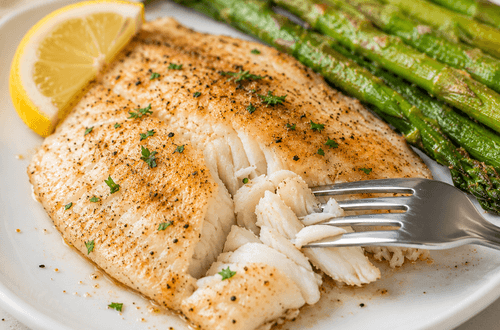
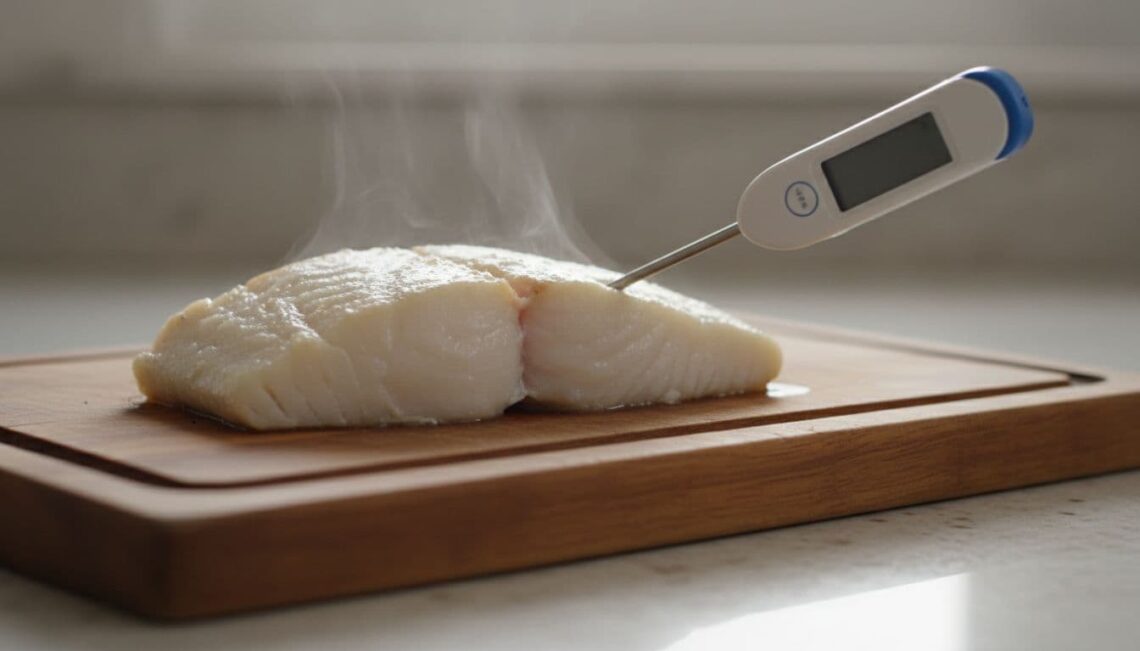
The recommended halibut done temperature is 145°F (63°C) in the thickest center. Use a narrow instant-read probe from the side, then transfer the fish off the hot cooking surface. Opaque flesh that separates with a fork is a useful supporting cue.
This guide explains the recommended halibut cooking temperature, how to position the thermometer, and how to adjust the heat when the outside browns before the thickest center is ready.
Watch the fish, not only the timer
Halibut cooks quickly, but the clock can fool you. A thin tail piece may finish well before a thick center-cut fillet due to differences in fillet thickness, so timing should only be your starting point.
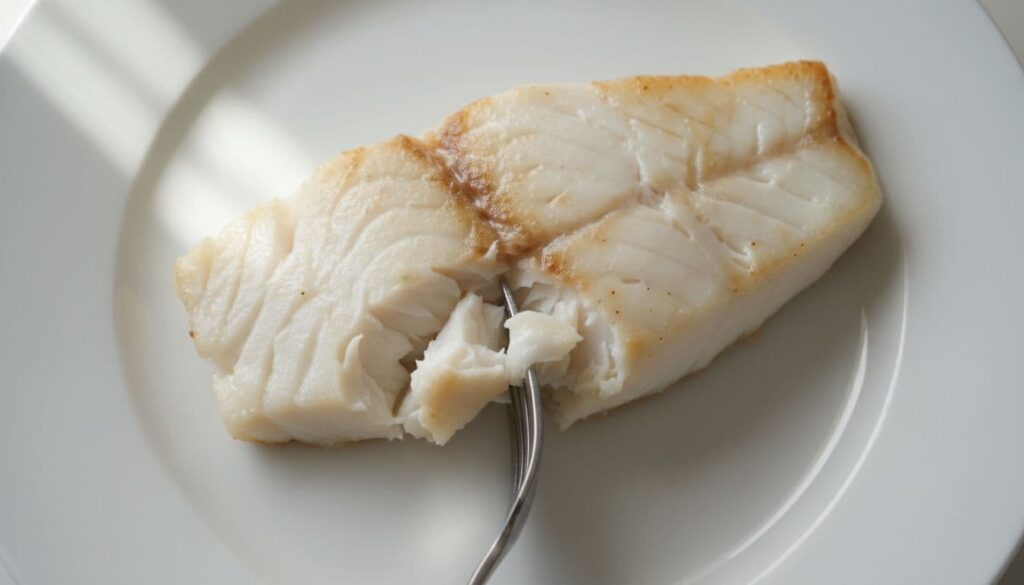
Start checking the thickest part first. As halibut cooks, the flesh changes from translucent and glossy to opaque white. The thickest center should no longer be translucent when the fish is ready to serve. A thermometer reading of 145°F (63°C) gives a clear target.
Next, test the flakes with the fork test. Slide a fork into the thickest part at a slight angle, then twist gently. If the fish separates into clean layers with light pressure, it’s ready. If it resists, cook it a little longer. If it crumbles into dry bits, it stayed on the heat too long, especially since halibut is a lean fish that dries out quickly. Use gentle pressure so the check does not tear the portion apart.
Texture matters too. Properly cooked halibut feels firm but still tender. It should spring back lightly when pressed, not feel mushy. After seasoning with salt and pepper before cooking, in a skillet or on the grill, it also releases more easily once the surface has cooked.
Check halibut in the thickest part: it should be opaque and separate easily with a fork; 145°F (63°C) is the recommended internal temperature.
Halibut can continue cooking after it leaves the pan, but the rise varies. Check the center before removal and stop promptly at 145°F (63°C); do not depend on an assumed rise to finish a cooler center.
Measure the halibut done temperature from the side
If you want the most reliable check for internal temperature, use an instant-read thermometer. Insert it into the thickest part from the side so the tip reaches the center. That gives you a true internal temperature reading instead of the hotter outer layer.
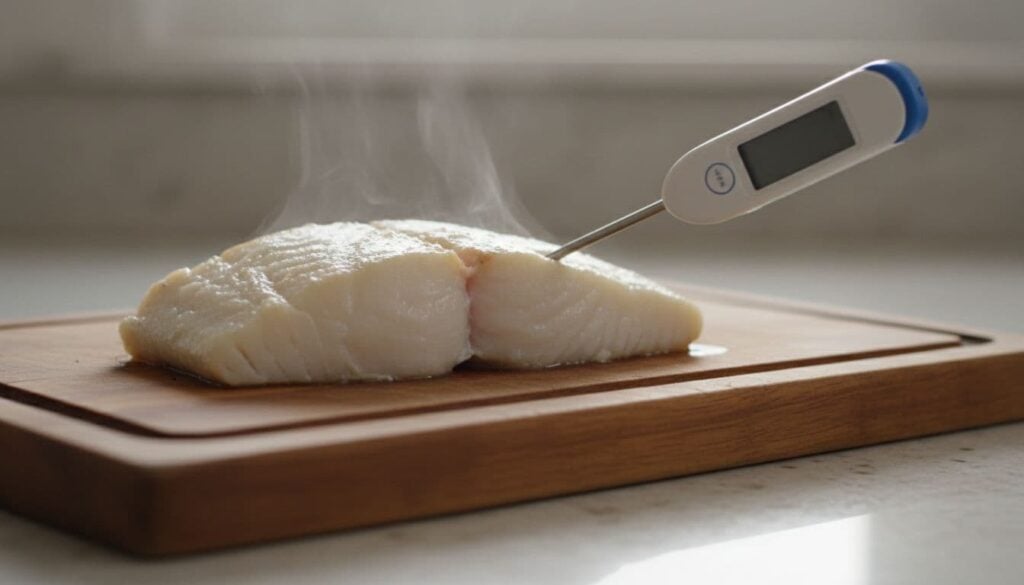
Use this chart for the recommended safe endpoint:
| Internal temperature: | What it looks like: | Texture: |
|---|---|---|
| 145°F | Fully opaque, flakes easily | Flaky and safely cooked; check early to avoid drying out |
According to FoodSafety.gov’s safe temperature chart, fin fish should reach 145°F (63°C), or be cooked until the flesh is no longer translucent and separates easily with a fork. Check the center with a thermometer for the clearest result.
For this thermometer-based method, keep cooking until the thickest center measures 145°F (63°C), then transfer the fillet off the hot pan. If the outside is browning too fast, lower the heat while the center finishes.
How doneness looks in baked, pan-seared, grilled, and air-fried halibut
Different methods change the outside of the fish, but the center still tells the truth.
Baked halibut and air-fried halibut
Baked halibut is the easiest method for beginners because the heat is more even. Start checking a few minutes before the recipe’s finish time. Look for opaque edges first, then test the center for gentle flaking. Use a thermometer in the thickest part to confirm 145°F (63°C), or check that the fish is no longer translucent and separates easily with a fork.
Air-fried halibut cooks fast and can brown before the center is ready. Because of that, don’t judge by surface color alone. Open the basket and check the thickest part; stop cooking when it reaches 145°F (63°C), or when the flesh is no longer translucent and separates easily with a fork. The hot circulating air can dry the outside quickly if you wait for a dramatic crust.
Pan-seared halibut and grilled halibut
Pan-seared halibut develops a crisp crust, but the center can overshoot quickly. Use an oil suitable for your pan temperature and lower the heat if it smokes heavily or the crust darkens before the center is ready. Watch the sides of the fillet as it cooks. You’ll see the opaque line move upward from the pan. Once the fish looks opaque most of the way through, check the center. Stop cooking when it reaches 145°F (63°C), or when the flesh is no longer translucent and flakes easily. Finish the dish with a lemon butter sauce made with lemon juice and fresh dill.
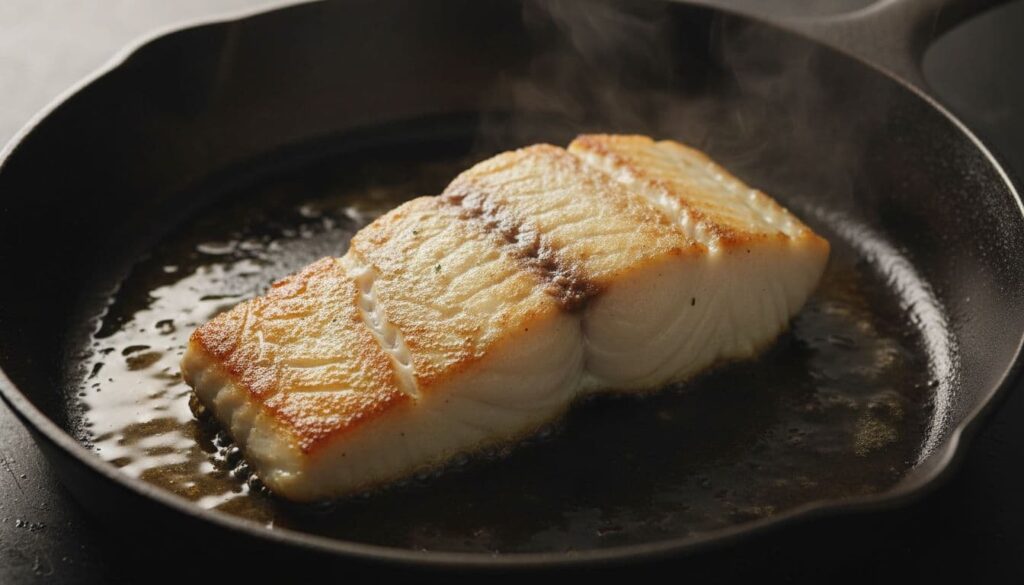
Grilled halibut can be harder to read because char masks the color. Instead, look at the side of the fillet. When the flesh is opaque about three-quarters of the way up, check the center with a fork or thermometer. Then take it off before the last bit of heat dries it out.
No matter the method, aim for moist and flavorful halibut. Overcooked fish turns dry and tough; the flakes tighten, moisture beads disappear, and the flesh turns chalky. When in doubt, check early.
Frequently Asked Questions
What is the ideal internal temperature for flaky halibut?
For the recommended safe endpoint, cook halibut to 145°F (63°C) in the thickest part, or until it is no longer translucent and separates easily with a fork. Start checking early so it does not overshoot.
How can I tell whether halibut is done without a thermometer?
Look for opaque white flesh instead of translucent, and perform the fork test: insert into the thickest part and twist gently—if it separates into clean layers with light pressure, it’s ready. Avoid mushy or crumbling texture, and check early due to carryover heat.
Why does halibut dry out faster than other fish?
As a lean fish, halibut lacks fat to retain moisture, so it turns dry and chalky if overcooked even by a minute. Check the thickest center with a thermometer and stop cooking once it reaches 145°F (63°C).
Does the cooking method change how I check doneness?
The center always tells the truth—use fork or temp check regardless of baking, searing, grilling, or air-frying. Methods like grilling hide color with char, while air-frying browns fast, so test the thickest part early.
Should I rely on cooking time or visual cues?
Timers are just a starting point since thickness varies; watch for the opaque line moving up the side and gentle flaking instead. Combined with temperature, these cues prevent guesswork for perfectly flaky results.
Store and reheat halibut
Refrigerate leftovers in shallow containers within 2 hours, or within 1 hour above 90°F. Keep them at 40°F or colder, use within 3–4 days, and reheat the center to 165°F. These limits follow USDA leftover guidance. Reheat only the amount you need and stop promptly at the endpoint to limit drying.