How long to bake frozen tilapia? Plan on about 20–25 minutes at 400°F (200°C), with your first temperature check around 18 minutes.
Each fillet is ready when its thickest part reaches 145°F (63°C). This is an estimated cooking window for plain, individually separated frozen fillets. Thickness, ice glaze, and oven performance affect the finish time. If the package says to thaw first, follow its directions.
A bag of tilapia can become a simple dinner with garlic, paprika, a little oil, and lemon. The challenge is heating the thick center without drying the thin edges. This guide explains how to choose the right fillets, arrange the pan, recognize common problems, and check doneness before you bring dinner to the table.
How long to bake frozen tilapia at 400°F
For the recipe below, allow roughly 20–25 minutes of baking and begin checking around 18 minutes. A thin piece can finish sooner; a thick center or heavy ice coating can need longer. Four fillets of the same weight can still cook differently if their shapes vary, so weigh the temperature reading more heavily than the timer.
The timing starts when the fish goes into a fully preheated oven. It does not include waiting for the oven to heat. Opening the door repeatedly lets heat escape, so have your thermometer ready and check efficiently. If a fillet is below 145°F, return it to the oven and check again after a short interval.
Choose the right fish and pan
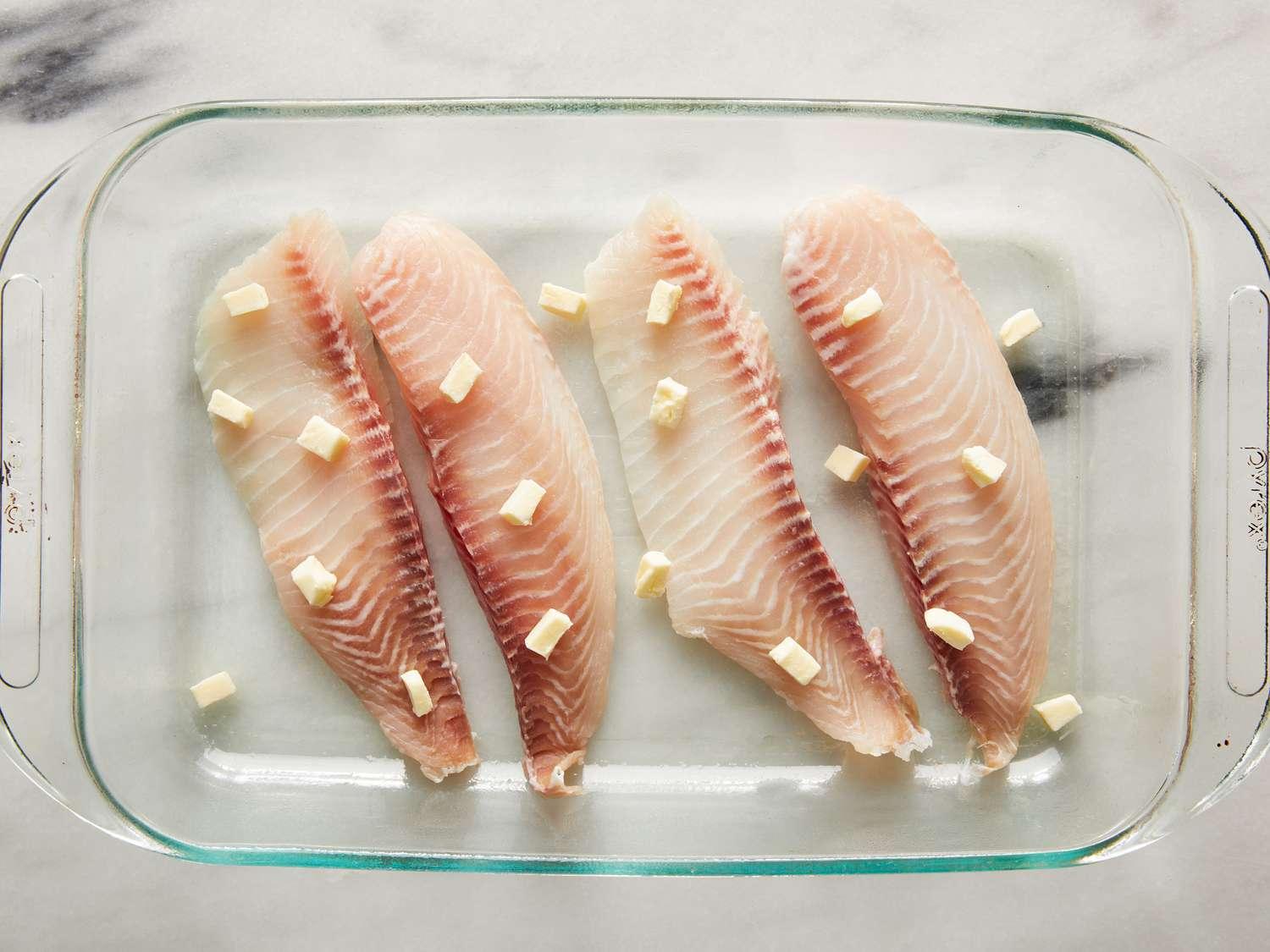
Use four plain tilapia fillets, approximately 4–6 ounces each, that are separate and suitable for cooking from frozen. This method is not a substitute for directions on breaded, stuffed, sauced, or preseasoned products. Read the label before you begin: some plain frozen fish is specifically intended to be thawed before cooking.
A wide, rimmed metal baking sheet gives melting ice room to spread. Line it with parchment rated for 400°F or lightly oil the surface. Keep the fish in one layer without overlapping. If you use an oven-safe baking dish, follow its manufacturer’s temperature-shock precautions and expect the baking time to vary.
- Ice glaze: a coating of ice releases water as it melts. Leave space around the fish and blot loose surface moisture with a paper towel before seasoning.
- Fillets stuck together: do not force a knife between them or bake the block using individual-fillet timing. Follow the package’s safe thawing directions until the pieces separate.
- Vacuum pouches: remove all packaging before baking. If you need to thaw fish in the refrigerator, take it out of the vacuum pouch first and follow the label. Do not thaw fish on the counter.
What the ingredients do
The complete quantities are in the printable recipe card. Olive oil helps the seasoning cling and gives lean tilapia a richer finish; melted unsalted butter is an alternative. Garlic powder distributes evenly without leaving large pieces that can scorch. Paprika adds a warm, mild flavor and color, while black pepper provides a little bite.
Use ½ teaspoon fine salt for the batch as a starting point. Check whether your fish contains added salt or a seasoning solution and reduce the salt if needed. Squeeze the lemon over the cooked fish just before serving so you can adjust the brightness at the table. Parsley is optional.
Step-by-step: bake frozen tilapia without drying it out
Preheat and prepare the pan
Heat a conventional oven to 400°F (200°C), with a rack near the middle. Prepare a rimmed metal baking sheet with suitable parchment or a light coating of oil. Mix the garlic powder, paprika, fine salt, and pepper in a small bowl so the seasoning is evenly distributed.
Unwrap and separate the fillets
Remove every plastic sleeve, pouch, and absorbent pad. Lay the frozen fillets on the prepared pan, leaving space between them. Blot loose moisture without trying to thaw the fish on the counter. Wash your hands and clean utensils after handling raw fish.
Add oil and seasoning
Brush the tablespoon of oil or melted butter over the fillets and sprinkle on the seasoning mixture. Distribute it across the thicker centers and thinner edges. If butter firms up on the cold surface, spread it as evenly as you can; it will melt in the oven.
Bake uncovered
Place the pan in the fully heated oven and set your first check for about 18 minutes. Plan on roughly 20–25 minutes overall, allowing for variation. The fish does not normally need turning with this method. Prepare the lemon and any sides while it bakes.
Measure the thickest part
Insert a thin thermometer probe from the side so the sensing tip reaches the center. Keep it above the pan, wait for a stable reading, and check each fillet. Continue baking any piece below 145°F. Transfer finished pieces to a clean plate while thicker ones finish; do not leave them baking simply to match the timer.
Lift gently and serve
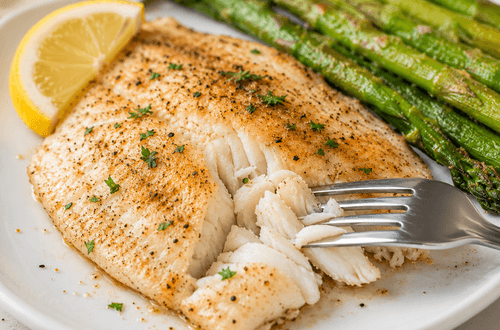
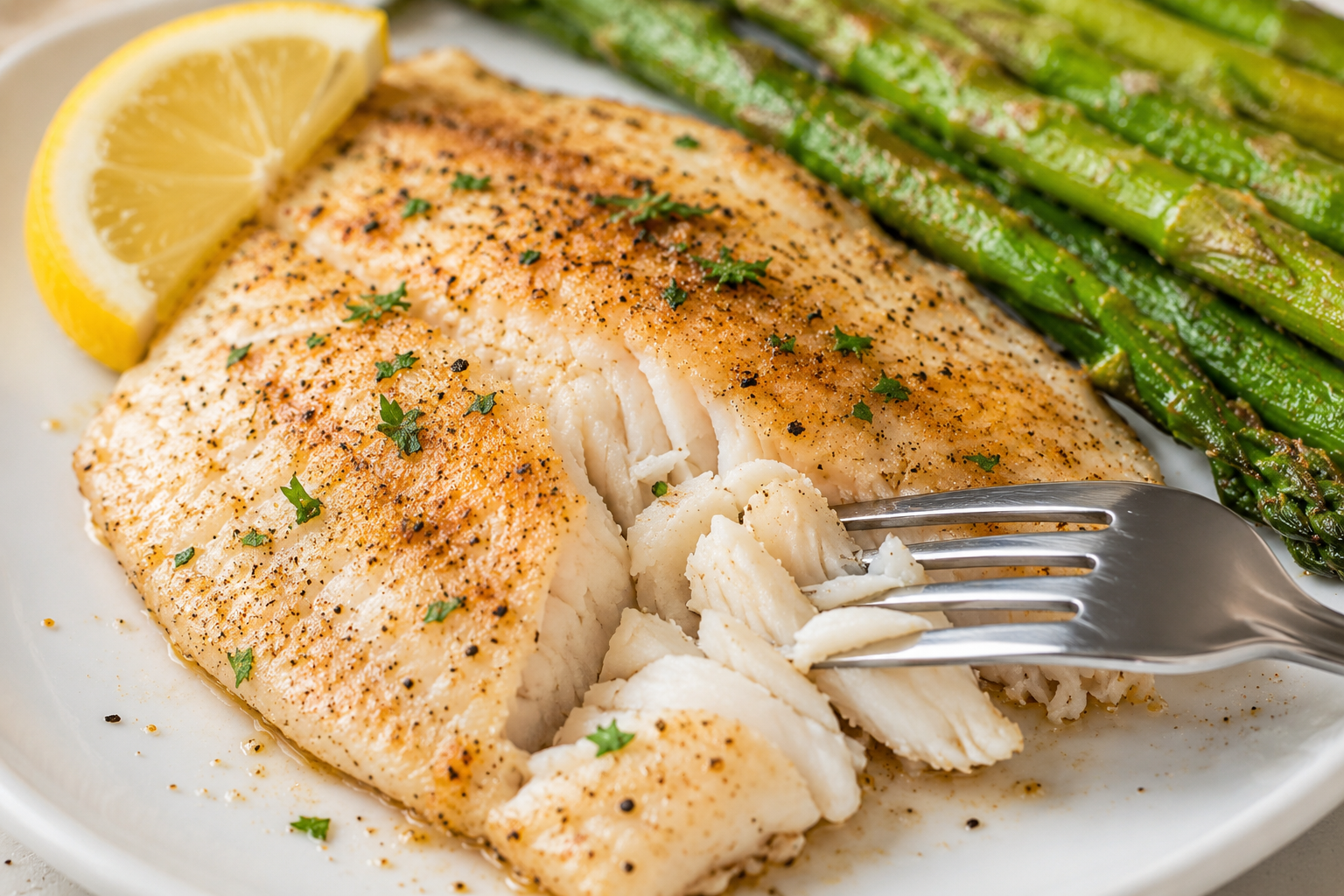
Slide a wide spatula underneath each fillet to keep the tender flesh together. Add lemon juice and optional parsley. The center should look opaque and separate into flakes, but use the measured temperature as your main check. Serve promptly with your prepared sides.
Fix watery, dry, or unevenly cooked fish
| Problem | Likely cause | Practical adjustment |
|---|---|---|
| Liquid pooling around the fish | Melting ice and moisture, especially in a crowded or deep dish | Use a wider rimmed pan next time. Lift cooked fish out of the liquid; do not overcook it to dry the pan. |
| Dry edges with a moist center | Very thin edges or extra time in the oven | Check early and remove each fillet as soon as its thickest part reaches 145°F. |
| One fillet is still underdone | Different thicknesses or overlapping pieces | Give it more room and continue cooking it separately while the finished portions come off the tray. |
| Fish breaks when lifted | Sticking or a narrow utensil | Use parchment or a lightly greased pan and slide a wide spatula under the whole fillet. |
For a closer look at thermometer placement and texture, see our tilapia doneness guide. A little oil improves flavor and helps with sticking, but it cannot compensate for leaving the fish in the oven too long.
Flavor options and an easy dinner plan
Lemon and herbs
Replace the paprika with ½ teaspoon dried oregano, then finish with lemon zest and juice. Keep the garlic powder and adjust the salt to suit the fish.
A little heat
Add a small pinch of cayenne to the garlic-paprika mixture. If you use a salted spice blend, reduce the separate salt instead of adding the full amount automatically.
Rice is a useful side because you can start it before the fish and let it finish while the tilapia bakes. Our rice cooking guide explains the differences between varieties. Add a green salad or roasted asparagus with lemon zest for another texture.
Cook dense vegetables on their own schedule and give them a head start when needed. Crowding vegetables onto the fish pan adds moisture and makes the timing less predictable. For extra richness, spoon a little lemon garlic butter sauce over the finished fish.
Store leftovers and reheat gently
Refrigerate cooked tilapia in shallow containers within two hours, or within one hour if the surrounding temperature is above 90°F. Keep the refrigerator at 40°F or colder. Use refrigerated leftovers within 3–4 days and reheat them to 165°F, following USDA leftover guidance.
Reheat only the amount you plan to eat. Reheat in a preheated 325°F oven in an oven-safe dish with a small splash of water and a loose foil cover. Check the thickest center and stop when it reaches 165°F. This reheating temperature is different from the 145°F endpoint for the first cooking. Do not leave the leftovers on the counter to cool completely before refrigerating.
Frozen tilapia questions
How long to bake frozen tilapia if the pieces are very thin?
Very thin fillets can finish before the usual 20–25-minute window, so begin checking before the 18-minute first check used for average fillets. Thickness matters more than a fixed time per fillet. Remove each piece only after its thickest part reaches 145°F.
Should I cover tilapia with foil?
This recipe bakes uncovered. A foil packet traps steam and produces a softer surface, so treat it as a different method with its own timing. Open any packet carefully and check the fish temperature before serving.
Can I use thawed fish or breaded tilapia?
Thawed fillets generally need a shorter cooking window. Breaded or prepared products need their package’s oven temperature and instructions. Do not automatically apply this frozen, unbreaded method to either.
Will baking from frozen make the fish crispy?
Expect tender, lightly seasoned fish rather than a crisp breaded crust. Frozen fillets release moisture as they cook. Avoid extending the baking time simply to make the surface brown.
Can I double the recipe?
Yes, if you have room to keep every fillet in one uncrowded layer. Use an additional pan if necessary. Two pans may change airflow and timing, so check the temperature of the fish on both trays.
Frozen Tilapia Recipe Card
Keep the quantities and six steps together while you cook. The card includes a print option, and you can leave your rating and cooking notes below.
THE COMPLETE RECIPE
Oven-Baked Frozen Tilapia
Yield: 4 servings
Ingredients
- 4 plain frozen tilapia fillets About 4–6 ounces each, individually separated; unbreaded and unseasoned.
- 1 tablespoon olive oil
- 1/2 teaspoon fine salt Reduce or omit if the fish contains added salt or seasoning.
- 1/2 teaspoon black pepper
- 1 teaspoon garlic powder Not garlic salt.
- 1 teaspoon paprika Sweet or smoked, according to preference.
- 1 lemon Cut into wedges, for serving.
Equipment
- 1 large rimmed metal baking sheet With enough room for four separated fillets.
- 1 oven-safe parchment Optional; rated for 400°F.
- 1 instant-read food thermometer A thin probe makes checking fillets easier.
- 1 small bowl and measuring spoons
- 1 Wide spatula
Instructions
- Preheat and prepare the pan. Heat the oven to 400°F / 200°C, with a rack in the center. Lightly grease a large rimmed metal baking sheet or line it with parchment rated for this temperature.
- Unwrap and separate. Remove all plastic and vacuum packaging. Use plain, individually separated frozen fillets and arrange them in a single layer with space between them. Do not use the same timing for a solid frozen block. Follow the product’s directions if they differ.
- Season evenly. Mix the salt, pepper, garlic powder and paprika. Brush the fish with the measured olive oil and sprinkle the seasoning over both sides. Leave the lemon for serving. Wash hands and clean utensils that touched raw fish.
- Bake uncovered. Bake on the center rack. Plan on about 20–25 minutes. Start checking around 17–18 minutes, or around 15 minutes for especially thin fillets. A thick piece or heavy ice glaze may extend the cooking time.
- Measure each fillet. Insert a thin thermometer probe from the side into the thickest center without touching the pan. Continue baking until each fillet registers 145°F / 63°C, checking every 2–3 minutes as needed. Remove finished pieces separately with a wide spatula.
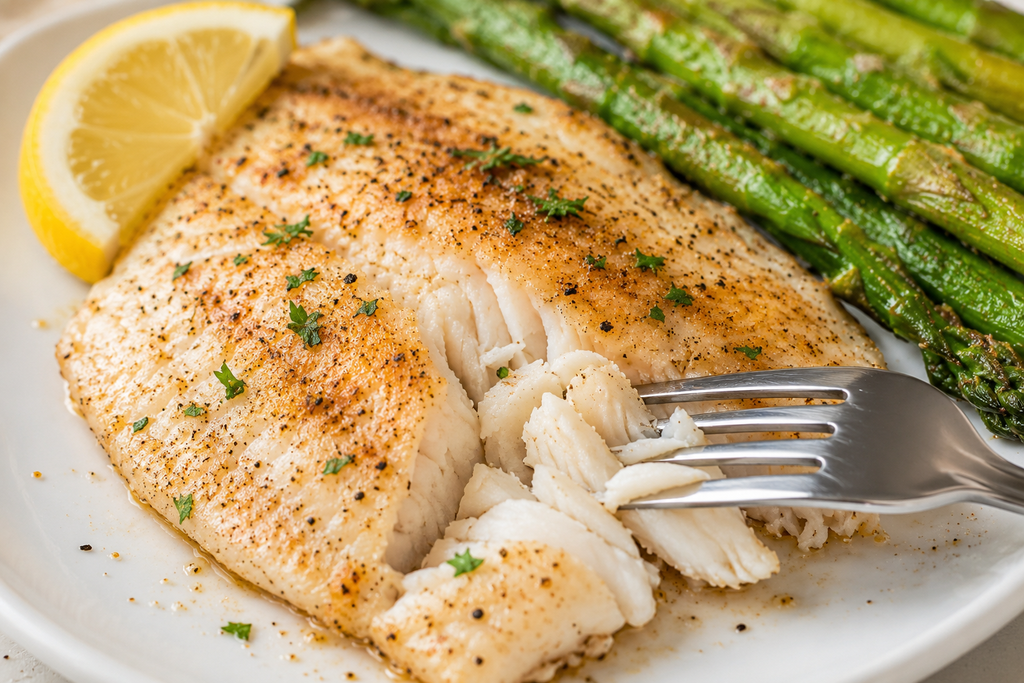
- Serve promptly. Transfer to clean plates and serve with lemon wedges. Do not leave finished fish in the oven just to dry up liquid in the pan. The flesh should be opaque and separate into flakes.
Notes
Rate This Recipe
Made this recipe? Choose a star rating in the comment form and share how it turned out. Your cooking time and any ingredient changes can help the next reader.
Rate This Recipe