Skillet skills · a thermometer-led method
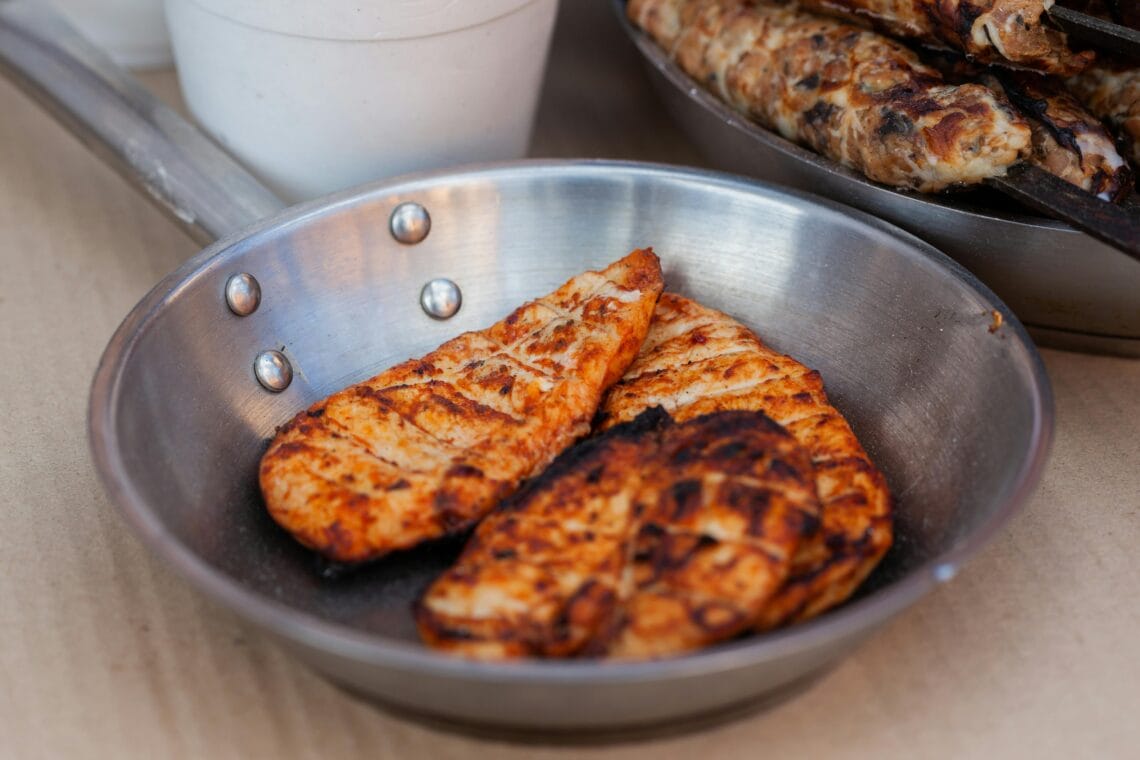
A golden crust. A tender center.
To sear chicken breast, make the thickness even, dry the surface, brown both sides, then lower the heat until the thickest center reaches 165°F (74°C). The crust shows browning; a thermometer tells you when each breast is ready.
Check each breast before removing it.
Ingredients for 2 servings
- 2 boneless, skinless chicken breasts, about 6–8 ounces each
- 1 tablespoon neutral cooking oil
- ½ teaspoon fine salt
- ¼ teaspoon black pepper
- Optional for basting: 1 tablespoon unsalted butter, 1 smashed garlic clove, and 1 thyme sprig
Pound the chicken to an even ¾-inch thickness. Use a skillet large enough to leave space between the breasts. Allow about 5–10 minutes preparation, 10–15 minutes cooking depending on thickness, and a 5-minute rest; thermometer readings determine when cooking is complete.
Set up the pan and chicken
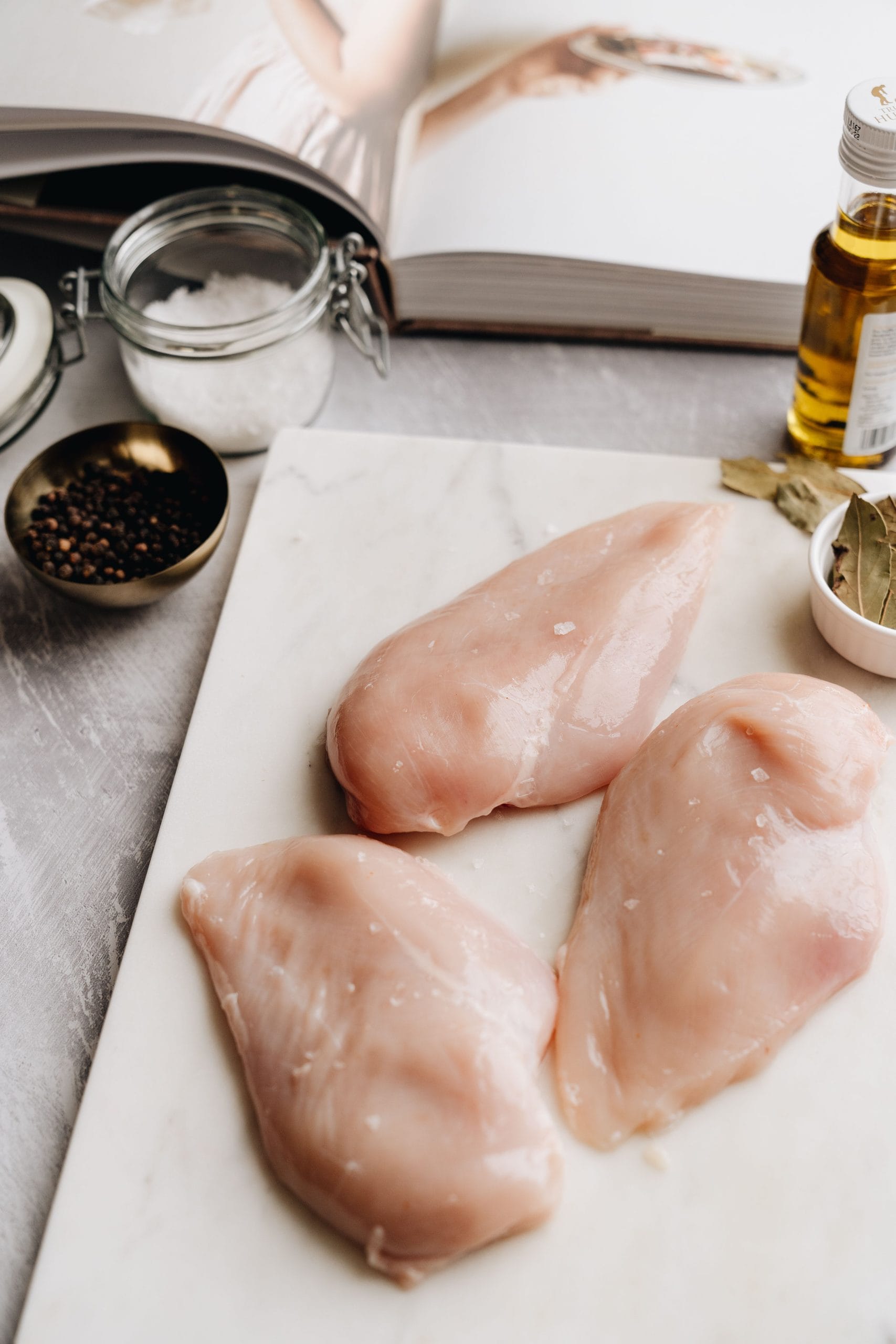
Keep the chicken refrigerated until preparation; do not rinse raw chicken. Pound the thick ends gently between food-safe sheets to about ¾ inch. Pat dry with paper towels, discard the towels, then season both sides with the measured salt and pepper. Wash hands and clean surfaces that touched raw poultry. If seasoning ahead, refrigerate the chicken. Reduce the plain salt when adding a salted spice blend.
Use a heavy skillet wide enough to keep the breasts apart. Heat the oil over medium-high heat until shimmering, without letting it smoke. Save the optional butter for the final minute. Cast iron and stainless steel encourage browning; follow the heat limits for a nonstick skillet.
How to sear chicken breast, step by step
Brown the chicken first, then lower the heat to finish the center gently. Allow about 20 to 30 minutes including preparation and the 5-minute rest; the cooking itself usually takes 10 to 15 minutes, depending on thickness.
Before the steps, here’s a quick guide for common breast thicknesses. Times vary by stove and pan, so use this as a starting point.
| Thickness (after pounding) | Sear minutes per side | Finish method | Minimum internal temp |
|---|---|---|---|
| 1/2-inch | 2 to 3 min | Pan only | 165°F |
| 3/4-inch | 3 to 4 min | Pan or oven | 165°F |
| 1 inch | 4 to 5 min | Oven recommended | 165°F |
Place the thermometer in the center
Insert an instant-read thermometer from the side into the thickest center, keeping the tip clear of the hot pan. Check both breasts in more than one spot and continue cooking until the lowest reliable center reading reaches 165°F (74°C). Remove each breast as it reaches that temperature.
The searing times are estimates for building color. If the outside is already brown, lower the heat while the center finishes. Do not keep cooking at high heat simply to match a timer, or rely on a predicted temperature rise during the rest.
Brown, then finish gently
- Preheat the pan (2 to 3 minutes).
Heat the skillet over medium-high heat. Add oil, then let it heat until it shimmers. The oil should shimmer without smoking; do not add water to hot oil. - Lay the chicken in, then don’t move it (3 to 5 minutes).
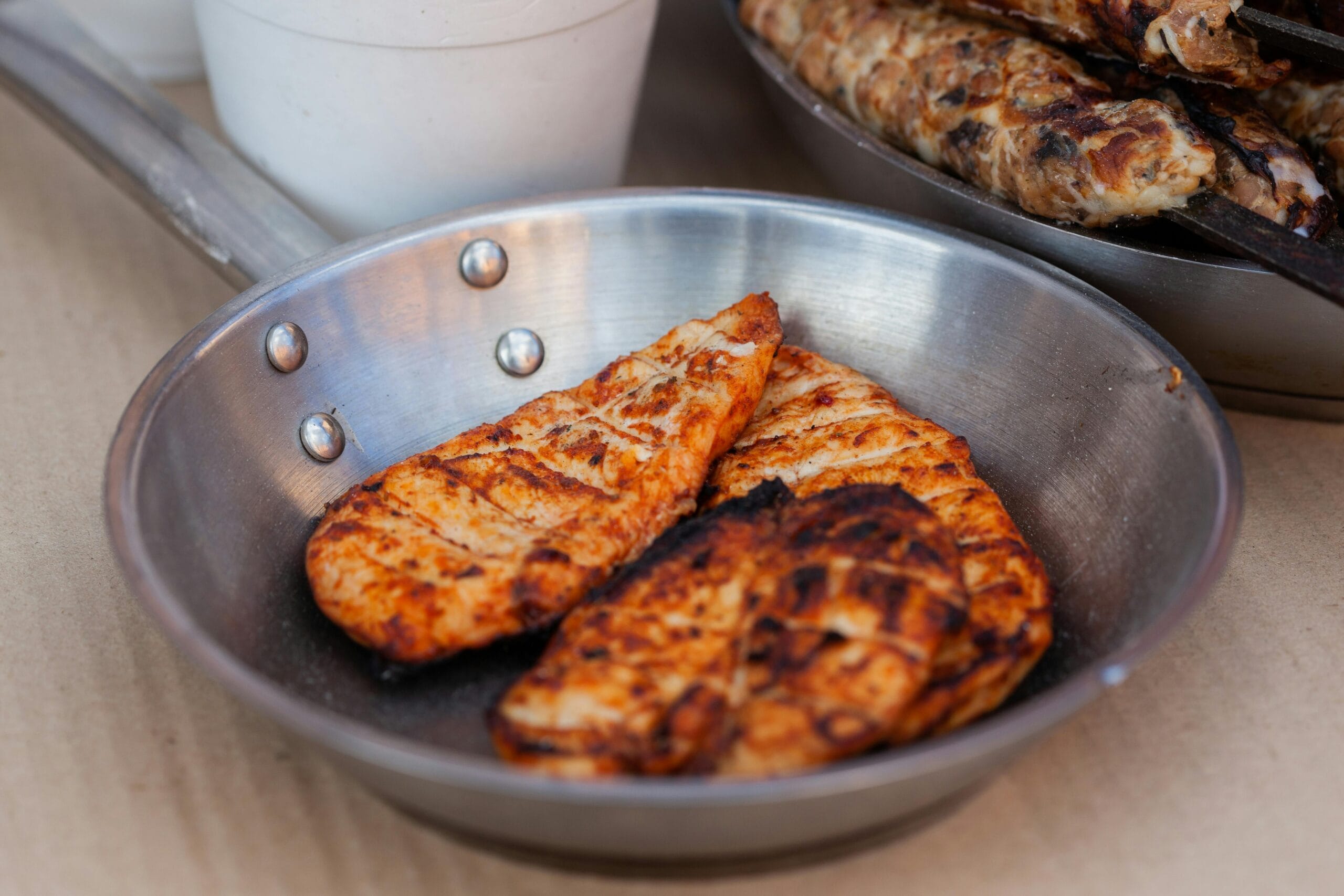
Place the chicken presentation-side down (the smoother side). Press lightly for 5 seconds so it makes full contact. Searing requires patience to achieve a golden brown crust, so leave it alone until it releases easily. If it sticks, it usually isn’t browned yet. - Turn and brown the second side (2 to 4 minutes).
After flipping the chicken, lower the heat to medium. At this point, you’re building color on side two while protecting the center. - Finish thicker breasts gently.
If the chicken is 1 inch thick or already deeply browned, transfer it to a 375°F oven in an oven-safe skillet or a baking dish. Check the handle and manufacturer’s temperature limit first; use oven mitts when handling the pan. Begin checking after about 5 minutes and continue until the thickest part measures 165°F. If finishing on the stove, lower the heat and check the center frequently. - Optional butter baste (30 to 60 seconds).
In the last minute, add 1 tablespoon unsalted butter and a smashed garlic clove or thyme sprig. Tilt the pan and spoon the foaming butter over the chicken. Keep it short so the butter doesn’t burn.
Two quick cues while cooking: you should hear a steady sizzle (not a weak hiss), and you should see browning along the edges before you flip.
Choose the next step from the center reading
| What you see or measure | What to do |
|---|---|
| Brown crust; center below 165°F | Lower the heat and continue gently. For a thick breast, use the oven finish above. |
| One breast at 165°F; the other below it | Move the finished breast to a clean plate while the other continues. |
| A high reading that drops when the probe moves | Reposition in the thickest center, clear of the pan, and use the lowest reliable reading. |
The FoodSafety.gov poultry guidance specifies 165°F. A predicted rise while resting is not a replacement for this measured endpoint. Rest about 5 minutes, then slice across the grain.
Rest, slice, and make a pan sauce
Resting briefly makes the chicken easier to handle and can reduce liquid lost when slicing.
Move the chicken to a plate and let it rest for 5 minutes for average breasts, or 8 minutes for thick ones. For meal prep, stop cooking at the measured endpoint and follow the storage guidance below. Then slice against the grain on a slight bias. Those angled slices look nicer and feel more tender.
A measured lemon-Dijon pan sauce
For two servings, have ¼ cup low-sodium chicken broth, 1 teaspoon Dijon mustard and 1 teaspoon lemon juice ready. These are extra ingredients for the optional sauce.
- Check the drippings. Leave the browned bits in the skillet. If they are black and smell burned, skip them and make the sauce in a clean pan.
- Deglaze and reduce. Add the broth carefully to the skillet, bring it to a boil, and scrape up the browned bits with a heat-safe utensil. Simmer until about 2 tablespoons of liquid remain.
- Finish off the heat. Stir in the mustard and lemon juice. Taste before adding salt, then spoon over the rested chicken. Add a teaspoon of water if the sauce reduces too far.
Make the sauce while the chicken rests. Reduction time depends on the width and heat of your pan, so watch the amount of liquid rather than a fixed countdown.
Fix the most common skillet problems
Why is the chicken sticking?
A developing crust often clings to stainless steel at first. Give it a little more time over controlled heat, then ease a thin spatula underneath. If the surface is darkening too fast or the oil smokes, lower the heat; waiting over excessive heat will burn it. Dry chicken, an even coating of oil and space in the pan help the next batch.
Why is there water in the pan?
A wet surface and crowded skillet make browning harder. Pat the next batch dry and cook in batches if needed. If liquid has collected, let it evaporate over controlled heat while watching the temperature of the chicken. Do not continue cooking already-done breasts just to achieve a darker crust.
Can I use thin chicken cutlets?
Yes, but begin checking much sooner. The timing and 30-minute total in the recipe card assume breasts pounded to about ¾ inch. Thin cutlets may reach 165°F while the second side browns and may not need the gentle finishing stage. Use a sideways thermometer reading to reach their center.
Can I cook more than two breasts?
Use batches so each breast has space against the skillet. Wipe out burned residue between batches and add fresh measured oil as needed. Keep raw chicken refrigerated until its turn, use a clean plate for cooked pieces, and check every breast separately. Total cooking time increases with each batch.
Store and reheat safely
Refrigerate cooked food in shallow containers within 2 hours, or within 1 hour when the surroundings exceed 90°F. Keep the refrigerator at 40°F or below. Use refrigerated cooked poultry within 3–4 days and reheat leftovers to 165°F. Freeze portions you will not use in that window. See the FoodSafety.gov storage chart for storage limits.
Print the pan-seared chicken recipe
Keep the measured ingredients, thermometer endpoint and optional pan sauce beside you. Rate the recipe after you have tried it.
THE COMPLETE RECIPE
Pan-Seared Chicken Breast
Yield: 2 servings
Ingredients
- 2 boneless skinless chicken breasts About 6–8 ounces each; pound to an even ¾-inch thickness.
- 1 tablespoon neutral cooking oil
- 1/2 teaspoon fine salt
- 1/4 teaspoon black pepper
- 1 tablespoon unsalted butter Optional, for the final minute.
- 1 garlic clove Optional, smashed.
- 1 thyme sprig Optional.
Equipment
- 1 heavy skillet Wide enough to leave space between the breasts; follow manufacturer heat limits.
- 1 instant-read food thermometer
- 1 tongs
- 1 meat mallet or rolling pin
- 1 clean plate and cutting board
Instructions
- Prepare the chicken. Keep the chicken refrigerated until preparation. Do not rinse it. Pound gently between food-safe sheets to an even ¾ inch. Pat dry with paper towels, discard the towels, and season both sides with the measured salt and pepper. Wash hands and clean surfaces that touched raw chicken.
- Heat the oil. Heat the oil in a heavy skillet over medium-high heat until shimmering, without smoking. Allow room between the breasts.
- Brown the first side. Set the chicken in the pan with the smoother side down. Leave it in place for about 3–5 minutes, checking for a browned crust and easier release. Reduce the heat if the oil smokes or the surface darkens too quickly.
- Turn and finish gently. Turn, lower the heat to medium, and cook the second side for about 2–4 minutes. Then lower the heat further as needed and keep cooking until an instant-read thermometer registers 165°F / 74°C in the thickest center of each breast. Insert from the side and keep the probe away from the pan. Cooking often totals 10–15 minutes, but thickness and equipment change this.
- Baste if desired. During the final 30–60 seconds of cooking, add the optional butter, garlic and thyme. Spoon the foaming butter over the chicken without letting it burn. Verify 165°F before removing each breast; do not count on resting to reach that temperature.
- Rest and slice. Transfer cooked chicken to a clean plate and rest 5 minutes. Slice across the grain on a clean cutting board. If one breast reaches temperature first, remove it while the other finishes.
Notes
Rate This Recipe
Made this recipe? Choose a star rating in the comment form and share how it turned out. Your cooking time and any ingredient changes can help the next reader.
Rate This Recipe