The BBQ rub ratio below makes a paprika-led seasoning for pork, chicken, and ribs. Measure by volume, choose your salt carefully, and reduce the sugar when cooking over intense direct heat.
4 : 2 : 1 : 1 : 1 by volume · 5 minutes · about 9 tablespoons
The master BBQ rub ratio you can keep in your head
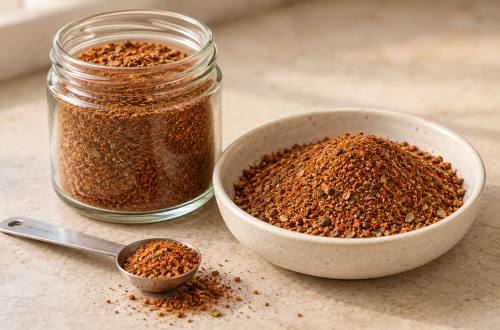
Use a 4:2:1:1:1 ratio by volume: 4 parts paprika, 2 parts brown sugar, and 1 part each kosher salt, black pepper, and garlic powder. A tablespoon as the “part” makes about 9 tablespoons of rub, enough for several meals. Mix thoroughly before measuring it onto meat, and add cayenne only if you want heat.
Prep: 5 minutes; no cooking required. Yield: about 9 tablespoons with salt, or 8 tablespoons without it. For a small trial batch, use teaspoons instead of tablespoons for every part, producing about 3 tablespoons. Break up brown-sugar lumps before mixing so each spoonful has an even balance of spices.
| Use | Mix |
|---|---|
| Master rub | 4 tbsp paprika, 2 tbsp brown sugar, 1 tbsp kosher salt, 1 tbsp black pepper, 1 tbsp garlic powder |
| Optional heat | 1/2 to 1 tsp cayenne or chipotle powder |
| Pork tweak | Add 1 tsp mustard powder or 1 tsp cumin |
| Chicken tweak | Cut sugar to 1 tbsp for hot grilling, add 1 tsp onion powder |
| Ribs tweak | Keep full sugar, add 1 tsp chili powder for deeper color |
Paprika gives the rub its color and a mild sweet note. Sugar helps with browning and adds a touch of caramel flavor. Salt wakes everything up, while pepper adds bite. Garlic powder fills in the middle so the rub tastes round instead of flat.
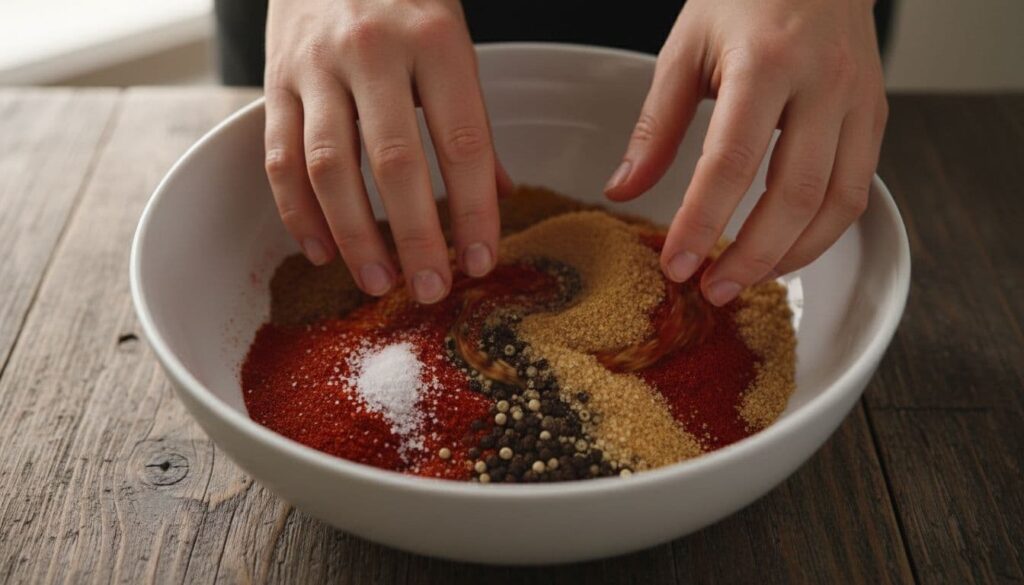
Those same ingredients also help build bark, the dark crust on the outside of the meat. Paprika and sugar deepen the color, while salt pulls a little moisture to the surface so the seasoning sticks better. Pepper gives that crust a sharper edge, which is why a rub can taste lively even before sauce touches it.
If you need swaps, keep them simple:
- Use smoked paprika if you want more smoke without a smoker.
- For high-heat grilling, reduce or omit the sugar. Turbinado sugar can still scorch over direct flame, so it is not a substitute for managing heat.
- Do not swap fine salt for kosher salt by equal volume. Crystal size and brand change how much salt fits in a spoon; use a salt conversion chart for your brand, or leave salt out of the jar and season each cut separately.
- Use ancho or chipotle instead of cayenne for softer heat.
Keep this a starting ratio, not a fixed salt dose for every cut. If the meat is already brined or injected with a salt solution, choose the salt-free version and season lightly after cooking if needed. For bone-in chicken, use the chicken thigh doneness guide to check the thickest part with a thermometer.
Small tweaks make pork and chicken taste right
The base mix works on both meats, but pork and chicken don’t behave the same on the grill. Pork has more room for sweetness and warm spices. Chicken cooks faster, so the rub needs a lighter touch.
Pork likes a little more warmth and depth
Pork shoulder, pork chops, and pork tenderloin all love this rub. For bigger cuts, add mustard powder or cumin. That little change gives the meat a deeper, rounder flavor without making it taste busy.
Use about 1 tablespoon rub per pound for pork shoulder or butt, and a lighter coating for chops or tenderloin. Pat dry, coat evenly, and refrigerate in a covered container if resting for 30 minutes or overnight. A rub adds seasoning; it does not replace safe refrigerated raw-meat storage.
Brown sugar works well with pork because pork has a natural sweetness. That’s why the bark on pulled pork often tastes richer than the skin on chicken with the same rub. If you’re cooking low and slow, keep the full amount of sugar. If you’re grilling chops hot and fast, cutting the sugar slightly can help prevent scorching.
Chicken cooks fast, so the rub should stay lighter
Chicken doesn’t need a heavy blanket of seasoning. Use about 2 teaspoons to 1 tablespoon per pound, depending on whether you’re cooking wings, thighs, or a whole bird. Pat the skin dry first, so it browns rather than steams.
For chicken, reduce the sugar if you’re grilling over medium-high heat. Add onion powder for a fuller, savory flavor. Smoked paprika also works well here because chicken can taste mild next to pork or ribs.
For chicken already brined or labeled enhanced, use the salt-free version of the rub. Season after cooking only if needed; the amount of salt already added to the meat varies by product.
Direct flame and hot grill surfaces can scorch a sugar-containing rub on any meat. Create a cooler zone on the grill and move pieces there if the coating darkens before the center is cooked. Salt-free rub gives you more control when the meat has already been seasoned.
If you’d like another family-friendly version, this adaptable dry rub shows how the same pantry spices can shift across meats without getting fussy.
Ribs need even coverage and time to build bark
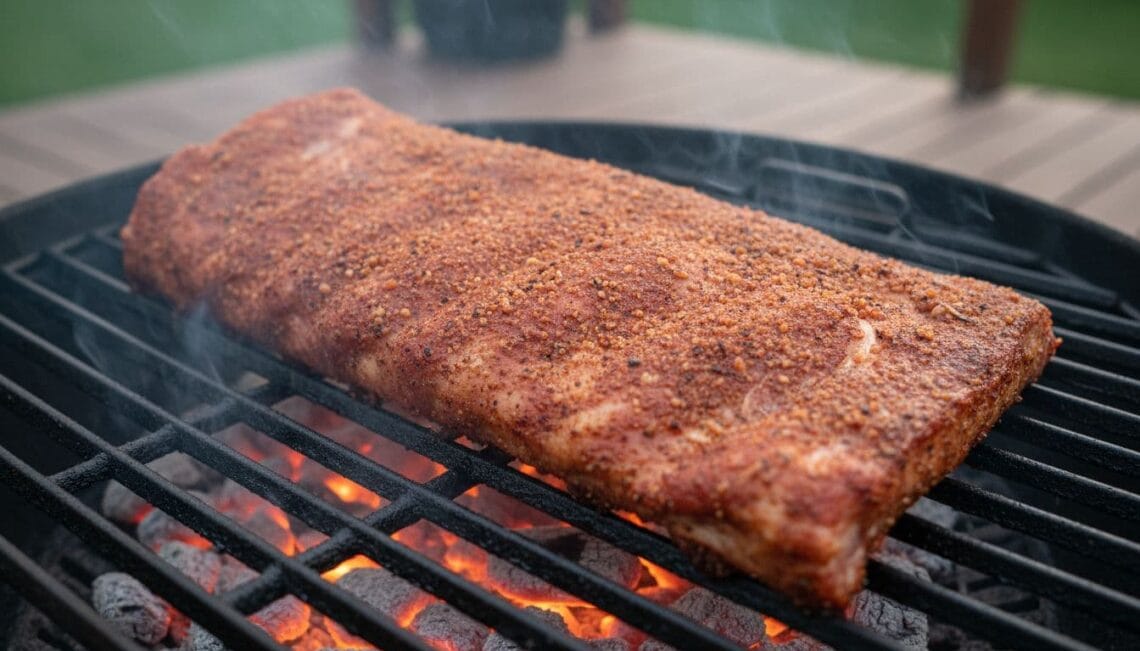
Ribs are where this BBQ rub ratio really shines. The surface area gives the seasoning room to work, and the longer cook time helps the bark set up.
Use about 2 to 3 tablespoons per rack, depending on size. Sprinkle the rub from a little height so it falls evenly, then gently pat it on. Don’t grind it into the meat. A rub pressed into the surface can turn patchy once the ribs start sweating.
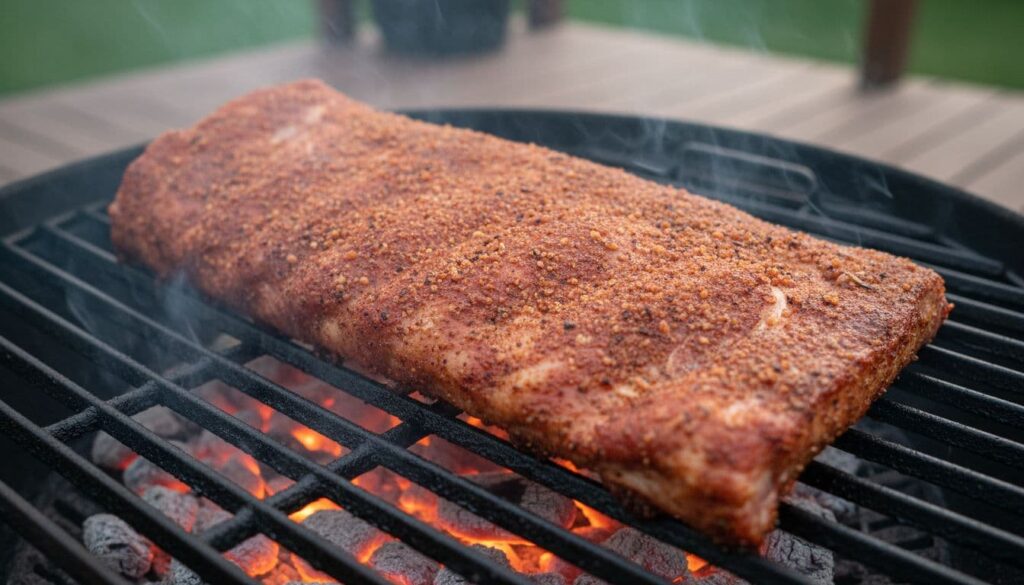
Ribs usually handle the full amount of sugar well because they cook more slowly than chicken. That gives the sugar time to brown instead of burn. Keep paprika generous, because it helps create that red-brown crust people want when they slice into a rack.
If you like bolder ribs, add chili powder for earthy depth or cayenne for more kick. Want sweeter ribs? Leave the ratio alone and brush on the sauce near the end, not early. Early sauce can clog the bark and make it sticky before the ribs are ready. For a sweeter style, this ribs dry rub recipe is a useful comparison point.
For repeatable results, record the paprika type, salt brand, and rub amount used on each cut. Keep measuring the base ratio when mixing a new jar; then adjust a small portion rather than changing the whole batch.
Mixing, storage, and safe use
Whisk the dry ingredients until evenly blended, then transfer them to a clean, dry, airtight jar. Label the jar with the date and salt brand or write “salt-free” if you left salt out. Store it in a cool, dark, dry cupboard and use it while the spices still smell fresh; discard a blend that becomes damp or moldy. Spoon the amount you need into a separate bowl before touching raw meat. Do not return any rub or utensil that has contacted raw meat or poultry to the storage jar.
Cook the seasoned meat to a measured safe endpoint: chicken to 165°F (74°C), and whole cuts of pork such as chops or tenderloin to 145°F (63°C) followed by a 3-minute rest. Rib tenderness may call for longer cooking; see how to know when ribs are done. The rub adds flavor and browning, but it does not make undercooked meat safe. Refer to FoodSafety.gov’s temperature chart for other cuts.
For a finishing layer, pair the rub with homemade rib sauce or a thin coat of sweet sauce for ribs. Taste both together before seasoning the meat heavily; sauce and rub can each contribute salt and sugar.