
Ribeye preparation
How to prep a ribeye steak: keep it refrigerated, pat it dry, season it, and prepare a hot pan or two-zone grill. Have a thermometer and a clean serving plate ready before the steak goes on the heat.
Step-by-Step Guide: How to Prep a Ribeye Steak
Good preparation makes browning and temperature control easier. Work through the eight steps, then choose a cooking method suited to the steak’s thickness.
Step 1: Choose a High-Quality Ribeye
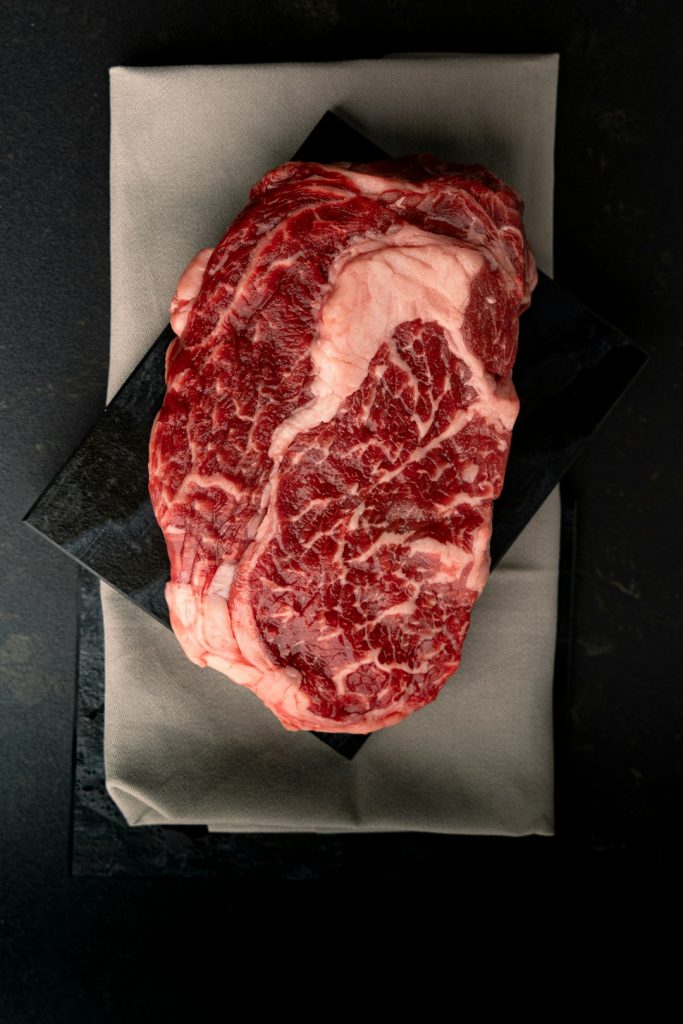
Choose a ribeye with visible marbling distributed through the meat rather than one thick exterior seam of fat. Marbling contributes richness as the steak cooks.
A ribeye about 1 to 1½ inches thick leaves more room to brown the surface while monitoring the center.
Step 2: Remove the Steak from the Refrigerator
Remove the ribeye when you are ready to dry, season, and cook it. It can remain cool from refrigeration; choose the cooking approach and begin thermometer checks according to the steak’s thickness.
Keep the steak refrigerated until you are ready to prep it. During active preparation, use a clean plate or wire rack. Do not leave raw beef unrefrigerated for more than 2 hours, or more than 1 hour when the surrounding temperature is above 90°F.
Step 3: Pat the Steak Dry
Pat both sides dry with paper towels so the surface browns instead of steaming. Discard the towels immediately, wash your hands with soap and water, and clean and sanitize any surface or utensil that touched the raw beef. Do not place the cooked steak on the raw-meat plate.
Step 4: Trim Only if Necessary
Most ribeye steaks require very little trimming. Leave the marbled fat intact since it adds flavor and moisture during cooking.
If there are any loose pieces of fat or silver skin hanging from the edges, trim them carefully with a sharp knife.
Step 5: Season Generously
Season both sides with kosher salt and freshly ground black pepper. If salting 30 to 40 minutes ahead, keep the steak refrigerated during that time. Otherwise, season it immediately before it goes on the heat.
You can also add garlic powder, onion powder, smoked paprika, or your favorite steak seasoning, but don’t overpower the natural flavor of the ribeye.
Step 6: Lightly Coat with Oil
Brush the steak lightly with a high-smoke-point oil such as avocado oil, canola oil, or grapeseed oil. A thin coating helps promote even browning and prevents sticking.
Avoid using butter at this stage because it can burn quickly over high heat.
Step 7: Prepare Your Cooking Surface
Before placing the steak on the grill or skillet, make sure your cooking surface is fully preheated.
- For grilling: Set one area for browning and leave another at lower heat so you can move the steak away from flare-ups or finish the center more gently.
- For pan-searing: Preheat a cast-iron skillet over medium-high to high heat for several minutes.
A fully preheated cooking surface supports even browning.
Step 8: Gather Everything Before Cooking
Have your tongs, instant-read thermometer, butter, garlic, herbs, and a separate serving plate ready before cooking. The serving plate must not be the plate that held the raw beef. Use the steak doneness temperature chart as a reference while monitoring the center.
Once you’ve completed these steps, your ribeye steak is fully prepped and ready to cook using your preferred method.
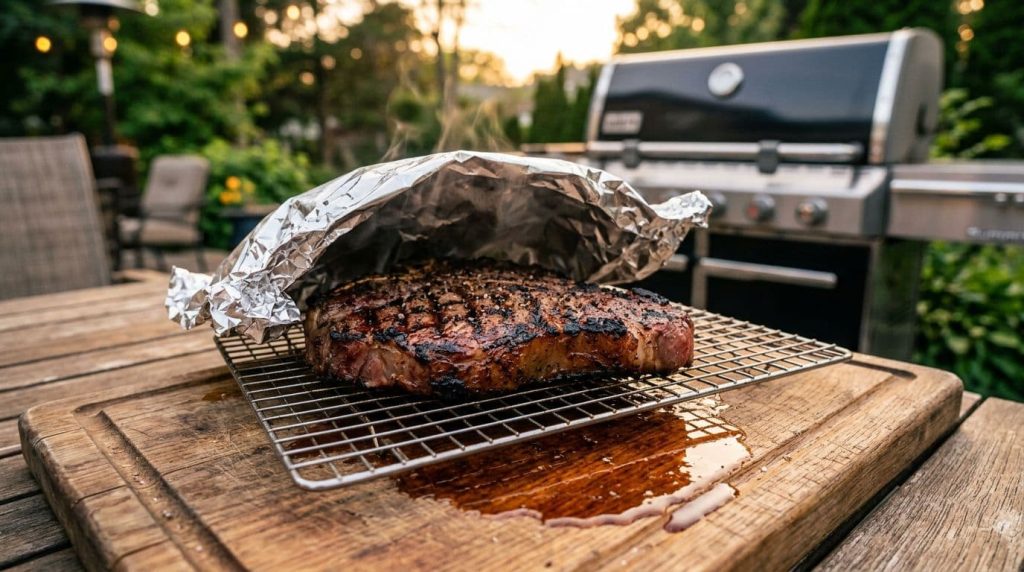
What to Do After Preparing Your Ribeye Steak
After preparation, choose a cooking method that matches the steak’s thickness and monitor the center with a thermometer. Grilling, pan-searing, and reverse-searing all work when heat and doneness are controlled.
Confirm the safe endpoint before resting
Food-safety endpoint: Cook a whole ribeye steak to 145°F in the thickest part before removing it from the heat, then rest it for at least 3 minutes. Rare and medium-rare temperatures are culinary preferences below this federal recommendation. See the federal temperature chart.
Carryover temperature rise varies with steak thickness and cooking heat. Do not assume it will rise by exactly 5°F or remove it below the safety target without a validated method.
Add Butter and Aromatics (Optional)
For an optional butter baste, lower the pan heat before adding 1 tablespoon butter during the final minute so the milk solids and garlic are less likely to scorch. Add a garlic clove or a small sprig of rosemary or thyme, tilt the pan, and spoon the foaming butter over the steak.
Let the Steak Rest
After the steak reaches 145°F and comes off the heat, leave it undisturbed for at least 3 minutes. A large ribeye can remain on the board a little longer if serving is delayed, but that extra time is a serving choice rather than another safety requirement.
Slice and Serve
For boneless ribeye steaks, slicing against the grain can make each bite even more tender, although many people prefer serving the steak whole. Pair your ribeye with classic sides such as roasted potatoes, grilled asparagus, sautéed mushrooms, or a fresh garden salad for a complete meal.
Ribeye Prep Checklist
Keep the steak refrigerated until prep, pat it dry, season it, and preheat a pan or two-zone grill. Have a thermometer and a clean serving plate ready. For the federal food-safety endpoint, measure 145°F in the thickest part before removing the steak from the heat, then rest it for at least 3 minutes.