A better batch • The boil, chill & peel guide
How to make hard-boiled eggs easier to peel starts with a repeatable routine: lower refrigerated eggs into boiling water, cook gently, cool promptly, and lift the shell with its thin membrane. None of these steps guarantees six perfectly smooth eggs, but they give you clear things to control.
This guide is for six large eggs with fully firm whites and yolks. The cooking estimate is about 12 minutes after the eggs enter the water, followed by roughly 10 minutes in an ice bath. Egg size, elevation, and the pot can change the time.
Set up the batch before heating
Choose a saucepan that holds the eggs in one layer without wedging them tightly together. You need enough water to cover them by about an inch, a spoon for lowering them, a timer, and a large bowl for ice water. Using similar-sized eggs gives the batch a more consistent starting point.
Keep the eggs refrigerated until you are ready. There is no need to leave them on the counter to warm up for this method. Check for cracks before cooking, and use clean hands and utensils. Have the cooling bowl ready before the timer ends so the eggs do not continue sitting in hot water while you look for ice.
Boil, cool, and check in six steps
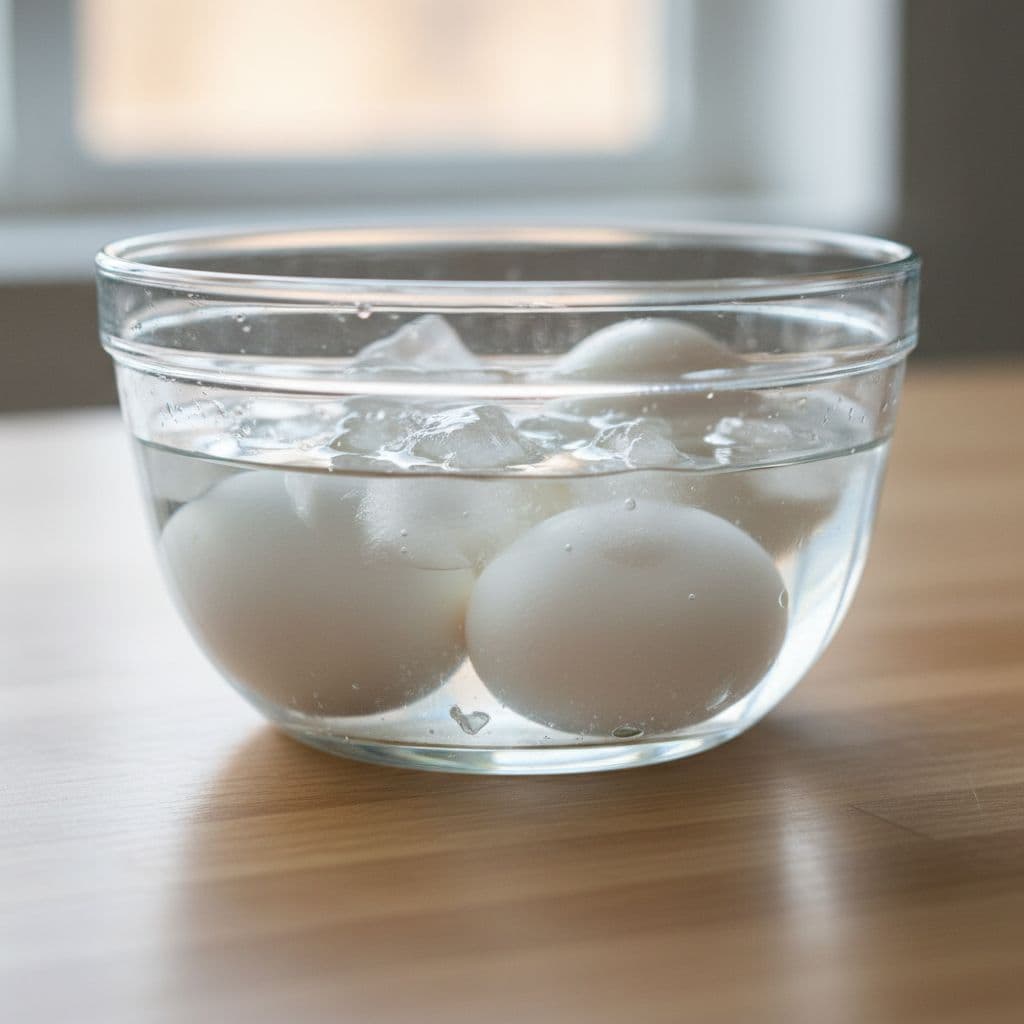
Make the ice bath
Fill a large bowl with cold water and plenty of ice. The eggs need room to sit beneath the water. Keep extra ice nearby if your kitchen is warm; a few cubes that melt immediately will not cool the whole batch effectively.
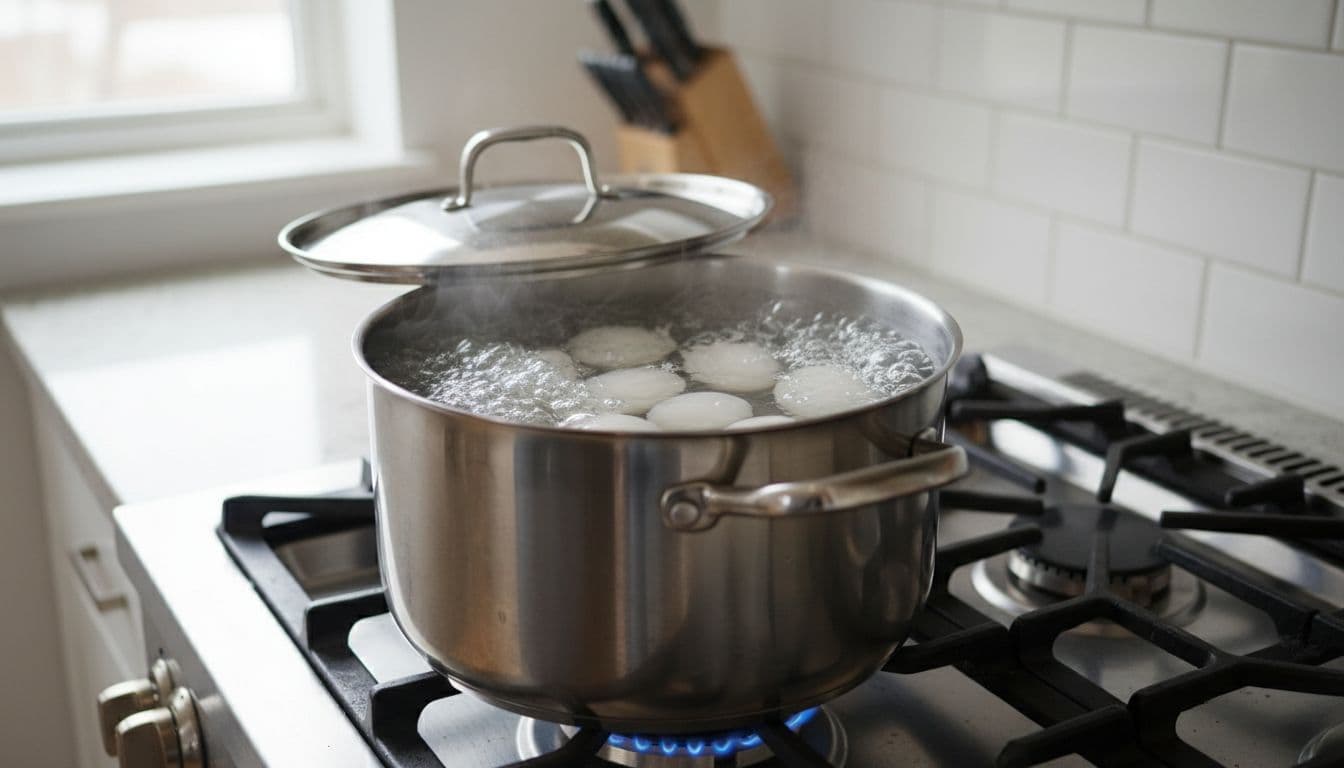
Bring the cooking water to a boil
Add enough water to the saucepan to cover the eggs by about an inch once they are in place. Bring it to a boil, then lower each refrigerated egg gently with a spoon. Avoid dropping the shells onto the pan or splashing hot water.
Cook gently and start the timer
Start timing when the eggs enter the water. Reduce the heat so the water maintains a gentle simmer rather than tossing the eggs around. Use about 12 minutes as an initial estimate for large eggs. Keep them submerged, and do not extend cooking simply because one shell looks difficult to peel.
Cool promptly
Transfer the eggs with a slotted spoon to the ice bath. Cool until they are cold enough to handle throughout, about 10 minutes for this batch, adding ice as needed. Water that becomes lukewarm needs refreshing. If you are not peeling immediately, refrigerate the cooled eggs promptly.
Check the first egg
Peel one egg and cut it in half. A hard-cooked egg should have a firm white and firm yolk, with no liquid center. If yours is still soft, return the remaining unpeeled eggs to hot water and continue cooking, then cool and check again before treating the batch as fully hard-cooked.
Peel with a light touch
Tap each cooled egg gently to crack the shell in several places. Roll it lightly under your palm, then start at the wider end. Lift a small shell patch and work beneath the membrane. Rotate the egg and release short sections rather than pulling hard on one large piece.
How to make hard-boiled eggs easier to peel
The shell is only the outer layer. Underneath it is a thin membrane that can cling to the white. If you remove fragments of shell while leaving that membrane behind, the next fragment may take a piece of white with it. Finding a loosened edge is more useful than increasing pressure.
Start wide
Begin at the broader end and look for a small gap. Work from the first loose patch instead of digging into the white with a fingernail or knife.
Lift both layers
Try to catch shell and membrane together. Keep your fingers close to the surface and turn the egg as the loosened area grows.
Add clean water
A bowl of clean water or a gentle running stream can help you see and rinse away tiny fragments. Catch shells before they enter the drain.
Very fresh eggs can be stubborn. The first-party Serious Eats peeling experiments support a hot start and show that no method succeeds with every egg. An ordinary refrigerated supermarket carton is a sensible starting point; do not leave eggs unrefrigerated to age them.
A calmer fix for stubborn shells
| What happens | What to do |
|---|---|
| The shell breaks into tiny flakes | Pause and find the membrane at the wider end. Lift from that edge while rotating the egg. |
| The white starts tearing | Stop pulling. Approach from another loose edge, using water to rinse away fragments. |
| The egg slips from your hand | Work over a bowl or board, one egg at a time. Hold gently; squeezing can split the white. |
| The yolk has a green-gray ring | Review the cooking and cooling routine. Excess time in hot water can affect color; the ring alone is not a reason to claim spoilage. |
| The center is still soft | Finish cooking the remaining eggs. A smooth shell release does not confirm that the yolk is firm. |
Once you understand how to make hard-boiled eggs easier to peel, a torn egg becomes a serving decision instead of a failed recipe. Reserve the smoothest ones for deviled eggs or neat slices. Chop the others for a sandwich filling or salad, checking carefully that no small shell pieces remain.
Store the eggs with a clear date
Refrigerate cooked eggs within two hours, or within one hour when the surroundings are above 90°F. Keep the refrigerator at 40°F or below and use hard-cooked eggs within one week, whether peeled or in the shell. These handling and doneness points follow the FDA egg-safety guidance.
Put peeled eggs in a clean covered container and label it with the cooking date. Store unpeeled cooked eggs separately from raw eggs so nobody confuses the two. Take out only what you plan to serve, and keep the rest chilled. A small batch is easier to use while it is fresh.
For breakfast, pair an egg with oven-baked bacon and toast. For a snack plate, add a small serving of quick pickled onions. Keep refrigerated accompaniments cold until serving rather than leaving the whole plate out while other food cooks.
Questions before the next batch
Should I add salt, vinegar, or baking soda?
This method needs only eggs, water, and ice. Keep the first batch simple so you can judge the effect of cooking, cooling, and peeling without changing several variables at once.
Can I double the batch?
Use a larger pot with enough room for one layer and prepare a larger ice bath. Do not simply double the cooking time. The water may recover heat differently, so check a cooked egg and record your result.
What if my eggs are extra-large?
They can need more time than large eggs. This card is written for large eggs; change the timing cautiously and confirm a firm center instead of relying on the same minute count.
Must I peel them all immediately?
No. Refrigerate the cooled eggs promptly and peel only what you need if that suits your meal plan. Both peeled and unpeeled hard-cooked eggs have the same one-week refrigerator limit.
Do white and brown shells need different methods?
Use the same method. Matching egg size and following a consistent cooking routine is more useful here than changing the timer to match shell color.
Printable six-egg method
Keep the cooking, cooling, and peeling steps together. Share your egg size and cooking time when you leave a recipe review.
THE COMPLETE RECIPE
Hard-Boiled Eggs for Easier Peeling
Yield: 6 eggs
Ingredients
- 6 large refrigerated eggs Clean, uncracked shells.
- water Enough to cover the eggs by about 1 inch in the saucepan, plus cold water for cooling.
- ice Enough to keep the cooling bath cold.
Equipment
- 1 saucepan Large enough to hold six eggs in one layer.
- 1 slotted spoon For lowering and lifting the eggs.
- 1 large bowl For the ice bath.
- 1 timer
- 1 small knife and cutting board For checking the first cooked egg.
Instructions
- Prepare an ice bath. Fill a large bowl with cold water and plenty of ice before cooking.
- Lower eggs into boiling water. Bring enough water to cover the eggs by about 1 inch to a boil. Lower six large refrigerated eggs gently with a spoon and start the timer.
- Cook gently. Reduce the heat to a gentle simmer, keeping the eggs submerged. Use about 12 minutes as an initial cooking estimate; avoid a vigorous boil that tosses the eggs around.
- Chill promptly. Transfer the eggs to the ice bath with a slotted spoon. Cool until cold enough to handle throughout, about 10 minutes, adding ice as needed.
- Check one egg. Peel one egg and cut it in half. Both yolk and white should be firm. If the center is soft, continue cooking the remaining unpeeled eggs, then cool and check again.
- Peel carefully. Tap the cooled eggs to crack the shells, roll lightly, and begin at the wider end. Lift shell and membrane together in short sections. Rinse away fragments and refrigerate promptly if not serving.
Notes
Rate This Recipe
Made this recipe? Choose a star rating in the comment form and share how it turned out. Your cooking time and any ingredient changes can help the next reader.
Rate This Recipe