How to Know When Scallops Are Done
How to Guide - Recipes by Method

How to Know When Scallops Are Done Without Overcooking Them

How to Know When Scallops Are Done (Visual and Touch Guide)

Many home cooks can sear scallops well, then miss the exact moment they finish cooking. That window is short, because scallops are lean and turn from tender to tough fast.

How to know when scallops are done comes down to three checks: color, feel, and time. They should look opaque with a golden crust, feel springy with a little give, and still leave the pan before the center turns fully firm.

If you pull them too late, they get rubbery; if you pull them too early, they stay soft in the middle. Keep reading for the cues that separate perfect scallops from overcooked ones, plus the best way to save them if they go a step too far.

Why scallops go from tender to tough so fast

Scallops change texture quickly because they are lean, delicate, and full of water. They do not have much fat to cushion the heat, so the window between “done” and “overdone” is very small. That is why scallops need close attention in the pan, far more than thicker proteins.

Close-up of succulent scallop with golden crust beside shrunken rubbery one in pan.

Heat tightens the proteins fast

When scallops hit a hot pan, their proteins begin to set almost at once. As they heat, the muscle fibers contract, squeeze out moisture, and firm up. That process is normal, but if it goes too far, the fibers tighten too much and the scallop turns chewy.

This is why timing matters more than with steak or pork. Those proteins have more structure and, in many cases, more fat to help them stay tender. Scallops do not have that same buffer, so even a short delay can make a real difference.

Water loss is the other reason they toughen

Scallops hold a lot of water, and heat drives that water out fast. Once too much moisture escapes, the flesh loses its soft, juicy feel and turns dense. The result is a scallop that tastes dry even when the center still looks cooked.

Pull scallops a little early, because the heat left in the flesh keeps cooking them after they leave the pan.

That last bit matters. Residual heat finishes the job off the stove, so a scallop that looks just slightly underdone at the center often lands in the sweet spot by the time it reaches the plate.

Why a small timing mistake matters

With scallops, there is no wide safety margin. A minute too long can move them from silky to firm, then firm to rubbery. That is why good scallops come off the heat while they still feel springy, not hard.

In practice, that means you should watch color, feel, and carryover heat at the same time. When the edges turn opaque, the center still shows a little translucence, and the surface feels gently springy, they are ready to come out.

What perfectly cooked scallops look like in the pan

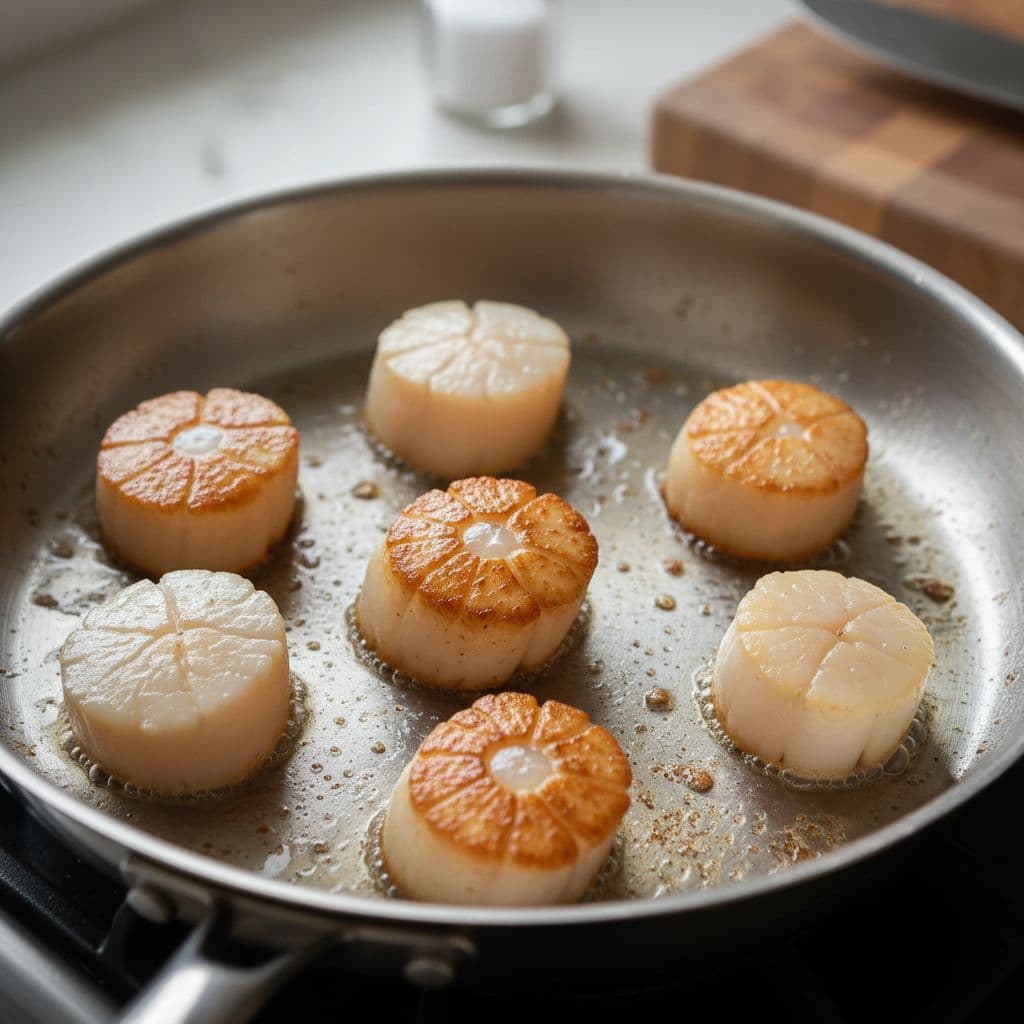
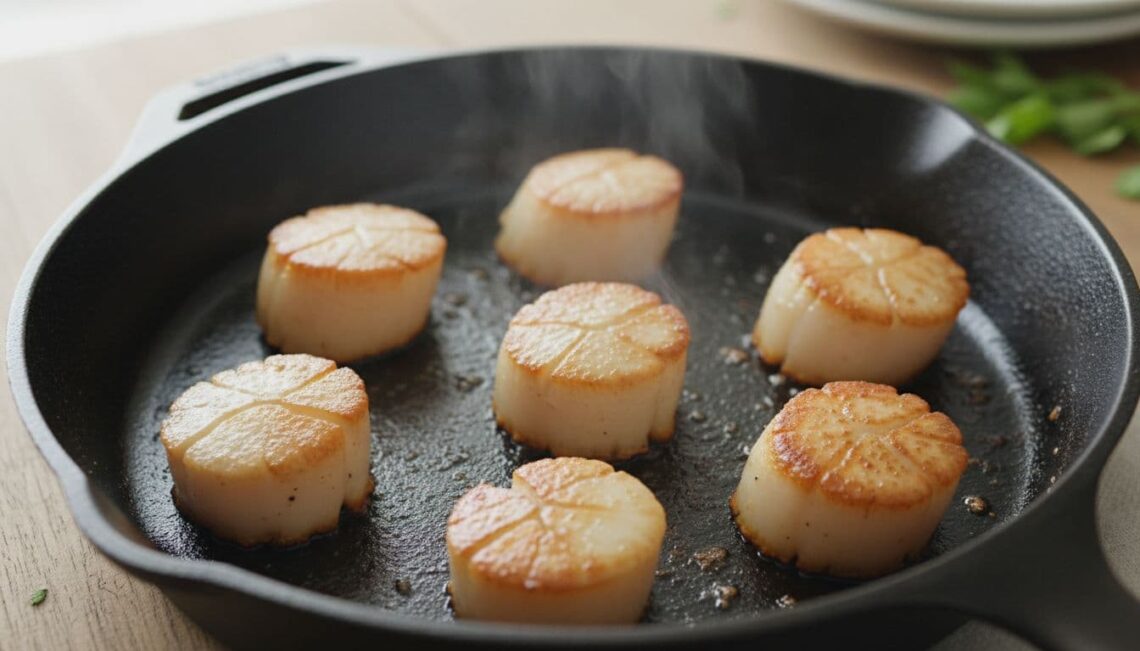
When you are learning how to know when scallops are done, the pan tells you almost everything. The color should shift in stages, the crust should brown evenly, and the center should stop short of looking fully dry. Those details matter because scallops keep cooking after they leave the heat.

Close-up of scallops searing in stainless pan, with golden-brown crusts and translucent-to-opaque centers.

The color change that shows the center is almost ready

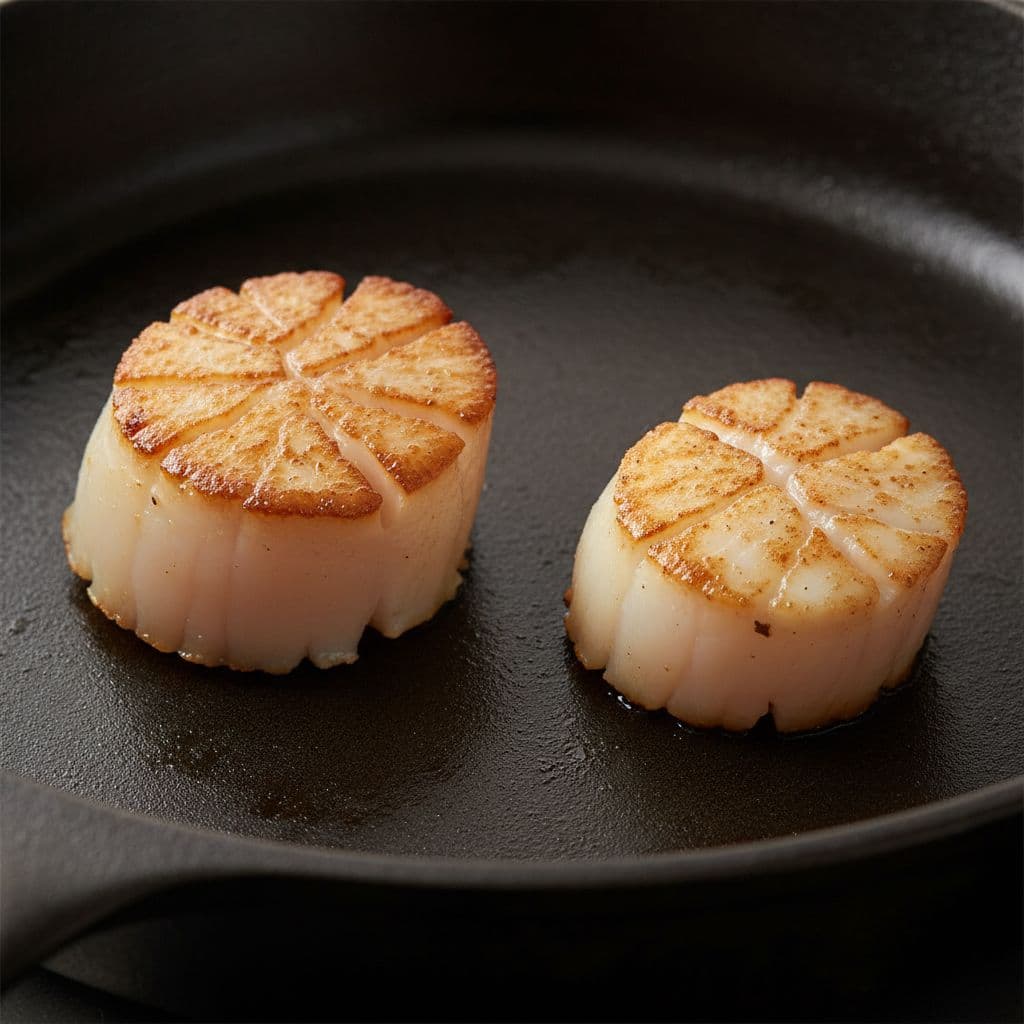
Raw scallops begin translucent and glossy. As they cook, the edges turn opaque first, then the white color moves inward. The best moment to pull them is when the outside looks set and the center still has a slight hint of translucence.

That small translucent core is a good sign. It means the scallop is hot through most of the middle, but not yet dried out. Once you remove it from the pan, carryover cooking finishes that center without pushing it into a tough texture.

A scallop that looks fully opaque all the way through is often closer to overdone than perfect if it stays in the pan too long. The flesh should look just cooked, not chalky or stiff. If the center is still a little glossy when you lift it out, that is usually right on target.

How browning tells you the sear is working

A deep golden crust is more than a nice finish. It shows that the pan was hot enough and the surface was dry enough for proper browning. That crust is the result of good heat and careful prep, not luck.

If the outside looks pale, spotty, or uneven, the pan likely needed more heat, the scallops held too much moisture, or the pan was crowded. In those cases, the scallops can steam instead of sear. They may still cook through, but the surface will look soft rather than crisp.

A well-seared scallop lifts from the pan easily when the crust is ready.

You may also notice shrinkage as the scallops cook. That is normal. What you do not want is a tight, wrinkled, dry look, because that usually means the scallop has gone too far. A good sear gives you contrast: browned outside, opaque edges, and a tender center that finishes off the heat.

How scallops should feel when they are done

Touch is the fastest way to confirm scallop doneness once the surface looks close. Color can guide you, but feel tells you whether the center still has life or has already tightened too far. Used with the visual cues above, the touch test gives you a more precise read.

Using the springy test without pressing too hard

A properly cooked scallop should feel springy with a little give. Press it lightly with a fingertip or the edge of tongs, just enough to test the surface. The flesh should bounce back gently, not collapse and not resist like a hard piece of meat.

That light touch matters. If you press too hard, you can crush the crust or squeeze out juices you want to keep in the scallop. A soft bounce is what you are after, especially when the scallop looks almost done but the center is still a little unclear.

Fingertip gently presses golden-brown seared scallop in stainless steel pan.

When the scallop gives slightly and then springs back, it is usually ready to leave the pan. That small amount of resistance is the sweet spot. It feels tender, but it still has structure.

Use a gentle press, not a squeeze. The scallop should feel soft and elastic, not flattened.

What rubbery scallops feel like and why that matters

Overcooked scallops feel tight, firm, and rubbery. Some people describe them as squeaky or oddly bouncy in a bad way. That texture usually means they stayed on the heat too long and lost too much moisture.

This matters because scallops have a very short window between perfect and overdone. Once the flesh tightens, there is no way to bring back that tender, buttery feel. Pulling them early is the safer choice, since residual heat keeps cooking them after they leave the pan.

A firm scallop that does not give at all is already past the point you want. It may still taste fine, but the texture turns chewy fast. For that reason, the touch test works best as a final check, not as an afterthought. If the scallop feels springy now, it is ready now.

The easiest timing cues for pan-seared scallops

Timing gives you a useful starting point, but it should never be the only signal you trust. Scallops vary in size, thickness, and moisture, so the same minute count will not fit every pan. Still, a reliable pattern does exist, and it helps narrow the window fast.

For most large sea scallops, the first side needs about 2 to 3 minutes over medium-high to high heat without moving them. After the flip, the second side usually needs only 1 to 2 minutes more, depending on thickness. Dry scallops, a very hot pan, and good spacing can shorten that window slightly, while a cooler pan or thicker scallops can stretch it.

Top-down view of three sea scallops in steel pan, one flipped with tongs revealing golden seared crust versus raw translucent side.

Why the first side needs patience -How to Know When Scallops Are Done

The first side does most of the work. Once the scallop hits the pan, leave it alone so the surface can brown and form a crust. That crust needs time to set before the scallop will release cleanly.

If it sticks, the answer is usually more time, not more force. Give it another 20 to 30 seconds and try again. Pulling too early tears the crust and leaves you with a pale, uneven sear.

A good first side is the anchor for the whole dish. When it is ready, the scallop will lift easily and show a deep golden bottom.

Why the second side usually cooks faster

After the flip, the scallop already holds heat from the first side. That means the second side often finishes in less time than the first. In many pans, 1 minute is enough for medium scallops, and 2 minutes is usually the ceiling.

Watch the center closely during this stage. Pull the scallops when the edges look opaque and the center still has a faint translucence. They will finish from residual heat as they rest, which helps keep the texture tender.

If the center looks fully opaque in the pan, you are often one step past ideal.

Use time as a guide, then let the crust, color, and springy feel make the final call. That combination is the clearest answer to how to know when scallops are done.

Common signs your scallops need more time or less time

Scallops give clear visual and textural cues if you watch them closely. The problem is that those cues change fast, so you need to read the pan in real time. A scallop that needs more heat looks different from one that has already gone too far, and the gap between the two is small.

High-angle close-up of three scallops in stainless steel pan: raw translucent, golden seared, shrunken overcooked.

When scallops are undercooked – Learn from your mistakes…

Underdone scallops still look a little glassy in the center. The edges may be opaque and browned, but the middle stays translucent or milky, almost as if the heat has not reached it yet. They also feel very soft, with less spring than you want.

If you slice one open, the center should not look raw and glossy. That sheen means it needs a little more time. Leave the scallops in the pan for another 20 to 30 seconds, then check again.

Use gentle heat control here. Keep the pan hot, but do not move the scallops around, because that can break the crust before the center finishes. If the edges are browning too quickly, lower the heat slightly and let the carryover heat finish the job.

How to prevent over cooked scallops in the future…

Overcooked scallops look tighter and smaller. They often shrink, wrinkle, and lose the smooth, plump shape they had at the start. The flesh turns firm and rubbery, and the bounce you want disappears.

At this stage, the scallop may still taste sweet, but the tenderness is gone. That is why it pays to pull them early, while the center still has a trace of translucence. Residual heat will finish the cooking on the plate.

If one batch goes too far, keep the flavor in mind. Chopped scallops still work well in chowder, pasta, or a baked seafood dish, where texture matters less than taste.

If a scallop sticks to the pan, the crust usually is not ready yet. Give it another moment before you force the flip.

A quick diagnosis helps: glassy and soft means more time, while shrunken, dry, and rubbery means too much time.

The prep steps that make doneness easier for next time…

Scallops are easier to read when they start in the right condition. Good prep gives you a cleaner crust, a clearer color change, and a more reliable feel when you press them. That matters because How to Know When Scallops Are Done depends on seeing small changes before the window closes.

Split-screen on white counter shows beige dry scallops patted with towel left, glossy white wet scallops in puddle right.

Why dry-packed scallops sear better than wet-packed ones

Dry-packed scallops are the better choice because they do not carry extra liquid into the pan. Wet-packed scallops are treated with a phosphate solution that helps them hold water, and that water gets in the way of browning. Instead of forming a clean crust, they tend to steam, which makes the surface pale and the doneness harder to judge.

That difference matters at the stove. When scallops sear well, you can see the edge change from translucent to opaque and watch the crust turn deep gold. Wet scallops blur those signals, since the surface stays damp longer and the pan has to work through that moisture before browning starts.

If you want the easiest read on doneness, buy dry-packed scallops every time. They brown faster, taste cleaner, and give you a much better visual cue for the exact moment to flip or remove them.

Why a dry surface matters before the scallops hit the pan

Even good scallops need a dry surface before they touch the heat. Any water left on top turns to steam in the pan, and steam blocks the crust you need for both color and texture. A damp scallop can still cook through, but it will be harder to tell when the outside is ready.

Pat them thoroughly with paper towels, then pat them again right before cooking. That extra step helps the scallops sear instead of simmer, and it gives you a clearer surface change to watch. Once the moisture is gone, the browning happens faster, the crust forms more evenly, and the springy feel becomes easier to judge.

A dry scallop is easier to read, because the crust forms cleanly and the center changes in a visible way.

Remove the side muscle too, since that small tab cooks differently and can make the texture feel uneven. If you’re using frozen scallops, thaw them overnight in the fridge, set them on paper towels, and dry them well before they go into the pan. That keeps the surface from weeping liquid and gives you a better shot at a crisp sear and a more accurate read on doneness.

What to do if you miss the perfect moment

Even careful cooks miss the ideal scallop window once in a while. The good news is that a scallop that is a little too far gone is still usable, especially if you stop treating it like a center-of-plate sear. Texture may shift, but the sweet, clean flavor is still there.

Slightly overcooked scallop with wrinkled texture on rustic wooden cutting board next to knife and parsley.

Serve slightly overcooked scallops with sauce

If the scallops are only a little over, a sauce can soften the dry edge. Lemon butter, white wine pan sauce, or a light cream sauce adds moisture and gives the scallops more room to read as tender on the plate. Slice them and spoon the sauce over top, rather than serving them whole.

That small change helps a lot. Sauce coats the surface, adds richness, and keeps the bite from feeling too tight. For a simple fix, warm them gently in the sauce for a few seconds, then serve right away.

Turn tougher scallops into a new dish

When the texture is clearly off, stop chasing a seared presentation. Chop the scallops and use them in chowder, seafood pasta, or a baked breadcrumb-topped dish where the texture is less important. Small pieces blend in better and pick up flavor from the surrounding ingredients.

You can also fold them into rice bowls or a creamy sauce. In those dishes, the scallop becomes a savory accent instead of the main event. That is often the smartest move.

How to keep the next batch easier to read

A missed moment usually comes from heat that stayed too long or a pan that was too crowded. For the next round, use dry-packed scallops, dry them well, and pull them while the center still looks slightly translucent. That gives you a wider margin and a better result.

All in all,

Learning how to know when scallops are done comes down to reading the pan with care. The best scallops are opaque with just a little translucence left in the center, springy when touched, and pulled before they tighten into a firm, rubbery bite.

Use all three checks together, because none of them tells the full story on its own. Color, feel, and timing work best as a set, and that small habit makes the difference between scallops that taste tender and scallops that go past the point of no return.

Once you trust those signs, scallops become much easier to cook well at home. Watch for the opaque edges, keep the center just shy of fully set, and take them off the heat while they still have a little give.

Leave a Reply

Your email address will not be published. Required fields are marked *