Pork chop doneness
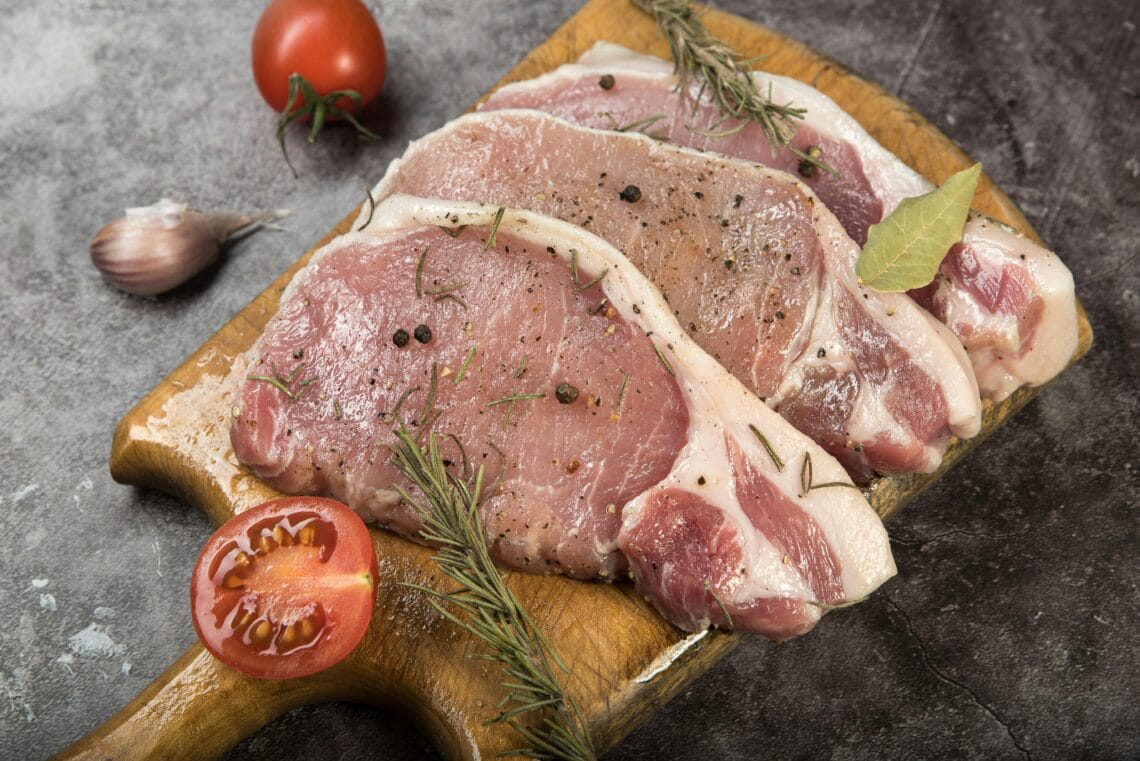
How to know when boneless pork chops are done: measure 145°F (63°C) in the thickest center, then rest for at least 3 minutes. Start checking before the timer ends; pinkness, clear juices, and a browned crust cannot confirm safety.
How to know when boneless pork chops are done
For whole cuts of pork (like chops, loin, and tenderloin), the USDA guidelines set the safe minimum internal temperature at 145 degrees Fahrenheit (63°C) followed by a three-minute rest. That short rest time matters because the meat continues to cook a bit after you take it off the heat. You can confirm the official guidance on the USDA safe minimum internal temperature chart.
A slight pink color can remain in properly cooked pork. Color does not establish safety: measure at least 145°F (63°C) in the thickest part of each whole pork chop before removing it from the heat, then rest it for at least 3 minutes.
A few notes that clear up common confusion:
- 145 degrees Fahrenheit + three-minute rest applies to whole muscle meats (most chops, pork loin, tenderloin, pork roast).
- Ground pork should reach 160 degrees Fahrenheit, because grinding spreads bacteria throughout the meat and raises the risk of foodborne illness compared to muscle meats.
- Bone-in chops often cook a bit slower near the bone, so measure carefully.
These texture descriptions are approximate. All whole pork chops need at least 145°F before leaving the heat and a 3-minute rest afterward; higher temperatures are a preference and can dry lean meat.
| Measured temperature before removing from heat | What it’s like | Best for |
|---|---|---|
| 145°F (63°C) | Juicy, tender, faint pink possible | Most chops, especially thicker cuts |
| 150 to 155°F (66 to 68°C) | Firmer bite, less pink | If you prefer “more done” but still moist |
| 160°F+ (71°C+) | Drier, tighter texture | Only if you truly want well-done |
Takeaway: Use 145 degrees Fahrenheit as the safety baseline, then adjust upward only for preference, and use technique to protect juiciness.
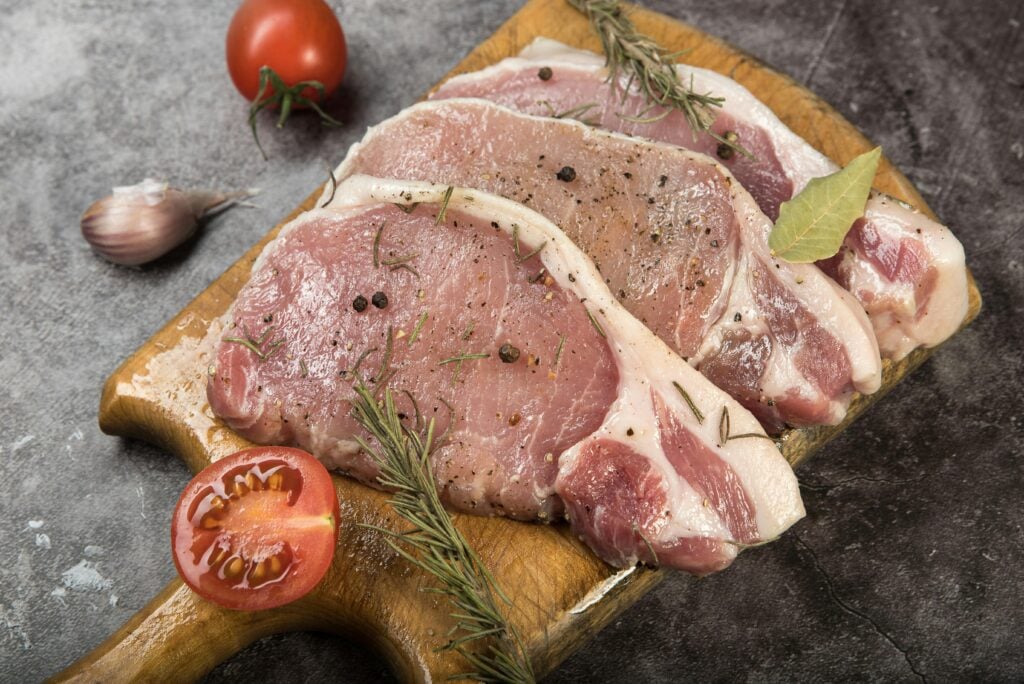
The doneness checks that prevent dry pork chops
A meat thermometer is the fastest path to confidence, but placement matters as much as the number. Measure wrong, and you’ll chase temperatures until the chop dries out.
How to temp pork chops correctly (the simple way)
First, move the chop to a spot where you can work safely. Then:
- Insert a digital cooking thermometer into the thickest part.
- Aim for the center, and avoid the bone and the pan surface.
- For thin chops, insert the probe from the side, not straight down.
- Take one reading, then shift slightly and take one more, because hot spots happen.
- Pull the chop when the coldest spot is at your target, then rest 3 minutes.
Color can mislead you. Temperature tells the truth, especially with pork.
If you want a second source that explains the same safe endpoint, Ask USDA’s pork temperature guidance is a helpful reference.
Timing ranges by thickness (useful, but not the final answer)
Times help you plan sides and avoid panic flipping. Still, thickness, starting temperature, cooking method, and your stove or grill can swing results. Bone-in pork chops may require a bit more time for even heat penetration compared to boneless pork chops. Use this table as a rough map, and let the thermometer be the compass.
| Chop thickness | Pan-sear (medium-high) | Oven bake (400°F) | Grill (medium-high) | Air-fry (400°F) |
|---|---|---|---|---|
| 1/2-inch | 2 to 3 min per side | 7 to 10 min | 2 to 3 min per side | 6 to 8 min |
| 3/4-inch | 3 to 4 min per side | 10 to 14 min | 3 to 4 min per side | 8 to 10 min |
| 1-inch | 4 to 5 min per side | 14 to 18 min | 4 to 5 min per side | 10 to 12 min |
| 1 1/2-inch | 5 to 7 min per side (often finish in oven) | 18 to 25 min | 6 to 8 min per side | 12 to 16 min |
The practical rule: start checking early, because the last few degrees go fast.
Step-by-step checks for pan-seared, baked, grilled, and air-fried chops
Different methods brown differently, but the finish is the same: hit the right pork chop internal temp, then rest.
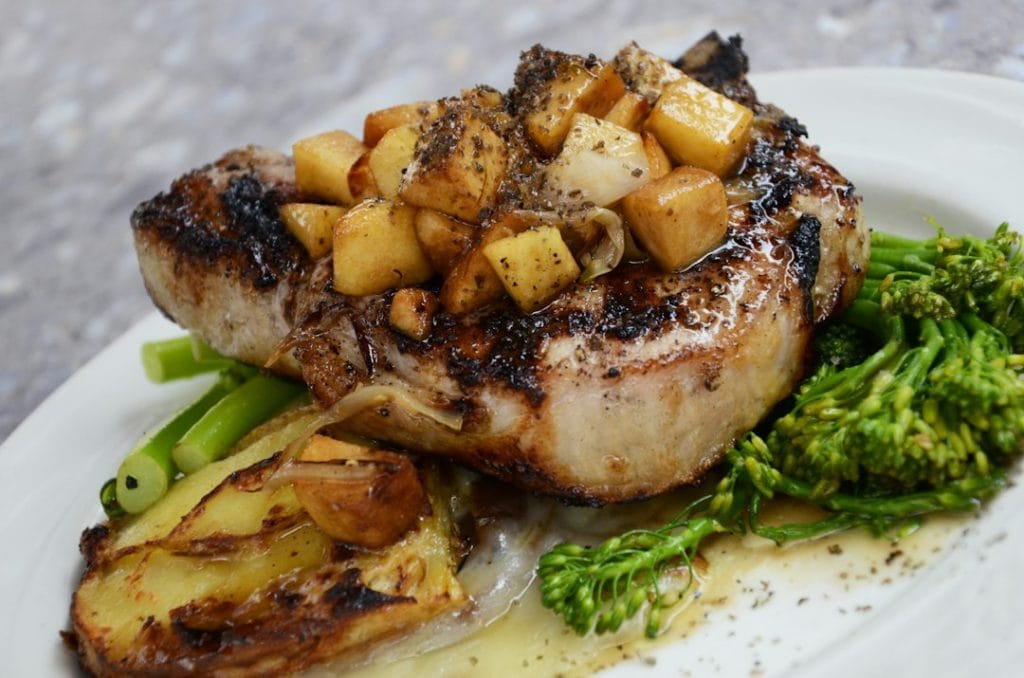
Pan-seared pork chops (best crust, fast finish)
Pat the chops dry and season them. Sear 1-inch chops for about 3 to 5 minutes per side, then reduce the heat if the exterior darkens too quickly. Begin checking early with a thermometer inserted from the side. Keep cooking until the coldest part reaches 145°F (63°C), remove from the heat, and rest at least 3 minutes.
Baked pork chops (steady heat, easy for batches)
Use a hot oven (often 400°F) so the chops don’t sit and dry. Arrange them with space between each piece. Begin checking temperature a few minutes before the table range says “done.” When internal heat in the center hits 145°F, rest on a plate, not in the baking dish, so they stop cooking sooner.
Grilled pork chops (watch flare-ups, measure smart)
Set up two zones if you can, a hotter side for searing and a cooler side to finish. Sear first for color, then move to indirect heat to coast up to temp. Keep the lid closed so the grill behaves like an oven. Probe near the center, avoiding bone, and pull when internal heat reaches 145°F.
Air-fried pork chops (quick, but can dry if you overshoot)
Preheat the air fryer if your model allows it. Lightly oil the chop surface for better browning. Flip halfway through, then start temping early, because air fryers can jump from perfect to overdone fast. Pull when internal heat hits 145°F, then rest 3 minutes before slicing.
Small moves that keep chops juicy every time
Most dryness is preventable with a few habits:
- Dry brine: Salt 30–60 minutes ahead and keep the chops refrigerated during that time. Pat the surface dry just before cooking.
- Even thickness: Choose similar chops, or lightly pound thicker areas for uniform cooking.
- Use tongs to turn the chops: Check the thickest sections with a thermometer as often as needed to confirm the target temperature.
- Rest, then slice: Carryover temperature during resting time allows juices to redistribute in muscle meats. Cut too soon, and the juices run out.
Confirm the measured endpoint and the 3-minute rest for each chop; clean handling and proper storage remain necessary.
For a clear explanation of why 145°F plus a rest works so well for pork, the National Pork Board’s cooking temperature guidance lines up with the same target.
Before you serve
Check each chop individually, remove it only after the coolest center reaches 145°F, and rest for at least 3 minutes. For a different whole pork cut, use the pork tenderloin temperature guide.