Meatloaf temperature
The right meatloaf internal temperature depends on the meat: 160°F (71°C) for beef or pork, and 165°F (74°C) for any mixture containing poultry. Check the center before removing the loaf; a 10-minute rest helps slicing after it reaches its target.
Why internal temperature matters (and why color can fool you)
Meatloaf is made from ground meat, which cooks differently from a steak. With a steak, bacteria mostly sit on the surface, so high heat outside helps. With ground meat, harmful bacteria like E. coli get mixed throughout during grinding. That means the center must reach a safe internal temperature, not just the crust.
That’s why food safety guidance from the USDA focuses on minimum internal temperatures. The USDA publishes a clear reference in its safe minimum internal temperature chart. It’s worth bookmarking if you cook meat often.
Color is the trap. A meatloaf can brown early because of sugars in ketchup glaze, paprika, or onion powder. On the other hand, it can look pink inside even after it’s safe, depending on the meat, seasoning, and how your oven heats.
Don’t use color as a doneness test. Use a thermometer, because ground meat needs a verified safe center.
Temperature also protects juiciness. Overcooking squeezes moisture out of the proteins, which is why “just to be safe” often turns into crumbly, dry slices. When you stop at the target temperature, the meat stays tender, and the loaf holds together.
One more piece most people skip: resting. Fresh-from-the-oven meatloaf is like a soaked sponge under pressure. Slice right away, and juices rush out. Rest it, and those juices settle back in, so your slices stay moist.

Meatloaf internal temperature targets (beef, pork, turkey, mixed)
Here’s the simplest rule: cook to the safe internal temperature for the meat in the mix. If you combine meats, follow the higher target. Ground pork calls for 160 degrees F, but mixes with ground turkey require 165 degrees F.
This quick table covers the temps home cooks use most:
| Meatloaf type | Safe internal temperature | Rest time before slicing |
|---|---|---|
| Ground beef, ground pork, veal, lamb (or mixed without poultry) | 160 degrees F (71°C) | Rest about 10 minutes for easier slicing; first reach the listed cooking temperature |
| Ground turkey or chicken (or any mix that includes poultry) | 165 degrees F (74°C) | Rest about 10 minutes for easier slicing; first reach the listed cooking temperature |
Use the target for the highest-risk meat in the mixture: a beef-and-pork loaf needs 160°F, while any loaf containing ground chicken or turkey needs 165°F.
A few practical notes that make the numbers easier to live with:
- Pulling it too late dries it out. Once you pass 160 degrees F to 165 degrees F, the loaf can go from juicy to tight fast.
- Carry-over cooking is real. The temp can keep rising a couple degrees while it rests. Still, for peace of mind, cook until the center hits the target, then rest for ten minutes.
- Check a stuffed loaf separately. A distinct filling can heat more slowly than the surrounding meat. For stuffed meatloaf, check both the meat and the center of the filling and cook to 165°F (74°C), following USDA stuffed-meat guidance. Ordinary breadcrumbs mixed throughout are not a separate stuffing.
The oven setting controls how quickly the loaf cooks; the center temperature tells you when it is safe. Keep those two numbers separate when adapting a recipe.
How to check meatloaf temperature without wrecking the loaf
A thermometer only works if you place it well. Aim for the coldest spot, which is almost always the center of the thickest section.
Use an instant-read thermometer as a reliable meat thermometer for quick checks, or a leave-in probe if you like watching the number climb.
Step-by-step thermometer placement (works for loaves and mini loaves)
- Start checking near the end. Begin when you think you’re 10 to 15 minutes from done.
- Insert from the side, not the top. Slide the probe into the center of the loaf horizontally. This helps you avoid hitting the pan and getting a false high reading.
- Find the thickest point. For a loaf pan, that’s usually the middle, where the meat mixture takes the longest to cook and requires an accurate internal temperature reading. For a free-form loaf, it’s often the center “hump.”
- Avoid the glaze and the pan. Glaze heats fast, and metal pans throw off readings.
- Watch the number settle. On an instant-read, wait a few seconds until it stops changing.
- Check a second spot if needed. If one area reads lower, cook until that low spot reaches the target.
Time is a rough estimate. Temperature is the finish line. Use the clock to plan dinner, then trust the thermometer.
Oven and air fryer cooking temps, plus realistic time ranges
Most meatloaf recipes do well at 350 degrees F. It’s hot enough to cook through evenly, but not so hot that the edges turn tough before the center is safe. A practical range is 325°F to 375°F, depending on your oven temperature and pan.
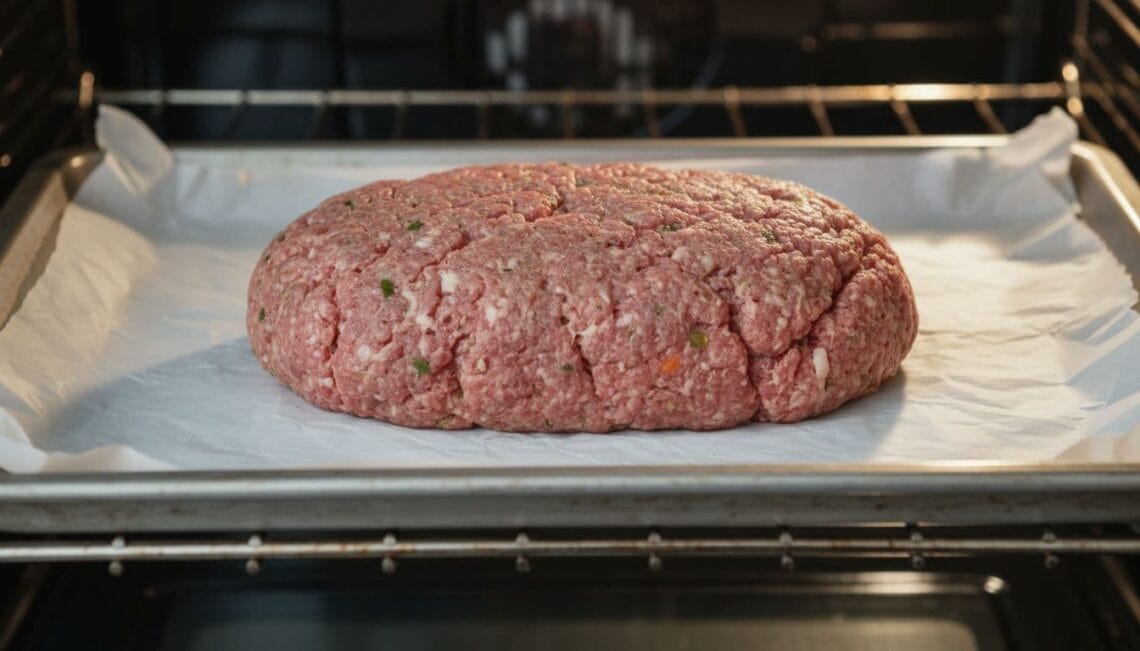
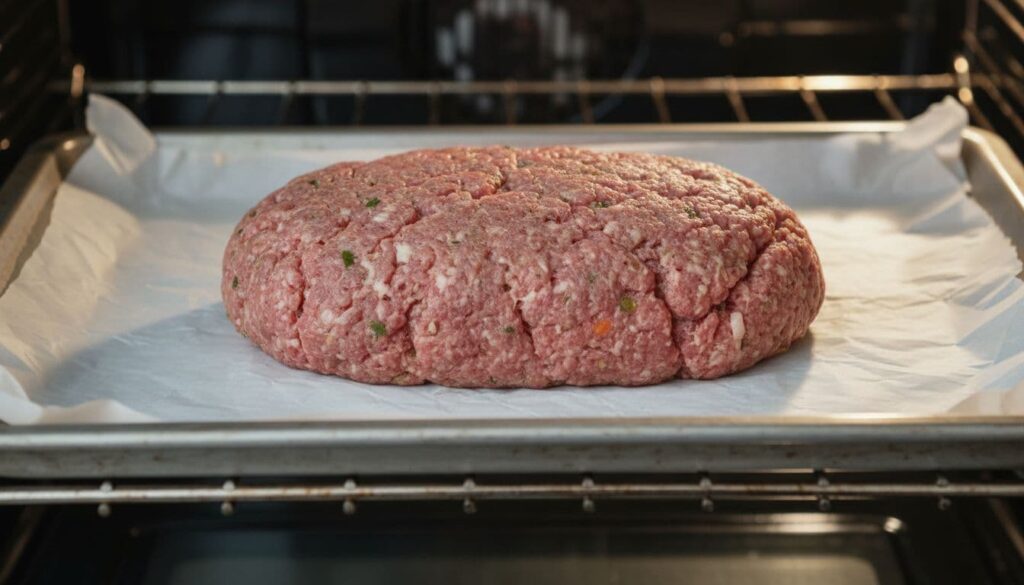
Before the table, a reminder: shape matters. When shaping the loaf, if not using a loaf pan, a baking sheet works well. A wide, low loaf cooks faster than a tall, tight loaf. A glass dish can cook differently than metal. Add-ins and fridge-cold meat also affect timing.
Here are planning ranges for a 350 degrees F oven, using the internal temperature targets above:
| Loaf weight | Oven temp | Approximate time range |
|---|---|---|
| 1 lb | 350 degrees F | 35 to 50 minutes |
| 1.5 lb | 350 degrees F | 45 to 65 minutes |
| 2 lb | 350 degrees F | 55 to 80 minutes |
| 3 lb | 350 degrees F | 75 to 100 minutes |
Use these time ranges only to schedule the rest of dinner, then start checking early. A wide free-form loaf can finish sooner than a compact loaf of the same weight, so the lowest reliable center reading—not the clock—determines when it is done.
Air fryer meatloaf temp and timing (best for smaller loaves)
Air fryers cook with strong airflow, so smaller loaves and mini loaves are easier to fit and cook evenly. Set the air fryer to 325°F to 350°F, leave room around the loaf, and begin checking the center early.
As a planning range, a 1 to 1.25 lb loaf often lands around 25 to 40 minutes, while mini loaves can finish sooner. Basket size, loaf thickness, and whether you use a small pan all change the outcome. Because of that, treat time as a guide only, and chase the same internal temperature targets.
After the center reaches its target, move the meatloaf out of the hot air fryer and rest it on a clean board or plate for about 10 minutes before slicing. Leaving it in the hot basket can keep cooking the edges.
How to store and reheat meatloaf safely
Refrigerate cooked meatloaf within 2 hours, or within 1 hour above 90°F, using shallow containers. Use refrigerated leftovers within 3–4 days. See the ground beef refrigerator guide for the shorter raw-meat timeline.
Reheat slices to 165°F (74°C), measured in the center. Covering the meatloaf and adding a spoonful of broth or sauce helps limit drying. These storage and reheating limits follow the FoodSafety.gov cold-storage chart and its safe-temperature chart.
Before you serve
Measure the thickest center, cook to the target for the mixture, then rest for slicing. A browned glaze, firm edge, or pink center cannot replace the thermometer reading.
Quick printable-style checklist (save or screenshot)
- Preheat oven to 350°F (or 325°F to 375°F as needed).
- Shape loaf evenly so it cooks at the same rate.
- Start checking temp 10 to 15 minutes before you expect it’s done.
- Insert instant-read thermometer from the side into the center of the loaf.
- Cook to 160 degrees F for beef, pork, veal, lamb (no poultry).
- Cook to 165 degrees F for turkey or chicken (or any mix with poultry).
- Rest 10 minutes before slicing.
- Slice with a sharp knife, then serve or chill leftovers quickly.
- Refrigerate leftovers within 2 hours and reheat slices to 165°F.