
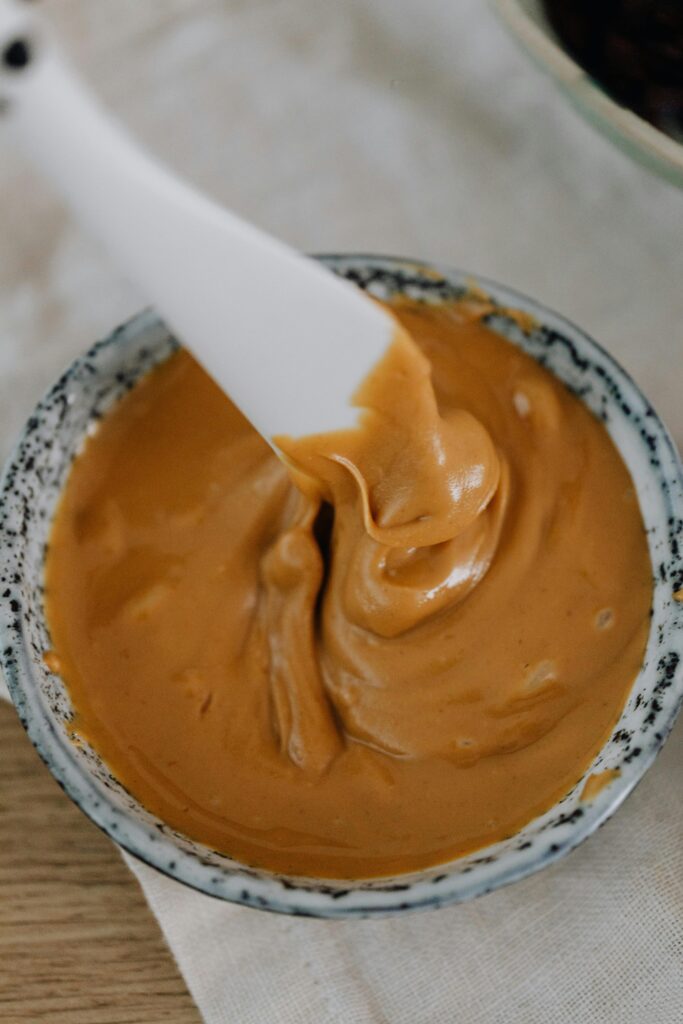
Stovetop peanut butter fudge depends on two controls: measured ingredients and the soft-ball stage. This version uses evaporated milk and marshmallow creme for a creamy, sliceable set, while a candy thermometer removes the guesswork. The sugar syrup should reach 234–236°F (112–113°C), then come off the heat before the peanut butter mixture is stirred in.
- 8-inch square pan
- About 36 small pieces
- 234–236°F at sea level
Stovetop peanut butter fudge at a glance
- Pan: 8-inch square pan
- Yield: about 36 small pieces
- Prep: about 10 minutes
- Cook: about 10–15 minutes, depending on the pan and burner
- Set: about 2 hours at room temperature
- Key temperature: 234–236°F (112–113°C)
This is an immediate-mix boiled fudge: cook the sugar and milk to soft-ball stage, remove the pan from the heat, then add the peanut butter, marshmallow creme, vanilla, and salt. It is not the classic method in which a plain fudge syrup cools undisturbed to about 110°F before beating. Mixing those two methods leads to conflicting instructions, so follow the sequence below from start to finish.
Ingredients
| Ingredient | Amount | Why it matters |
|---|---|---|
| Granulated sugar | 2 cups (400 g) | Provides structure; do not reduce it in this cooked formula. |
| Evaporated milk | 2/3 cup (160 ml) | Adds dairy richness with less water than regular milk. |
| Creamy no-stir peanut butter | 1 cup (about 255 g) | Gives consistent fat and sugar; natural peanut butter is not a direct substitute. |
| Marshmallow creme | 1 cup (about 120 g) | Helps control crystallization and produces a softer set. |
| Vanilla extract | 1 teaspoon | Rounds out the peanut flavor. |
| Fine salt | 1/4 teaspoon | Balances the sweetness. Omit only if the peanut butter is very salty. |
| Unsalted butter or neutral oil | A small amount | For greasing the pan or parchment. |
Measure everything before heating the syrup. Once it reaches temperature, the remaining steps move quickly. A flexible spatula helps empty the peanut butter and marshmallow creme without delaying the mixture.
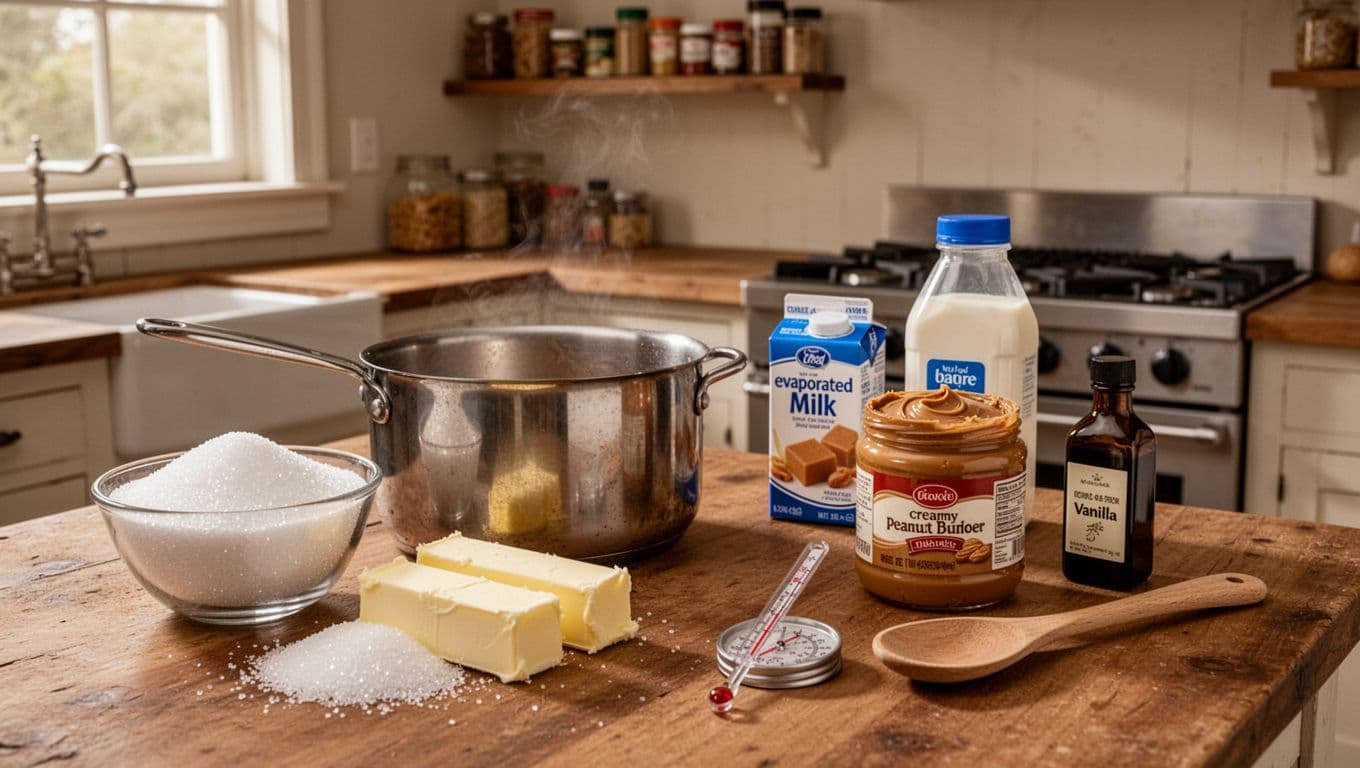
Equipment
- 8-inch square pan
- Parchment paper
- Heavy 3-quart saucepan; the mixture expands as it boils
- Clip-on or instant-read candy thermometer
- Heatproof spoon or silicone spatula
- Clean pastry brush and a little water, optional
How to make stovetop peanut butter fudge
- Prepare the pan. Lightly grease an 8-inch square pan. Line it with parchment, leaving overhang on two sides, then lightly grease the parchment.
- Stage the finishing ingredients. Put the peanut butter, marshmallow creme, vanilla, and salt next to the stove. Keep them separate but ready to add.
- Dissolve the sugar. Combine the sugar and evaporated milk in the heavy saucepan. Heat over medium, stirring steadily and scraping the bottom, until the sugar dissolves and the mixture reaches a full boil.
- Cook to soft-ball stage. Attach the thermometer without letting its tip touch the bottom of the pan. Once the mixture is boiling evenly, continue stirring steadily across the bottom to prevent the milk from scorching. If dry sugar crystals appear above the syrup line, brush them down with a damp pastry brush without splashing the syrup. Cook until the syrup reaches 234–236°F (112–113°C).
- Remove from the heat promptly. Take the pan off the burner as soon as the temperature is reached. Do not keep boiling while gathering ingredients.
- Add the peanut butter mixture. Immediately add the peanut butter, marshmallow creme, vanilla, and salt. Stir firmly until the mixture is uniform and begins to lose some shine. Stop once it thickens enough to leave brief trails from the spoon; prolonged beating can make it set in the saucepan.
- Spread and set. Transfer the fudge to the prepared pan and spread it into the corners. Leave any hard sugar crystals on the saucepan walls behind. Let the fudge stand at room temperature until completely cool and firm, about 2 hours.
- Cut. Lift the slab out by the parchment. Use a large sharp knife to cut 6 rows in each direction for 36 small pieces. Wipe the blade between cuts.
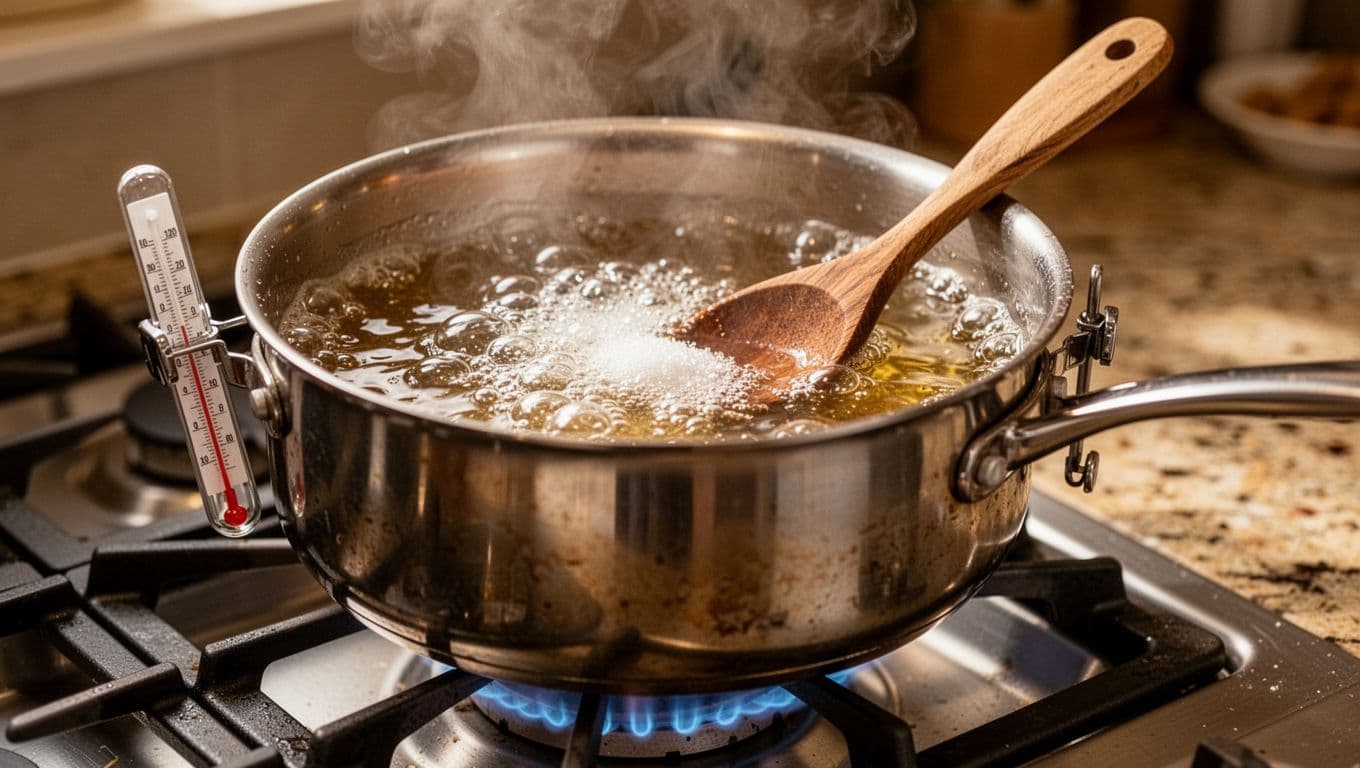
Why the temperature and stirring rules matter
Undissolved sugar and dried crystals can leave fudge sandy. Dissolve the sugar before the full boil and leave hardened side-wall crystals behind. This milk-based method uses steady stirring across the bottom to limit scorching. For comparison, King Arthur Baking’s marshmallow peanut butter fudge also uses a 234–236°F target and adds the peanut butter after removing the pan from the heat; its ingredient formula is different.
The soft-ball range is also narrow. Below it, too much water remains and the fudge may stay loose. Above it, too much water has cooked away and the candy can become dry or crumbly. A thermometer is more dependable than a timed boil because pan shape, burner output, and starting temperature all change the cooking time.
No thermometer?
A cold-water test can confirm soft-ball stage, although it is less precise. Drop a small spoonful of syrup into very cold water. After a few seconds, it should gather into a soft ball that flattens easily between your fingers. Keep hands away from the saucepan and let the sample cool in the water before touching it.
Troubleshooting peanut butter fudge
| Problem | Likely cause | What to do |
|---|---|---|
| Fudge is soft after it has fully cooled | The syrup did not reach 234°F, or the thermometer read the pan bottom. | Chill and serve it as a softer candy. For the next batch, check thermometer placement and verify the thermometer in boiling water before cooking. |
| Texture is grainy | Undissolved sugar or crystals from the pan wall seeded the batch. | Use it as a topping or mix-in if the flavor is good. Re-cooking can make the result less predictable; on the next batch, dissolve the sugar fully, stir across the pan bottom during cooking, and leave hardened side-wall crystals behind. |
| Fudge is dry or crumbly | The syrup exceeded the target temperature or the finished mixture was beaten too long. | Cut smaller pieces and serve at room temperature. Remove the next batch from the heat at 234–236°F and stop mixing when spoon trails briefly hold. |
| Oil separates | Natural peanut butter was used, or the mixture was overheated after the peanut butter was added. | Use a conventional no-stir peanut butter and add it only after removing the syrup from the heat. |
| Scorched flavor | The pan was too thin or the heat was too high. | Discard badly scorched candy. Use a heavy saucepan and moderate heat next time. |
Check the thermometer in boiling water before making candy. The expected boiling point changes with elevation; use Utah State University Extension’s altitude guidance to distinguish calibration error from an altitude adjustment. Do not assume a sea-level candy target applies unchanged at higher elevations.
Substitutions and variations—with limits
- Natural peanut butter: Not recommended here. Its separated oil and different sugar content can change the set.
- Whole milk: It can work in some traditional formulas, but it contains more water than evaporated milk and changes the cooking behavior. Do not swap it cup for cup if you want the result described here.
- Crunchy peanut butter: Use the same amount of conventional no-stir crunchy peanut butter if you want pieces of peanut in the fudge.
- No marshmallow creme: Choose a recipe specifically developed for a cool-and-beat method. Simply omitting it from this formula changes both the volume and crystal control.
- Chocolate topping: After the fudge has cooled, spread a thin layer of melted chocolate over the slab. Let it set before cutting.
For another practical pantry technique, see how to soften butter without melting it. If peanut butter is the main attraction, the toasted peanut butter and jelly sandwich is a quicker option that does not involve hot sugar syrup.
Storage and serving
Store the pieces in an airtight container with parchment between layers. For best texture, keep them in a cool room for up to 5 days or refrigerate for up to 2 weeks. Let refrigerated fudge sit at room temperature for 15–20 minutes before serving. For longer storage, freeze the well-wrapped slab or individual pieces for up to 2 months, then thaw them in the refrigerator while still wrapped to limit condensation.
This candy contains peanuts and milk, and many marshmallow cremes also contain egg. Both Jet-Puffed Marshmallow Creme and Marshmallow Fluff list egg in their allergen information. Check every ingredient label before serving someone with a food allergy; do not assume this fudge is egg-free. Keep utensils and work surfaces separate to avoid allergen cross-contact.
Keep a note for your next batch
Write down the thermometer reading, pan size, and final texture after the fudge has set. Change one variable at a time on a later batch. A few degrees or a different peanut butter can affect texture, so a timed boil alone is not a reliable comparison.