THE WEEKNIGHT SKILLET / CARROT / WHITE BEANS
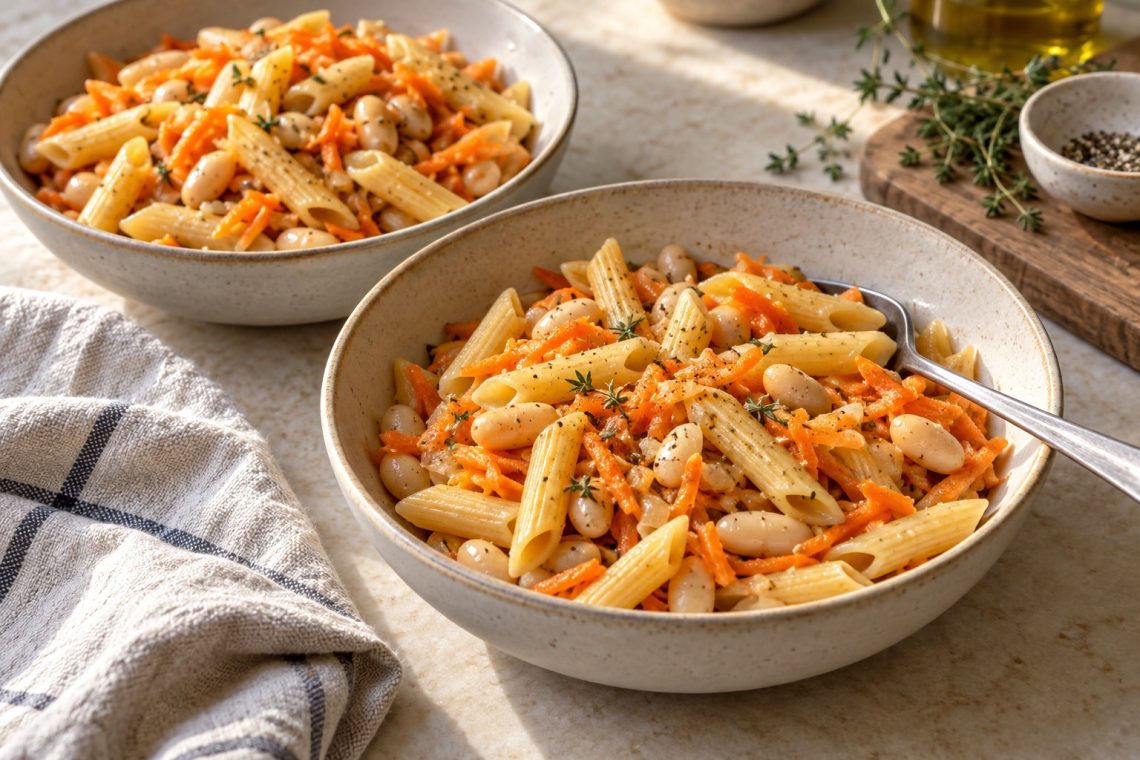
Carrot cannellini pasta combines tender grated carrot, white beans, and short pasta in a light onion, garlic, and thyme coating. There is no tomato sauce or bottled cream sauce. Grating the carrot gives it a short cooking time and lets its sweetness spread through the pan without leaving large, firm pieces among the pasta.
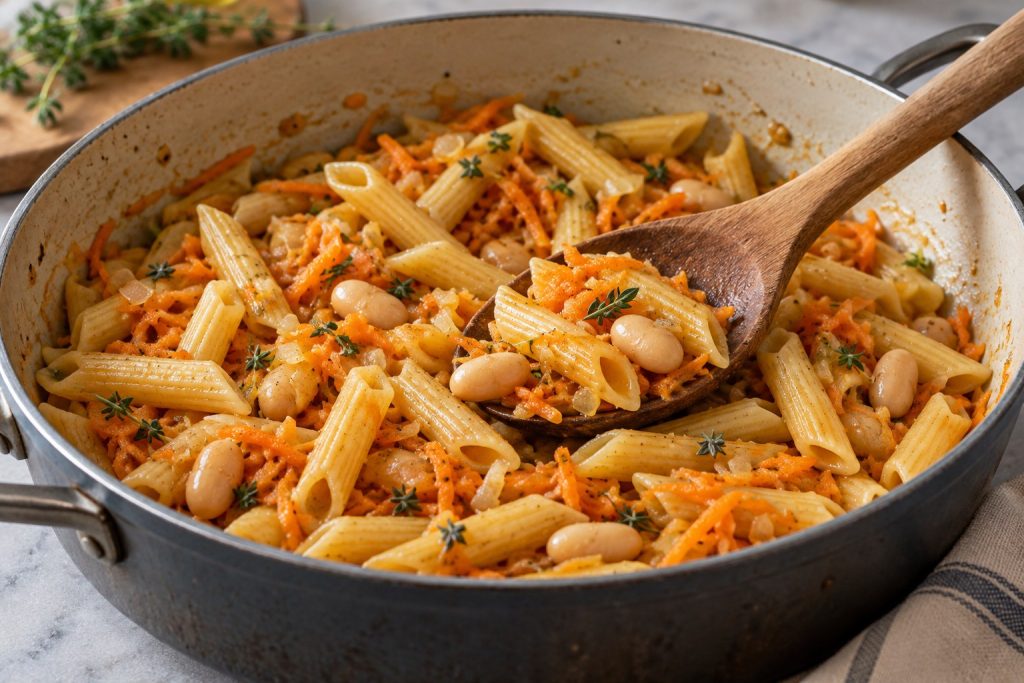
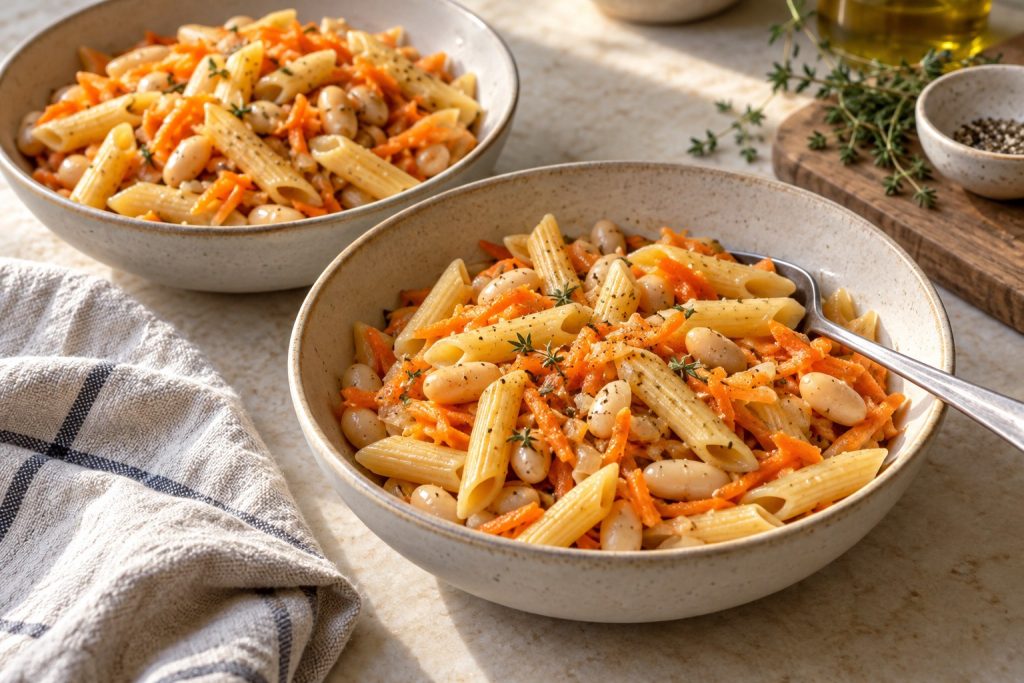
The finished dish should be moist and easy to spoon, with whole beans and fine orange carrot strands still visible. Save more pasta water than the initial sauce needs, soften the vegetables before adding the beans, and finish with a small measured squeeze of lemon.
A small white-bean pasta meal
- Yield
- 2 dinner portions
- Prep
- About 15 minutes
- Cook
- Allow 30 minutes, with pasta and vegetables cooking alongside each other
- Additional time
- None
- Total
- About 45 minutes
Equipment: A 4–5-quart pasta pot, a 10–12-inch deep skillet or wide 3-quart sauté pan with a lid, colander, heatproof measuring cup, box grater, knife, cutting board, and broad spoon or spatula. Use the large holes of the grater for the carrot.
Measured ingredients for two portions
- 5 ounces (140 g) dry short pasta, such as penne
- 1 large carrot, about 3 ounces (85 g) after trimming, coarsely grated to give about ¾ cup
- ½ small onion, finely diced, about ¼ cup
- 1 tablespoon olive oil
- 1 garlic clove, finely minced
- ½ teaspoon dried thyme leaves
- 1 can cannellini beans, 15 ounces (425 g) including liquid, drained and rinsed; about 1½ cups drained beans
- 1 cup reserved pasta cooking water; start with ⅓ cup, then add more as needed
- 1 teaspoon fresh lemon juice, plus more to taste
- ⅛ teaspoon ground black pepper
- 1 teaspoon fine salt for approximately 3 quarts pasta water, plus ⅛ teaspoon for the vegetables and more to taste
- 2 tablespoons plain water, only if needed to finish softening the carrot
Grate the carrot into short, flexible strands
Scrub the carrot under running water, trim the ends, and peel if preferred. Grate on the large holes of a box grater. The FDA’s produce guidance recommends washing produce before preparing it, including when you plan to remove the peel.
The grated measurement varies with how firmly it is packed, so the trimmed weight is a useful reference. If the carrot you have is unusually large, measure the stated amount rather than adding all of it automatically. Store the remainder for another meal.
Bagged matchstick carrots are thicker and less flexible than freshly grated strands. They are not a direct timing substitute; chop them smaller and allow more softening time if using them. Very finely grated carrot works but blends more thoroughly into the coating.
Drain the cannellini and keep most beans whole
Use plain canned beans rather than a seasoned bean dish. Rinse them gently and let excess water drain. The can’s 15-ounce label includes liquid, so it does not mean 15 ounces after draining. Camellia’s conversion gives about 1½ cups drained beans per can, with some variation between products.
The beans provide soft bites throughout the pasta. A few may break while folding and lightly thicken the cooking liquid, but there is no need to purée the can. Save rough stirring for the vegetable stage and handle the beans gently once they join.
Soften the carrot before the beans go in
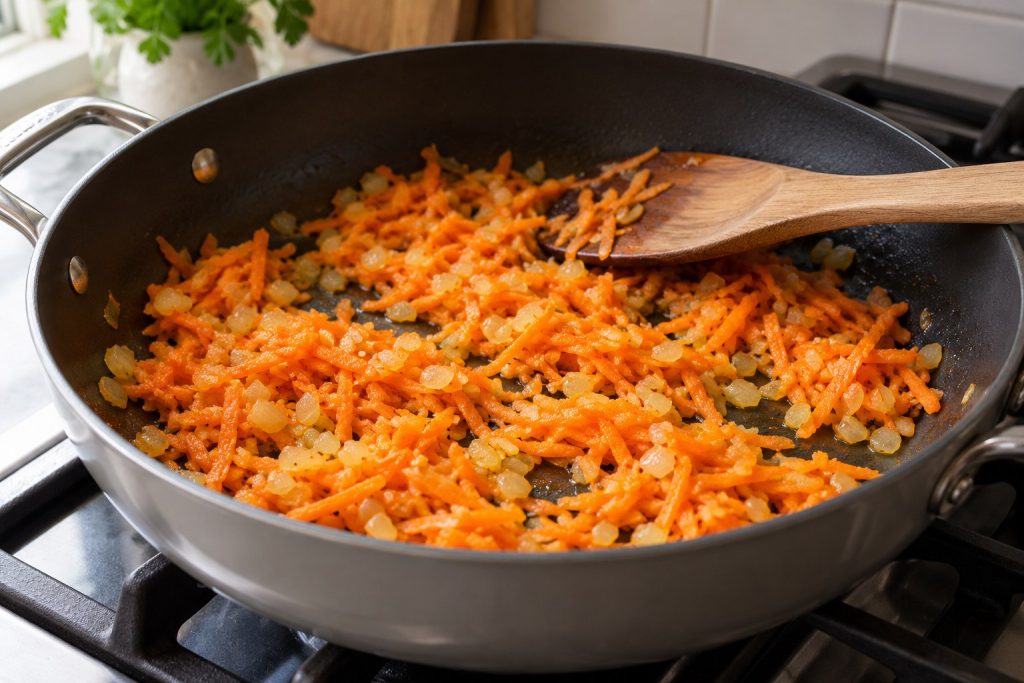
Look for strands that bend around the spoon and no longer feel raw and rigid when tasted. They should remain visible, rather than disappear completely. The small covered stage is useful when the carrot is particularly dry or your grater produces thick shreds.
If the grated carrot is still firm and the pan is dry, use the optional 2 tablespoons plain water and cover for 2 minutes. Once you uncover the pan, let any obvious puddle evaporate before adding garlic. That keeps the finished coating light and avoids using the pasta’s final cooking stage to finish a firm vegetable.
How to make carrot cannellini pasta
- Prepare the ingredients and water. Bring approximately 3 quarts water to a boil in the pasta pot. Grate the carrot, dice the onion, mince the garlic, and drain the beans. Put a heatproof measuring cup within reach for reserving pasta water.
- Soften the onion. Heat the olive oil in the wide skillet over medium heat. Add the onion and ⅛ teaspoon salt. Cook for 4–5 minutes, stirring occasionally, until translucent and softened without dark brown edges.
- Cook the pasta and carrot alongside each other. Add 1 teaspoon salt and the pasta to the boiling water and cook to al dente according to the package. Meanwhile, add the grated carrot to the onion and cook for 4–6 minutes, stirring, until the strands soften and bend easily. If dry or still firm, add 2 tablespoons plain water, cover for 2 minutes, then uncover.
- Add garlic, thyme, and beans. Near the end of the pasta cooking, reserve 1 cup cooking water, then drain the ready pasta without rinsing. Reduce the skillet to medium-low. Stir garlic and thyme into the softened vegetables for about 30 seconds. Fold in the beans, black pepper, and ⅓ cup reserved water; warm gently for 2–3 minutes.
- Bring the coating together. Add the drained pasta and fold gently for 1–2 minutes over low heat. If dry, add reserved water 1–2 tablespoons at a time. Stop when the pasta glistens, the beans are hot, and the carrot is distributed through the pan without a pool of liquid underneath.
- Finish with lemon. Remove from the heat and stir in 1 teaspoon lemon juice. Taste a bite with pasta, carrot, and beans, then add salt, pepper, or a few more drops of lemon if needed. Divide between two bowls and serve promptly.
Make a moist coating without extra cream
The first ⅓ cup pasta water loosens the vegetables and beans, while the remaining reserve is for adjusting after the pasta joins. Fold between additions so you can see whether the noodles still need moisture. Saving a full cup does not mean pouring it all into the pan.
Barilla explains how pasta water helps a sauce cling. In this recipe, the coating remains light: the carrot strands, oil, and a little bean starch surround the pasta without forming a thick layer. Serve before it has time to sit and tighten.
Troubleshooting carrot, beans, and pasta
| What you notice | What helps |
|---|---|
| Carrot strands remain firm | Use the brief covered stage before adding beans. Thicker matchsticks need longer than freshly grated carrot. |
| Pasta looks dry and dull | Fold in reserved water 1–2 tablespoons at a time. Gentle mixing protects the beans. |
| Water collects at the bottom | Stop adding liquid and fold over low heat briefly. Reassess before continuing to cook. |
| Beans become mushy | Reduce the heat and lift with a broad spoon. Avoid vigorous tossing or prolonged simmering. |
| The dish is overly salty | Use unsalted hot water for further loosening. Lemon changes the flavor balance but cannot remove salt. |
On a small screen, scroll the table sideways to see every column.
Practical pasta and bean alternatives
Great northern beans can replace cannellini in the same drained volume. If using home-cooked beans, measure about 1½ cups after draining and make sure they are fully tender. Dry beans cannot cook through during this recipe’s brief warming stage.
Small shells, rotini, or fusilli can replace penne at the same 5-ounce dry weight. Follow the package and taste before draining. A gluten-free pasta may need especially gentle handling; check the individual product rather than transferring the wheat pasta’s cooking time.
Grated zucchini makes a different vegetable version. Use about ¾ cup, cook uncovered until its extra moisture evaporates, and omit the carrot’s optional plain-water addition unless the pan actually needs it. The result will be less sweet and softer.
For four servings, double the ingredients, use a wide 5–6-quart sauce pan, and start with ⅔ cup reserved pasta water. Keep more available for the final adjustment. Doubling the batch changes pan capacity and heating time, not the pasta package’s basic cooking instructions.
Serve the light sauce with a crisp side
Carrot cannellini pasta works well with a green salad or separately steamed broccoli. Share the beans evenly between the bowls, then spoon any carrot-rich juices over the pasta. Keep bread separate until serving so it does not take up the moisture intended for the noodles.
For another small meal built around a can of white beans, try sweet potato with white beans. If you prefer a soup on another day, white bean potato soup without cream gives the same pantry ingredient a different texture.
Store in portions and reheat with moisture
Divide leftovers into shallow containers and refrigerate within 2 hours, or within 1 hour above 90°F (32°C). Keep at 40°F (4°C) or below and use within 3–4 days, following USDA leftovers guidance.
Start one portion with 1 tablespoon water in a small pan, cover, and warm gently. Fold occasionally and add another spoonful only if dry. Reheat throughout to 165°F (74°C). For the microwave, use a suitable covered, vented bowl and stir during heating. The carrot and beans will soften further, so keep handling gentle.
Carrot and white-bean pasta questions
Does the finished dish taste strongly of carrot?
The carrot adds a gentle sweetness and soft strands throughout the pasta. Onion, garlic, thyme, and a little lemon keep the overall flavor savory.
Can I leave out the onion?
Yes. Start with the carrot in the measured oil and use the optional water if needed. Keep the garlic’s brief addition after the carrot softens.
Should I use ground thyme or thyme leaves?
The recipe calls for dried leaves. If using ground thyme, start with ¼ teaspoon, following the leaf-to-ground proportion in Nebraska Extension’s substitution guide.
Should I rinse the cooked pasta?
No. Drain it and combine while warm. Rinsing is unnecessary for this hot dish and washes away surface starch useful to the light coating.
What can I prepare earlier in the day?
Grate the carrot, dice the onion, and drain the beans, then refrigerate them in covered containers. Cook the pasta near serving time for the best texture.
THE COMPLETE RECIPE
Small Batch Carrot Cannellini Pasta Without Tomato Sauce
Yield: 2 dinner portions
Ingredients
- 5 ounces dry short pasta 140 g; penne or another short shape
- 1 large carrot 3 ounces / 85 g after trimming; coarsely grated, about 3/4 cup
- 1/2 small onion finely diced, about 1/4 cup
- 1 tablespoon olive oil
- 1 garlic clove minced
- 1/2 teaspoon dried thyme leaves
- 1 15-ounce can cannellini beans 425 g including liquid; drain and rinse, about 1 1/2 cups drained beans
- 1 cup reserved pasta cooking water reserve this much; start with 1/3 cup in the skillet, then add only as needed
- 1 teaspoon fresh lemon juice plus more to taste
- 1/8 teaspoon black pepper
- 1 teaspoon fine salt for approximately 3 quarts pasta cooking water
- 1/8 teaspoon fine salt for the vegetables, plus more to taste
- 2 tablespoons plain water only if needed to soften the carrot
Instructions
- Prepare the ingredients and water Bring approximately 3 quarts water to a boil in the pasta pot. Grate the carrot, dice the onion, mince the garlic, and drain the beans. Put a heatproof measuring cup within reach for reserving pasta water.
- Soften the onion Heat the olive oil in the wide skillet over medium heat. Add the onion and ⅛ teaspoon salt. Cook for 4–5 minutes, stirring occasionally, until translucent and softened without dark brown edges.
- Cook the pasta and carrot alongside each other Add 1 teaspoon salt and the pasta to the boiling water and cook to al dente according to the package. Meanwhile, add the grated carrot to the onion and cook for 4–6 minutes, stirring, until the strands soften and bend easily. If dry or still firm, add 2 tablespoons plain water, cover for 2 minutes, then uncover.
- Add garlic, thyme, and beans Near the end of the pasta cooking, reserve 1 cup cooking water, then drain the ready pasta without rinsing. Reduce the skillet to medium-low. Stir garlic and thyme into the softened vegetables for about 30 seconds. Fold in the beans, black pepper, and ⅓ cup reserved water; warm gently for 2–3 minutes.
- Bring the coating together Add the drained pasta and fold gently for 1–2 minutes over low heat. If dry, add reserved water 1–2 tablespoons at a time. Stop when the pasta glistens, the beans are hot, and the carrot is distributed through the pan without a pool of liquid underneath.
- Finish with lemon Remove from the heat and stir in 1 teaspoon lemon juice. Taste a bite with pasta, carrot, and beans, then add salt, pepper, or a few more drops of lemon if needed. Divide between two bowls and serve promptly.
Notes
Rate This Recipe
Made this recipe? Choose a star rating in the comment form and share how it turned out. Your cooking time and any ingredient changes can help the next reader.
Rate This Recipe