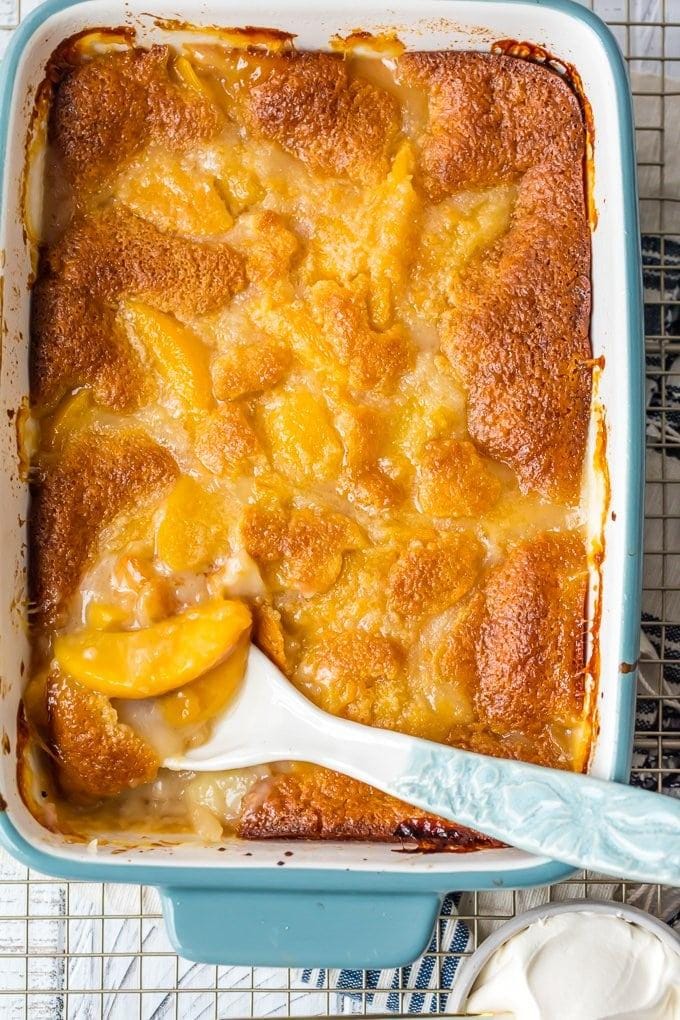
Peach cobbler with self rising flour uses a simple batter and a buttery pan to bake sliced fruit into a warm, cake-style dessert. This version is written for a 9-by-13-inch baking dish. Measure the prepared peaches by volume, drain frozen or canned fruit, and check the topping in the center rather than judging only by brown edges.
- 9 × 13-inch pan
- 350°F oven
- Check from 45 minutes
Recipe at a glance
- Yield: about 10 to 12 dessert portions
- Pan: 9 by 13 inches
- Oven: 350°F (175°C)
- Preparation: about 20 minutes with already peeled fruit
- Baking: begin checking at 45 minutes; allow longer if the center is still wet
- Rest before serving: about 20 minutes
Jump to ingredients or baking instructions.
Ingredients
Peach filling
- 5 cups peeled, sliced peaches, measured after draining if canned or thawed
- 3/4 cup granulated sugar
- 1/4 cup light brown sugar
- 1 tablespoon lemon juice
- 1 teaspoon vanilla extract
- 1 teaspoon ground cinnamon
- 1/4 teaspoon ground nutmeg, optional
- 2 teaspoons cornstarch
Batter and pan
- 1/2 cup unsalted butter, melted
- 2 cups self rising flour, spooned into the measuring cup and leveled
- 1 cup granulated sugar
- 1 cup whole milk
- 1 teaspoon vanilla extract
Self rising flour already includes leavening and salt, so do not add extra baking powder to this ingredient list. Check that the flour is fresh. The fruit amount is 5 cups of prepared slices; the number of whole peaches or cans needed varies.
Choose and prepare the peaches
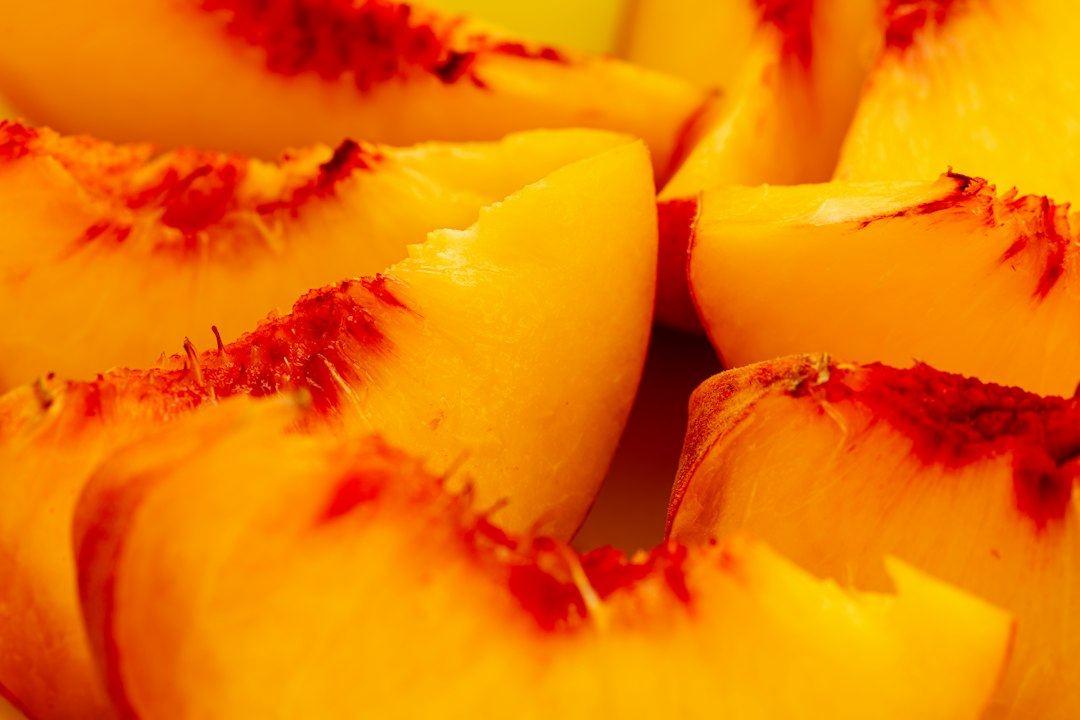
Use ripe peaches that still hold their shape when sliced. Cut away bruised areas and remove the pits. Peel them for a smoother filling, or leave the skins on if you prefer their texture. Slice into similar-size wedges so one piece does not remain firm while another breaks down.
Thaw frozen peaches in the refrigerator and drain them before measuring. Drain canned peaches as well. Fruit packed in heavy syrup is sweeter than fresh peaches; for that version, begin with 1/2 cup granulated sugar in the filling instead of 3/4 cup. This is a flavor adjustment, and fruit sweetness still varies.
How to assemble the cobbler
- Heat the oven. Position a rack in the center and preheat to 350°F. Pour the melted butter into the 9-by-13-inch dish.
- Mix the filling. Toss the peaches with both filling sugars, lemon juice, vanilla, cinnamon, optional nutmeg, and cornstarch. Let stand for about 10 minutes.
- Mix the batter. Whisk the flour and batter sugar together. Stir in the milk and vanilla just until combined. This is a thick batter; avoid beating it until completely smooth.
- Layer. Spoon the batter evenly over the butter, spreading gently where necessary. Spoon the peach mixture across the top. Do not stir the layers together.
- Bake. Begin checking at 45 minutes. The edges should bubble and the topping should be golden, but the center also needs to be set. Insert a toothpick into a patch of topping rather than a peach; it should show moist crumbs rather than raw batter. Continue in 5-minute intervals if needed.
- Rest. Set the dish on a heat-safe surface for about 20 minutes before scooping. The filling is very hot immediately after baking and becomes easier to serve as it cools.
Why the center matters
A dark edge can form before the middle has finished baking. Glass, metal, and ceramic dishes transfer heat differently, and wet fruit adds another variable. If the surface is brown while the center is still wet, lay foil loosely over the dish and keep baking. Avoid switching to the broiler to finish a raw center: it adds color without reliably cooking the batter underneath.
Troubleshooting
The filling is watery: check whether the fruit was drained and whether the center baked fully. Let the cobbler rest before judging the final thickness. A serving can also contain peach juice even when the topping is baked.
The topping is dense: too much flour, old self rising flour, or excessive mixing may contribute. Spoon and level the flour, use a fresh package, and stop mixing once the dry patches disappear.
The edges are dark: tent with foil and move the dish away from a very hot bottom rack. Check that the oven is fully preheated and use the center rack.
The fruit tastes too sweet: serve a smaller portion with plain yogurt or lightly sweetened cream. Record the fruit type and sugar amount so you can make a measured adjustment next time.
Serving and storage
The time and temperature limits below follow USDA leftover guidance. In surroundings above 90°F, refrigerate within 1 hour.
Serve warm with vanilla ice cream or plain Greek yogurt. If you need to soften butter for another dessert, our butter-softening guide explains how to distinguish soft butter from melted butter.
Refrigerate leftovers in a covered container within 2 hours; do not leave the full dish on the counter overnight. Use within 3 to 4 days. Reheat only the portions you plan to serve, checking that leftovers are heated through to 165°F. For freezing, divide cooled portions into suitable containers, label them, and thaw in the refrigerator before reheating. The topping will usually be softer after freezing.
Frequently asked questions
Is this a biscuit cobbler? No. It is a cake-style batter cobbler. A biscuit topping uses a different dough and assembly method.
Can I use a smaller pan? A deeper layer changes the baking time and can leave the center underdone. Use the stated pan for this version.
Can I prepare it ahead? Measure dry ingredients and prepare the fruit separately. Mix and assemble close to baking time so the batter does not sit after the liquid activates its leavening.
Can I use plain all-purpose flour? Not as a direct swap: this ingredient list relies on the leavening and salt already in self rising flour. Use a recipe written for plain flour, or follow a flour manufacturer’s self rising blend instructions before measuring it.
For another make-ahead dessert, see stovetop peanut butter fudge. It uses a candy thermometer and an entirely different setting method.