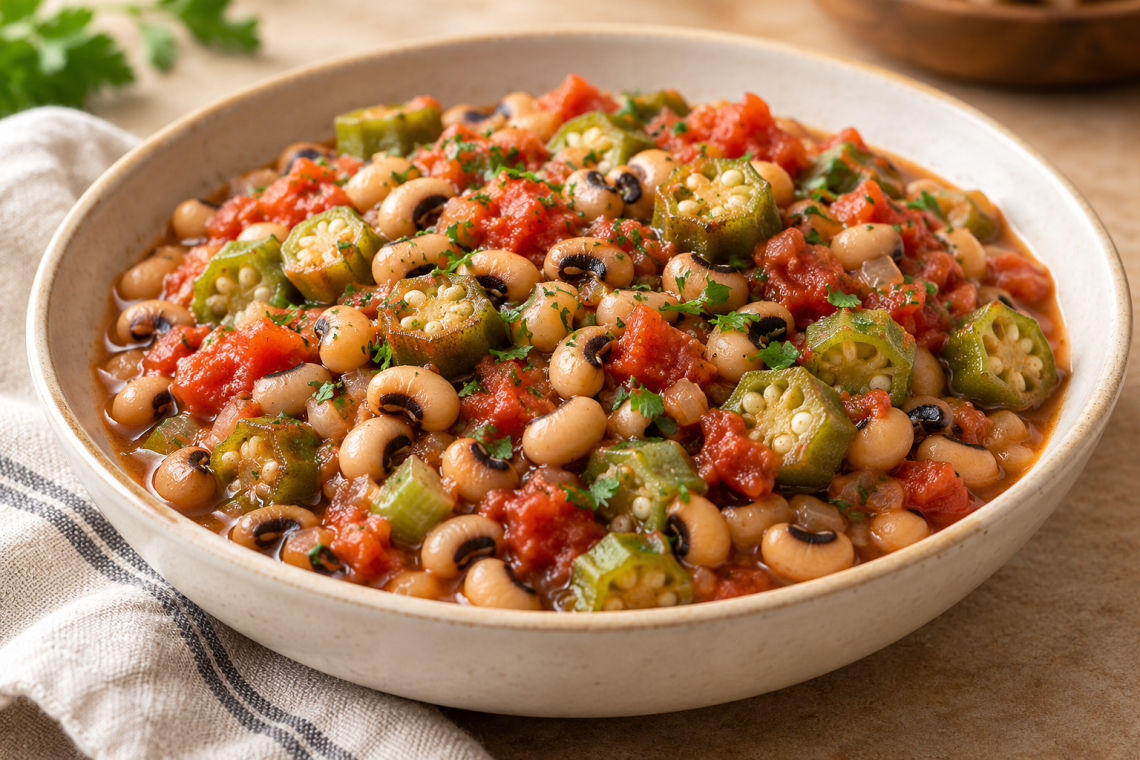
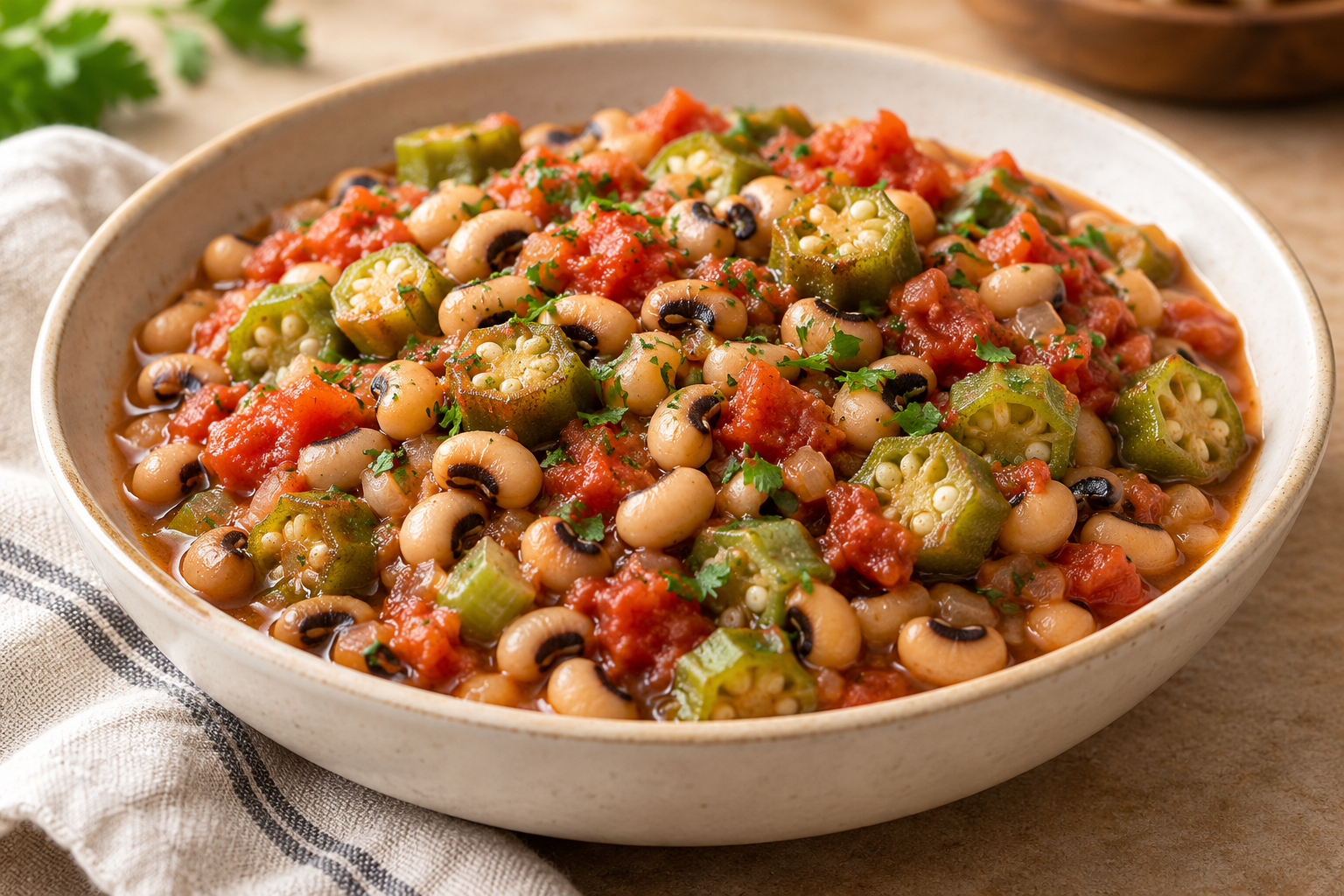
These canned black eyed peas with okra and tomatoes make a hearty, lightly smoky supper from two cans, a bag of frozen vegetables and a handful of seasonings. The black-eyed peas stay tender and distinct, while sliced okra gives the tomato broth a little body. Spoon it over plain rice or serve it beside cornbread to catch the sauce.
This version is built for the stovetop and begins with fully cooked canned peas. It does not ask you to soak dried beans or commit to a slow cooker. The cooking time is spent softening the onion and celery, simmering the tomato base and giving the frozen okra enough time to become tender. Add the peas later so they keep their shape.
Jump to Recipe · Rate this recipe
Cook from here: ingredient groups · six steps · sauce and lid guide.
A four-portion stovetop supper
At a glance
4 servings with a starch on the side
10 minutes preparation · about 30 minutes cooking
About 40 minutes total
Set out
Deep 12-inch skillet or 4-quart saucepan with a lid, colander, knife and wooden spoon. A wide pan makes the sauce easier to watch; a saucepan needs closer attention to how much liquid remains.
Know the texture you are aiming for
Okra naturally thickens liquid as it cooks. In this recipe that quality helps create a spoonable sauce, so the goal is tender rounds in a cohesive stew rather than crisp, dry vegetables. A wide pan, a measured amount of liquid and a gentle simmer keep the texture manageable. Do not expect the result to resemble fried okra.
Use plain frozen sliced okra and follow the package’s cooking requirements. A bag of breaded okra will not work here. Keep the pieces frozen until the pan is ready; thawing a bag on the counter is unnecessary. If the pieces are frozen together, loosen the bag gently without crushing the rounds before measuring.
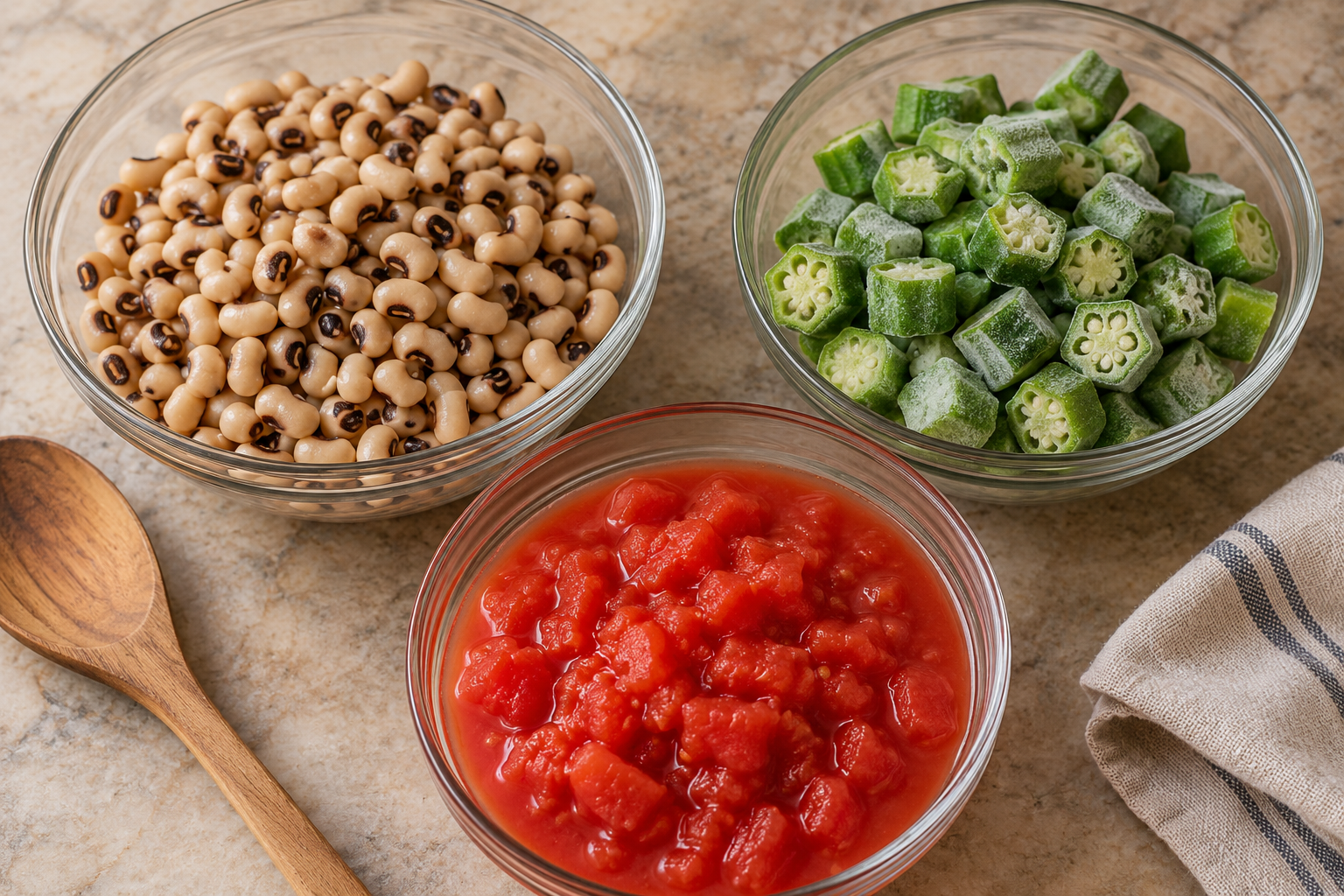
Ingredients by cooking stage
Build the aromatic base
- 2 tablespoons olive oil
- 1 medium yellow onion, approximately 150 g, finely diced
- 1 celery stalk, approximately 50 g, finely diced
- 2 garlic cloves, minced
- 1 teaspoon smoked sweet paprika
- 1/2 teaspoon dried thyme
Add the vegetables and peas
- 1 can diced tomatoes, 14.5 ounces, with its juice
- 1/2 cup low-sodium vegetable broth, plus more if needed
- 10 ounces plain frozen sliced okra, approximately 280 g
- 2 cans black-eyed peas, 15 ounces each, drained and gently rinsed
Seasoning, herbs and serving
- 1/4 teaspoon fine salt, plus more to taste
- 1/4 teaspoon ground black pepper
- 2 tablespoons chopped flat-leaf parsley
- 1 teaspoon apple cider vinegar, optional, added only after tasting
- Cooked rice or cornbread, for serving
Choose tomatoes without a strong added seasoning blend so the paprika and thyme remain in balance. Fire-roasted tomatoes can be used if you want a more pronounced smoky flavor; start with half the paprika in that case. The canned peas should be drained because their packing liquid would make the amount and saltiness of the sauce harder to control.
Read the three packages, then set up the counter
The ounces printed on a can describe the contents before draining. For this recipe, buy the two listed cans and drain them; do not try to replace their contents with thirty ounces of already drained peas. Tip the peas into a colander gently and look through them while rinsing. A few split peas can thicken the sauce, but pressing the whole batch through the mesh would erase the distinct beans this dish is meant to have.
Measure the frozen okra before starting the onions, then return any extra to the freezer. Put the measured paprika and thyme in a small dish together; they enter the pan at the same moment. Keep the opened tomatoes and measured broth beside them. When the garlic and spices have had their brief warming, you can add the liquid promptly instead of searching for a can opener while the paprika darkens.
How to make canned black eyed peas with okra and tomatoes
First, build the tomato base
- Soften the vegetables. Warm the oil over medium heat. Add the onion, celery and measured salt. Cook for 6 to 8 minutes, stirring occasionally, until softened. A little pale gold color is fine, but lower the heat if the small pieces start to scorch.
- Briefly warm the spices. Add the garlic, smoked paprika and thyme. Stir for about 30 seconds. Immediately add the tomatoes with their juices and the broth, scraping the bottom to loosen the flavorful coating.
- Start the sauce. Bring the tomato mixture to a gentle simmer and cook uncovered for 5 minutes. The onion and celery should be fully tender, and the tomato pieces should begin to soften around their edges.
Then, cook the okra fully
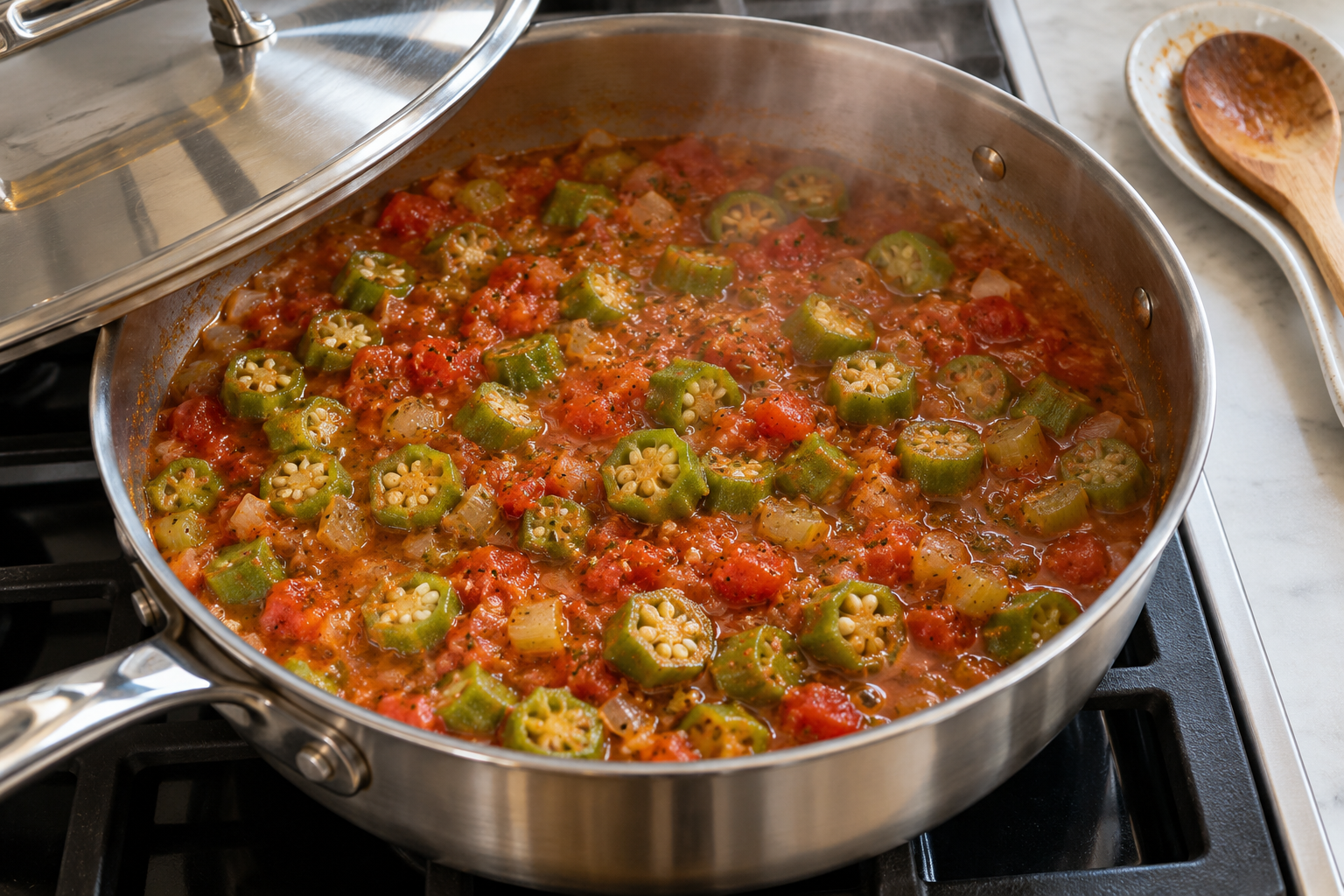
- Add the okra. Stir in the frozen rounds carefully. Return to a simmer, then partially cover and cook for about 10 to 12 minutes, or as long as required by the package, until the okra is tender and hot throughout. Stir gently a few times. Add a splash of broth if the sauce gets dry before the okra is cooked.
Finally, fold in the tender peas
- Warm the black-eyed peas. Fold in the drained peas and black pepper. Simmer uncovered for 5 to 7 minutes, until the peas are hot and the sauce has the consistency you want. Handle the mixture with a lifting motion so the peas do not break apart.
- Finish to taste. Remove from the heat and add the parsley. Taste a full spoonful before adding more salt. If the flavor needs a sharper finish, add the optional vinegar a few drops at a time. Serve over rice or beside cornbread.
The lid is a texture control
| What is happening | What to do next |
|---|---|
| A tall saucepan holds plenty of steam and the sauce stays loose. | Keep the final pea-warming stage uncovered and assess the liquid before adding more broth. |
| A broad skillet dries around its perimeter before the okra softens. | Keep the lid partly over the pan during the okra stage and add the small splash of broth already allowed in the method. |
| The mixture moves in large, forceful bubbles. | Lower the heat until it simmers gently; a vigorous boil makes it harder to protect the tender peas. |
The covered-then-uncovered approach has a useful parallel in Mississippi State University Extension’s tomatoes and okra method. Here the separate final pea stage adds another reason to watch the sauce before folding in the already cooked beans. A timer marks when to check; it does not show how quickly your particular pan loses moisture.
Adjust the stew with these two checks
Check a round of okra. It should be tender enough to bite easily, with no hard, fibrous edge. Seeds will be visible inside the slices; that is expected. If the okra is firm, keep it simmering before adding the peas. This lets you finish the vegetable without repeatedly cooking the already tender beans.
Check the sauce at the edge of the pan. There should be enough liquid to spoon over rice, but it should not pool like a thin soup. If the mixture is too loose, simmer uncovered gently for a few minutes. If it is very thick, add broth or water a tablespoon at a time. The okra continues to influence the sauce as the stew stands.
Do not stir briskly in an attempt to remove okra’s natural texture. That breaks both the vegetable and the peas. The finished dish is supposed to be soft and cohesive. If you discover that you strongly prefer dry, crisp okra, a roasted preparation is a better choice for another meal; this cooking method deliberately uses a moist sauce.
Taste a complete spoonful before changing the pot
For these canned black eyed peas with okra and tomatoes, judge a spoonful containing sauce, an okra round and a pea. Let the spoonful cool enough to taste comfortably, then decide which part of the flavor needs attention.
If it tastes flat
Try a few grains of salt in a cooled spoonful first, rather than immediately salting the entire pan. If that improves it, season the pot modestly and taste again. If it already tastes salty but needs a brighter finish, try the optional vinegar a few drops at a time. Salt and acidity solve different problems; changing both at once makes the result harder to judge.
If it tastes too sharp or smoky
Leave out the optional vinegar and taste the stew with the plain rice you plan to serve. Do not add more paprika just to intensify the color: the existing smoked spice is already part of the flavor. For guests who want extra heat, offer hot sauce separately so everyone can adjust their own bowl. Keep a little of the measured parsley for the last stir so its fresh flavor is easy to notice.
Build a simple supper around it
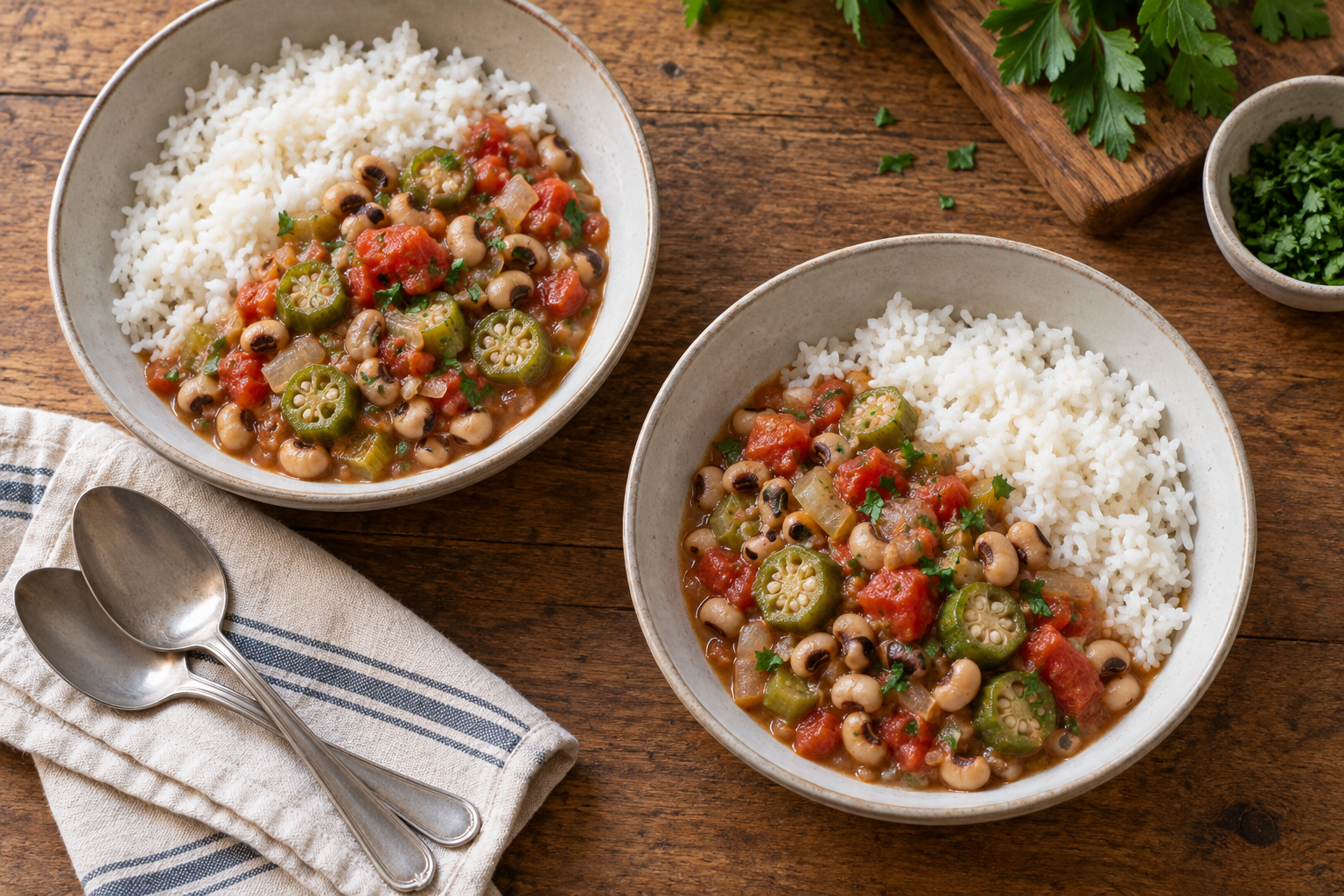
Plain rice lets the tomato and smoky seasonings remain the focus. Cook it separately so you can control its texture and portion the stew according to appetite. Cornbread is another natural partner. For a crisp contrast, add thinly sliced cucumber or a simple cabbage salad dressed lightly with vinegar.
If serving a mixed group, keep garnishes separate. Some diners may want a spoonful of plain yogurt or sour cream, while others prefer hot sauce. The base recipe contains no dairy. If dietary restrictions matter, check the broth, canned goods and any bread or toppings rather than relying on the recipe title alone.
Swaps that change the result
White beans can replace the black-eyed peas, but their texture and flavor are different. Canned pinto beans are sturdier and give the sauce a darker color. Bean textures vary, so keep the main recipe’s timing as a starting point and watch how easily the beans break.
For extra vegetables, a small diced bell pepper can cook with the onion and celery. Avoid adding several cups of extra produce without increasing the pan size; the resulting water can turn a skillet stew into soup. Changing one ingredient at a time makes it easier to understand what the pan needs.
Store the stew safely
Refrigerate in shallow containers within 2 hours, or within 1 hour when the surroundings are hotter than 90°F. Store at 40°F or below and use within 3 to 4 days. Freeze portions for up to 2 to 3 months for quality, then thaw in the refrigerator. Reheat gently with a little water until the center reaches 165°F. Keep separately cooked rice on its own safe cooling and storage schedule.
Our small-batch skillet cornbread without eggs is an option for serving alongside. For a different meal using the same bean, see brown rice and black-eyed pea bowls with collards.
Use three doneness checks, not one timer
Okra, cooked beans and tomato sauce change at different speeds. A reliable pot is ready when all three components pass their own check, not simply when the clock reaches the end of a suggested range.
Check the okra
Cut pieces should be hot through and tender enough to bite without a firm, icy center. They should still be recognizable. Stir with broad turns instead of rapid circles so the pods do not break down unnecessarily.
Check the peas
Canned black-eyed peas need to heat and absorb flavor, not cook until they split. Lift a spoonful from the center of the pot and look for mostly whole peas with creamy interiors.
Check the sauce
The tomato liquid should lightly coat the back of a spoon while still moving around the vegetables. If it runs like water, simmer uncovered. If it sits in a heavy mound, loosen it with a small splash of water or broth.
A little natural thickening from okra is normal and helps the sauce cling to the beans. Before adding salt, cool a spoonful for a moment and taste it with both a pea and a piece of tomato. Finish with herbs, pepper or a small splash of acid only after the sauce concentration is right; reducing a heavily seasoned pot can make it unexpectedly salty.
Frequently asked questions
Can I use fresh okra?
Yes. Choose tender pods, trim the stems without cutting deeply into the pod and slice into roughly 1/2-inch rounds. Start checking tenderness after about 8 minutes in the sauce. Freshness and pod size affect the timing, so use the texture as your guide.
Can I start with dried black-eyed peas?
Cook them separately first, then use about 3 cups cooked, drained peas in place of the cans. Dry peas cannot replace the canned amount directly in this quick skillet: they need considerably more liquid and a different cooking schedule.
Will frozen black-eyed peas work?
Cook them according to their package directions before adding them at the warming stage. Measure approximately 3 cups cooked peas. Do not assume a frozen bean product is already fully cooked or ready to eat.
Is this a spicy dish?
The main recipe uses sweet smoked paprika and black pepper, so the heat is mild. For a hotter bowl, offer hot sauce or chili flakes at the table. If your paprika is labeled hot, use less until you know the strength of that product.
Why does the recipe drain the peas but keep the tomato juice?
The tomato juice forms the base of the sauce and is part of the measured liquid. Draining the peas avoids adding an unpredictable amount of salty packing liquid. The broth then provides a controlled way to adjust moisture.
Can canned black eyed peas with okra and tomatoes be made in advance?
Yes. The stew is suitable for a next-day meal after prompt refrigeration. It will thicken and the vegetables will soften a little more. Add water during reheating and a little fresh parsley afterward to refresh the texture and flavor.
Food handling references: FDA storage guidance and FoodSafety.gov reheating temperatures.
Rate this recipe
Made these canned black-eyed peas with okra and tomatoes? Choose a star rating in the comment form and share how you served the stew.
Canned Black-Eyed Peas With Okra and Tomatoes
Ingredients
Equipment
Method
- Warm the olive oil over medium heat. Add the onion, celery and salt. Cook for 6 to 8 minutes, stirring occasionally, until softened. Lower the heat if the small pieces begin to scorch.
- Add the garlic, smoked paprika and thyme. Stir for about 30 seconds, then immediately add the tomatoes with their juices and the broth. Scrape the bottom of the pan.
- Bring the mixture to a gentle simmer and cook uncovered for 5 minutes, until the onion and celery are fully tender and the tomato pieces begin to soften.
- Stir in the frozen okra. Return to a gentle simmer, partially cover and cook for 10 to 12 minutes, or as directed on the package, until the okra is tender and hot throughout. Stir gently and add a small splash of broth if the pan becomes dry.
- Add the drained black-eyed peas and black pepper. Simmer uncovered for 5 to 7 minutes, lifting and folding gently, until the peas are hot and the sauce is spoonable rather than soupy.
- Remove from the heat and stir in the parsley. Taste a full spoonful before adding more salt. Add the optional vinegar a few drops at a time if the stew needs brightness. Serve with rice or cornbread.