A WARM TWO-BOWL LUNCH / CARROTS / COUSCOUS
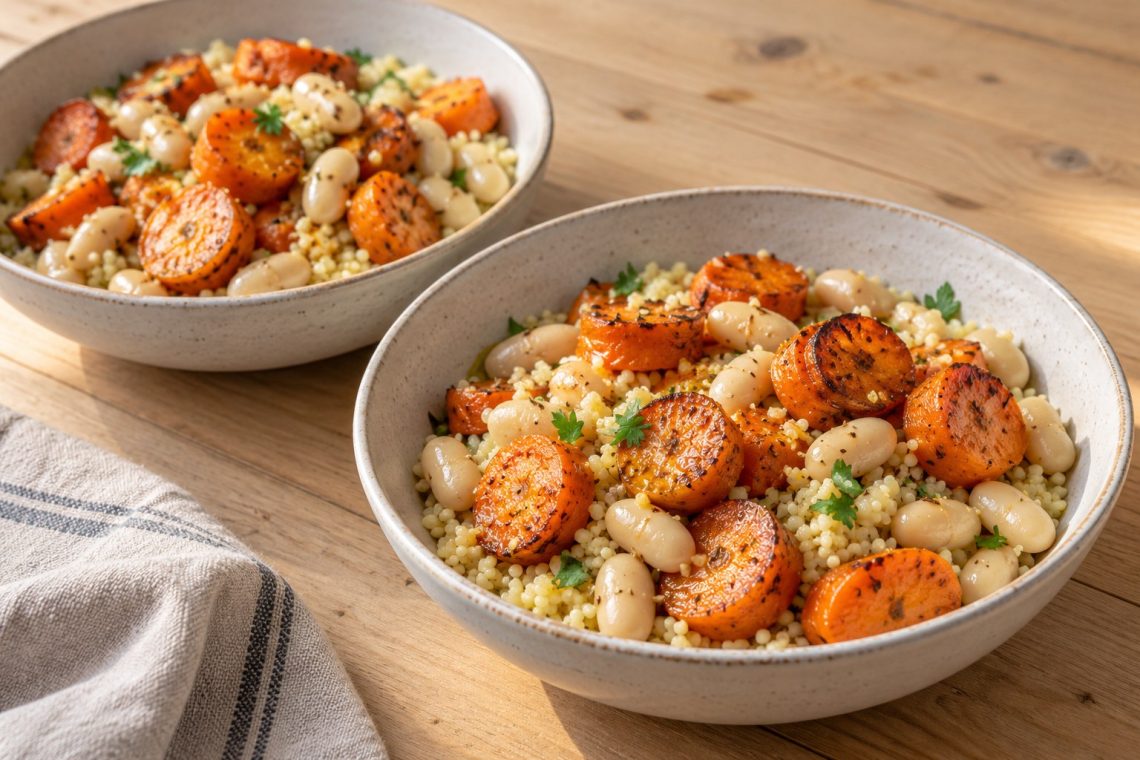
These couscous carrot bowls combine sweet, browned carrot coins, soft cannellini beans, and fluffy couscous with a lemon and parsley dressing. Cumin gives the carrots a warm savory note, while the white beans provide a creamy bite without yogurt. The carrots do most of the work in the oven; the couscous and beans can be prepared during the last few minutes of roasting.
The recipe makes two lunch bowls from a small amount of couscous and one can of beans. Roast the carrots until their centers are tender, fluff the couscous before adding anything else, and drain the beans well. Those details keep the bowl light and distinct rather than turning it into a wet, tightly packed mixture.
Couscous carrot bowls with white beans: recipe overview
- Prep
- 10 minutes
- Cook
- 30 minutes
- Additional time
- 0 minutes
- Total
- 40 minutes
- Yield
- 2 lunch bowls
The couscous hydrates while the carrots roast, so its five-minute standing time is included in the cooking window. You will need a rimmed sheet pan about 13 by 18 inches, a small saucepan with a tight lid, a second small pot or microwave-safe bowl for beans, a colander, fork, knife, and mixing cup.
Measured ingredients for the bowls
- 1/2 cup plain quick-cooking Moroccan-style couscous, about 85 g
- 1/2 cup vegetable broth, or the liquid quantity specified for your couscous
- 3 medium carrots, about 225 g total, scrubbed and cut into 1/2-inch-thick coins
- 1 can cannellini beans, 15 ounces (425 g) net weight, rinsed and well drained
- 2 tablespoons olive oil, divided
- 1/2 teaspoon ground cumin
- 1 tablespoon fresh lemon juice
- 1 tablespoon finely chopped parsley
- 1/4 cup water, for warming the beans, then drained
- Fine salt to taste; start with 1/4 teaspoon divided between carrots and dressing
- Freshly ground black pepper to taste
Use the tiny couscous that hydrates off the heat
The method is for small, quick-cooking couscous, not the larger pearl variety. Check the package for its water ratio. The half-cup broth amount suits products that use equal volumes of liquid and couscous; other brands need more. RiceSelect’s traditional couscous directions are one example of the equal-volume, five-minute method.
Plain couscous lets you control the salt and cumin. A seasoned packet may contain additional salt or ingredients that change the flavor. Whole-wheat couscous is another option if you follow its own liquid and standing-time instructions.
Cut carrots for even roasting
Carrot thickness matters more than whether the pieces are perfectly round. Halve wide coins so the largest pieces are not much wider than the smaller ones. Keep the 1/2-inch thickness consistent. Thin tips cook faster, so cut them into slightly longer pieces instead of tiny disks that can burn.
Scrubbing is enough when the skin is tender and clean; peel if the surface is tough. Pat the carrots dry before coating them with oil. Water left on the surface delays browning and can make a crowded tray steam.
Roast the carrots, then finish the couscous and beans
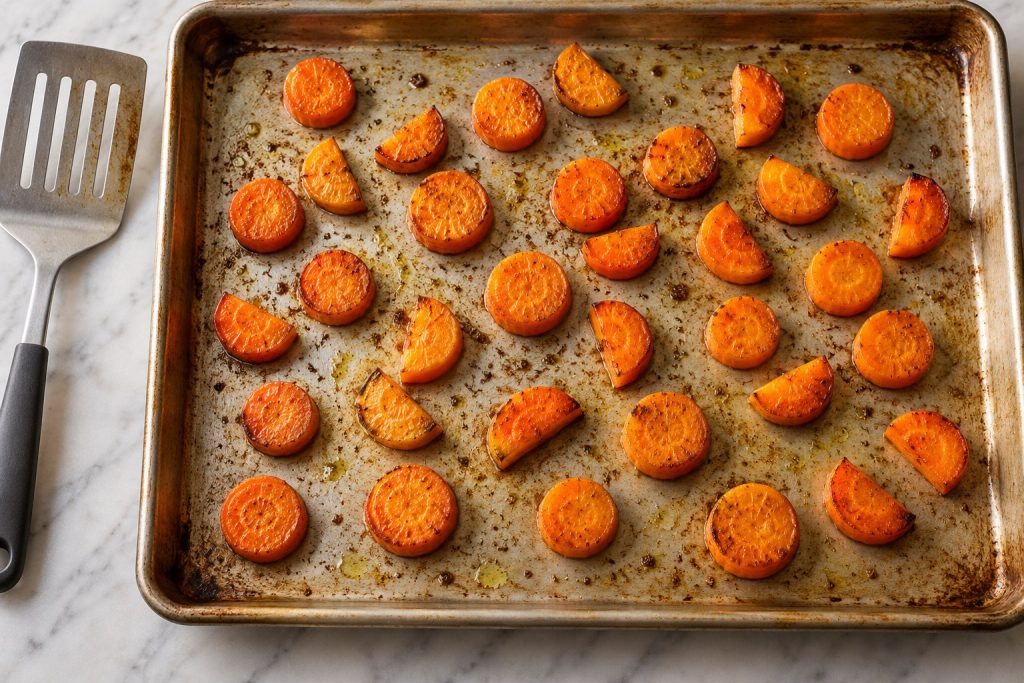
- Heat the oven and season the carrots. Set the oven to 425°F (220°C). Toss the carrot coins on the sheet pan with 1 tablespoon olive oil, the cumin, a small pinch of the measured salt, and pepper. Spread in one layer with space between the pieces.
- Roast until tender at the center. Roast for about 25–30 minutes, turning after 15 minutes. Start checking smaller pieces around 20 minutes. A fork should enter the thickest carrot easily, and some edges should be golden. If the carrots remain firm, give them several more minutes rather than assembling early.
- Hydrate the couscous. During the final 10 minutes of roasting, bring the broth to a boil in the small saucepan. Remove from the burner, stir in the couscous, cover immediately, and leave for 5 minutes, or follow your package directions. Lift and separate the grains with a fork.
- Warm the cooked beans. Put the drained cannellini beans and 1/4 cup water in a small pot. Heat gently for about 3 minutes, stirring carefully, until warm throughout. Drain away the water. The beans are already cooked; avoid a hard boil that splits them.
- Mix the dressing. Whisk the remaining tablespoon of olive oil with the lemon juice, parsley, remaining salt, and a little pepper. Taste with a spoonful of couscous before adding more salt, particularly if the broth is salty.
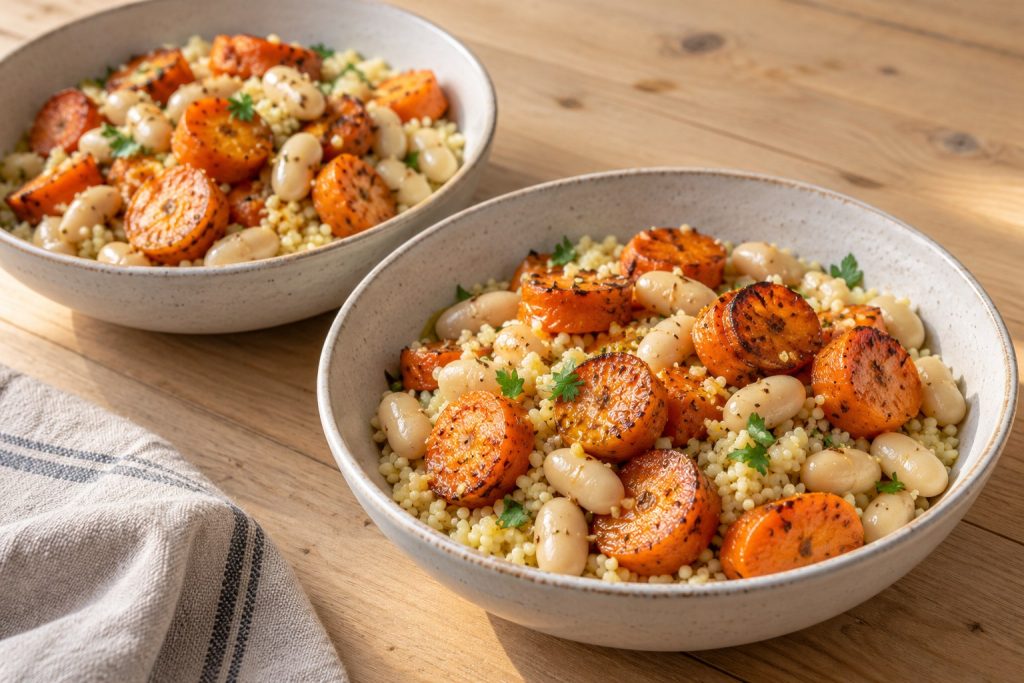
- Assemble and serve. Divide the couscous between two bowls. Add the warm beans and roasted carrots, then spoon the dressing evenly over both portions. Fold gently if you want dressing throughout, or leave the carrots on top so their browned surfaces remain visible.
Keep the three textures distinct
The bowl works best when the couscous is fluffy, the beans are soft but mostly whole, and the carrots have a little roasted firmness at the edges. Stirring everything vigorously can crush the beans into a paste that coats the grains. A few broad folds are enough.
Fluff the couscous before it meets the beans or dressing. Dragging a fork lightly through the hydrated grains breaks up clumps without compacting them. If you see a dry patch, sprinkle on a teaspoon of hot broth or water and cover briefly before fluffing again.
Warm the beans separately when serving the bowl hot. Adding refrigerator-cold beans straight to the small batch of couscous can cool it considerably. For a chilled lunch, cool the cooked components promptly and combine them cold instead of trying to keep the assembled bowl lukewarm for a long time.
Troubleshooting dry couscous and firm carrots
| What happened | What helps |
|---|---|
| Carrots are dark outside but firm inside | Lower the oven to 400°F, cover the tray loosely with foil, and continue until a fork enters easily. |
| Carrots are pale and wet | Spread them farther apart and continue roasting uncovered. Use a second tray when doubling. |
| Couscous has dry centers | Check the package ratio. Add hot liquid a teaspoon at a time, cover briefly, and reassess. |
| The bowl is watery | Drain the beans thoroughly and leave pooled liquid behind when portioning. Do not add more dressing yet. |
| The flavor seems flat | Taste a complete bite, then adjust with a small pinch of salt or a teaspoon of lemon juice. |
On a small screen, scroll the table sideways to see every column.
Bean and vegetable swaps that fit the recipe
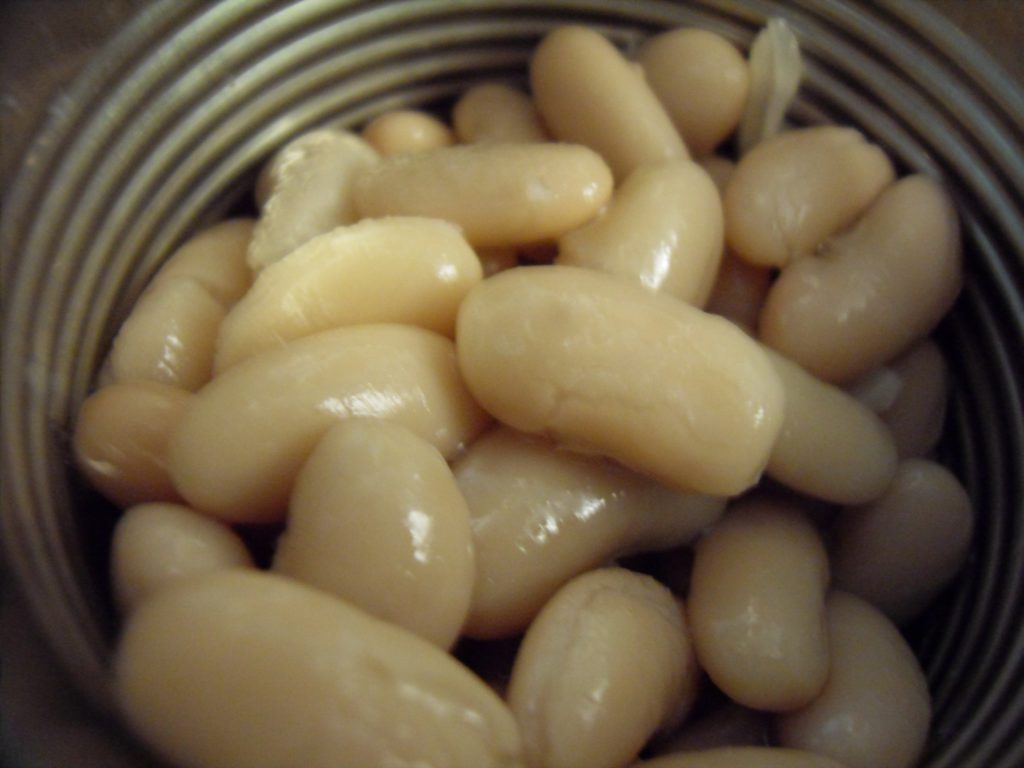
Cannellini beans are mild and tender. Butter beans work in the same quantity, but fold carefully because their larger pieces break more easily. Great northern beans give a slightly smaller bite. Use fully cooked beans; dried beans need their own cooking time before this recipe begins.
Parsnips can replace part or all of the carrots. Cut them into similarly sized pieces and check for tenderness rather than relying on identical timing. If a large parsnip has a tough woody center, remove it before chopping.
Fresh mint can replace half the parsley for a brighter dressing. Start with a small amount because it is more assertive. A little finely grated lemon zest is another way to increase citrus aroma without adding a lot more liquid.
If you prefer a different base, use cooked quinoa or rice prepared separately according to its own directions. Pearl couscous also works after proper boiling, but it cannot be substituted into the covered five-minute hydration step.
Serving and packing the bowls
Serve couscous carrot bowls while the carrots and beans are warm, with a lemon wedge nearby if desired. A few cucumber slices on the side add crunch; packing them separately keeps their moisture out of the grain. The recipe is also suitable as three smaller side portions alongside another dish.
For another use of quick couscous, try couscous with canned lentils and frozen spinach. If you have extra white beans and want a warm lunch later in the week, white bean potato soup without cream uses their soft texture in a different way.
Storage and reheating
Portion leftovers into shallow containers. Under USDA guidance, refrigerate within 2 hours, or 1 hour above 90°F, at 40°F or below; use within 3–4 days and reheat leftovers to 165°F.
For reheating, sprinkle a teaspoon or two of water over the couscous, cover loosely, and warm in short microwave intervals, stirring between them. Check the temperature in several places. Add a little fresh parsley or lemon afterward if the flavor needs refreshing.
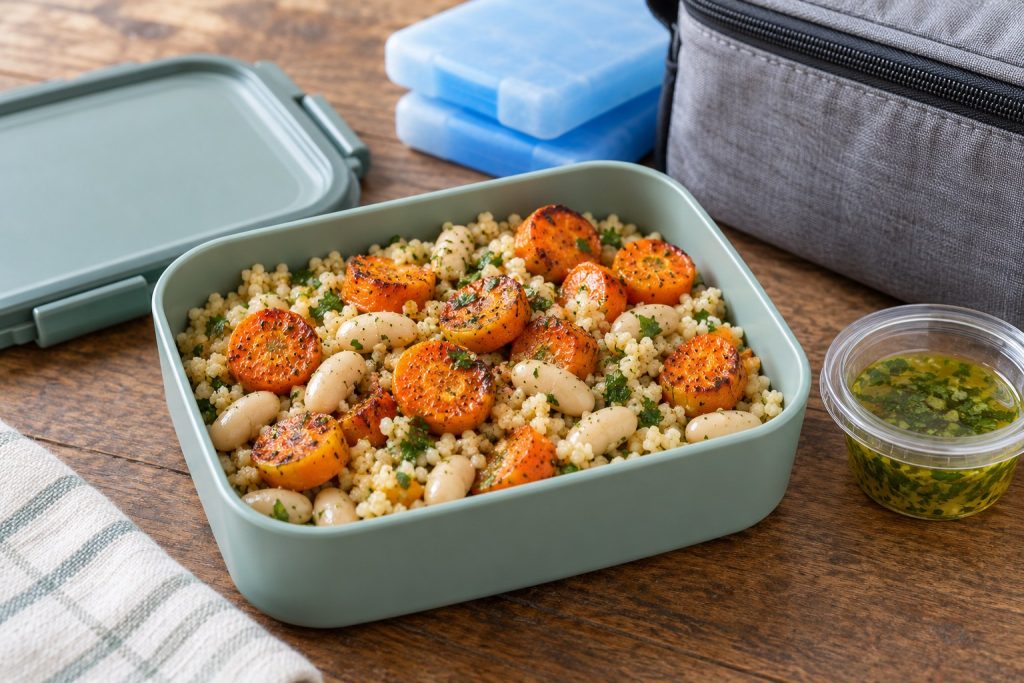
For a packed cold lunch, chill the components before transport and use an insulated bag with cold packs. Keep any extra dressing in a small container so you can add only what the chilled grain needs. Freezing is possible, but thawed beans can be more fragile and the carrots softer; refrigerate to thaw, then reheat gently.
Questions about this couscous bowl
Does the dressing need a yogurt replacement?
No. Olive oil, lemon, and parsley coat the ingredients without a thick sauce. The soft cannellini beans supply the creamy texture, so a yogurt substitute is unnecessary.
Can I use pearl couscous?
Yes, after cooking it separately according to its package. Its larger pasta shape needs boiling and gives a chewier bowl. Do not keep the small-couscous liquid ratio and five-minute standing method.
Can I use water instead of broth?
Yes. Use the same quantity required by your couscous, then taste the finished bowl carefully. The carrots, cumin, lemon, and parsley still provide flavor, but you may want a little more salt.
How do I double the recipe?
Double the ingredients and use two trays if necessary to keep the carrots in one layer. Prepare the couscous in a larger covered saucepan. Roasting time depends on piece size and tray crowding, not simply the number of servings.
Can I eat it chilled?
Yes, once it has been cooled and stored safely. Fluff the couscous again before serving and add a small splash of lemon or water only if it needs loosening.
THE COMPLETE RECIPE
Couscous Cannellini Roasted Carrot Bowls Without Yogurt
Yield: 2 lunch bowls
Ingredients
- 1/2 cup plain quick-cooking Moroccan-style couscous about 85 g; not pearl couscous
- 1/2 cup vegetable broth or use the liquid amount specified on the couscous package
- 3 medium carrots about 225 g total; scrub and cut into 1/2-inch-thick coins
- 1 15-ounce can cannellini beans 425 g net weight; rinse and drain well
- 2 tablespoons olive oil divided: 1 tablespoon for carrots and 1 tablespoon for dressing
- 1/2 teaspoon ground cumin
- 1 tablespoon fresh lemon juice
- 1 tablespoon fresh parsley finely chopped
- 1/4 cup water for warming beans; drain afterward
- 1/4 teaspoon fine salt starting amount, divided between carrots and dressing; adjust to taste
- freshly ground black pepper to taste
Instructions
- Heat the oven and season the carrots Set the oven to 425°F (220°C). Toss the carrot coins on the sheet pan with 1 tablespoon olive oil, the cumin, a small pinch of the measured salt, and pepper. Spread in one layer with space between the pieces.
- Roast until tender at the center Roast for about 25–30 minutes, turning after 15 minutes. Start checking smaller pieces around 20 minutes. A fork should enter the thickest carrot easily, and some edges should be golden. If the carrots remain firm, give them several more minutes rather than assembling early.
- Hydrate the couscous During the final 10 minutes of roasting, bring the broth to a boil in the small saucepan. Remove from the burner, stir in the couscous, cover immediately, and leave for 5 minutes, or follow your package directions. Lift and separate the grains with a fork.
- Warm the cooked beans Put the drained cannellini beans and 1/4 cup water in a small pot. Heat gently for about 3 minutes, stirring carefully, until warm throughout. Drain away the water. The beans are already cooked; avoid a hard boil that splits them.
- Mix the dressing Whisk the remaining tablespoon of olive oil with the lemon juice, parsley, remaining salt, and a little pepper. Taste with a spoonful of couscous before adding more salt, particularly if the broth is salty.
- Assemble and serve Divide the couscous between two bowls. Add the warm beans and roasted carrots, then spoon the dressing evenly over both portions. Fold gently if you want dressing throughout, or leave the carrots on top so their browned surfaces remain visible.
Notes
Rate This Recipe
Made this recipe? Choose a star rating in the comment form and share how it turned out. Your cooking time and any ingredient changes can help the next reader.
Rate This Recipe