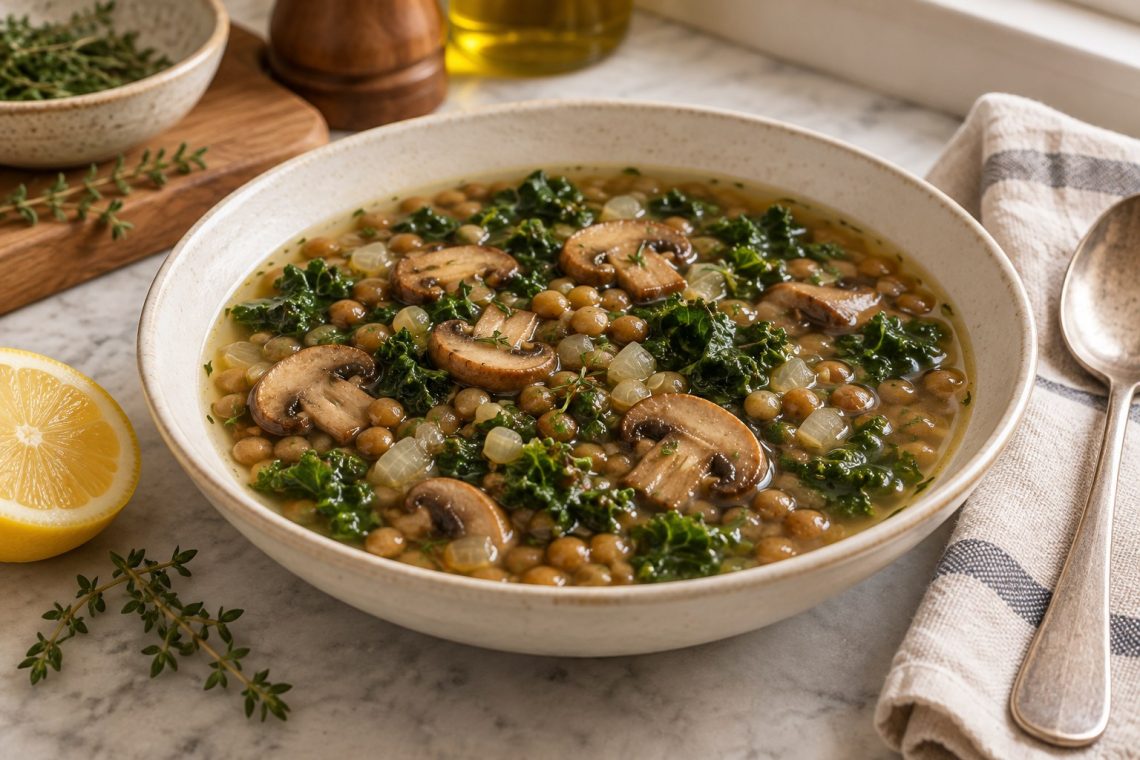
Browned mushrooms give lemony canned lentil mushroom soup with frozen kale its savory starting point. The lentils are already cooked, so the saucepan can spend its first minutes on the fresh mushrooms and onion. Broth and kale turn that base into three warm portions, and lemon is stirred in after the heat is off.
The soup should remain brothy enough to move around the lentils, with soft mushroom slices and pieces of tender kale in each spoonful. It does not need a blender or a flour thickener. The two decisions to watch are when mushroom moisture has evaporated and when the kale has finished its required cooking.
Jump to recipe · Rate this recipe
Begin with the wide pan
Yield: 3 portions · Prep: about 10 minutes · Cook: about 20–25 minutes · Total: about 30–35 minutes, allowing extra time if the kale package requires it.
Set out: a broad saucepan with room for 3 cups of broth plus the vegetables and lentils, a wooden spoon, knife, cutting board, colander, measuring tools and a ladle. Keep the lemon juice beside the serving bowls as a reminder that it goes in after the heat is off.
A narrow saucepan can hold the finished soup but gives the mushrooms less contact with the bottom. If that is the only pan available, allow more time for their moisture to evaporate. Do not force the stated schedule by raising the heat until small mushroom pieces burn while the rest remain wet.
Use the guide: ingredients · cooking · seasoning · FAQs.
Three stages to remember:
- Brown: let mushroom moisture evaporate before the broth goes in.
- Simmer: satisfy the kale package directions while warming the already-cooked lentils.
- Finish: switch off the heat, stir in lemon, then taste a spoonful containing broth and solids.
Shopping list
- 1 tablespoon olive oil
- 6 ounces cremini mushrooms, sliced
- 1/2 small onion, diced
- 1 garlic clove, minced
- 1/2 teaspoon dried thyme
- 1 can (15 ounces) cooked lentils, drained and rinsed
- 3 cups low-sodium vegetable broth
- 3/4 cup frozen chopped kale
- 1 tablespoon lemon juice
- Salt and pepper, to taste
Fresh mushrooms, plain canned lentils
Use fresh cremini mushrooms rather than canned mushrooms for the browning stage. Clean them, trim dry stem ends and slice the edible stems and caps to similar thickness, about 1/4 inch. Very thick halves and paper-thin slices will not reach the same texture together. Keep the measured 6 ounces as the reference amount; adding another full package can crowd the pan and change the balance of three portions.
Choose plain canned brown or green lentils packed in water, not lentils in curry sauce or a tomato preparation. The recipe’s 15-ounce measure is the unopened can size; after draining, do not open another can to replace the lost liquid weight. Rinse gently, drain well and avoid pressing very soft lentils into the colander.
Before seasoning, compare vegetable-broth labels using the same serving size. The FDA explains that Nutrition Facts are usually stated per serving, and products can use different serving sizes. Keep the measured 3 cups of low-sodium broth, then adjust salt only after the lentils and off-heat lemon are in the pot.
Let the mushrooms finish their dry stage
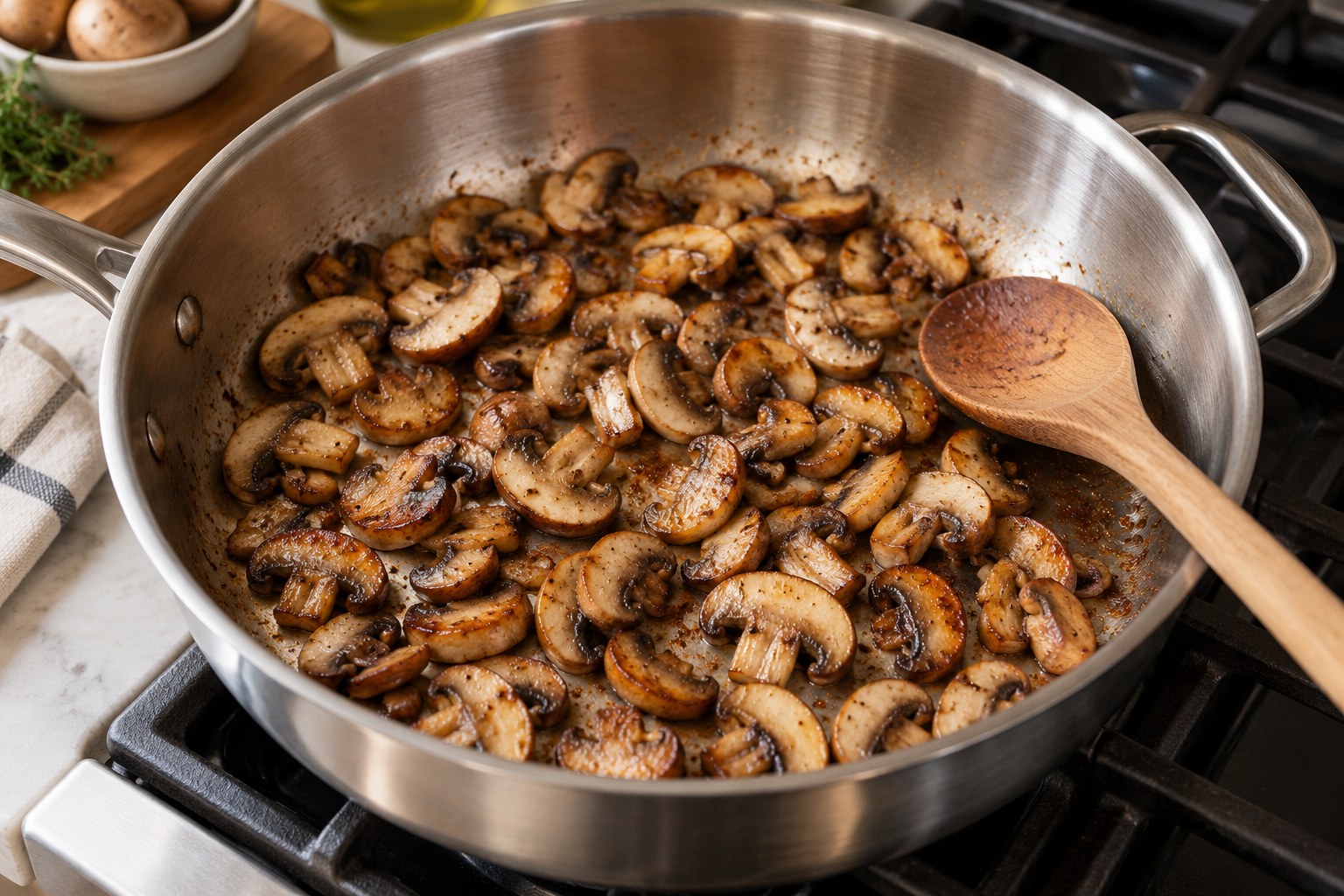
Scatter the slices in an even layer in the oiled pan. At first, leave them alone for the stated three minutes so some surfaces can begin coloring. Then turn a few pieces and inspect the base. A shallow puddle means the mushrooms are still releasing water. Let that moisture evaporate before expecting more golden edges.
Once the broth enters, the job changes to simmering. The liquid can pick up the golden coating from the pan, but it will not create the same dry-surface browning. Add the onion after the mushrooms have had their head start, and keep the garlic aside until its short aromatic step. This protects small garlic pieces from the much longer mushroom stage.
Check the kale package
Use the measured 3/4 cup of plain frozen chopped kale. Loose pieces are easier to stir into the broth than one compact frozen block. If the product needs a separate cooking method, prepare it as directed and add the fully cooked kale to the soup. Do not replace its cooking requirements with a quick thaw.
The Food Standards Agency’s frozen-vegetable advice calls for thorough cooking. The 7–10-minute soup simmer is an estimate that must still satisfy the kale package, including any specified temperature or standing time. Tender-looking leaves may surround a firmer stem piece, so inspect a representative spoonful rather than checking only a small loose leaf.
Cook lemony canned lentil mushroom soup with frozen kale
- Prepare everything that enters quickly. Slice the mushrooms, dice the onion and mince the garlic. Drain the lentils and read the kale directions. Measure the broth and lemon so you can move from browning to simmering without leaving the garlic unattended.
- Brown the mushroom base. Heat the oil over medium to medium-high heat in the broad saucepan. Spread the mushroom slices over the bottom and leave for about 3 minutes. Turn them, then continue cooking until obvious surface liquid evaporates and some edges are golden. Lower the heat if dark patches develop rapidly.
- Soften the onion. Add the onion and cook for 3–4 minutes, stirring it among the mushrooms. Look for softened, translucent pieces. Add the garlic and thyme and stir for another 30 seconds, just until aromatic.
- Add the soup ingredients. Pour in the broth, scraping up golden residue with the spoon. Add the drained lentils and kale, using its package-required preparation. Bring the pot back to a gentle simmer rather than judging the cooking time from the moment cold ingredients entered.
- Simmer with gentle movement. Cook for about 7–10 minutes, or the full kale requirement if longer. Fold through occasionally so no frozen clump remains in the center. If the kale was cooked separately, add it fully cooked and keep the combined soup at a gentle simmer until evenly hot. Avoid a hard boil that repeatedly breaks the lentils.
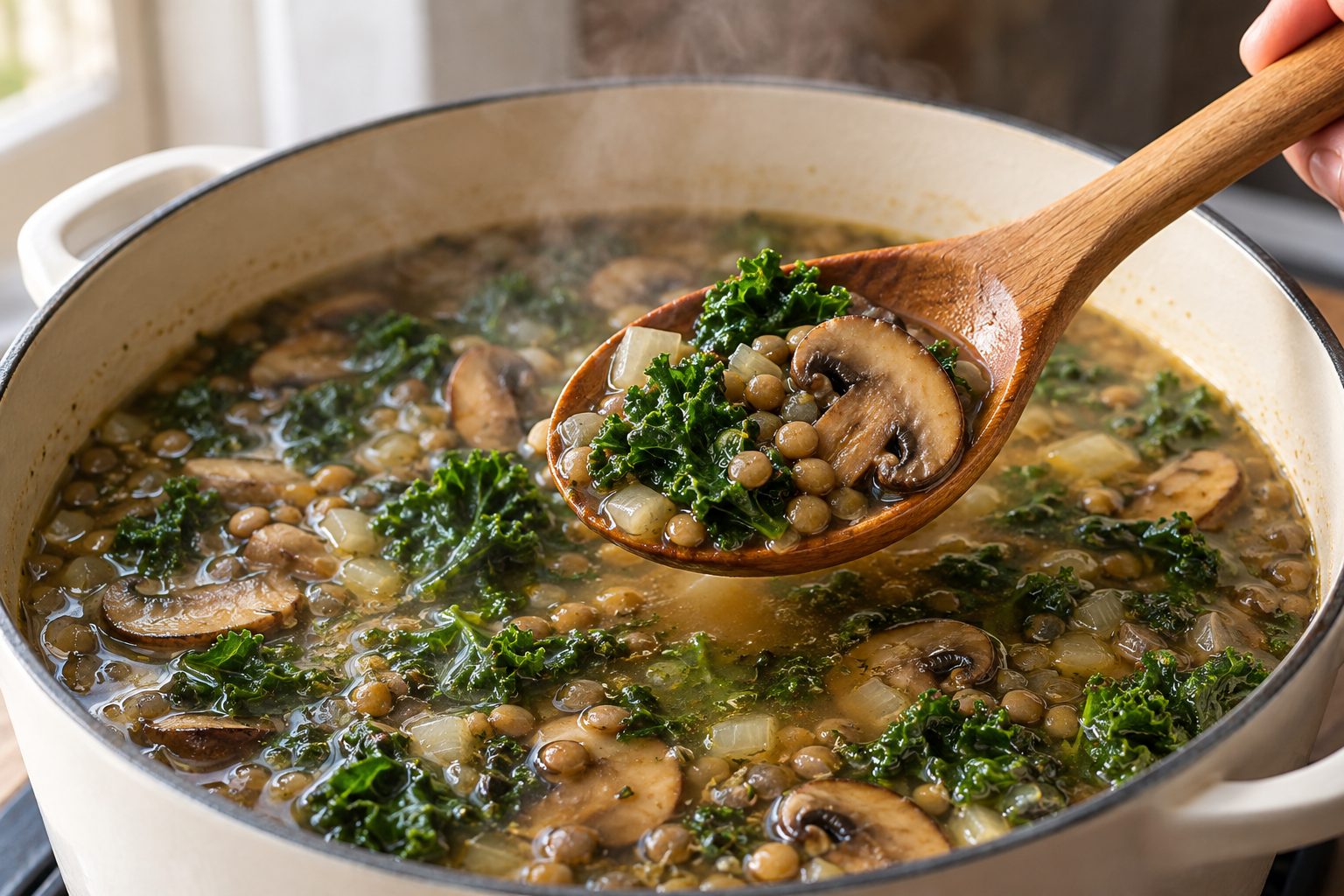
- Check before finishing. Taste a cooled spoonful of kale and mushroom. The greens should be tender without a tough stem center, and the lentils should be hot throughout. If the soup has reduced noticeably, add a small splash of broth and stir before the final seasoning.
- Add lemon off the heat. Remove the pan from the burner and stir in the tablespoon of lemon juice. Wait about 1 minute, then taste a complete spoonful before adding salt and pepper. Divide the mushrooms, lentils and greens between three bowls and share the broth.
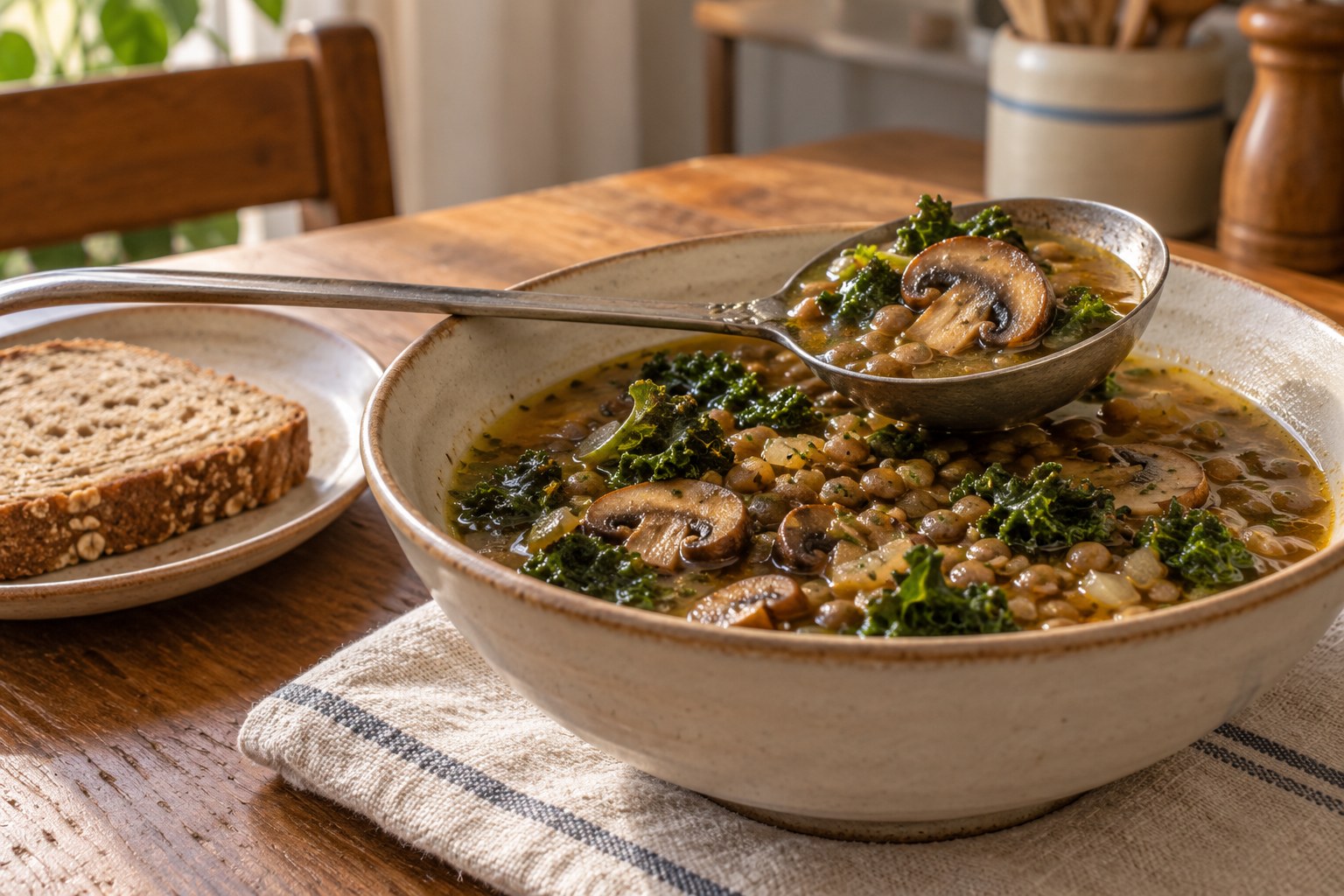
Taste the lemon in a complete spoonful
A spoon of plain broth gives only part of the picture. Include a few lentils and a mushroom slice when checking the finish. Let the sample cool enough to taste comfortably. The lemon should brighten the savory base while the mushroom remains recognizable.
If the finish is too sharp, add a little broth, stir and taste again. This also dilutes salt, so reassess seasoning after the liquid adjustment. Sugar is not part of the reference formula. If the soup seems flat before the lemon, finish the measured recipe before deciding to add more herbs or salt.
Choose the correction that matches the pot
Check the soup at its current stage before reaching for another ingredient. Mushroom problems are easiest to address before the broth; lentil texture needs gentler handling after it.
Pale, wet mushrooms: wait before adding broth
Give them more time in the uncovered pan before adding broth. If the pan is overcrowded, use batches on a future attempt. The mushroom slices may be tender and usable even if they never gain a deep brown edge, but the broth will taste milder.
Dark residue: distinguish browned from scorched
Pause before pouring in the broth if the pan smells acrid or the residue has turned black. Golden-brown residue is the coating the method asks you to scrape up; a blackened patch is not a cue to keep cooking for more flavor. Lower the heat, lift out any unburned mushrooms and onion, and inspect the base. If it is scorched, use a clean pan for the remaining steps instead of scraping the black residue into all three portions. The result may have less browned flavor, but extra lemon cannot remove a burnt taste.
Splitting lentils: reduce movement
Reduce stirring and keep the heat gentle. Once the kale is fully cooked and the soup is hot, stop cooking. Long boiling cannot improve an already tender canned lentil. Preserve the broth-and-pieces character by moving the spoon from the bottom upward in a broad fold.
Too little broth: adjust before seasoning
Look between the solids rather than judging only the surface of the pot. If a spoon drawn through the soup leaves a dense mound with very little free liquid, add the small splash of broth already allowed in the method. Fold once, let the liquid heat through, then reassess. Add only enough to restore the intended broth-and-pieces texture; pouring in a large unmeasured amount changes both the seasoning and the three-portion yield. Make this adjustment before the final lemon-and-salt taste check.
Lunch portions and leftovers
Brown bread or toast makes a simple accompaniment. Keep a crisp vegetable side separate rather than adding raw vegetables to the finished hot soup. A little extra black pepper can be offered at the table without changing the whole batch. For another way to use canned lentils at lunch, try canned lentil cucumber wraps without mayo.
Refrigerate leftover portions in shallow covered containers within 2 hours, or within 1 hour above 90°F. Keep at 40°F or below and use within 3–4 days. To reheat, bring the soup to a rolling boil, stirring so it heats evenly, and verify that the reheated portion reaches 165°F. Remove it from the heat once thoroughly hot instead of boiling it for a prolonged period. Add broth gradually if the lentils have thickened the soup. Earlier storage time for previously opened lentils still counts.
Flavor and texture adjustment chart
Taste a complete spoonful that includes broth, lentils, mushroom and kale before making a correction. The broth alone can seem brighter or saltier than the solids, so adjusting from only one part of the pot can push the finished bowl too far.
| What you notice | What is probably happening | Best small correction |
|---|---|---|
| Broth tastes flat | The savory base is present, but the finish needs contrast. | Stir in lemon juice 1 teaspoon at a time off the heat, then taste again before adding more salt. |
| Soup feels too thin | The lentils are floating rather than giving the broth body. | Mash 2–3 tablespoons of lentils against the side of the pan and simmer gently for 2 minutes. |
| Soup became too thick | The lentils absorbed broth while standing. | Add warm broth or water a few tablespoons at a time and return only to a gentle simmer. |
| Mushroom flavor seems weak | The slices may have steamed before browning. | Finish this batch with black pepper and thyme; next time use a wider pan and wait for visible moisture to evaporate. |
For leftovers, expect the soup to thicken in the refrigerator. Reheat it slowly and restore the original consistency before correcting the seasoning. Lemon aroma also softens overnight, so a small fresh squeeze added after reheating often improves the second-day bowl more than extra salt.
Mushroom lentil soup questions
Should I thaw frozen kale?
Follow its package rather than thawing automatically. Loose frozen pieces can enter directly when the soup method meets the product’s cooking directions. A dense block or a product requiring another method is easier to prepare separately. The final result needs fully cooked greens, not merely defrosted leaves.
Can I use fresh kale?
Finely chop tender leaves and remove tough stems. Simmer until the leaves are tender, allowing extra time if needed. Fresh kale packs into a measuring cup differently from frozen chopped kale, so this is a suggested variation that needs its own quantity and texture check.
Can frozen spinach replace kale?
It produces a softer, less substantial green component. Cook it according to its package, drain and loosen the leaves before combining. Do not simply shorten the cooking to an arbitrary minute count. Its water contribution and texture differ from kale and have not been tested in this formula.
Will dried lentils cook in this schedule?
No. The short method assumes a can of fully cooked lentils. Cook dried brown or green lentils separately until tender and drain them before considering a substitution. Raw lentils need their own water and cooking time and cannot replace the can directly.
Is the soup supposed to be thick?
It should have visible broth between the lentils and vegetables. Unlike a blended lentil soup, this version does not intentionally purée or mash the legumes. If it becomes thick after storage, loosen the reheated portion with broth instead of adding cream.
Can I freeze lemony canned lentil mushroom soup with frozen kale?
Cool and refrigerate the soup promptly, then freeze individual portions in freezer-safe containers with room for expansion. Thaw in the refrigerator and reheat using the rolling-boil guidance above. The lentils and greens may soften after freezing; choose this option when a slightly softer texture is acceptable.
Food handling references: USDA leftovers guidance, FDA refrigerated storage advice and FoodSafety.gov reheating temperatures.
Lemony Canned Lentil Mushroom Soup Recipe Card
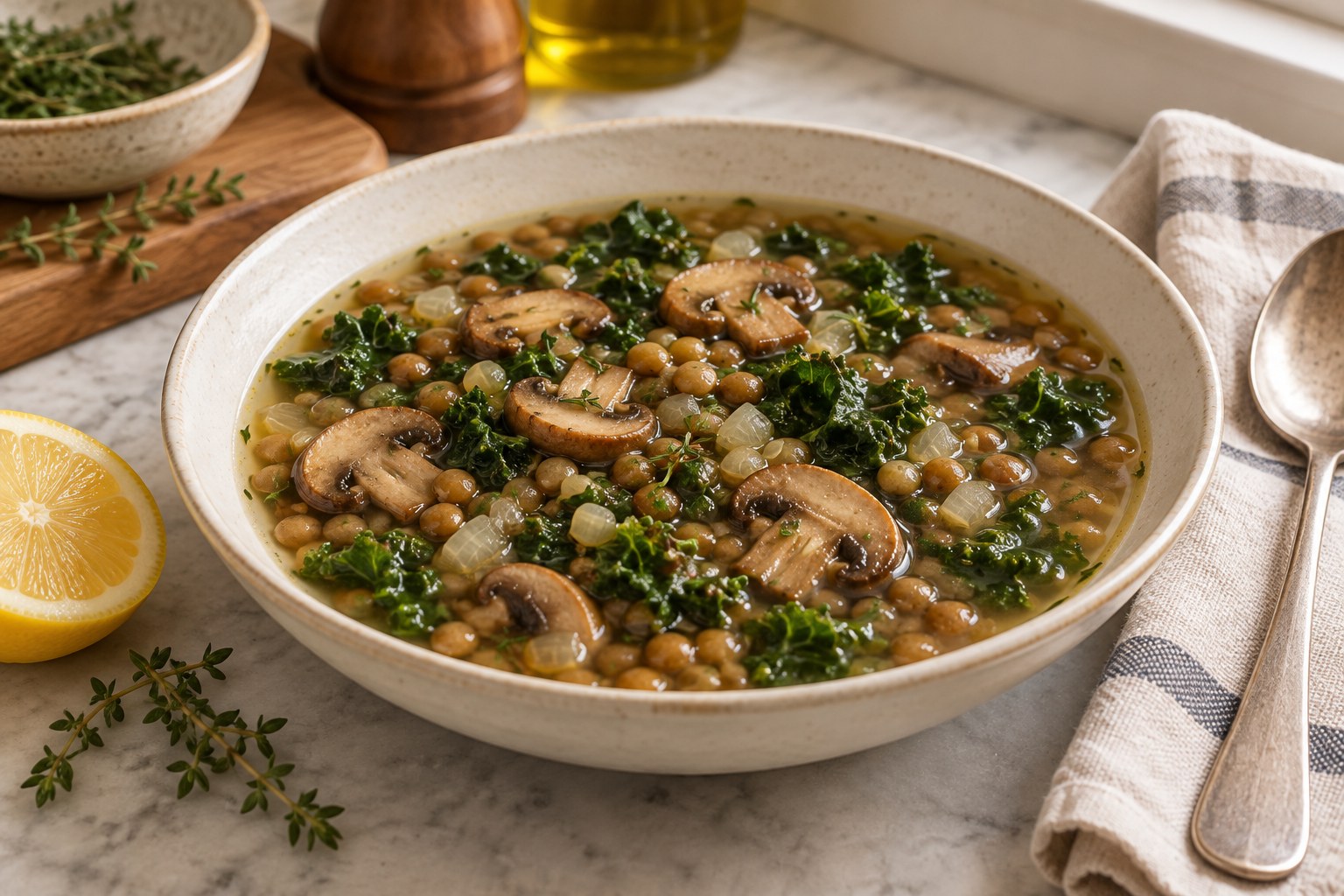
Lemony Canned Lentil Mushroom Soup With Frozen Kale
Ingredients
Equipment
Method
- Slice the mushrooms, dice the onion and mince the garlic. Drain and rinse the canned lentils. Read the frozen-kale package and measure the broth and lemon juice before heating the pan.
- Heat the olive oil in the broad saucepan over medium to medium-high heat. Spread the mushrooms over the bottom and leave them undisturbed for about 3 minutes. Turn them, then continue cooking until their obvious surface liquid evaporates and some edges are golden. Lower the heat if dark patches develop rapidly.
- Add the onion and cook for 3 to 4 minutes, stirring it among the mushrooms, until the pieces soften and look translucent. Add the garlic and thyme and stir for about 30 seconds, just until aromatic.
- Pour in the broth and scrape up the golden residue from the bottom. Add the drained lentils and frozen kale, following the applicable package directions for the kale. If the package requires separate preparation, cook the kale accordingly before adding it to the soup.
- Bring the soup back to a gentle simmer after the cold ingredients go in. Once it is simmering, cook for 7 to 10 minutes or as required by the kale package, including any specified internal temperature or standing time. Fold through occasionally so no frozen clump remains. Avoid a hard boil that can break the tender canned lentils.
- Cool a representative spoonful before tasting. The kale should be fully cooked and tender without a tough stem center, the mushrooms should be soft and the lentils should be hot throughout. Add a small splash of broth if the soup has reduced more than expected.
- Remove the saucepan from the heat and stir in the lemon juice. Wait about 1 minute, then taste a spoonful containing broth, lentils and mushroom before adding salt and black pepper. Divide the solids and broth evenly among three bowls.