A sweet potato chickpea cabbage skillet without onion needs a short plan for its two vegetables. Sweet potato receives a covered head start so the centers can soften. Cabbage enters after the moisture has mostly evaporated, giving its thin strands a chance to gain a few golden edges. Paprika and cumin season the cabbage stage, chickpeas join for the last warming, and the measured lemon finishes the pan.
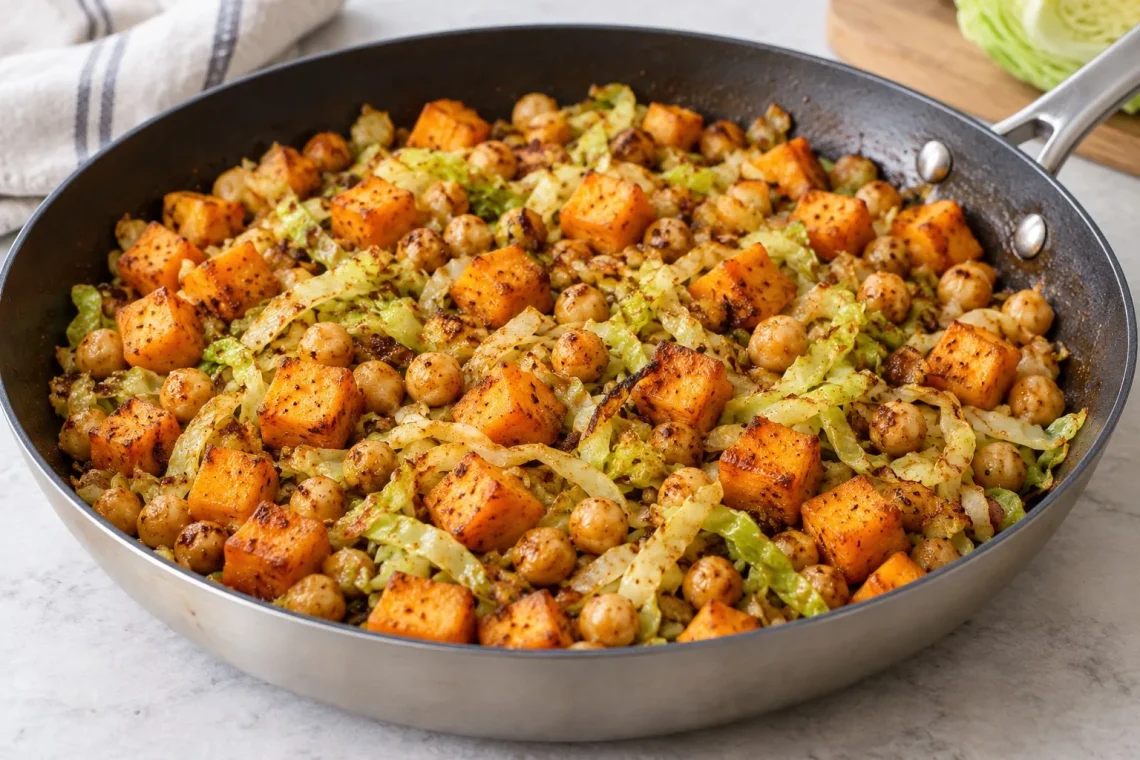
The finished mixture should show orange cubes, flexible green cabbage and mostly whole chickpeas. It is a warm skillet meal, not a purée or a pan of raw-looking root vegetables. The largest sweet-potato cube is the first texture check; the cabbage can keep a little snap beside it.
Create depth even when onion is left out
| Layer | Technique |
|---|---|
| Savory base | Add garlic, paprika and cumin with the cabbage after the covered sweet-potato stage. Lower the heat if the small garlic pieces or spices begin to darken. |
| Sweet potato | Cut evenly and give the cubes the longest cooking time. A covered steam step softens the centers; an uncovered finish removes extra moisture. |
| Cabbage | Add after the potato has started. Thin ribbons need less time than thick squares and should retain enough structure to separate on the fork. |
| Chickpeas | Fold in last so they remain whole and creamy instead of drying while the vegetables cook. |
Finish with the measured teaspoon of lemon juice after removing the skillet from the heat. Taste a cooled bite containing sweet potato, cabbage and chickpea before adding salt or pepper. Offer any extra lemon separately so each serving can be adjusted without making the whole pan too sharp.
Prepare the lid before the ingredients
Affiliate disclosure: As an Amazon Associate I earn from qualifying purchases. Paid links open Amazon search results.
Yield: approximately 2–3 servings. Preparation: about 10–12 minutes. Estimated cooking: 18–30 minutes. Total: about 28–42 minutes. Use a wide skillet (paid link) with a close-fitting lid, broad spatula (paid link), cutting board, knife, colander, measuring tools and a small plate for tenderness checks.
The lid belongs to the short sweet-potato steaming stage. Later, the cabbage benefits from the uncovered pan. Keep the measured quarter cup of water ready before heating so you can switch from browning to covered cooking without leaving the sweet potato unattended.
Jump to: printable recipe · ingredient list · cutting guide · cooking phases · FAQs.
Ingredients
- 1 1/2 tablespoons olive oil
- 1 medium sweet potato, peeled and cut into 1/2-inch cubes
- 2 cups thinly sliced green cabbage
- 1 can (15 ounces) chickpeas, rinsed and drained
- 1 garlic clove, minced
- 1/2 teaspoon sweet paprika
- 1/4 teaspoon cumin
- 1/4 cup water
- 1 teaspoon lemon juice
- Salt and pepper
Two cuts for two vegetables
| Vegetable | Preparation | Why this cut matters here |
|---|---|---|
| Sweet potato | Peel and cut into similar 1/2-inch cubes. | The center must soften during the early covered stage before cabbage is added. |
| Green cabbage | Remove tough core sections and slice leaves thinly; measure 2 cups. | Fine strands can cook in the shorter uncovered stage without hard thick ribs. |
Wash the sweet potato before peeling. Trim a flat face if the root rolls on the board, then cut slabs, sticks and cubes. Check the finished pile for noticeably larger pieces and recut them now. An oversized cube can remain hard long after neighboring pieces are ready.
Loosely fill the cabbage measure rather than compressing several extra handfuls into the cup. Very long strands can be cut once across their length so they fit a fork. Keep the cabbage apart from the sweet potato because they enter at different stages, and keep the garlic and spices ready in their own small dishes.
Keep the chickpeas as the late component
Rinse the drained chickpeas and let the colander finish dripping. Their packing liquid is not part of the quarter cup of water. The chickpeas already have cooked centers, so they can wait outside the pan while you finish the harder sweet potato.
The reference recipe contains garlic but no onion. Sweet paprika provides mild pepper flavor, while the smaller cumin measure gives warmth. A switch to smoked paprika changes the flavor direction; it should be treated as an optional variation, not as the same seasoning under a different label.
Cook sweet potato chickpea cabbage skillet without onion
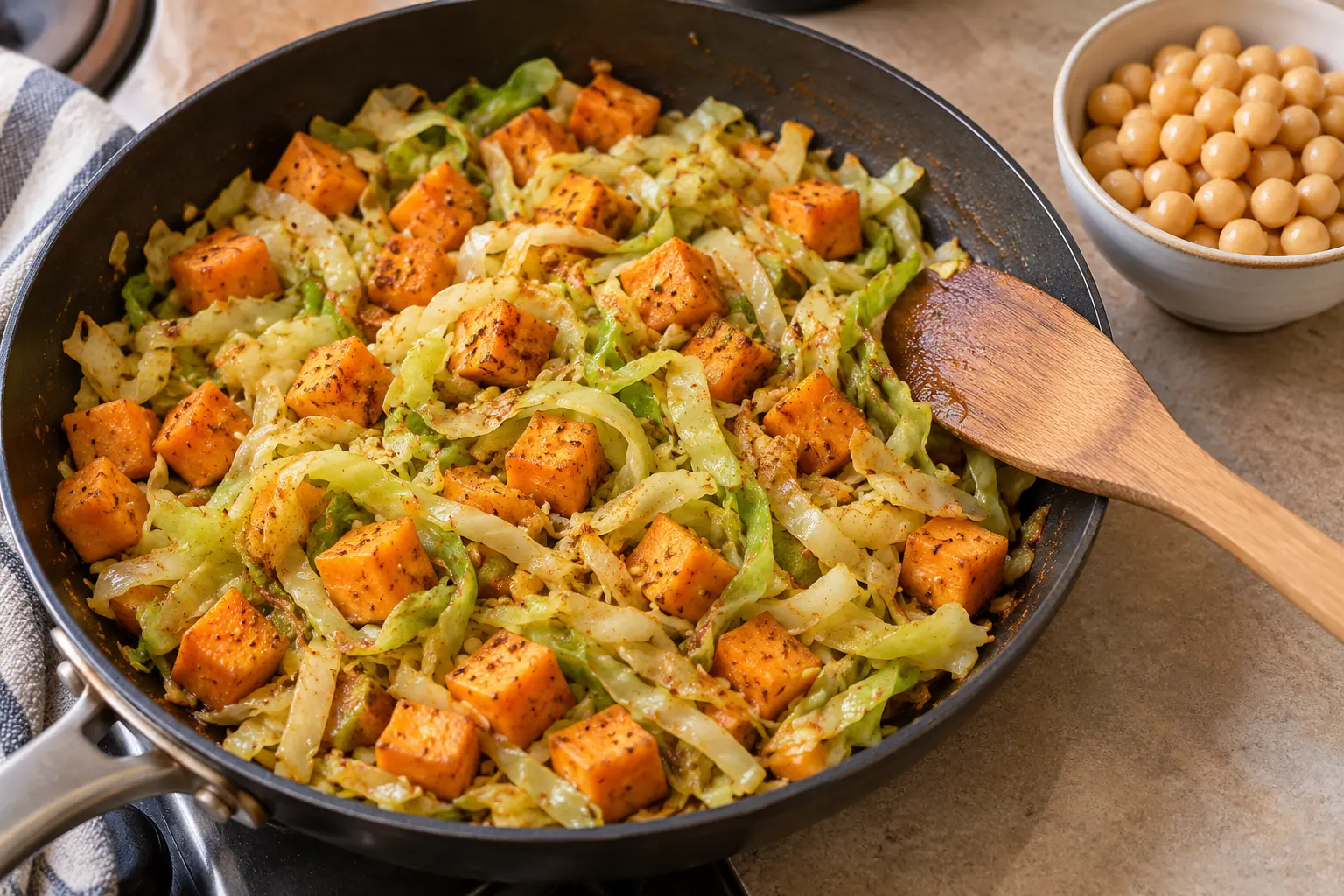
Color and tenderize the sweet potato
- Warm the skillet. Heat the oil over medium heat in the uncovered pan. Add the sweet-potato cubes in a broad layer and cook for about 3 minutes, turning gently, to begin coloring a few surfaces. Deep browning is not required before the covered stage.
- Add the measured water. Pour in the quarter cup of water carefully and cover. Cook over a gentle heat for about 6–8 minutes. The pan should maintain a little steam without drying immediately or rattling violently under the lid.
- Test a large cube. Lift the lid away from your face. Transfer a larger cube to the plate and check the center with a fork. It should offer little resistance. If still hard, add a small splash of water if needed and continue covered cooking before introducing the cabbage.
Cook cabbage in the cleared pan
- Evaporate remaining water. Remove the lid and allow pooled moisture to leave over moderate heat. Turn the sweet potato gently so it does not stick. The purpose is to clear the pan for the cabbage, not to cook the already tender cubes until they fall apart.
- Add cabbage and seasonings. Fold in the thin cabbage, garlic, paprika and cumin. Cook uncovered for about 4–6 minutes, moving the strands between the potato cubes. Look for flexible cabbage with a few colored edges. Reduce heat if the garlic or spice specks begin darkening before the cabbage softens.
Warm chickpeas and finish
- Fold in the chickpeas. Add the drained chickpeas and warm for about 3 minutes, using broad lifts rather than forceful stirring. Check that the whole mixture is hot and that the larger sweet-potato cubes are completely tender.
- Add lemon off the heat. Remove the pan from the burner and stir in the teaspoon of lemon juice. Taste a combined bite before adding salt and pepper. Divide the visible orange cubes among the portions before sharing the remaining chickpeas and cabbage.
If the vegetables finish at different times
Sweet potato is dark outside but firm inside: lower the heat and use a little more water under the lid. Keep the cabbage out until the root has softened. The covered moisture does the work on the center; harder frying only deepens the outside color.
Cabbage is pale and wet: keep the skillet uncovered and spread the strands more widely. Increase heat modestly only if the spices are not catching. Do this before the chickpeas enter where possible, so they do not receive an unnecessarily long finishing cook.
Sweet potato is very soft: handle it minimally. Slide the spatula beneath several cubes together rather than turning each one repeatedly. The finished dish may be softer in that batch, but a few careful folds can preserve more pieces than brisk tossing.
Plan the plate around the skillet
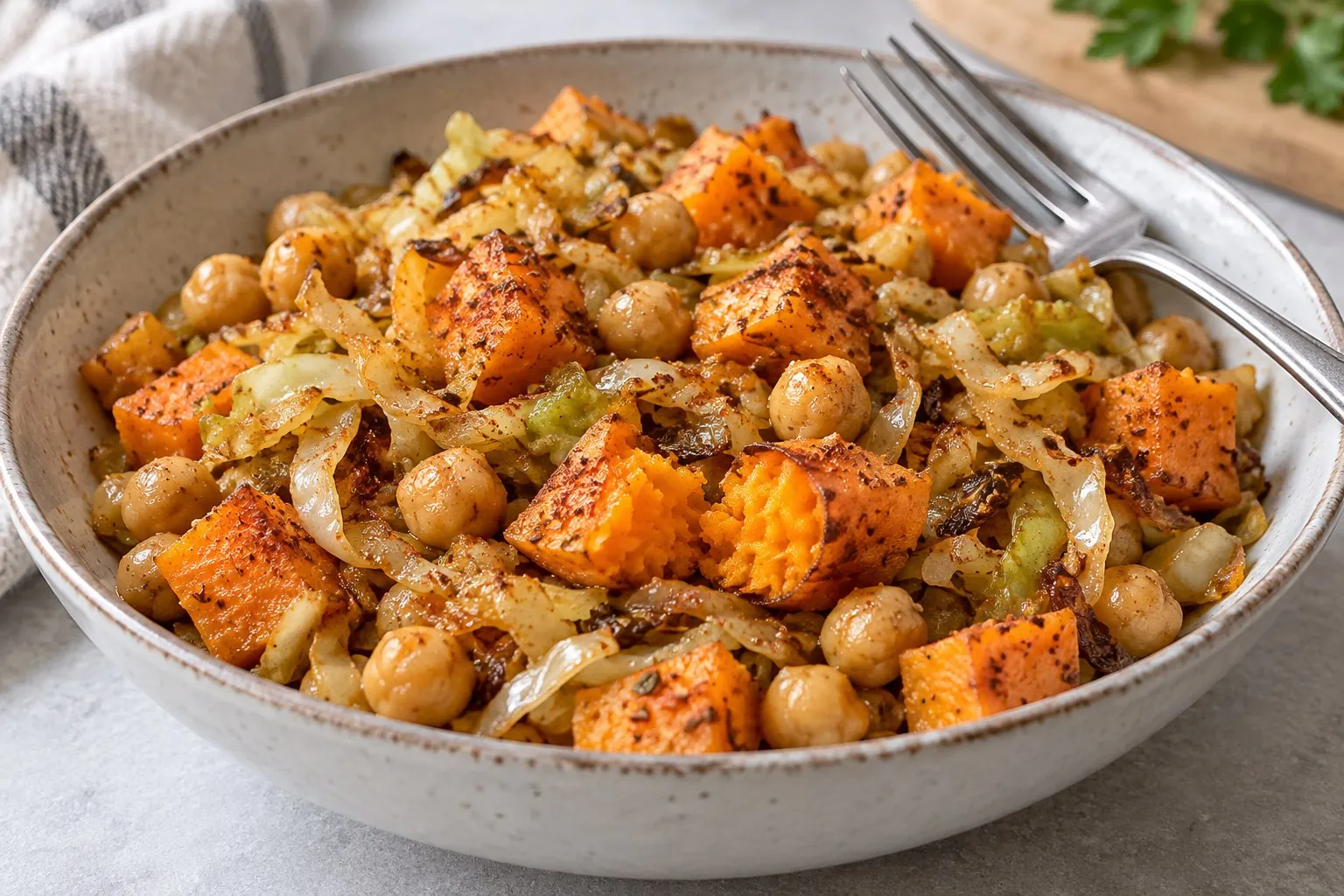
Plain yogurt can be offered separately if desired, and a crisp salad supplies a cooler texture. The measured skillet itself uses oil rather than dairy. Bread or a separately cooked grain can make two light main portions more substantial without adding another ingredient to the crowded pan.
For three smaller servings, portion the sweet potato first so the third plate does not receive only cabbage. A serving spoon that lifts from the bottom gathers chickpeas as well as strands. Keep stronger table seasonings separate; the base is designed around a modest paprika-cumin balance and a small amount of lemon.
Onion-free skillet questions
Can I skip the garlic as well?
Yes. Leave it out, then taste the finished paprika, cumin and lemon combination before increasing any seasoning. The dish will lose its garlic flavor, but the sweet-potato, cabbage and chickpea cooking stages stay the same. Add any extra pinch of paprika or drops of lemon to an individual serving first.
Can butternut squash replace sweet potato?
It can be developed as a variation using similar half-inch pieces, but it may need a longer covered stage. Check the center before cabbage enters. A whole squash is not equivalent to one medium sweet potato, so the usable amount also needs an intentional comparison.
Can I use smoked paprika?
It changes the mild sweet-paprika direction to a smoky one. Start with the same modest quantity if trying it and taste before adding extra spice. Smoke can become prominent quickly in a small pan, so do not also increase the cumin automatically.
Why does the cabbage go in after the water evaporates?
The sweet potato needs moist covered cooking, while the later cabbage stage aims for flexible strands with a few colored edges. Leaving a pool of water beneath the cabbage makes it steam. Clearing that pool gives the second vegetable its intended cooking conditions.
Can I use dried chickpeas?
Only after cooking them separately until tender. Dry chickpeas cannot cook in the short skillet schedule or the quarter cup of water. Use a prepared quantity comparable to the drained can, and include any earlier refrigeration time in the finished meal’s storage plan.
Can sweet potato chickpea cabbage skillet without onion be reheated?
Yes after prompt safe refrigeration. Expect softer sweet potato and cabbage. Use a small splash of water and gentle folds, heating the center to 165°F. Avoid repeatedly pressing the cubes with the spatula while trying to separate a chilled portion.
Pack and store the finished mixture
Transfer leftovers to shallow covered containers within 2 hours, or within 1 hour above 90°F. Refrigerate at 40°F or below and use within 3–4 days. Reheat only the portion needed, check that it reaches 165°F throughout and keep yogurt or crisp sides separate until serving.
Label the cooking date and allow for any earlier storage of opened chickpeas. A broad container is easier to reheat evenly than a tightly packed deep mound. If the portion is dry once hot, add a little water; extra oil is not required simply because refrigeration has firmed the mixture.
Food handling references: USDA leftovers guidance, FDA refrigerated storage advice and FoodSafety.gov reheating temperatures.
Keep each component clear in sweet potato chickpea cabbage skillet without onion
Sweet potato chickpea cabbage skillet without onion combines small cubes with thin leafy strands, so preparation is mainly about making those shapes cooperate. Keep the peeled sweet potato, measured cabbage and drained chickpeas separate until their stated stages. The sweet potato remains in the skillet while the cabbage cooks around it; the later folds should protect those already tender cubes.
Use the cabbage measure after slicing
Trim the dense core from a wedge and slice the leaves thinly before filling the cup. Loosen connected strands with your fingertips so the measure is not hiding a tightly compressed block. A thick pale rib can be cut more finely than the soft green leaf around it. Lay a few strands across a fork to judge whether they will be awkwardly long, and shorten the longest ones on the board. This small check helps the cabbage mix between the sweet-potato cubes without winding into a single tangled bundle.
Choose a tenderness sample deliberately
During the covered sweet-potato stage, select one of the larger cubes from a part of the skillet that has not browned as strongly. Put it on the small checking plate and press through its center with a fork. A browned face alone cannot answer whether that middle is soft. If further covered cooking is needed, return to the method before introducing cabbage. Once the cube is tender, handle the rest with broad lifts. Repeatedly stabbing several pieces in the pan can break them before the vegetable mixture is assembled.
Watch the shallow water at the pan edge
When the lid comes off, look along the lower edge of the skillet for liquid hidden beneath the cubes. A narrow wet strip can remain even when the center looks dry. Turn the pan carefully if needed to inspect it without tipping hot contents toward yourself. Let the remaining water evaporate over controlled heat before adding cabbage. This observation prevents adding extra oil to a pan that still has water to lose. Keep the lid off during the cabbage stage unless you are following a specific correction for unfinished sweet potato.
Distribute garlic and spices without overworking cubes
Measure paprika and cumin into a small dish so they can be scattered across several areas of cabbage rather than dropped as one pile. Keep the minced garlic ready as well. Fold the strands between the potato pieces with the broad face of the spatula, lifting from underneath rather than cutting down through the softened cubes. Look for a pale patch of cabbage beside a heavily seasoned patch and turn those areas together. Lower the heat if small garlic pieces darken before the cabbage has softened; repeatedly adding seasoning will not correct a hot spot.
Assess a complete spoonful before the finish
Once the chickpeas are hot, gather a cooled sample containing sweet potato, cabbage and a chickpea. Notice whether the cabbage remains too firm, whether a cube breaks comfortably with the fork, and whether the beans are evenly coated. Resolve a texture issue using the method before adjusting flavor. Then add the measured lemon off the heat and taste again. The dish includes garlic even though it leaves out onion, so describe it that way when sharing the meal. Keep any optional yogurt or stronger table condiment separate until diners have tasted the base combination.
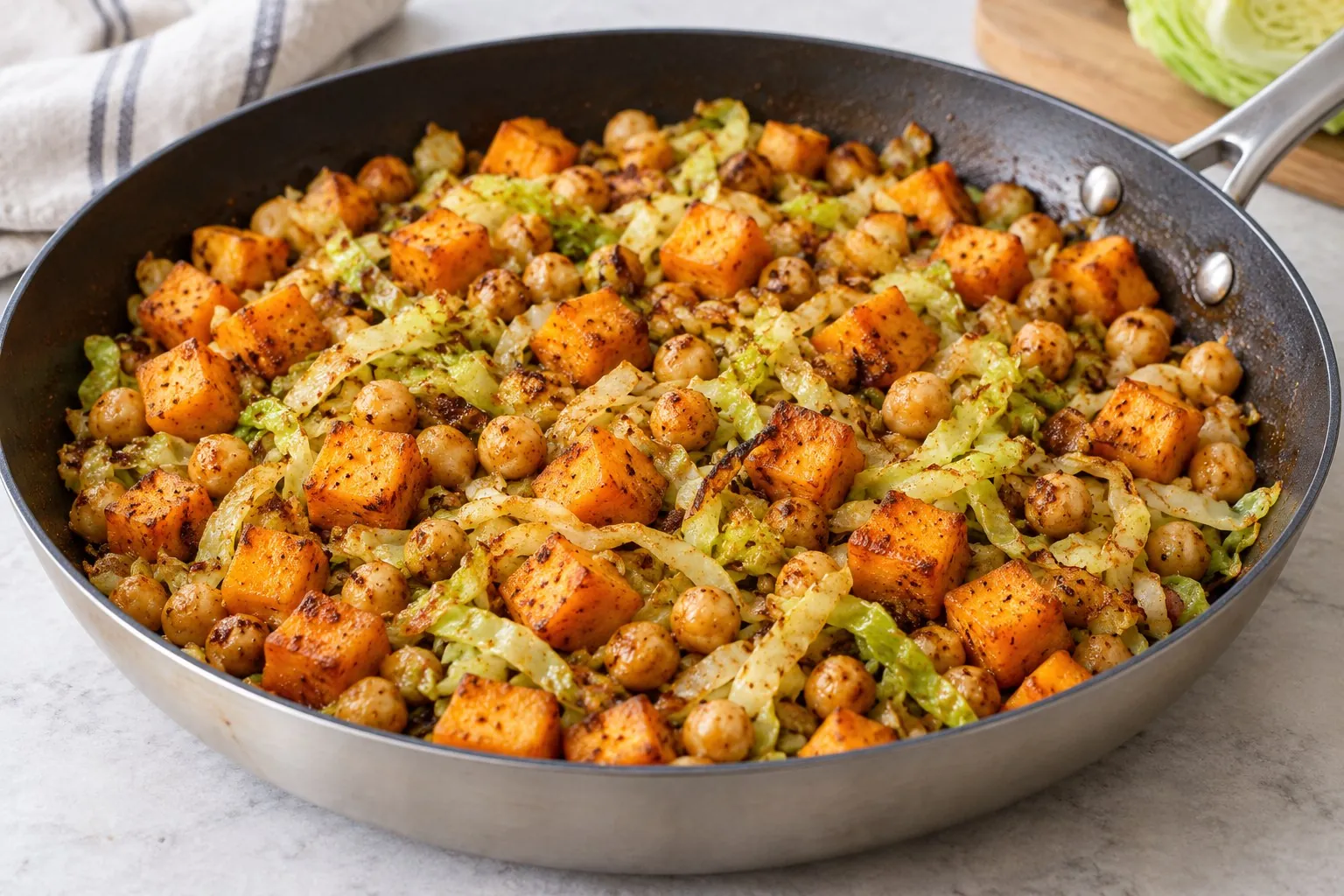
Sweet Potato Chickpea Cabbage Skillet Without Onion
Ingredients
Equipment
Method
- Warm the skillet. Heat the oil over medium heat in the uncovered pan. Add the sweet-potato cubes in a broad layer and cook for about 3 minutes, turning gently, to begin coloring a few surfaces. Deep browning is not required before the covered stage.
- Add the measured water. Pour in the quarter cup of water carefully and cover. Cook over a gentle heat for about 6–8 minutes. The pan should maintain a little steam without drying immediately or rattling violently under the lid.
- Test a large cube. Lift the lid away from your face. Transfer a larger cube to the plate and check the center with a fork. It should offer little resistance. If still hard, add a small splash of water if needed and continue covered cooking before introducing the cabbage.
- Evaporate remaining water. Remove the lid and allow pooled moisture to leave over moderate heat. Turn the sweet potato gently so it does not stick. The purpose is to clear the pan for the cabbage, not to cook the already tender cubes until they fall apart.
- Add cabbage and seasonings. Fold in the thin cabbage, garlic, paprika and cumin. Cook uncovered for about 4–6 minutes, moving the strands between the potato cubes. Look for flexible cabbage with a few colored edges. Reduce heat if the garlic or spice specks begin darkening before the cabbage softens.
- Fold in the chickpeas. Add the drained chickpeas and warm for about 3 minutes, using broad lifts rather than forceful stirring. Check that the whole mixture is hot and that the larger sweet-potato cubes are completely tender.
- Add lemon off the heat. Remove the pan from the burner and stir in the teaspoon of lemon juice. Taste a combined bite before adding salt and pepper. Divide the visible orange cubes among the portions before sharing the remaining chickpeas and cabbage.
Notes
- Yield and timing: One batch makes 2 light main portions or 3 smaller servings. Allow about 10–12 minutes to prepare and 18–30 minutes to cook; a fork should easily enter the largest sweet-potato cube.
- Cooking order: Cut sweet potato into even ½-inch cubes. Brown briefly, add the measured water and cover until nearly tender. Uncover to evaporate pooled water, then add thin cabbage with garlic, paprika and cumin. Fold in cooked chickpeas last.
- Seasoning: This recipe contains garlic but no onion. Add the measured lemon off heat and taste before salting. Keep optional yogurt, bread or grains separate from the pan.
- Leftovers: Refrigerate in shallow containers within 2 hours, or 1 hour above 90°F (32°C), at 40°F (4°C) or below. Use within 3–4 days and reheat to 165°F (74°C). FoodSafety.gov storage guidance.