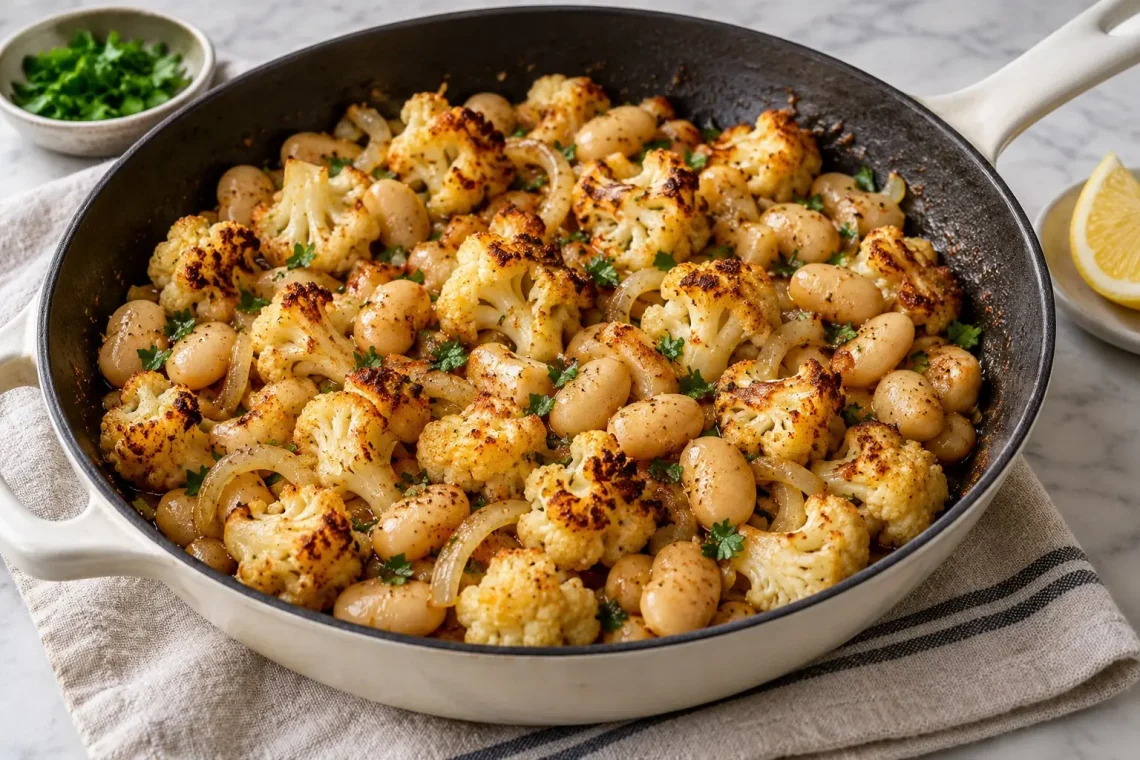
This smoky cauliflower butter bean skillet without tomatoes pairs small cauliflower florets with creamy canned butter beans. The cauliflower gets a dry browning stage and a brief covered steam before the beans enter. Smoked paprika seasons the vegetables, and lemon finishes a pan that should be moist without a tomato or cream sauce.
Affiliate disclosure: As an Amazon Associate I earn from qualifying purchases. These paid links open Amazon search results so you can compare suitable tools.
For the cauliflower browning and covered-steaming stages, compare a wide skillet with a lid (paid link). A broad cooking spoon (paid link) is useful when gently turning the softened florets and butter beans.
The contrast matters: fork-tender cauliflower still holds its shape beside the larger, softer beans. Keep the butter beans outside the skillet until the thickest cauliflower stem has softened. That single decision prevents a common mismatch in which the beans are falling apart while the vegetable centers remain hard.
Round out smoky flavor without tomatoes
- Dry the cauliflower: surface moisture delays browning. Use a wide pan and let cut sides stay in contact with the metal before turning.
- Bloom smoked spices briefly: stir them into the oil for only a short aromatic step. Prolonged direct heat can make paprika taste dusty or bitter.
- Protect the butter beans: add drained beans once the cauliflower is nearly tender, then fold with a broad spoon rather than stirring rapidly.
- Use acidity as a finish: lemon or vinegar brightens smoke and beans more effectively when added after the heat is lowered.
The skillet is ready when the cauliflower has browned edges, the stems are tender when pierced, and the beans remain mostly whole.
If the pan tastes intensely smoky, do not add more salt first. Loosen it with a splash of water, add fresh herbs or acid, and taste again after the beans have absorbed some seasoning.
Plan around the cauliflower stem
Yield: approximately 2–3 servings. Preparation: about 10–12 minutes. Estimated cooking: 18–30 minutes. Total: about 28–42 minutes. Choose a wide skillet with a lid, broad spatula, knife, cutting board, colander, measuring tools and a small plate for a stem check.
A small head is the reference quantity. If the prepared florets form a deep mound in your pan, a broader skillet or batches give the browning stage more room. Do not simply add more oil and force the vegetables into the same crowded layer. The lid needs to fit well enough to keep moisture in during the later covered stage.
Jump to: printable recipe · ingredients · cauliflower preparation · method · FAQs.
Ingredients
- 2 tablespoons olive oil, divided
- 1 small head cauliflower, cut into 3/4-inch florets
- 1/2 onion, thinly sliced
- 1 garlic clove, minced
- 1 can (15 ounces) butter beans, drained and rinsed
- 1/2 teaspoon smoked paprika
- 1/4 cup water
- 1 tablespoon lemon juice
- 2 tablespoons parsley, optional
- Salt and pepper
Cut small florets with useful flat faces
Remove the cauliflower’s outer leaves and tough central core, rinse the edible florets and drain well. Cut the pieces to roughly 3/4 inch rather than leaving a few very large branching sections. If one floret has a thick stem, split through that stem so it is no larger than the rest.
A cut face can rest against the pan and develop color more readily than a rounded crown touching at one point. You do not need to create identical tiny cubes; preserve recognizable florets while giving the largest pieces a practical flat side. Pat away surface water before placing them in the oil.
Keep the thinly sliced onion and minced garlic separate. The onion enters after the cauliflower’s first browning, while the garlic only needs a brief aromatic turn before water is added. If everything is mixed on the board, the smallest garlic pieces can end up in the hot pan much too early.
Drain butter beans with a light touch
Use one 15-ounce can of plain butter beans, drained and rinsed. Their large shape is part of the intended contrast, so avoid squeezing or stirring them hard in the colander. Let water drip away while you prepare the remaining ingredients. A broad bowl is easier to tip gently than a narrow cup packed tightly with fragile beans.
The oil is divided: one tablespoon begins the cauliflower stage and the second joins with the onion. Measure the quarter cup of water separately, and set the lemon juice near the serving dishes to remind yourself that it finishes the cooked pan. Smoked paprika should be ready before the garlic enters so that short step can proceed without delay.
Cook smoky cauliflower butter bean skillet without tomatoes
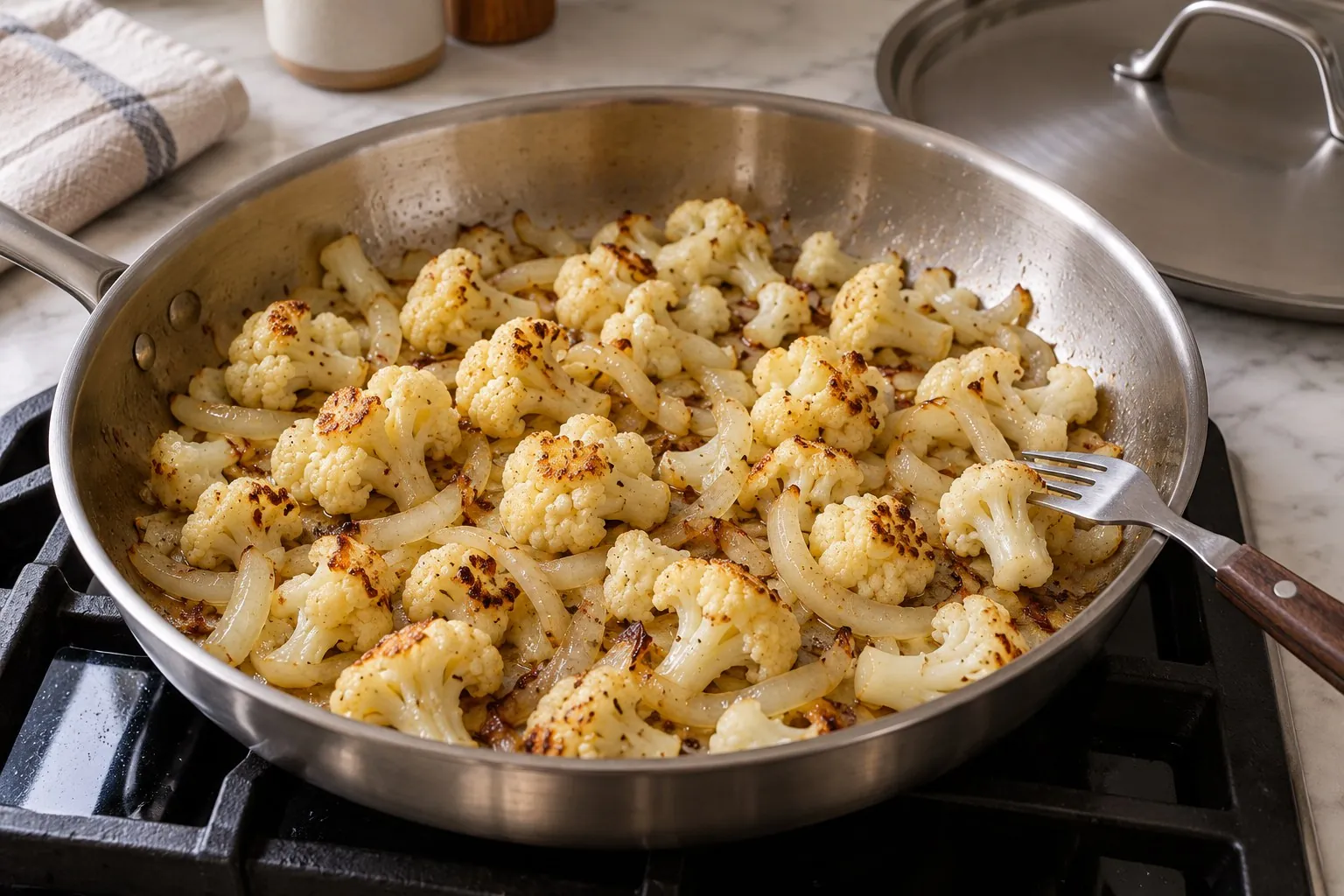
- Start the dry cauliflower stage. Warm 1 tablespoon oil in the wide skillet over medium-high heat. Add the prepared florets in a broad layer. Cook for about 4–5 minutes, turning occasionally so some cut faces become golden. Do not expect the thick stems to be tender yet.
- Add onion and the remaining oil. Fold the sliced onion through with the second tablespoon of oil. Cook for about 3 minutes, until the onion softens and some edges become translucent. Move pieces away from any hot spot that is coloring faster than the rest.
- Warm the garlic and paprika briefly. Add them and stir through the vegetables until aromatic. Keep the measured water ready; the small garlic pieces and paprika should not sit against a dry pan for an extended time.
- Steam the stems. Add the quarter cup of water carefully, bring it to a gentle simmer and cover. Cook for about 4–6 minutes. Lift the lid away from your face and transfer a larger floret to the small plate. A knife or fork should enter the thick stem easily while the crown remains intact.
- Resolve tenderness and moisture. If the stem still resists, continue covered cooking with a little water as needed. Once tender, remove the lid and allow remaining pooled water to evaporate. Turn gently; the cauliflower no longer needs vigorous handling.
- Warm the butter beans. Fold in the drained beans and heat for about 2–3 minutes, or until the mixture is hot throughout. Use the broad spatula to lift vegetables and beans together from the bottom. Avoid repeated tossing that knocks the large beans against the sides.
- Finish off the burner. Remove from the heat, fold in the tablespoon of lemon juice and optional parsley, then taste before adding salt and pepper. Share the larger florets and beans evenly among the plates before adding the remaining onion and pan juices.
Match the correction to the stage
| Stage and problem | Correction |
|---|---|
| Florets remain pale during browning | Clear surface moisture and give the pieces more pan contact; allow time before adding water. |
| Golden cauliflower has firm stems | Use the covered water stage and a representative stem check. Color is not tenderness. |
| Ready cauliflower sits in pooled water | Uncover and evaporate the excess before adding butter beans. |
| Beans split during the finish | Reduce movement and stop cooking once the pan is hot. More stirring will not restore the skins. |
A few broken beans can lightly thicken the coating, but that is different from mashing most of the can. Keep the final pan moist enough that a spatula slides under the ingredients without scraping them into fragments. Add only a small spoonful of water if that motion becomes difficult because the base is dry.
Serve over something that catches the juices
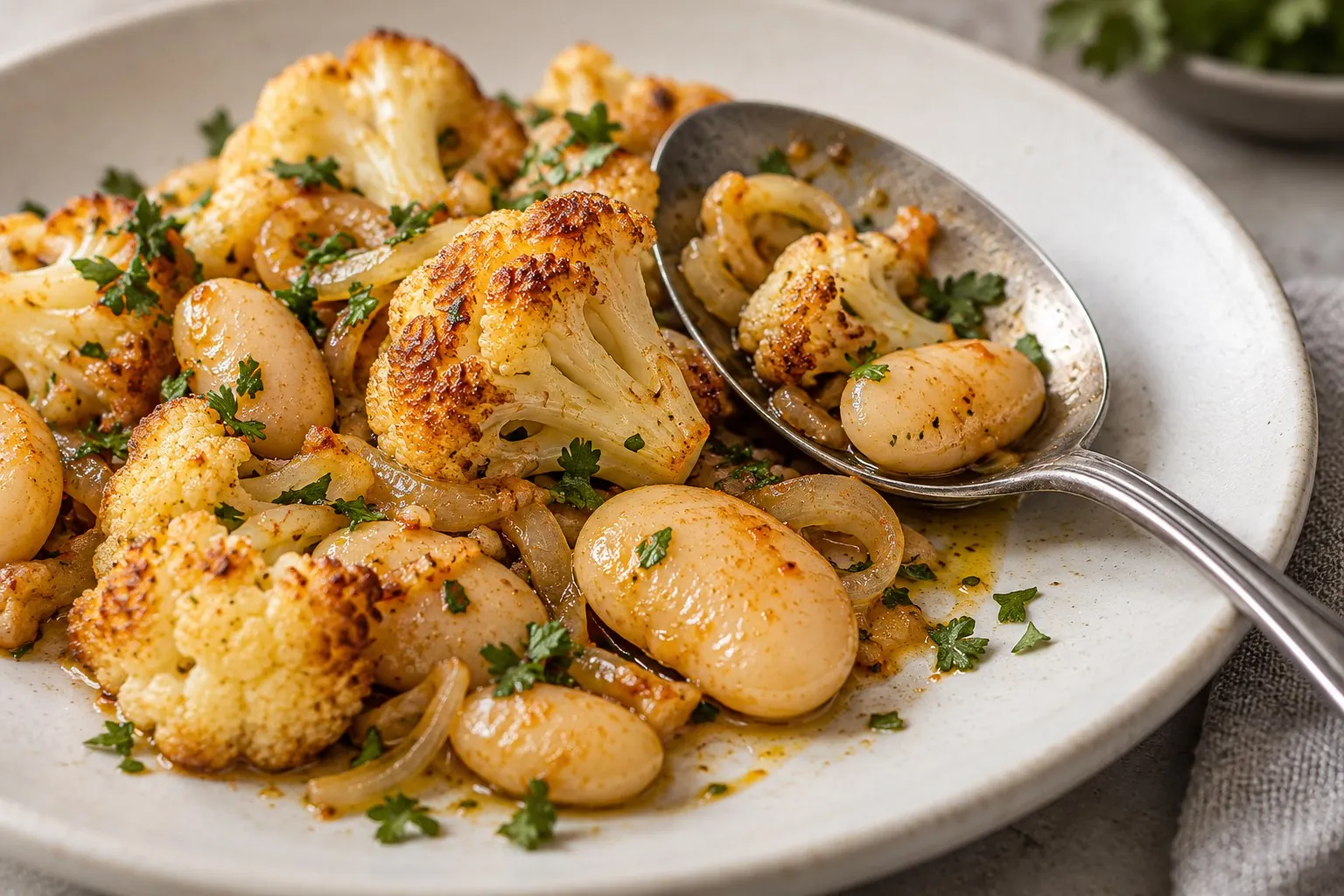
Soft polenta is a useful base because it can hold the modest lemony pan juices. Prepare it separately and keep it ready before the bean stage. Crusty bread is a simpler option. A crisp salad or cucumber side keeps the meal from being uniformly soft.
For two light main portions, divide the full pan between bowls with the chosen accompaniment. For three sides, make sure each plate receives some of the large butter beans. If you want a larger quantity, use a second pan or cook the cauliflower in batches so browning remains possible.
Butter-bean skillet questions
Can I use frozen cauliflower?
It is a different preparation. Follow the full cooking method on its package and allow released moisture to evaporate before adding beans. Frozen florets may soften and brown differently from the small fresh pieces. Do not assume the original fresh-floret times apply unchanged.
Can cannellini beans replace butter beans?
Yes. Use one 15-ounce can, drained and rinsed, and keep the same late warming stage. Cannellini beans are smaller than butter beans, so they spread more evenly between the florets. Fold gently and stop once the mixture is hot to preserve their skins.
Can I use regular paprika?
It gives a mild pepper flavor without the same smoke. Keep the quantity modest and taste the finished dish. A small pinch of cumin is another possible change in direction, but it does not reproduce smoked paprika; treat it as a different seasoning choice.
Do the cauliflower crowns have to turn dark brown?
No. A few golden faces add flavor while the covered stage finishes the stems. Chasing dark color over every crown can leave small pieces overcooked. Judge the final cauliflower by an easy stem check and an intact floret rather than uniform darkness.
Why do my butter beans fall apart?
The can may contain very tender beans, or they may have been handled too firmly. Drain without pressing, add them after the cauliflower is ready and use broad lifts during warming. Long simmering or vigorous tossing makes it harder to preserve their large shape.
Can smoky cauliflower butter bean skillet without tomatoes be reheated?
Yes after prompt refrigeration, though the cauliflower softens and browned areas lose crispness. Add a little water and reheat gently to 165°F throughout. Taste once hot before adding extra lemon, and keep any fresh parsley for the serving stage.
Store in shallow portions
Refrigerate within 2 hours, or within 1 hour when the surrounding temperature is above 90°F. Keep covered shallow containers at 40°F or below and use within 3–4 days. Reheat to 165°F, checking the center after a gentle fold. Use only enough moisture to prevent sticking.
Pack the large beans and florets loosely rather than pressing them into a compact container. Label the cooking date and account for earlier storage if the beans were already opened. The first freshly cooked serving remains the best reference for the intended contrast between cauliflower and beans.
Food handling references: USDA leftovers guidance, FDA refrigerated storage advice and FoodSafety.gov reheating temperatures.
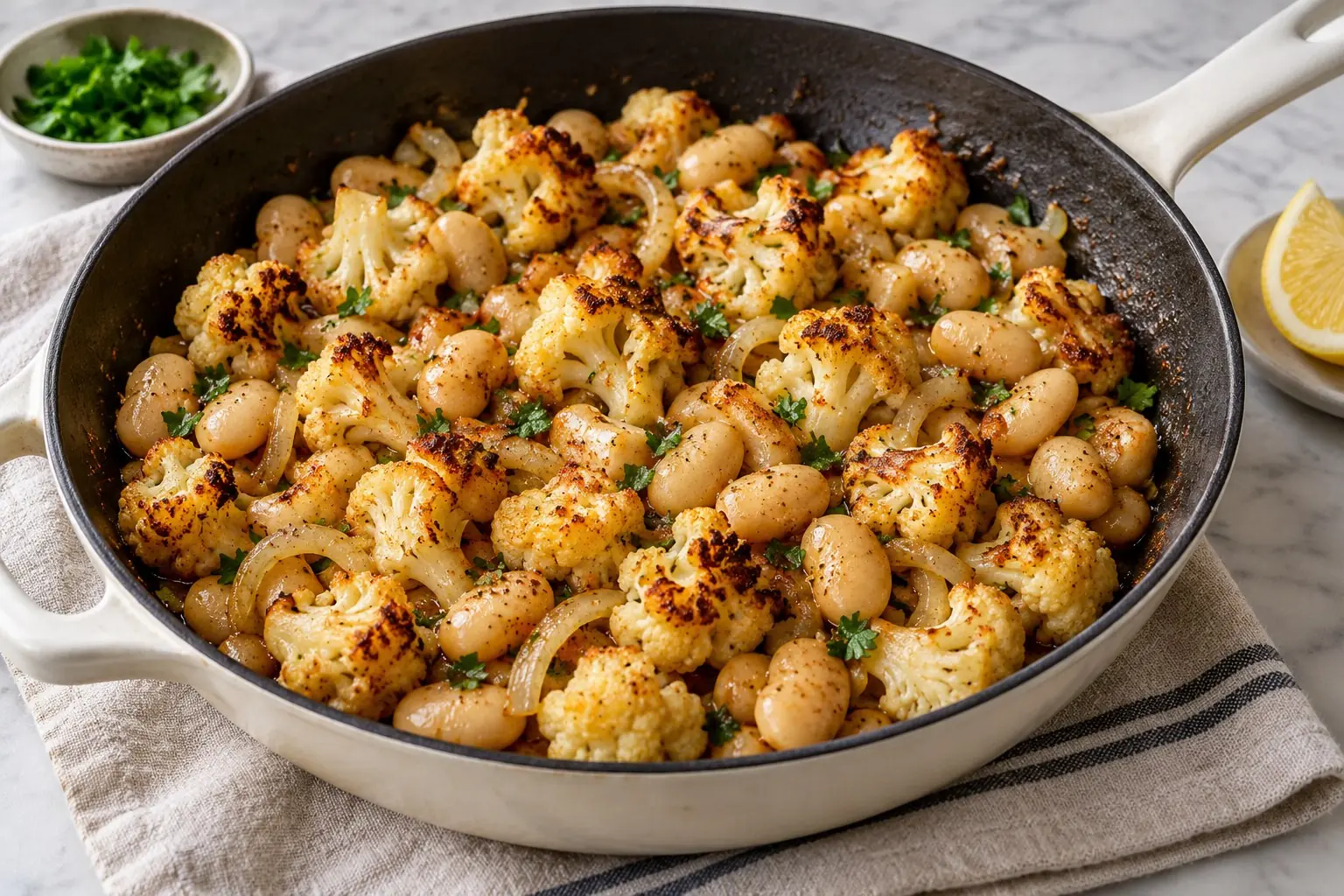
Smoky Cauliflower Butter Bean Skillet Without Tomatoes
Ingredients
Equipment
Method
- Start the dry cauliflower stage. Warm 1 tablespoon oil in the wide skillet over medium-high heat. Add the prepared florets in a broad layer. Cook for about 4–5 minutes, turning occasionally so some cut faces become golden. Do not expect the thick stems to be tender yet.
- Add onion and the remaining oil. Fold the sliced onion through with the second tablespoon of oil. Cook for about 3 minutes, until the onion softens and some edges become translucent. Move pieces away from any hot spot that is coloring faster than the rest.
- Warm the garlic and paprika briefly. Add them and stir through the vegetables until aromatic. Keep the measured water ready; the small garlic pieces and paprika should not sit against a dry pan for an extended time.
- Steam the stems. Add the quarter cup of water carefully, bring it to a gentle simmer and cover. Cook for about 4–6 minutes. Lift the lid away from your face and transfer a larger floret to the small plate. A knife or fork should enter the thick stem easily while the crown remains intact.
- Resolve tenderness and moisture. If the stem still resists, continue covered cooking with a little water as needed. Once tender, remove the lid and allow remaining pooled water to evaporate. Turn gently; the cauliflower no longer needs vigorous handling.
- Warm the butter beans. Fold in the drained beans and heat for about 2–3 minutes, or until the mixture is hot throughout. Use the broad spatula to lift vegetables and beans together from the bottom. Avoid repeated tossing that knocks the large beans against the sides.
- Finish off the burner. Remove from the heat, fold in the tablespoon of lemon juice and optional parsley, then taste before adding salt and pepper. Share the larger florets and beans evenly among the plates before adding the remaining onion and pan juices.
Notes
- Yield and timing: One batch makes 2 light main portions or 3 smaller sides. Allow about 10–12 minutes to prepare and 18–30 minutes to cook; check a thick cauliflower stem instead of judging only by color.
- Oil: Use the first tablespoon with the cauliflower and the second with the onion. Add garlic and paprika briefly before the measured water and covered stage.
- Beans and finish: Add drained butter beans only after the cauliflower is tender and excess water has evaporated. Use broad gentle folds, then add lemon and optional parsley off heat.
- Leftovers: Refrigerate in shallow containers within 2 hours, or 1 hour above 90°F (32°C), at 40°F (4°C) or below. Use within 3–4 days and reheat to 165°F (74°C). FoodSafety.gov storage guidance.