THE COOL-GRAIN TABLE / BARLEY / CUCUMBER
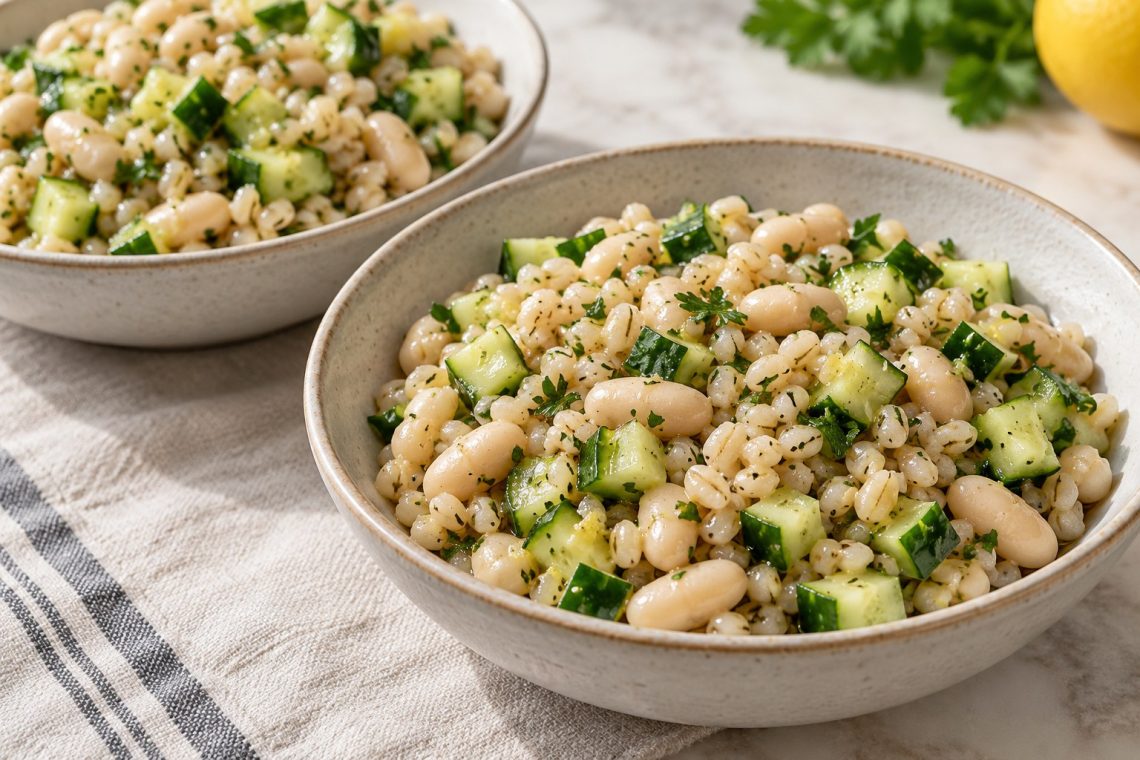
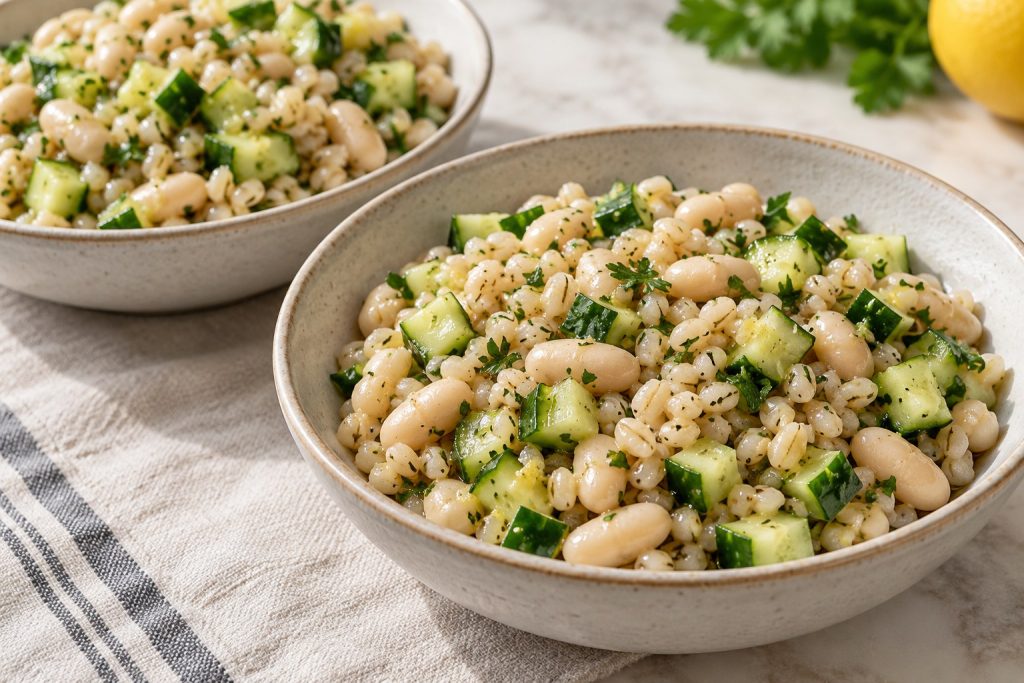
These barley white bean bowls combine chewy pearl barley, tender great northern beans, and crisp cucumber with a lemon-Dijon dressing. There are no tomatoes, so the cucumber stays at the center of the fresh flavor. Parsley and black pepper keep the bowl savory, while the soft beans make each bite more substantial than a plain grain salad.
The cooking takes longer than the chopping, but most of it is a gentle simmer. Give the barley enough time to soften all the way through, then let its steam escape before adding the cucumber. That order protects the contrast between the chewy grain and cool, crisp vegetables.
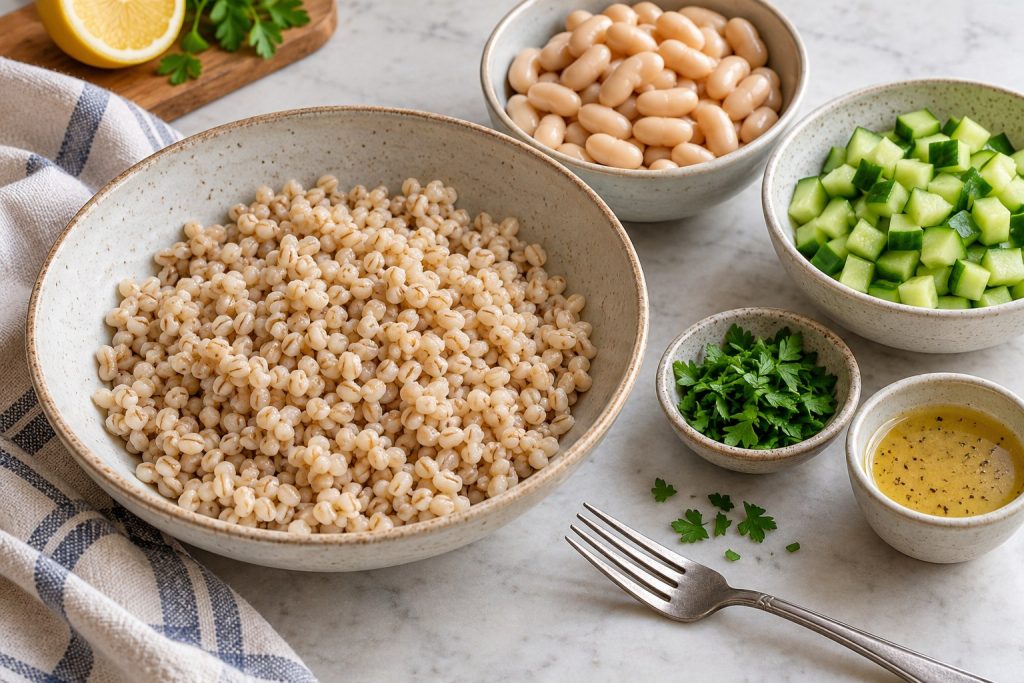
Barley white bean bowls: time, portions, and equipment
- Prep
- 10 minutes
- Cook
- About 50 minutes
- Additional time
- 10 minutes initial cooling
- Total
- About 70 minutes
- Yield
- 2 lunch bowls
The cooking allowance includes bringing the water to a boil and a typical 45-minute simmer. Allow up to 85 minutes total if your pearl barley needs a 60-minute simmer, rather than the 45-minute starting estimate. Full refrigerator chilling, if desired, takes additional time. Use a 2-quart lidded saucepan, sieve, large shallow mixing bowl, fork, knife, and small dressing cup.
Ingredients for the lemon cucumber barley salad
- 1/2 cup dry pearl barley, about 100 g
- 1 1/2 cups water, plus additional hot water if needed during cooking
- 1 can great northern beans, 15 ounces (425 g) net weight, rinsed and well drained
- 1/2 large English cucumber, about 150 g, cut into 1/4-inch dice
- 2 tablespoons olive oil
- 1 tablespoon fresh lemon juice
- 1 teaspoon Dijon mustard
- 1 tablespoon finely chopped parsley
- Fine salt to taste; start with 1/4 teaspoon in the dressing
- Freshly ground black pepper to taste
Check that the bag says pearl barley
Pearl barley is the intended grain. Hulled barley generally takes longer, while quick-cooking barley has a shorter preparation time. They are not interchangeable on the clock. Montana State University Extension’s barley guide uses three volumes of water to one volume of barley and a covered simmer of about 45 minutes, with tenderness as the endpoint.
For this small batch, the starting amounts are 1/2 cup barley and 1 1/2 cups water. Keep a little extra hot water available because lid fit, burner strength, and cooking duration affect evaporation. If your package specifies a different process, follow it, then drain the cooked barley before assembly.
Choose soft beans and dry cucumber dice
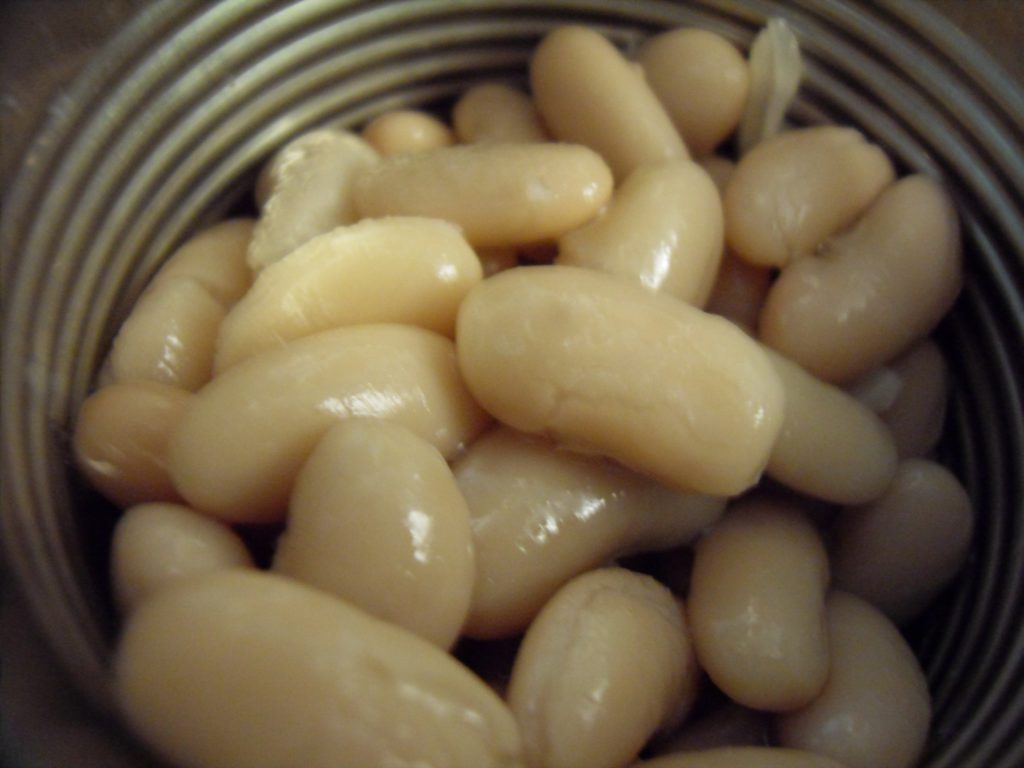
Great northern beans have a mild flavor and a size that mixes comfortably with barley. Rinse gently, let them drain, and avoid pressing them through the sieve. Canned beans are already cooked; there is no need to boil them for this cool salad-style bowl.
An English cucumber usually has tender skin and a smaller seed center. With a standard cucumber, peel any tough skin and scoop out a watery center before dicing. Blot surface moisture with a clean towel. This is particularly helpful if you plan to refrigerate the bowl before eating.
Cook the barley, cool it briefly, and fold gently
- Start the barley. Rinse the barley in a sieve and drain. Put it in the 2-quart saucepan with 1 1/2 cups water. Bring to a boil, reduce to low heat, and cover. Maintain a gentle simmer rather than a vigorous boil.
- Simmer until the center is tender. Cook for about 45 minutes, beginning to taste a few grains around 30 minutes. The grain should be pleasantly chewy without a hard center. If the pan becomes dry before the barley is tender, add hot water 1/4 cup at a time. Some products need up to 60 minutes; follow the package and texture cues.
- Prepare the cool ingredients. While the barley simmers, rinse and drain the beans. Wash and dry the cucumber and parsley, then chop them as directed. Whisk the oil, lemon juice, Dijon, salt, and pepper in a small cup until combined.
- Drain and release the steam. When the barley is tender, drain any remaining water. Spread the grain loosely in the large shallow bowl and let it cool for about 10 minutes, stirring once with a fork, until it is warm rather than steaming hot.
- Dress and assemble. Stir the dressing again and toss it through the barley. Add the beans, cucumber, and parsley, folding gently so the beans stay mostly whole. Taste a complete spoonful and adjust the lemon, salt, or pepper in small amounts.
- Portion for serving or chilling. Divide between two bowls and serve slightly warm or cool. If eating later, transfer promptly to shallow covered containers and refrigerate. Do not leave the assembled bowl on the counter to cool completely.
Keep the dressing bright and the grain loose
Barley releases some starch while cooking, so the surface may feel slightly tacky after draining. Loosen it with a fork instead of repeatedly beating it with a spoon. A little warmth helps the oil and lemon distribute, but very hot grain can wilt the parsley and soften the cucumber.
Dress the barley before adding the beans. This lets you separate clumps without crushing the softer ingredients. Once everything is combined, use a spoon to lift from the bottom and turn the mixture gently rather than stirring in tight circles.
The dressing is deliberately simple: mustard adds savory sharpness, lemon brings acidity, and olive oil rounds both out. Taste with a bean and a cucumber piece in the same bite. Adding salt based only on the dressing can make the finished bowl too salty, particularly with salted canned beans.
Troubleshooting hard barley and watery bowls
| Problem | Adjustment |
|---|---|
| Barley is hard and the pan is dry | Add 1/4 cup hot water, cover, and continue simmering. Recheck before adding any cold ingredients. |
| Grain is tender but water remains | Drain in a sieve. Do not keep boiling tender barley simply to evaporate every drop. |
| The bowl has a puddle underneath | Leave excess liquid behind when serving; drain beans and dry cucumber more thoroughly next time. |
| Chilled barley feels tight and dry | Fold in a teaspoon of water and a teaspoon of olive oil, then reassess. |
| The beans have broken down | Stop stirring and serve gently. Use a broad folding motion for the next batch. |
On a small screen, scroll the table sideways to see every column.
Make two lunches or a side for the table
Serve barley white bean bowls as two substantial lunches, or divide into three smaller side servings. A handful of leafy greens on the side adds a different texture. If you like a crunchy topping, add a small spoonful of pumpkin seeds just before eating so they stay crisp.
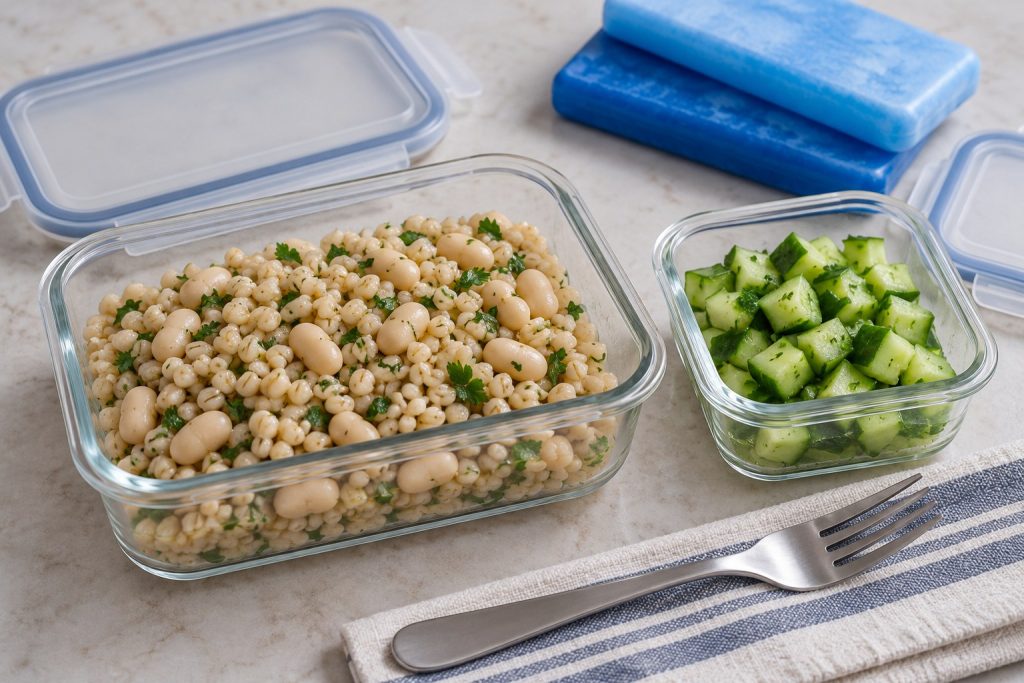
For lunch prep, keep the cucumber and parsley in a separate container if you want their freshest texture. Dress the barley and beans ahead, then fold in the vegetables at mealtime. If you have extra dry barley, small-batch mushroom barley soup is a useful warm-weather-to-cool-weather change of pace.
Tomato-free variations and ingredient choices
Cannellini beans can replace great northern beans in the same drained quantity. Butter beans make larger, softer bites and need gentler mixing. Cooked chickpeas offer a firmer contrast if you prefer the beans to stand out more from the grain.
Cucumber supplies most of the crunch. Finely diced celery can replace a small portion, but start with a few tablespoons so its stronger flavor does not take over. A little diced sweet pepper is another option; you do not need tomatoes to give the bowl color or freshness.
For herbs, replace half the parsley with chopped dill or mint. Use fresh herbs where possible and add them near serving time. Dried herbs have a different strength and texture, so do not substitute a full tablespoon of dried parsley or dill.
Cooked farro works as a different grain, using its own cooking instructions. For a quinoa variation, start with about 1 1/2 cups cooked and cooled quinoa and omit the dry barley and its water. The quinoa rinsing guide can help with that preparation when needed.
Chill promptly and refresh before serving
Under USDA leftover guidance, refrigerate within 2 hours, or 1 hour above 90°F, at 40°F or below; use within 3–4 days. Count that time from the oldest previously cooked ingredient.
Keep the bowl covered and use clean utensils when portioning. The cucumber is usually crispest on the day of mixing or the next day; this quality preference does not lengthen the storage limit. For travel, chill the portions first and use an insulated lunch bag with cold packs.
If you want a warm leftover portion, remove separately packed cucumber, heat the barley and beans to 165°F, then add the cool cucumber. Fully mixed leftovers can also be reheated, but the cucumber will soften. Freeze plain cooked barley separately for better texture than freezing the completed salad.
Questions about barley and white bean bowls
Does pearl barley need overnight soaking?
Not for this method. Rinse it and simmer until tender. If your package gives specific preparation instructions, use them and adjust the cooking schedule accordingly.
Is barley gluten-free?
No. Barley contains gluten. Use a suitable alternative such as cooked quinoa when avoiding gluten, and check the other packaged ingredients for your needs.
Can I use quick-cooking barley?
Yes, with its own liquid ratio and cooking time. Measure the same dry quantity, cook as directed, then drain if needed and cool before adding the cucumber.
Can I leave out Dijon?
Yes. Whisk the oil and lemon well and season after mixing. The dressing will have less savory sharpness but still coats the grain.
Does this have to be fully cold?
No. It is pleasant with warm barley and cool vegetables. The important texture step is allowing strong steam to escape before the cucumber goes in.
THE COMPLETE RECIPE
Pearl Barley White Bean Cucumber Bowls Without Tomatoes
Yield: 2 lunch bowls
Ingredients
- 1/2 cup dry pearl barley about 100 g; not hulled or quick-cooking barley
- 1 1/2 cups water plus hot water as needed, added 1/4 cup at a time
- 1 15-ounce can great northern beans 425 g net weight; rinse and drain well
- 1/2 large English cucumber about 150 g; cut into 1/4-inch dice
- 2 tablespoons olive oil
- 1 tablespoon fresh lemon juice
- 1 teaspoon Dijon mustard
- 1 tablespoon fresh parsley finely chopped
- 1/4 teaspoon fine salt start with this amount in the dressing, then adjust to taste
- freshly ground black pepper to taste
Equipment
- 2-quart saucepan with lid
- Sieve
- Large shallow mixing bowl
- Fork
- Knife and cutting board
- Dressing cup
Instructions
- Start the barley Rinse the barley in a sieve and drain. Put it in the 2-quart saucepan with 1 1/2 cups water. Bring to a boil, reduce to low heat, and cover. Maintain a gentle simmer rather than a vigorous boil.
- Simmer until the center is tender Cook for about 45 minutes, beginning to taste a few grains around 30 minutes. The grain should be pleasantly chewy without a hard center. If the pan becomes dry before the barley is tender, add hot water 1/4 cup at a time. Some products need up to 60 minutes; follow the package and texture cues.
- Prepare the cool ingredients While the barley simmers, rinse and drain the beans. Wash and dry the cucumber and parsley, then chop them as directed. Whisk the oil, lemon juice, Dijon, salt, and pepper in a small cup until combined.
- Drain and release the steam When the barley is tender, drain any remaining water. Spread the grain loosely in the large shallow bowl and let it cool for about 10 minutes, stirring once with a fork, until it is warm rather than steaming hot.
- Dress and assemble Stir the dressing again and toss it through the barley. Add the beans, cucumber, and parsley, folding gently so the beans stay mostly whole. Taste a complete spoonful and adjust the lemon, salt, or pepper in small amounts.
- Portion for serving or chilling Divide between two bowls and serve slightly warm or cool. If eating later, transfer promptly to shallow covered containers and refrigerate. Do not leave the assembled bowl on the counter to cool completely.
Notes
Rate This Recipe
Made this recipe? Choose a star rating in the comment form and share how it turned out. Your cooking time and any ingredient changes can help the next reader.
Rate This Recipe