BROWN RICE / BLACK-EYED PEAS / COLLARDS
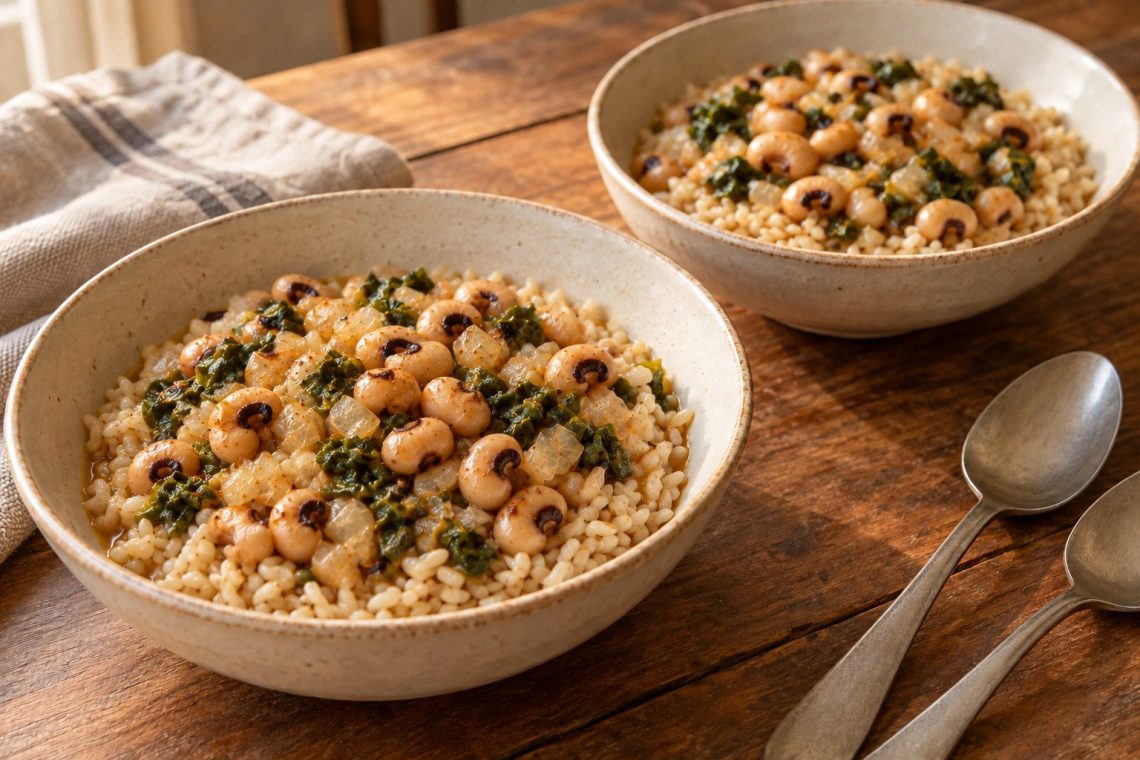
These brown rice black-eyed pea bowls turn cooked rice, a can of peas, and frozen collards into a savory meal without ham. Soft onion and a small pinch of smoked paprika flavor the greens, while apple cider vinegar brightens the finished bowl. The rice stays distinct underneath, with enough broth in the topping to moisten each spoonful.
There are two different cooking jobs to keep in mind: the frozen collards need to cook fully, while the canned black-eyed peas and previously cooked rice only need heating. Giving the greens their own cooking time keeps them from staying tough while the peas turn mushy.
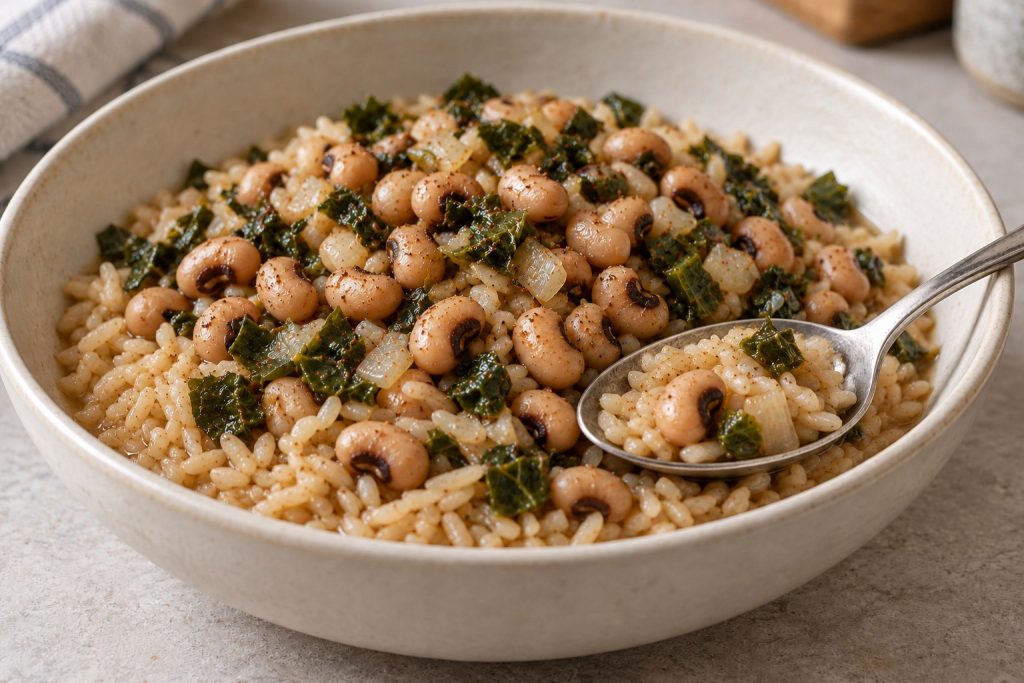
Brown rice black-eyed pea bowls without ham
- Prep
- 10 minutes
- Cook
- 45 minutes
- Additional time
- None
- Total
- About 55 minutes
- Yield
- 2 main-course bowls
The timing allows for frozen collards that need about half an hour of simmering, plus bringing water to a boil and finishing the topping. About 20 minutes is hands-on work. Read your greens package first: a different product or cooking method can change the schedule. Cooking dry brown rice from scratch is not included in these times.
Equipment: a 1½–2-quart saucepan with a lid, a 10-inch skillet or second saucepan, a colander, a microwave-safe bowl with a vented cover or a small pan for reheating rice, a food thermometer, a knife, and a cutting board.
Ingredients for the rice, peas, and collard topping
- 2 cups cooked plain brown rice, previously cooled promptly and refrigerated safely
- 1 can plain black-eyed peas, 15 ounces net weight, rinsed and drained; about 1½ cups drained peas
- 1 cup frozen plain chopped collard greens, about 3 ounces by weight, measured while frozen
- ½ small onion, finely diced, about ⅓ cup
- 1 tablespoon olive oil
- ¼ teaspoon smoked paprika
- ⅓ cup low-sodium vegetable broth
- 1 teaspoon apple cider vinegar
- ⅛ teaspoon ground black pepper, or to taste
- Fine salt to taste, starting with a small pinch if needed
- Water for cooking the collards as directed on the package, plus 2 tablespoons for reheating the rice
Start with cooked rice, not a dry measure
The two cups are measured after cooking. Long-grain brown rice makes a loose base; short-grain brown rice gives a softer, more cohesive bowl. Either works when already cooked. Do not add two cups of dry rice to this recipe: it would require its own water, cooking time, and a much larger quantity of topping.
Plain shelf-stable cooked rice is another option. Heat it according to its package and measure two cups for the bowls. If you cook a fresh batch, follow that rice’s own directions and have two cooked cups ready as the collards finish. There is no single water ratio that suits every brown rice product.
Read the frozen collards package before starting
Choose plain chopped collards with no seasoning packet or added meat. Check the peas and broth too if keeping the whole meal free of animal ingredients. The recipe uses a modest amount of greens folded through rice and peas; it is not intended to be a large serving of greens alone.
Frozen collards may need considerably more time than spinach. For example, Pictsweet’s plain chopped collards call for water to cover, a 3-minute boil, then a covered 25–30-minute simmer, with heating to 165°F. Follow the amount of water, method, and minimum cooking requirements on your own bag rather than treating thawed greens as ready to eat.
Use already cooked black-eyed peas
A 15-ounce can includes packing liquid; after draining, expect roughly 1½ cups of peas. A little variation will not upset the recipe. Choose plain peas rather than a heavily seasoned variety so you can control the broth, smoke, and salt. Dried or frozen uncooked black-eyed peas need separate cooking before this short finishing step.
Cook the greens, warm the rice, and finish the bowls
- Cook the frozen collards fully. Keep the rice refrigerated while you start the greens. Put the frozen collards in the lidded saucepan and cook according to the package, including its water amount and full cooking time. For the plain collards described above, cover with water, boil for 3 minutes, then cover and simmer for 25–30 minutes, adding water if needed. Follow any different directions on your bag. Check that the greens are tender and meet the package’s temperature requirement before proceeding.
- Prepare the topping ingredients. While the collards simmer, rinse and drain the black-eyed peas. Finely dice the onion and measure the paprika, broth, vinegar, and pepper. Let the peas drain thoroughly so their rinse water does not thin the topping.
- Soften the onion. When the collards are nearly ready, heat the olive oil in the skillet over medium heat. Cook the onion for about 5 minutes, stirring occasionally, until softened and translucent. Reduce the heat if the edges darken before the centers soften.
- Combine the cooked greens and peas. Drain the cooked collards in a colander. Stir the smoked paprika into the softened onion for about 15 seconds, then add the vegetable broth, drained collards, and drained black-eyed peas. Bring to a gentle simmer and cook for 3–5 minutes, turning carefully, until the peas are hot throughout. Leave a little flavorful liquid in the pan.
- Reheat the rice separately. As the topping finishes, put the refrigerated rice in a microwave-safe bowl with 2 tablespoons water. Cover with a vented microwave-safe cover and heat in short intervals, stirring and breaking up clumps between intervals, until the rice reaches 165°F throughout. Alternatively, warm it in a covered small saucepan over low heat, stirring and adding a little water as needed, to the same temperature.
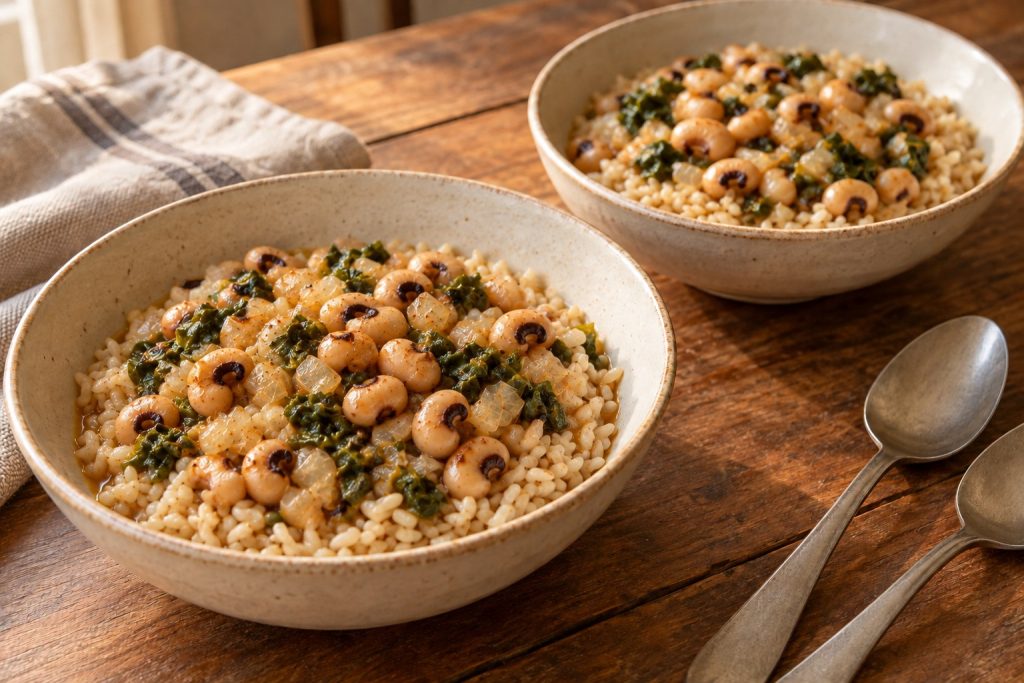
- Finish and serve. Take the topping off the heat and stir in the vinegar and pepper. Taste before adding salt because canned peas and broth vary. Divide the hot rice between two bowls, spoon the peas and collards over it, and include the small amount of pan liquid. Serve promptly.
Building savory flavor with onion, paprika, and vinegar
The onion needs to soften before the broth enters the pan. If it is still raw and sharp, a few minutes of warming with the cooked peas will not give the same mellow base. A medium heat is easier to control than rushing the onion over high heat.
Smoked paprika is potent in a small batch. Start with the measured ¼ teaspoon, let it meet the warm oil briefly, and add the broth promptly. If the spice darkens or burns, it can leave the whole topping bitter. More paprika is an option at the table, but it should not overpower the peas.
The vinegar goes in after the greens are tender and the pan is off the heat. Taste a spoonful of rice with the topping before adjusting it. If the bowl tastes flat, it may need a pinch of salt; if it tastes heavy, a few extra drops of vinegar may be more useful than extra smoke.
Troubleshooting collards, broth, and leftover rice
| What is happening | How to fix it |
|---|---|
| Collards are still tough | Continue their covered cooking with enough water before adding them to the peas. Check thicker stem pieces as well as leaves. |
| Topping is watery | Simmer uncovered briefly to reduce excess liquid. Next time, drain both the cooked greens and rinsed peas more thoroughly. |
| Topping is too dry | Add broth or water a tablespoon at a time. The finished liquid should lightly moisten the rice, not turn it into soup. |
| Peas are splitting | Lower the heat and fold with a broad spoon. The canned peas only need warming after the collards are cooked. |
| Rice has hard, cold clumps | Add a little water, cover, and continue heating. Break clumps apart and check more than one spot with the thermometer. |
| The bowl tastes too salty | Balance a small portion with additional plain cooked rice or unsalted peas. Adding vinegar does not remove salt. |
On a small screen, scroll the table sideways to see every column.
Adjust the bowl without adding ham
Make it greener: use two cups of frozen collards instead of one, cooking them fully according to the package. Drain well before folding into the peas. Taste again for vinegar and seasoning, and add a splash more broth only if the larger topping needs it.
Use another cooked bean: cannellini, great northern, or pinto beans can replace the black-eyed peas in the same drained amount. The flavor and texture will change, but the method stays focused on cooking the greens first and warming the beans gently afterward.
Change the greens: frozen chopped kale can work, but use its package directions rather than the collard simmer time. Frozen spinach will produce a softer topping and needs its own cooking and draining method. Our potato and frozen spinach hash offers another way to use that ingredient.
Add a fresh finish: a little thinly sliced scallion provides contrast. A few drops of hot sauce can suit the smoky flavor; choose one with ingredients that fit your preferences, and taste before adding more salt or vinegar.
Serving and packing the rice bowls
To assemble the brown rice black-eyed pea bowls, spoon the topping gently over the rice. That keeps the peas intact and makes it easier to portion the greens evenly. Include a little broth from the pan so the rice underneath does not feel dry.
For lunch prep, keep rice and topping side by side in a shallow container. Portion only what you expect to eat, and keep optional scallions separate until serving. If you enjoy this approach to pantry meals, try our canned lentil rice skillet with frozen vegetables for a different rice-and-legume combination.
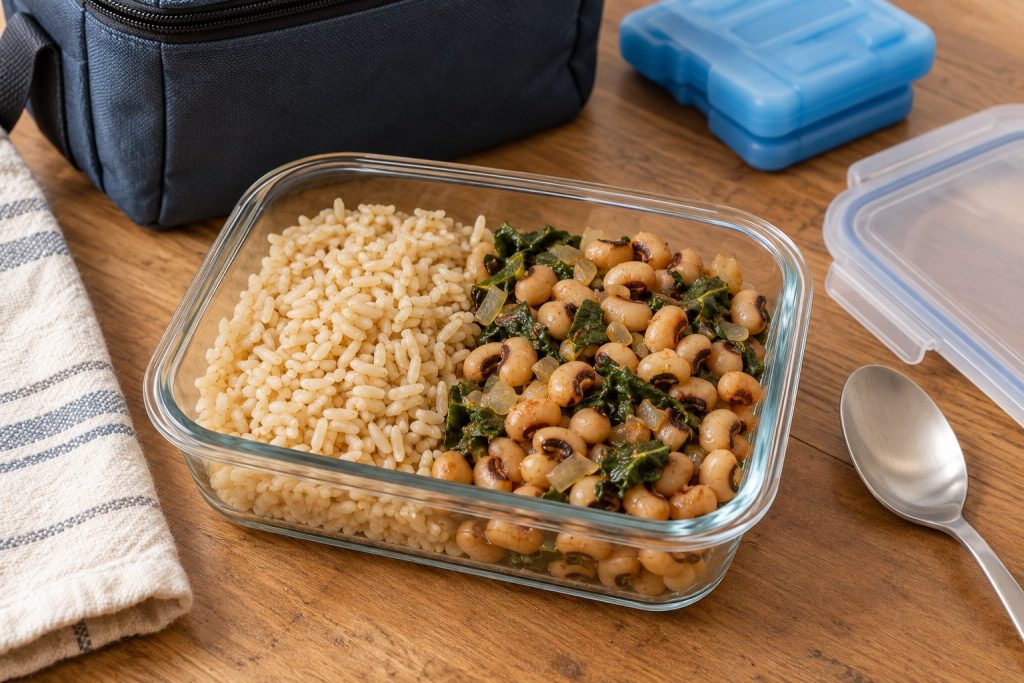
Storage starts with the original rice batch
Refrigerate leftovers in shallow containers within 2 hours, or 1 hour above 90°F, and keep them at 40°F or below. Use cooked leftovers within 3–4 days counted from the original rice cooking date or the oldest component, and reheat to 165°F, following USDA leftover guidance. Plan around the earliest storage deadline of any component, including previously cooked rice.
Do not use rice that sat out overnight. FoodSafety.gov’s handling guidance includes cooked rice among perishable foods that should be discarded after too long at room temperature. For reheating, add a little water, stir thoroughly, and check the center as well as the edges. Heat only the portion you intend to eat.
Questions about rice, peas, and frozen collards
Can I use freshly cooked brown rice?
Yes. Have two cooked cups ready as the topping finishes, and serve them hot. Skip the refrigerated-rice reheating step. Start with your rice package’s directions and allow its full cooking and resting time in your meal plan.
Can everything cook in one pot?
Using separate pans gives better control for this formula. Frozen collards may need a long simmer and plenty of water, while canned peas can break apart during that wait. Cold rice also reheats more evenly when you can loosen its clumps separately.
Can I substitute dried black-eyed peas?
Yes, once they are fully cooked. Prepare them separately according to their package, drain, and measure about 1½ cups. The short simmer in this recipe is only a warming step and cannot replace the cooking required for dried peas.
What if I only have regular paprika?
Use the same starting amount for a milder pepper flavor. The bowl will have less smokiness, but onion, broth, and vinegar still season it. Avoid compensating with a large quantity of paprika, which can overpower this small batch.
Should I drain all the broth before serving?
No. Drain the collard cooking water before the finishing step, then keep a little of the measured vegetable broth with the topping. That lightly seasoned liquid moistens the rice. Reduce it only if the bowl would otherwise be soupy.
THE COMPLETE RECIPE
Brown Rice Black-Eyed Pea Bowls with Collards, No Ham
Yield: 2 main-course bowls
Ingredients
- 2 cups cooked plain brown rice previously cooled promptly and safely refrigerated
- 1 15-ounce can plain black-eyed peas rinse and drain; about 1 1/2 cups drained
- 1 cup plain frozen chopped collard greens about 3 ounces / 85 g; measure while frozen and cook fully by the package
- 1/2 small onion finely diced; about 1/3 cup
- 1 tablespoon olive oil
- 1/4 teaspoon smoked paprika
- 1/3 cup low-sodium vegetable broth
- 1 teaspoon apple cider vinegar
- 1/8 teaspoon ground black pepper or to taste
- fine salt to taste, starting with a small pinch if needed
- 2 tablespoons water for reheating rice, plus the package-required water for cooking collards
Equipment
- 1 1/2- to 2-quart saucepan with lid, or the size required by the collards package
- 10-inch skillet or second saucepan
- Colander
- Microwave-safe bowl with a vented cover, or small rice-reheating pan
- Food thermometer
- Knife and cutting board
- Measuring tools
Instructions
- Cook the frozen collards fully Keep the rice refrigerated while you start the greens. Put the frozen collards in the lidded saucepan and cook according to the package, including its water amount and full cooking time. For the plain collards described above, cover with water, boil for 3 minutes, then cover and simmer for 25–30 minutes, adding water if needed. Follow any different directions on your bag. Check that the greens are tender and meet the package’s temperature requirement before proceeding.
- Prepare the topping ingredients While the collards simmer, rinse and drain the black-eyed peas. Finely dice the onion and measure the paprika, broth, vinegar, and pepper. Let the peas drain thoroughly so their rinse water does not thin the topping.
- Soften the onion When the collards are nearly ready, heat the olive oil in the skillet over medium heat. Cook the onion for about 5 minutes, stirring occasionally, until softened and translucent. Reduce the heat if the edges darken before the centers soften.
- Combine the cooked greens and peas Drain the cooked collards in a colander. Stir the smoked paprika into the softened onion for about 15 seconds, then add the vegetable broth, drained collards, and drained black-eyed peas. Bring to a gentle simmer and cook for 3–5 minutes, turning carefully, until the peas are hot throughout. Leave a little flavorful liquid in the pan.
- Reheat the rice separately As the topping finishes, put the refrigerated rice in a microwave-safe bowl with 2 tablespoons water. Cover with a vented microwave-safe cover and heat in short intervals, stirring and breaking up clumps between intervals, until the rice reaches 165°F throughout. Alternatively, warm it in a covered small saucepan over low heat, stirring and adding a little water as needed, to the same temperature.
- Finish and serve Take the topping off the heat and stir in the vinegar and pepper. Taste before adding salt because canned peas and broth vary. Divide the hot rice between two bowls, spoon the peas and collards over it, and include the small amount of pan liquid. Serve promptly.
Notes
Rate This Recipe
Made this recipe? Choose a star rating in the comment form and share how it turned out. Your cooking time and any ingredient changes can help the next reader.
Rate This Recipe