PANTRY LUNCH, BUILT BY HAND
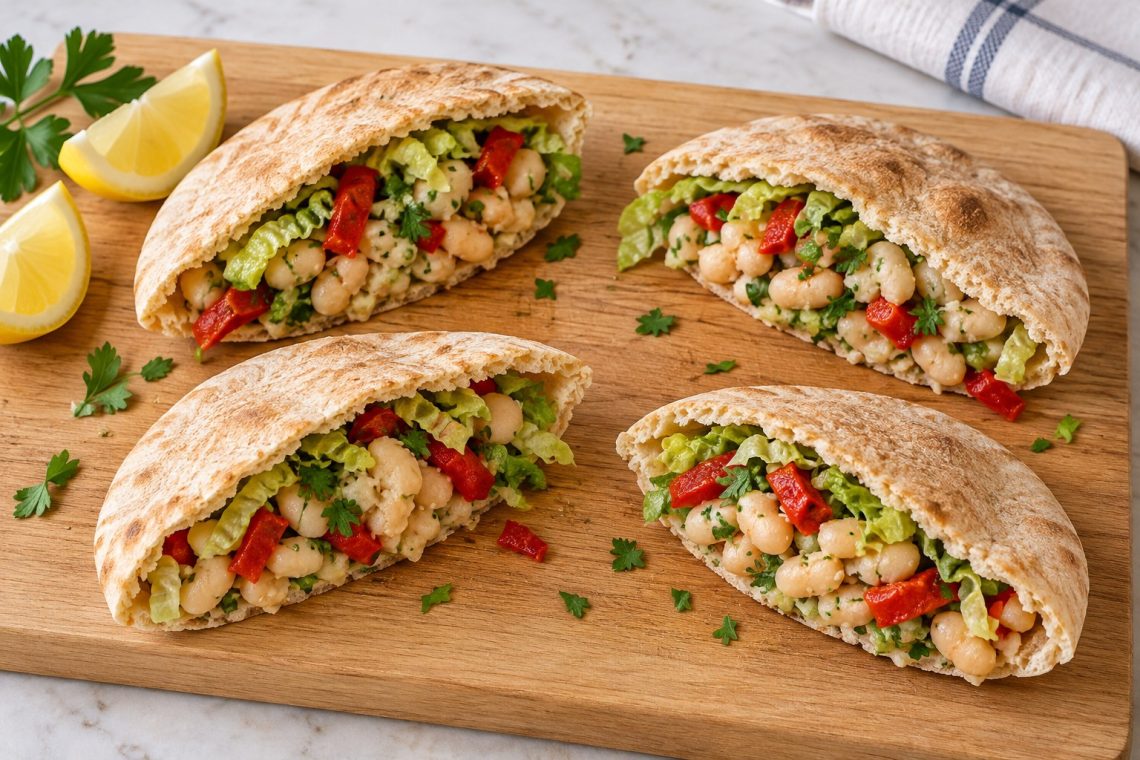
Roasted pepper white bean pita pockets combine sweet, soft peppers with a lemony bean filling and crisp romaine. You do not need prepared hummus or a blender: a fork turns most of the beans into a coarse spread, while a few whole beans keep the texture interesting. The filling is soft enough to tuck into bread but thick enough to stay put when the pita is lifted.
Draining the peppers is the step that deserves attention. Their jar liquid can loosen the beans and soak into the bread, so drain, blot and chop before mixing. Cut two pocket-style pita rounds into four halves and portion the filling before stuffing. Bread thickness and pocket capacity vary; leave a little space at each opening and serve any extra filling alongside.
Recipe summary
- Prep and assembly
- About 15 minutes
- Cook time
- 0 minutes; optional pita warming is extra
- Additional time
- 0 minutes; no required chilling
- Total
- About 15 minutes with soft, room-temperature pita
- Yield
- 2 lunch servings: 4 filled pita halves
Equipment: medium bowl, fork or potato masher, colander, measuring spoons, knife, cutting board and a clean towel or paper towels. Use a spoon for filling the pockets; it gives you more control than pushing in a large mound all at once.
What to look for in the beans, peppers and bread
Soft beans for a coarse spread
Great northern beans mash easily when fully cooked. Cannellini beans work in the same drained quantity and have a slightly larger shape. You are making a spread with texture, so a fork is enough: roughly two-thirds of the beans will be crushed, with the remaining third left mostly whole.
If using beans cooked from dried, they should be tender all the way through before you start. A firm center will stay grainy when mashed. Use about 1 1/2 cups drained cooked beans as a practical substitute for the can, adjusting salt because home-cooked beans may be less seasoned.
Roasted peppers with no loose jar liquid
Plain jarred roasted red peppers are the most straightforward choice. Check the ingredients if avoiding added sugar, strong garlic seasoning or other flavorings. Peppers packed in brine or vinegar may already taste salty and sharp, so hold back the last teaspoon of lemon until the filling is mixed.
Drain the strips, spread them briefly on a clean towel and blot gently. Chop into short pieces after drying; long, slippery strips can pull out of the pocket with the first bite. If they release more liquid on the cutting board, blot once more rather than tipping that liquid into the beans.
A soft pocket leaves room for the filling
Choose pita with a pocket and a flexible edge. Two roughly 6-inch rounds are enough for four half-pockets, though thick breads vary in capacity. Pocketless flatbread can hold the mixture as an open-faced lunch, but it will not give the same enclosed sandwich. Dry romaine adds a crisp layer without making the filling wetter.
Ingredients for roasted pepper white bean pita pockets
- 1 can great northern beans, 15 ounces net weight, drained and rinsed; usually about 1 1/2 cups after draining
- 1/2 cup jarred roasted red pepper strips, measured after draining, then patted dry and chopped into roughly 1/4-inch pieces
- 1 tablespoon lemon juice, divided: 2 teaspoons for the mash, then up to 1 teaspoon after tasting
- 1 teaspoon olive oil
- 1/4 teaspoon ground cumin
- 1 tablespoon chopped flat-leaf parsley
- 2 pita rounds with pockets, about 6 inches across
- 1/2 cup shredded romaine lettuce, washed and thoroughly dried
- 1/8 teaspoon black pepper, or to taste
- Salt to taste, added after tasting the beans and peppers together
The can’s net weight includes its liquid; use all the drained beans, not 15 ounces of drained beans. Measure the pepper strips after draining so the half-cup measure holds peppers rather than a mixture of peppers and brine.
Mash, fold and fill the pockets
- Drain everything first. Rinse and drain the beans, shaking the colander to remove loose water. Drain the roasted peppers, measure 1/2 cup, pat dry and chop into roughly 1/4-inch pieces. Wash, shred and thoroughly dry the romaine. Chop the parsley. Keep wet ingredients off the bread until assembly.
- Mash most of the beans. Put roughly two-thirds of the beans in a medium bowl. Add 2 teaspoons of the lemon juice, the olive oil, cumin and black pepper. Mash with a fork until the beans form a coarse, spreadable base. Small soft lumps are welcome; dry, firm bean centers are not.
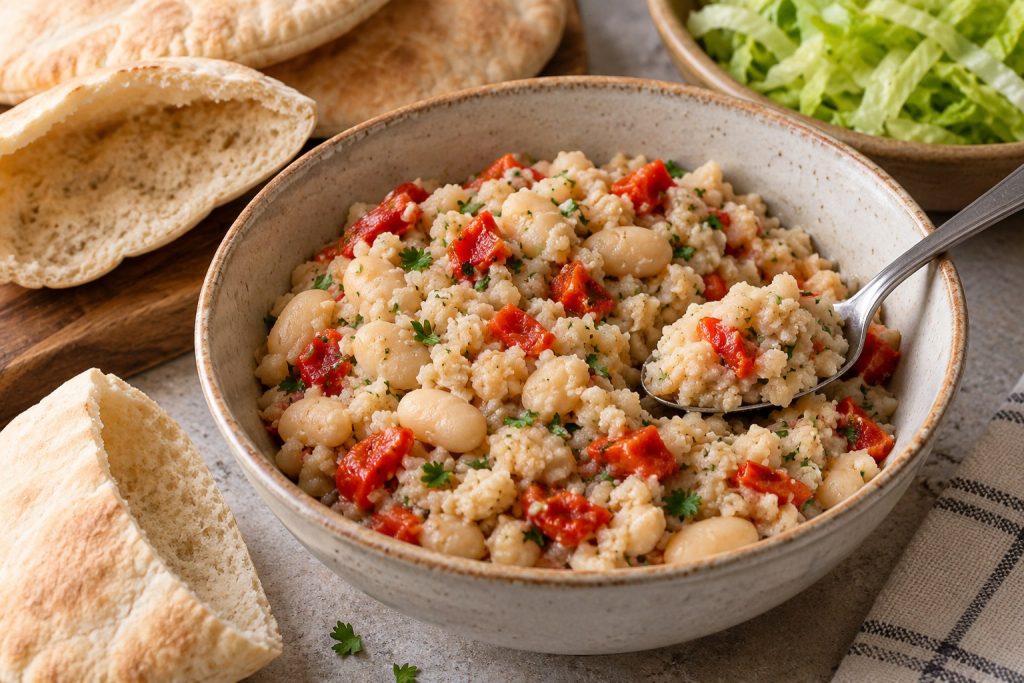
- Fold in the texture. Add the remaining whole beans, chopped peppers and parsley. Fold gently until the pepper pieces are distributed through the mash. Lift a spoonful: it should sit in a soft mound rather than immediately sliding off in liquid. Mash a few more beans into the mixture if it needs extra body.
- Finish the seasoning. Taste a spoonful containing both beans and peppers. Add some or all of the remaining teaspoon lemon juice if you want more brightness, then salt only as needed. Jarred peppers vary, so taste before adding the final lemon or a large pinch of salt. Keep the filling thick rather than turning it into a dressed salad.
- Open the pita halves. Cut each round across the middle to make four half-pockets. Gently open the inside walls. If the bread is already soft, use it at room temperature. If it cracks when bent, warm according to package directions just until flexible and let steam escape before filling.
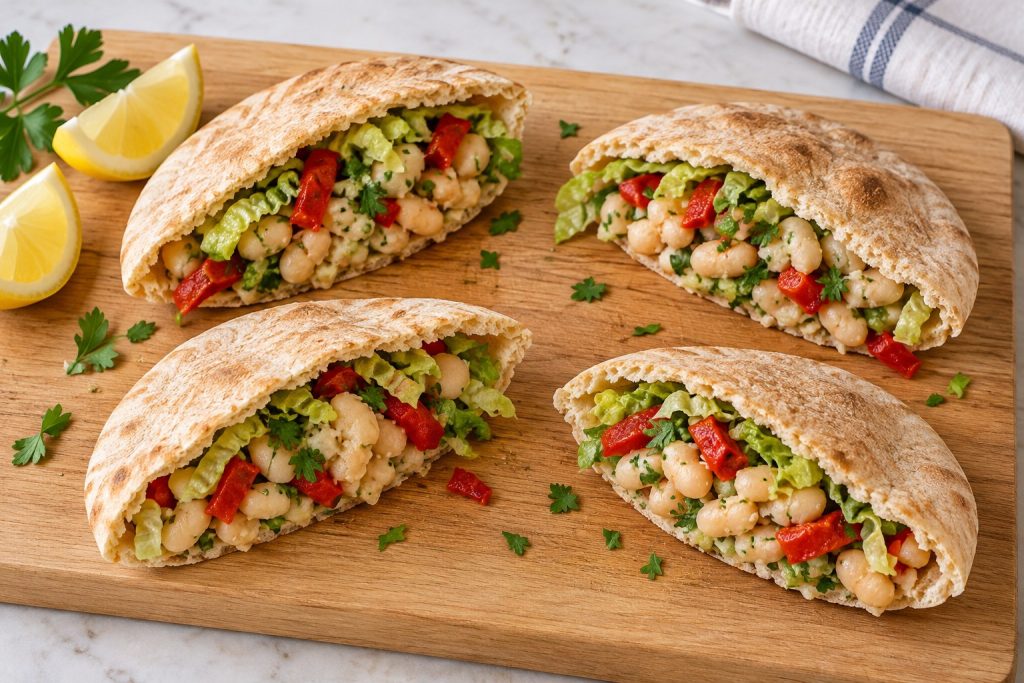
- Line, fill and serve. Divide the romaine among the pockets. Divide the bean mixture into four portions and spoon it in without stretching the bread tight. Stop a little below the opening so each half is easy to hold. Serve two halves per person, with any filling that does not fit alongside on the plate.
A spoon test is more useful than a perfectly smooth mash
The filling needs enough mashed beans to coat the peppers and hold the whole beans in place. It does not need to look like a smooth dip. A useful finished texture is a soft mound that holds on a spoon but spreads easily when pressed against the inside of the pita.
Lettuce creates a pleasant crisp layer, but it cannot rescue a watery filling. Deal with visible liquid before assembly. Conversely, do not mash the mixture until every pepper fragment disappears: distinct red pieces and whole beans make the pocket more interesting to eat.
Keep the filling thick and the bread intact
| Problem | Likely cause | What helps |
|---|---|---|
| Filling slides out | Too much liquid or too few beans mashed. | Remove any visible liquid, then crush more of the existing beans into the base. |
| The pita tears near the bottom | Wet filling, stiff bread or overfilling. | Use softer bread and smaller spoonfuls. Serve a damaged pocket open-faced rather than continuing to stretch it. |
| A pepper strip pulls out in one piece | The peppers were left too long. | Chop the remaining strips into shorter pieces before filling the other pockets. |
| The filling tastes too sharp | Vinegary peppers plus more lemon than needed. | Leave out the reserved lemon. Pair the filling with a little more lettuce; next time, taste the peppers before seasoning. |
| The mash is dry and difficult to spread | Beans are unusually dry or firm. | Crush thoroughly, then add water by the teaspoon only until the filling spreads. Use fully tender beans. |
On a small screen, scroll the table sideways to see every column.
Substitutions without adding prepared hummus
Homemade roasted peppers: use 1/2 cup peeled, seeded, cooled and drained peppers. Chop them to the same small size. Preparing peppers from scratch adds roasting and cooling time, so the 15-minute recipe estimate assumes the jarred version.
Another white bean: cannellini or small navy beans can replace great northern beans. Begin by mashing about two-thirds, then judge the texture. Smaller beans may make a more compact filling, while very soft beans may need only gentle folding to keep some whole.
A different crisp element: finely shredded butter lettuce can replace romaine. If adding cucumber, use small, blotted pieces and keep the quantity modest. Large watery chunks make the pocket harder to close and can loosen the filling during storage.
Seasoning: chopped dill can replace part of the parsley if you prefer it with lemon. Taste before adding extra cumin, garlic powder or chili. The peppers should still taste sweet and roasted rather than being hidden under a heavy layer of spice.
Serving and packing options
Serve roasted pepper white bean pita pockets as two filled halves per person, with fruit, cucumber sticks or a few extra romaine leaves. A small cup of pumpkin white bean soup with sage is another option when you want a warm accompaniment. Keep a lemon wedge on the side for anyone who wants more acidity instead of adding extra juice to the whole bowl.
For a portable lunch, pack the filling, dry lettuce and pita separately and assemble just before eating. A spoon makes this easy at a desk or picnic table. If you need to fill the pita in advance, start with chilled filling and cooled bread, then keep the assembled pockets refrigerated. They will gradually soften even when carefully packed.
If your pita breaks, make a bowl: serve the bean-pepper mixture with lettuce and cooked quinoa instead. See the quinoa rinsing guide for preparing dry grain. Keep the filling’s red pepper pieces distinct and add dressing sparingly; the beans already carry lemon and olive oil.
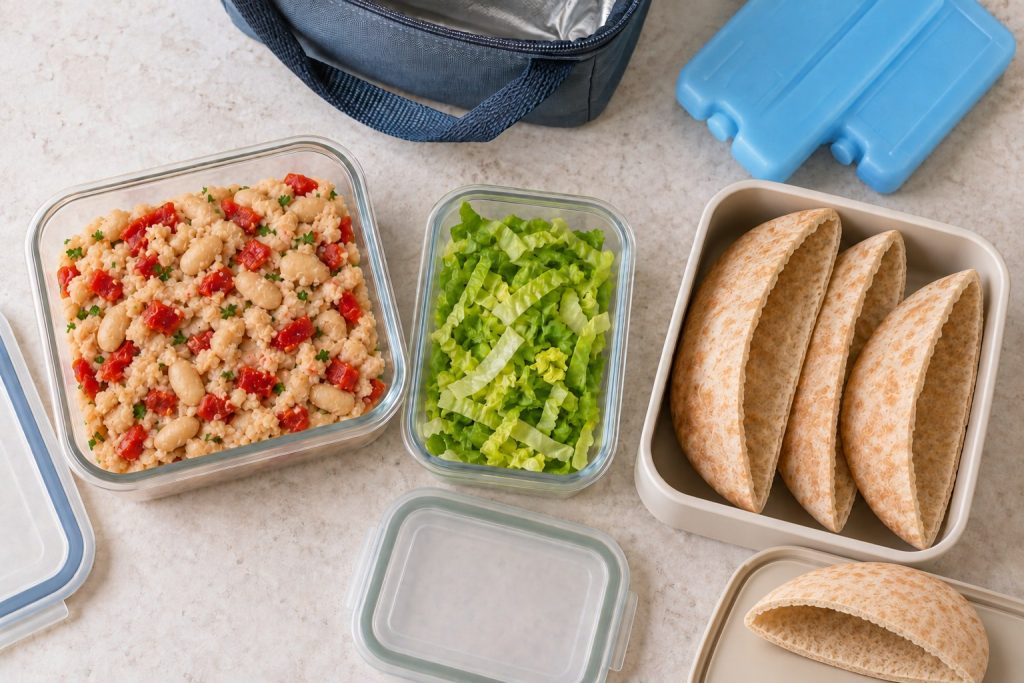
Store the filling separately for better texture
Cover and refrigerate the bean filling at 40°F or below, and use within 3–4 days. Use the earliest applicable storage deadline: mixing the filling does not restart the beans’ 3–4-day refrigerated window or extend the pepper jar’s after-opening directions. The USDA guidance for opened canned foods gives the same refrigerated range for beans. Store unused jarred peppers according to their own label, with clean utensils each time you take some out.
Refrigerate the prepared filling promptly and within 2 hours, or 1 hour above 90°F, following FDA food-storage guidance. For a lunch away from refrigeration, use an insulated bag and at least two cold sources as described in USDA lunchbox advice. Keep the dry bread separate until serving when practical.
For quality, assemble only the pockets you plan to eat that day. Freezing an entire lettuce-filled pita is less useful than freezing extra bread on its own: the lettuce will lose its crispness and the filling may make the thawed bread damp.
Frequently asked questions
Is this just white bean hummus?
This recipe is a coarse white-bean and pepper filling, with whole beans deliberately left for texture. It uses no prepared hummus, chickpeas or tahini. You can spread it on flatbread, but do not expect the smooth, uniform consistency of a blended dip.
Can I use raw red bell pepper instead?
It will give a crunchier, less cohesive filling with a different flavor. Roasted pepper is soft and blends into the bean base without long, rigid pieces pressing against the bread. For the recipe as written, choose roasted pepper; use raw pepper sticks alongside if that is what you have.
Should I rinse jarred roasted peppers?
Draining and blotting is usually enough. If the brine tastes unusually salty or vinegary, a brief rinse can remove some of the liquid on the surface, but dry the peppers thoroughly afterward. Taste the filling before adding the reserved lemon or salt rather than assuming every jar needs the same seasoning.
Can I make the filling the night before?
Yes. Refrigerate it promptly in a covered container and leave the lettuce and bread separate. Stir gently before assembly and check for any liquid that has collected at the bottom. The mixture should still mound on a spoon; mash a few more beans into it if needed.
Can I eat the filling without bread?
Yes. Serve it over lettuce or beside cooked grain, or spoon it onto a plate with crisp vegetables. Keep its slightly coarse texture rather than thinning it into a sauce. The stated recipe yield remains two lunch servings; changing the bread changes the form of the meal, not the amount of filling.
THE COMPLETE RECIPE
Roasted Pepper White Bean Pita Pockets Without Hummus
Yield: 2 lunch servings
Ingredients
- 1 15-ounce can great northern beans net weight includes liquid; drain and rinse, about 1 1/2 cups drained beans
- 1/2 cup jarred roasted red pepper strips measure after draining, then pat dry and chop into roughly 1/4-inch pieces
- 1 tablespoon lemon juice divided: 2 teaspoons initially, then up to 1 teaspoon after tasting
- 1 teaspoon olive oil
- 1/4 teaspoon ground cumin
- 1 tablespoon flat-leaf parsley chopped
- 2 pita rounds with pockets about 6 inches across; cut into 4 half-pockets
- 1/2 cup romaine lettuce shredded, washed, and thoroughly dried
- 1/8 teaspoon black pepper or to taste
- salt to taste, after tasting the beans and peppers together
Equipment
- Medium mixing bowl
- Fork or potato masher
- Colander
- Measuring cups and spoons
- Knife and cutting board
- Clean towel or paper towels
- Spoon for filling
Instructions
- Drain everything first Rinse and drain the beans, shaking the colander to remove loose water. Drain the roasted peppers, measure 1/2 cup, pat dry and chop into roughly 1/4-inch pieces. Wash, shred and thoroughly dry the romaine. Chop the parsley. Keep wet ingredients off the bread until assembly.
- Mash most of the beans Put roughly two-thirds of the beans in a medium bowl. Add 2 teaspoons of the lemon juice, the olive oil, cumin and black pepper. Mash with a fork until the beans form a coarse, spreadable base. Small soft lumps are welcome; dry, firm bean centers are not.
- Fold in the texture Add the remaining whole beans, chopped peppers and parsley. Fold gently until the pepper pieces are distributed through the mash. Lift a spoonful: it should sit in a soft mound rather than immediately sliding off in liquid. Mash a few more beans into the mixture if it needs extra body.
- Finish the seasoning Taste a spoonful containing both beans and peppers. Add some or all of the remaining teaspoon lemon juice if you want more brightness, then salt only as needed. Jarred peppers vary, so taste before adding the final lemon or a large pinch of salt. Keep the filling thick rather than turning it into a dressed salad.
- Open the pita halves Cut each round across the middle to make four half-pockets. Gently open the inside walls. If the bread is already soft, use it at room temperature. If it cracks when bent, warm according to package directions just until flexible and let steam escape before filling.
- Line, fill and serve Divide the romaine among the pockets. Divide the bean mixture into four portions and spoon it in without stretching the bread tight. Stop a little below the opening so each half is easy to hold. Serve two halves per person, with any filling that does not fit alongside on the plate.
Notes
Rate This Recipe
Made this recipe? Choose a star rating in the comment form and share how it turned out. Your cooking time and any ingredient changes can help the next reader.
Rate This Recipe