MUSHROOMS / CABBAGE / DIJON
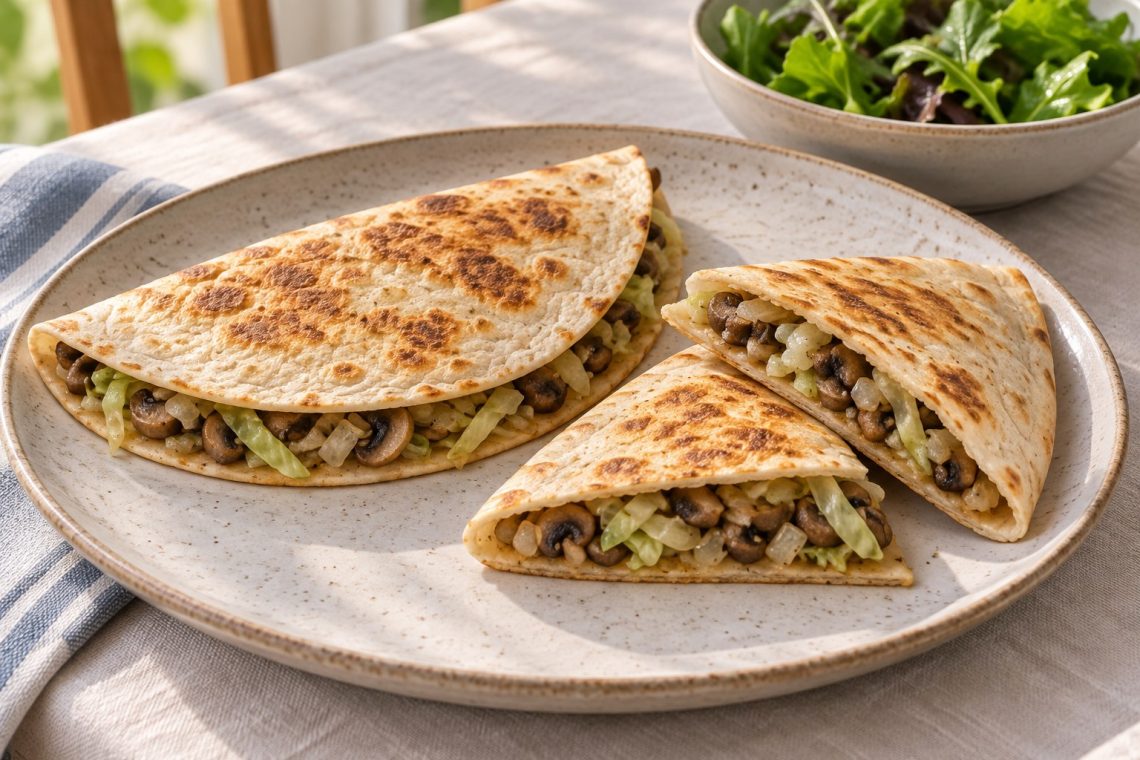
These mushroom cabbage tortilla folds combine browned cremini mushrooms, soft cabbage, and a little garlic inside warm, crisp tortillas. Lemon and Dijon finish the vegetables without cheese or a heavy sauce. The recipe makes two folded tortillas, each large enough for a light lunch with a salad or bowl of soup.
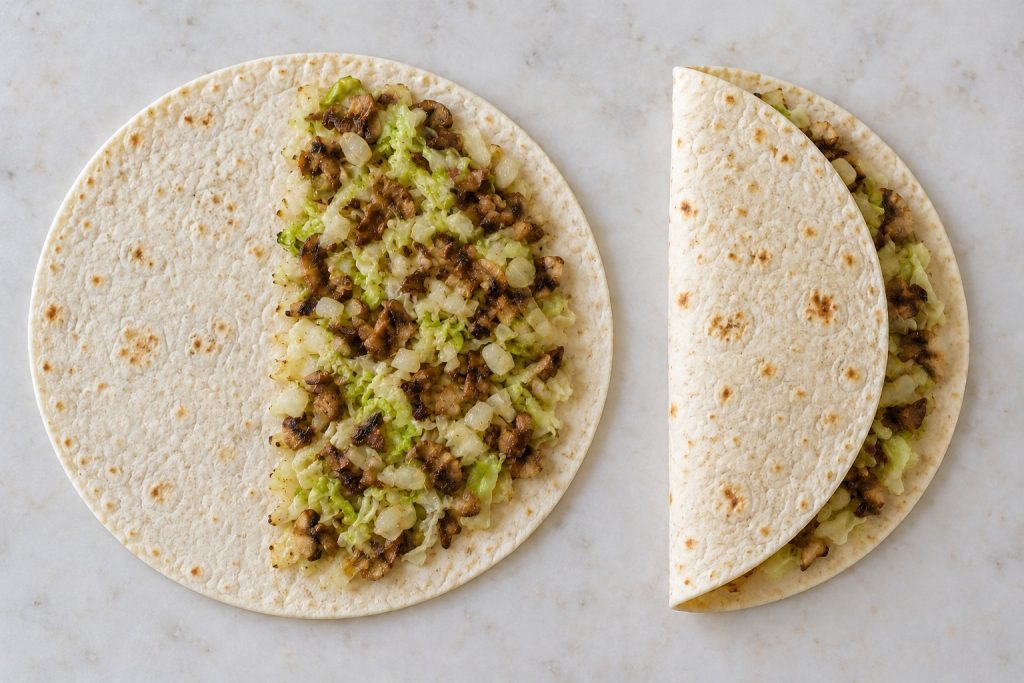
The key is to finish the vegetables before they go inside the tortillas: the mushrooms should have browned edges, the cabbage should bend easily, and the pan should have no watery puddle. Then spread the filling over half of each whole tortilla, fold the other half over it, and toast both sides. A wide spatula helps keep the filling in place when you turn each fold.
Mushroom cabbage tortilla folds: recipe summary
- Yield
- 2 folded tortillas; 2 light lunch portions
- Prep
- About 10 minutes
- Cook and toast
- Allow 25 minutes
- Total
- About 35 minutes
- Equipment
- 12-inch skillet, wide spatula, bowl, knife, cutting board, measuring cups and spoons
A nonstick or well-seasoned skillet makes the dry toasting step easier. Use two ready-to-eat flour tortillas about 8 inches across. The 35-minute estimate allows for heating the pan, cooking the filling, folding, and toasting both tortillas together. A smaller skillet may require a second toasting batch and more time.
Why the mushrooms cook first
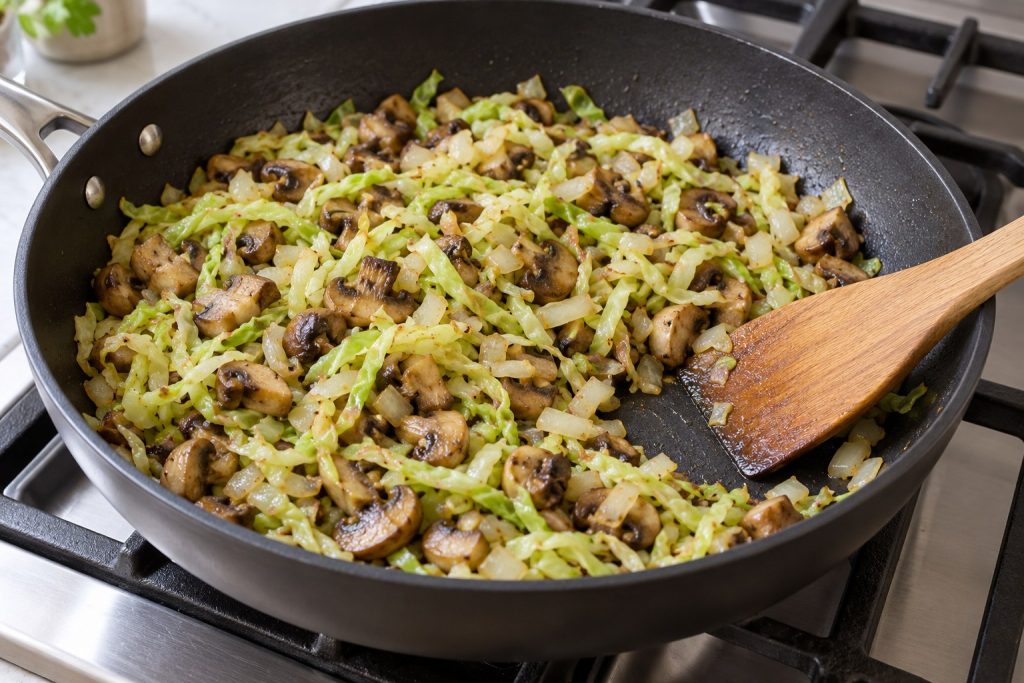
Mushrooms release moisture as they cook. Giving them the pan first lets that liquid evaporate before the cabbage joins them. Spread them out, then let them sit briefly between stirs so some pieces stay in contact with the hot surface. The Mushroom Council’s sautéing guide also emphasizes space in the pan for browning.
The sound and appearance are useful cues: an early wet bubbling stage should give way to a steadier sizzle, with some golden-brown edges visible. You do not need every mushroom piece deeply browned. Once the cabbage and onion go in, stir more often so the thin shreds soften without catching.
Prepare vegetables that cook evenly
Clean and chop the mushrooms
Brush away visible dirt or rinse the mushrooms briefly, then pat them dry. Trim only tough or dry stem ends; tender cremini stems can be chopped with the caps. The Mushroom Council’s preparation guidance supports both brushing and a brief rinse followed by drying.
Aim for small, distinct pieces rather than minced mushroom paste. Pieces about ¼ to ½ inch across tuck into the filling and give you browned edges to look for. Very large chunks can lift the tortilla away from the pan and make the fold harder to turn.
Slice the cabbage thinly
Remove any damaged outer leaves and cut away the firm core from the wedge you are using. Slice the cabbage into thin shreds, roughly ⅛ inch wide. Cut very long strands crosswise into shorter lengths, then measure 1½ cups without packing it tightly.
Thin cabbage can soften during the short skillet cook. Thick chunks may still be crunchy when the onion is already browning, so take a little care with the knife work. Chop the onion finely and keep the minced garlic separate; it goes in near the end.
Ingredients for tortilla folds without cheese
- 6 ounces (170 g) cremini mushrooms, cleaned, tough stem ends trimmed, and chopped into ¼- to ½-inch pieces
- 1½ cups thinly sliced green cabbage, measured after slicing
- ½ small onion, finely chopped
- 1 tablespoon olive oil
- 1 garlic clove, minced
- 1 teaspoon Dijon mustard
- 1 teaspoon lemon juice
- 2 ready-to-eat flour tortillas, about 8 inches across
- Salt, to taste; start with a small pinch
- Black pepper, to taste
- Up to 1 tablespoon water, only if needed to loosen the pan while the cabbage softens
The tortillas stay whole until after toasting. You are filling one half of each tortilla and folding its empty half over the vegetables; you are not cutting the tortillas into semicircles first. The straight folded edge helps contain the filling, while the curved rim stays open.
How to cook and fold the tortillas
- Prepare the filling ingredients. Clean and chop the mushrooms, thinly slice and measure the cabbage, finely chop the onion, and mince the garlic. Set out the Dijon, lemon, tortillas, and seasonings so they are ready when the pan is hot.
- Brown the mushrooms. Heat the olive oil in a 12-inch skillet over medium-high heat. Add the mushrooms and spread them out. Cook for about 4–6 minutes, stirring occasionally, until released moisture has evaporated and some edges are brown. If the pan is still watery, continue to that cue before moving on.
- Soften the cabbage and onion. Add the cabbage, onion, and a small pinch of salt. Reduce to medium heat and cook for about 5–7 minutes, stirring regularly, until the cabbage bends easily and the onion is softened. If the pan catches before the cabbage is tender, add up to 1 tablespoon water and scrape gently. Let that water evaporate completely.
- Finish the seasoning. Stir in the garlic for about 30 seconds, until fragrant. Check that no liquid is pooling, then remove the pan from the heat. Stir in the Dijon, lemon juice, and black pepper; taste and adjust salt if needed. Transfer to a bowl and let steam escape for about a minute. Remove loose vegetable bits from the skillet before toasting.
- Fill the whole tortillas. If the tortillas are stiff, warm them briefly according to the package directions. Divide the filling between them, spreading it over one half of each in an even layer and leaving about a ½-inch border. Fold the empty half over the filling to make a half-moon. Press lightly; reserve any filling that prevents the tortilla from closing comfortably.
- Toast both sides. Return the skillet to medium heat without adding more oil. Set the two folded tortillas in the pan with room to turn them. Toast for about 2–3 minutes per side until golden in patches and crisp. Slide a wide spatula well underneath each fold and turn it gently, keeping the filling supported.
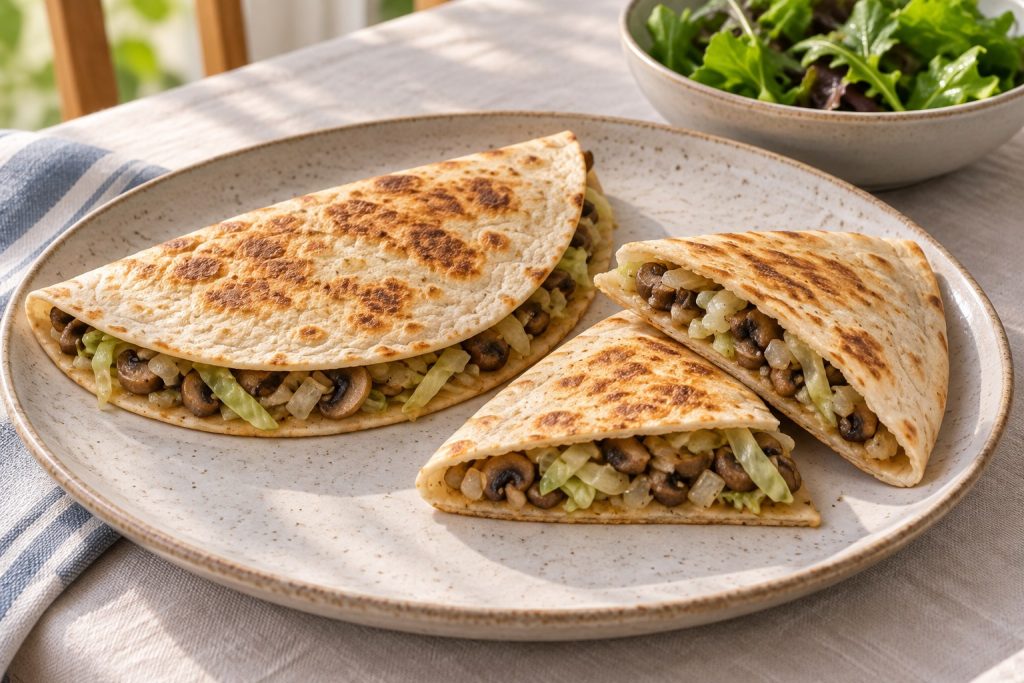
- Cut and serve. Move the folds to a board and let them settle briefly while you get the plates. Cut each into two wedges with a sharp knife. Serve while the outside is crisp, keeping wet salads or sauces alongside rather than over the tortillas.
Keep the filling contained without cheese
Cheese is not needed for the flavor of this cabbage tortilla filling, but there is also no melted layer sealing the edges together. Treat the folded tortilla as a pocket with an open rim. An even, modest layer of vegetables stays in place more easily than a tall pile.
Before placing it in the pan, check that the empty half reaches the outer edge without stretching. Use the broad part of the spatula under the center of the fold, then turn it in one gentle motion. Trying to lift it by one corner can open the rim and scatter the vegetables.
Keep the heat moderate during toasting. Very dark tortilla patches in less than a minute mean the pan is too hot; lower the heat before continuing. The filling is already cooked and warm, so this stage is about crisping the tortilla evenly.
Troubleshooting the filling and fold
| Problem | What to check | Adjustment |
|---|---|---|
| Mushrooms are pale and wet | The liquid has not evaporated, or the pieces are crowded. | Spread them out and cook longer before adding cabbage. Use a wider pan next time. |
| Cabbage is tough while the pan browns | The shreds are thick or the heat is too high. | Lower the heat and add the small optional splash of water. Cook until tender, then evaporate the liquid. |
| The tortilla becomes soggy | The filling went in wet or very steamy. | Cook off free liquid and let the filling release steam briefly before folding. |
| Vegetables spill during turning | The fold is overfilled or lifted by one edge. | Use less filling and support the whole fold with a wide spatula. |
| The outside scorches | The toasting heat is too high or loose bits remain in the pan. | Lower to medium or medium-low and clear the pan before the next batch. |
On a small screen, scroll the table sideways to see every column.
Practical ingredient substitutions
White button mushrooms: use the same 6-ounce amount and the same small cut. Follow the moisture and browning cues rather than assuming the clock will be identical.
Savoy cabbage: measure the same 1½ cups after thinly slicing it. Its more delicate leaves may soften sooner, so start checking before the full cooking time has elapsed.
A spinach variation: 2 lightly packed cups of fresh baby spinach can make a softer, less bulky filling in place of the cabbage. Cook the onion until softened first, then add the spinach and let it wilt. Cook off any released liquid before finishing the filling. This changes the amount and texture of the cooked vegetables, so fill the tortillas by what closes comfortably rather than expecting identical portions.
Different wraps: flexible whole-wheat tortillas of the same size work well for the same folding method. Gluten-free products vary; follow their handling instructions. Small corn tortillas are better served as soft tacos and will change how many pieces you need. Check package ingredients if avoiding dairy or other allergens.
What to serve with the folds
Serve mushroom cabbage tortilla folds as a light lunch, with one folded tortilla per person and a lemony green salad. Dress the salad in a separate bowl so its liquid does not soak into the crisp edges. For a fuller lunch, pair the folds with small batch lemon lentil zucchini soup.
If you like the skillet-toasted format and want another filling without cheese, try the white bean quesadillas without cheese. Their bean filling offers a different texture from the loose mushrooms and cabbage here.
Storage, reheating, and making ahead
Refrigerate leftovers in a covered, shallow container within 2 hours, or within 1 hour above 90°F. Keep at 40°F or colder and use within 3–4 days. Reheat leftovers to 165°F, following USDA’s leftover safety guidance.
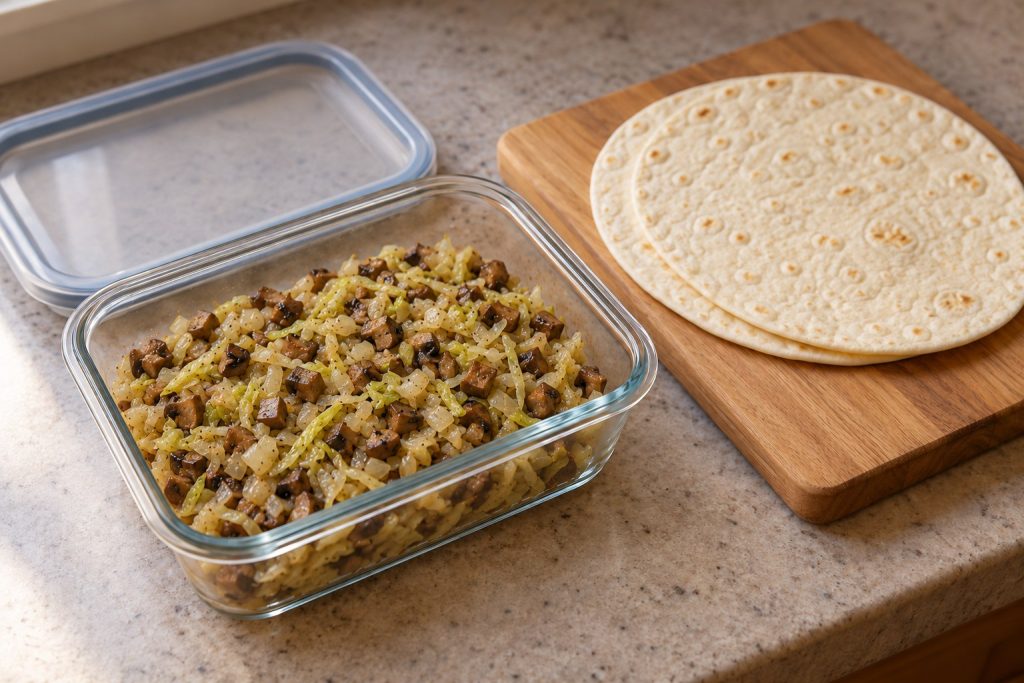
For the best texture, refrigerate the cooked filling separately from the tortillas. Reheat that filling to 165°F first, then fold and toast fresh tortillas. A short dry toast alone may brown the outside while leaving refrigerated filling cold in the center.
To reheat a whole assembled fold, warm it gently in a skillet, covering briefly if needed to heat the center. Check the filling reaches 165°F, then uncover to crisp the tortilla again. An assembled fold can also be packed chilled, but the tortilla will soften. Use an insulated bag with at least two cold sources, as advised in USDA’s packed-lunch guidance.
Frequently asked questions
Will the tortillas seal without cheese?
The edges will not stick together like a sealed pastry. The fold, a thin filling layer, and careful turning keep the vegetables contained. Serve them as half-moons or cut wedges rather than expecting a fully sealed pocket.
Can I use a smaller skillet?
Yes, but cook and toast in batches if the food crowds the pan. Crowded mushrooms take longer to lose moisture, and two folds need enough room for the spatula. Allow extra time beyond the 35-minute estimate.
Can I use uncooked flour tortillas?
Cook them according to their package directions before adding the filling. This recipe starts with ready-to-eat tortillas and its short final toast does not replace the initial cooking required for a raw product.
Can I leave out the lemon?
Yes. It brightens the finished vegetables but does not bind them. Taste the filling with the Dijon, then adjust pepper and salt gently if you omit the lemon.
Can I prepare the vegetables in advance?
You can wash, dry, and chop the vegetables ahead and keep them refrigerated in covered containers. Keep the mushrooms, cabbage and onion, and garlic separate because they enter the pan at different stages. Dry any surface moisture before cooking.
THE COMPLETE RECIPE
Mushroom Cabbage Tortilla Folds Without Cheese
Yield: 2 light lunch portions
Ingredients
- 6 ounces cremini mushrooms 170 g; clean, trim tough stem ends, and chop into 1/4- to 1/2-inch pieces
- 1 1/2 cups thinly sliced green cabbage measure after slicing
- 1/2 small onion finely chopped
- 1 tablespoon olive oil
- 1 garlic clove minced
- 1 teaspoon Dijon mustard
- 1 teaspoon lemon juice
- 2 ready-to-eat flour tortillas about 8 inches across
- salt to taste; start with a small pinch
- black pepper to taste
- 1 tablespoon water up to this amount, only if needed while softening the cabbage
Instructions
- Prepare the filling ingredients Clean and chop the mushrooms, thinly slice and measure the cabbage, finely chop the onion, and mince the garlic. Set out the Dijon, lemon, tortillas, and seasonings so they are ready when the pan is hot.
- Brown the mushrooms Heat the olive oil in a 12-inch skillet over medium-high heat. Add the mushrooms and spread them out. Cook for about 4–6 minutes, stirring occasionally, until released moisture has evaporated and some edges are brown. If the pan is still watery, continue to that cue before moving on.
- Soften the cabbage and onion Add the cabbage, onion, and a small pinch of salt. Reduce to medium heat and cook for about 5–7 minutes, stirring regularly, until the cabbage bends easily and the onion is softened. If the pan catches before the cabbage is tender, add up to 1 tablespoon water and scrape gently. Let that water evaporate completely.
- Finish the seasoning Stir in the garlic for about 30 seconds, until fragrant. Check that no liquid is pooling, then remove the pan from the heat. Stir in the Dijon, lemon juice, and black pepper; taste and adjust salt if needed. Transfer to a bowl and let steam escape for about a minute. Remove loose vegetable bits from the skillet before toasting.
- Fill the whole tortillas If the tortillas are stiff, warm them briefly according to the package directions. Divide the filling between them, spreading it over one half of each in an even layer and leaving about a ½-inch border. Fold the empty half over the filling to make a half-moon. Press lightly; reserve any filling that prevents the tortilla from closing comfortably.
- Toast both sides Return the skillet to medium heat without adding more oil. Set the two folded tortillas in the pan with room to turn them. Toast for about 2–3 minutes per side until golden in patches and crisp. Slide a wide spatula well underneath each fold and turn it gently, keeping the filling supported.
- Cut and serve Move the folds to a board and let them settle briefly while you get the plates. Cut each into two wedges with a sharp knife. Serve while the outside is crisp, keeping wet salads or sauces alongside rather than over the tortillas.
Notes
Rate This Recipe
Made this recipe? Choose a star rating in the comment form and share how it turned out. Your cooking time and any ingredient changes can help the next reader.
Rate This Recipe