TUNA / WHITE BEANS / LEMON
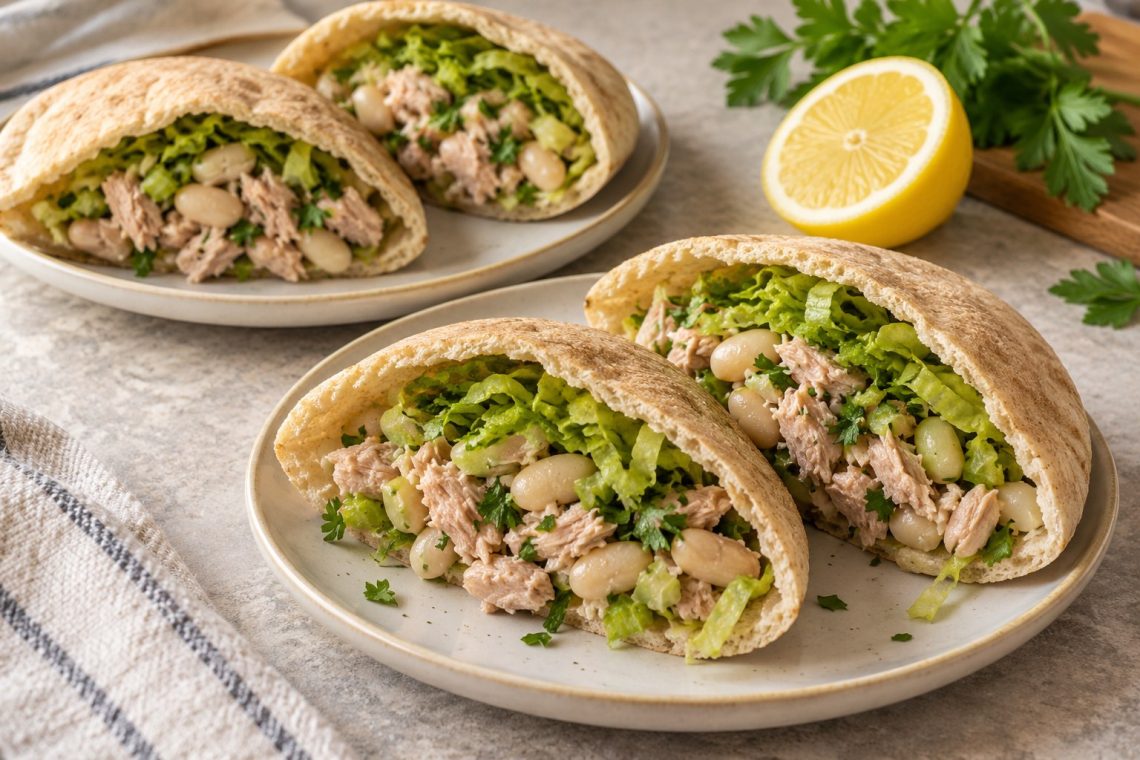
This tuna white bean pita without mayo has a lemony filling, soft beans and a little celery crunch tucked into lettuce-lined bread. Mashing just part of the beans gives the tuna something to cling to, while leaving the rest whole keeps the filling pleasantly chunky. The job is mostly draining, chopping and folding, so it suits a quick lunch at home or an assembled-at-lunchtime meal.
Keep the dressing light and the pita comfortably filled. You want moist forkfuls that hold together, with no liquid collecting beneath them. Two small pita rounds become four half-pockets: two halves for each lunch portion.
Recipe summary
- Prep and assembly
- About 15 minutes
- Cook time
- 0 minutes; optional pita warming is extra
- Additional time
- 0 minutes; no required chilling
- Total
- About 15 minutes with soft, room-temperature pita
- Yield
- 2 lunch servings: 4 filled pita halves
Equipment: medium mixing bowl, fork, spoon, fine-mesh strainer or colander, measuring spoons, knife, cutting board and a clean towel or paper towels. A shallow covered container is useful if saving one serving for later.
Ingredients for tuna white bean pita without mayo
- 1 can tuna in water, 5 ounces net weight, thoroughly drained
- Half of one 15-ounce can cannellini beans, rinsed and drained; divide the drained can in half, about 3/4 cup for this recipe
- 1 tablespoon olive oil
- 1 tablespoon lemon juice
- 1 tablespoon finely chopped celery
- 1 tablespoon chopped flat-leaf parsley
- 2 small pita rounds with pockets, about 6 inches across
- 1/2 cup shredded lettuce, washed and thoroughly dried
- 1/8 teaspoon black pepper, or to taste
- Salt to taste, added only after tasting the filling
The can weights above include the packing liquid. Rinse and drain one 15-ounce can of beans, then divide the drained beans in half; use one half here, about 3/4 cup. Refrigerate the unused half promptly for another meal.
Choose ingredients that make a manageable filling
Tuna: flaky, with no pool of water
Chunk-style tuna gives distinct pieces; solid-pack tuna works too if broken into bite-size flakes. Drain in a strainer and press lightly with the back of a spoon. Stop when loose water has drained away. Pressing until the fish becomes a dry, compact block makes it harder to fold through the beans and encourages adding too much dressing later.
Beans: soft enough for a fork
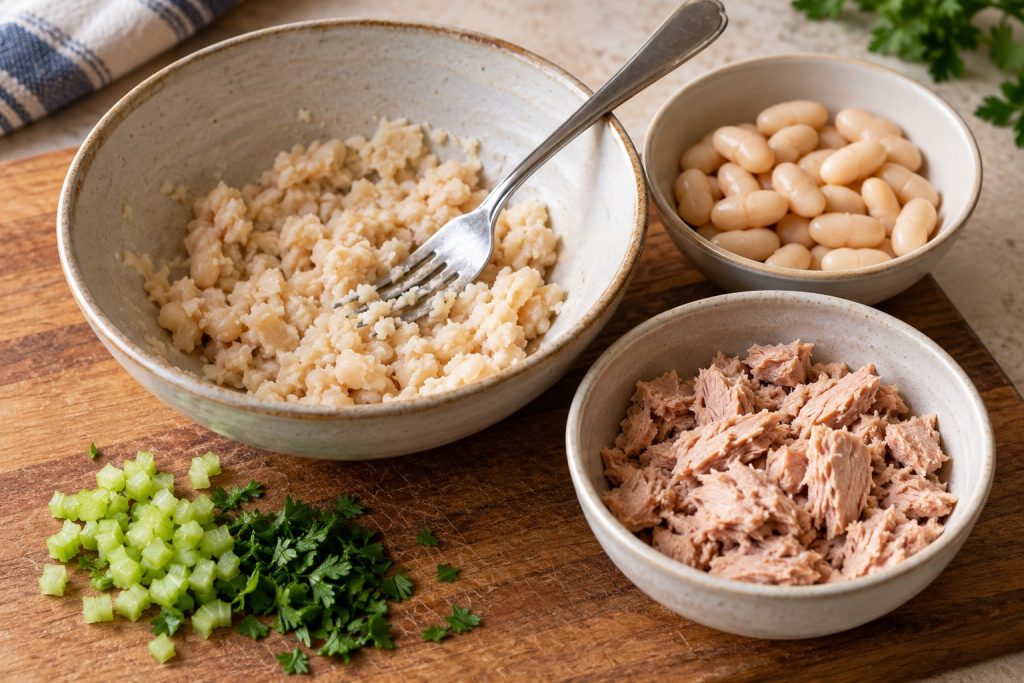
Cannellini beans should crush easily against the side of the bowl. Great northern beans are a useful substitute in the same drained amount. Shake off rinsing water, then blot any obvious surface moisture. You will mash approximately one-third of the measured beans, about 1/4 cup, and keep the remaining beans mostly intact.
Pita: a real pocket, not a flatbread
Choose soft rounds that open into pockets. Some breads labeled pita are pocketless, so check before planning to stuff them. A 6-inch round is a guide rather than a promise that every brand holds the same amount. Thick bread and shallow pockets need a lighter hand with the filling.
Finely chop the celery rather than adding broad slices; small pieces distribute their crunch without wedging the pocket open. Dry the lettuce after washing. It provides a crisp layer, but wet lettuce introduces exactly the extra moisture you have just removed from the tuna.
Why the beans replace a heavy dressing
The mashed portion coats the tuna and fills the gaps between the larger pieces. The whole beans provide a softer bite alongside the celery. Keeping both textures matters: entirely whole beans make a looser mixture, while mashing everything produces a denser filling that needs more careful spreading.
Lemon should brighten the tuna without leaving a sharp puddle in the bowl. If you want more acidity after mixing, add a few drops, stir and taste again. Spoonfuls of extra juice can quickly undo the careful draining.
Mix the filling and assemble the pitas
- Drain and prepare. Drain the tuna thoroughly and break it into small flakes. Rinse and drain the beans, measure half the drained can and refrigerate the remainder. Chop the celery and parsley. Shred and dry the lettuce. Keep the ingredients in separate small piles so you can see whether any still carry excess water.
- Make a coarse bean base. Put about one-third of the measured beans in the mixing bowl. Mash with a fork until they form a rough paste with only a few small lumps. Stir in the olive oil, lemon juice and black pepper. The paste should loosen enough to coat other ingredients without becoming a pourable dressing.
- Fold rather than beat. Add the remaining whole beans, tuna, celery and parsley. Turn the mixture over gently with a spoon until the dressing is distributed. Leave visible tuna flakes and whole beans. Scraping and beating repeatedly will turn the filling into a uniform mash and lose the texture this recipe is built around.
- Check the consistency and seasoning. Lift a spoonful. It should sit in a soft mound, with no liquid running off the spoon. Taste before adding salt; tuna and canned beans vary in saltiness. If the mixture is crumbly, mash a few more beans into it before considering the small dressing adjustments described below.
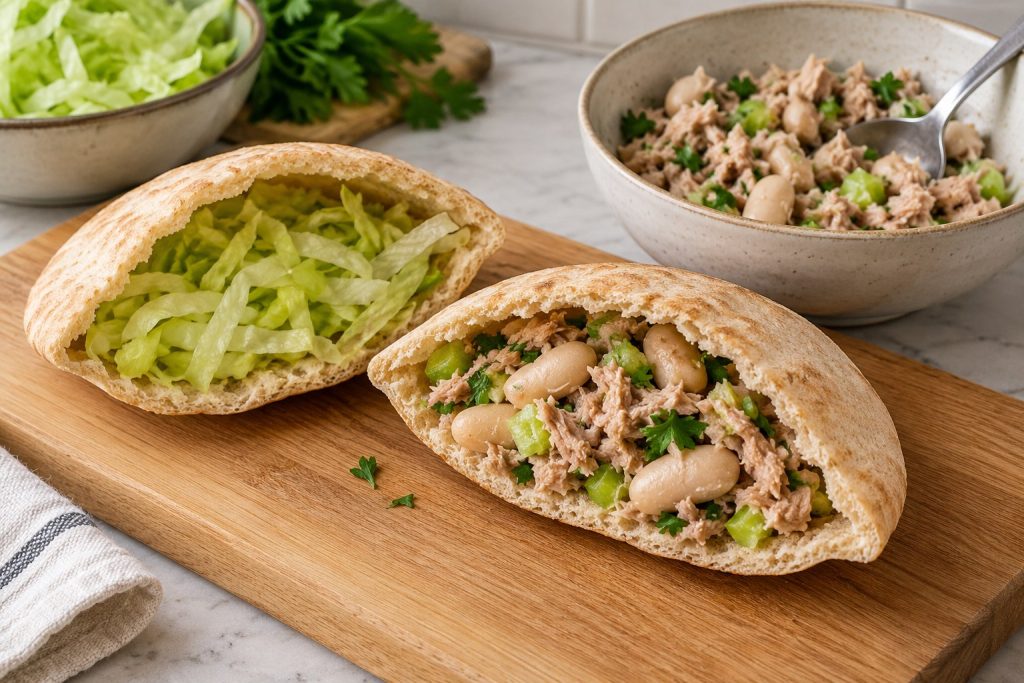
- Open the pockets. Cut each pita round in half across its diameter, giving four halves. Gently separate the inside walls with your fingers. Use the bread at room temperature if it bends easily. If stiff, warm according to its package instructions just until pliable, then let trapped steam escape before adding the cold filling.
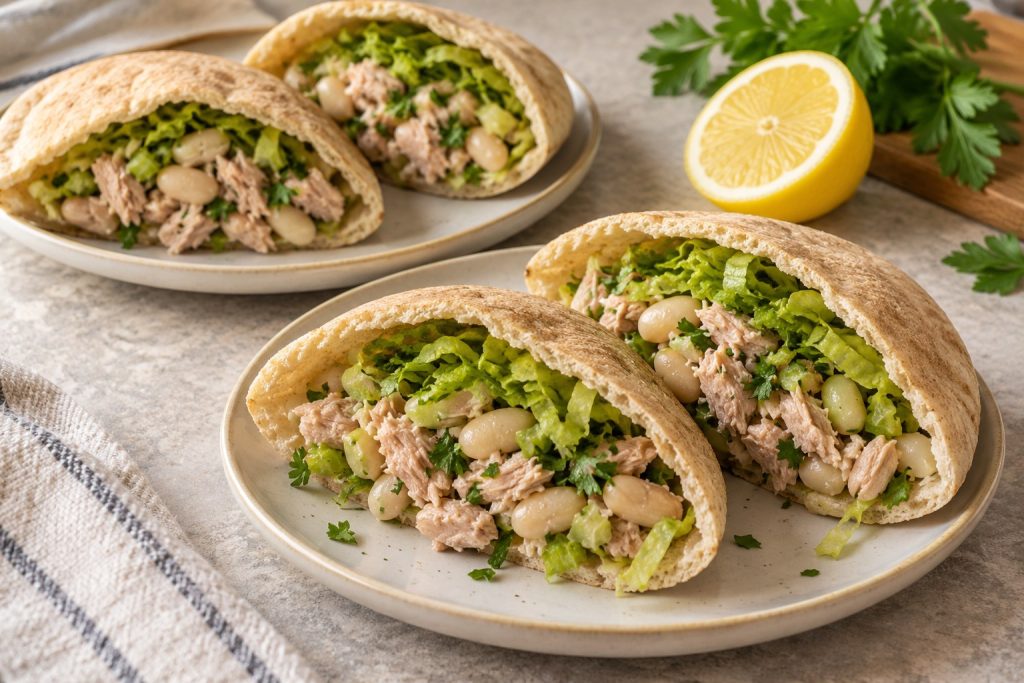
- Fill lightly and serve. Divide the lettuce among the four pockets. Divide the tuna mixture into four portions and spoon it in gently, stopping before the bread is stretched tight. Leave a little space at the opening. If a pocket is smaller than expected, serve its extra filling alongside instead of forcing it inside. Serve two halves per person.
Quick fixes before you fill the bread
| Problem | Likely cause | What to do |
|---|---|---|
| Liquid gathers in the bowl | Tuna, beans or lettuce carried excess water. | Spoon away the liquid and gently blot the filling’s surface. Mash a few more beans for body; do not rely on chilling to remove water. |
| Filling crumbles apart | Too little bean paste, or tuna pressed very dry. | Mash a little more of the existing beans. If still dry, fold in 1 teaspoon olive oil and reassess. |
| The pita splits | Stiff bread or too much filling. | Warm the remaining bread briefly and use smaller portions. Serve a torn pocket open-faced on a plate. |
| The flavor seems flat | Seasoning needs adjusting after the beans were added. | Taste a bite with both tuna and beans. Add a small pinch of salt or a few drops of lemon, then taste again. |
On a small screen, scroll the table sideways to see every column.
Serve now or pack the components separately
Serve tuna white bean pita without mayo as two filled halves per person, with cucumber wedges or fruit. If you want a warm side, a small cup of chickpea and celery lemon soup keeps the bright lemon flavor running through the meal. Adjust the amount of pita filling you serve to your appetite rather than overloading the bread.
For a packed lunch, put the filling in a covered container and carry dry lettuce and pita separately. Spoon the filling into the pockets when you are ready to eat. If assembling in advance is more convenient, use completely cooled bread, dry lettuce and chilled filling, and expect the pita to soften as it sits.
There is also an easy bread-free serving option: spoon the filling over cooked, cooled quinoa with lettuce alongside. The quinoa rinsing guide covers preparation before cooking. Keep the tuna mixture separate from warm grain until you are ready to serve or chill the components for packing.
Practical swaps that keep the lunch mayo-free
Oil-packed tuna: drain it well and begin with 1 teaspoon added olive oil instead of the full tablespoon. Fold the filling together before deciding whether it needs more. This is an adjustment for the tuna’s retained oil, not a reason to add extra lemon automatically.
Different beans or herbs: use great northern beans in place of cannellini. Chopped dill can replace some or all of the parsley; start with 2 teaspoons if its flavor is strong. Keep the beans soft and the total bean quantity similar so the filling still binds.
No celery: use the same amount of finely diced cucumber with the watery center removed and the pieces blotted dry. The crunch will be milder. Canned salmon is another fish option, but check for hard bones and break it into flakes before mixing.
Storage and safe lunch packing
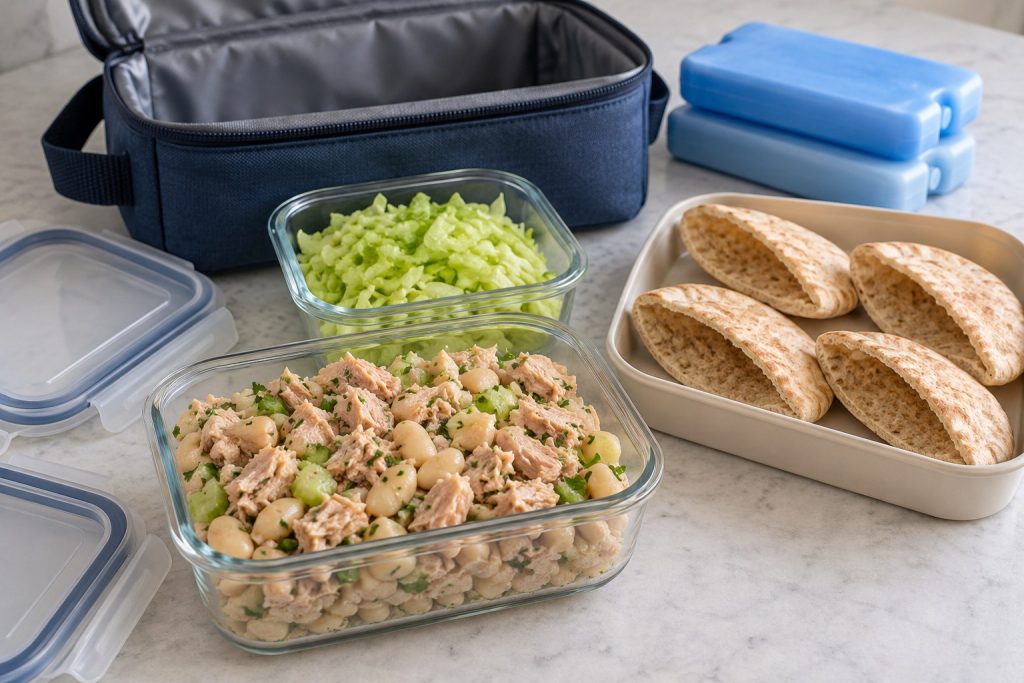
Leaving out mayonnaise does not make the fish filling shelf-stable. Keep the tuna filling covered at 40°F or below and use it within 3–4 days, following the FoodSafety.gov guidance for tuna salads. Count from when the tuna was opened or the oldest prepared ingredient was made, not from a later day when you refreshed the herbs. Assembled pita has its best texture the day it is filled.
Refrigerate perishables within 2 hours, or within 1 hour when the temperature is above 90°F, as explained in the FDA food-storage guidance. For travel, follow USDA lunch-packing advice: use an insulated bag with at least two cold sources, ideally one above and one below the food. A lettuce layer does not replace refrigeration.
Frequently asked questions
Will this taste like tuna salad made with mayonnaise?
It has a different finish: lemon and olive oil are more noticeable, and the bean paste is less rich than mayonnaise. Keep the tuna in flakes and mash only part of the beans for a chunky result. If you want a smoother filling, crush a little more of the beans rather than adding a large quantity of oil.
Can I use a tuna pouch instead of a can?
Yes. Choose plain cooked tuna and use an amount similar to the drained contents of the 5-ounce can. Pouch sizes and added flavorings vary, so compare the quantity and ingredients rather than swapping package for package. A heavily seasoned pouch may need less salt or lemon.
How do I make one serving?
Use half the drained tuna, half the beans measured for this recipe, 1 1/2 teaspoons each olive oil and lemon juice, half the celery and parsley, 1 pita round and 1/4 cup lettuce. Refrigerate the unused tuna promptly. This gives two filled halves without needing to assemble the second lunch in advance.
Can I mix the filling the night before?
Yes, provided the ingredients are fresh and the mixture is refrigerated promptly. Keep the bread and lettuce separate. Before filling the pockets, stir gently and check the bottom of the container for liquid. If the flavor has mellowed, adjust with a few drops of lemon rather than another full spoonful.
Can I freeze the filled pitas?
They are not a good choice for preserving this recipe’s texture. Lettuce loses its crunch and the filling can leave the bread damp after thawing. Freeze extra bread separately according to its package directions, then make a fresh filling for it. A refrigerated, unassembled lunch is the more straightforward make-ahead option.
THE COMPLETE RECIPE
Tuna White Bean Pita Without Mayo
Yield: 2 lunch servings
Ingredients
- 1 5-ounce can tuna in water thoroughly drained
- 1/2 15-ounce can cannellini beans rinse and drain the can, then use half of its drained contents; about 3/4 cup
- 1 tablespoon olive oil
- 1 tablespoon lemon juice
- 1 tablespoon finely chopped celery
- 1 tablespoon chopped flat-leaf parsley
- 2 small pita rounds with pockets about 6 inches across
- 1/2 cup shredded lettuce washed and thoroughly dried
- 1/8 teaspoon black pepper or to taste
- salt to taste, after mixing
Equipment
- Medium mixing bowl
- Fork and spoon
- Fine-mesh strainer or colander
- Measuring tools
- Knife and cutting board
- Clean towel or paper towels
- Covered container for packing
Instructions
- Drain and prepare Drain the tuna thoroughly and break it into small flakes. Rinse and drain the beans, measure half the drained can and refrigerate the remainder. Chop the celery and parsley. Shred and dry the lettuce. Keep the ingredients in separate small piles so you can see whether any still carry excess water.
- Make a coarse bean base Put about one-third of the measured beans in the mixing bowl. Mash with a fork until they form a rough paste with only a few small lumps. Stir in the olive oil, lemon juice and black pepper. The paste should loosen enough to coat other ingredients without becoming a pourable dressing.
- Fold rather than beat Add the remaining whole beans, tuna, celery and parsley. Turn the mixture over gently with a spoon until the dressing is distributed. Leave visible tuna flakes and whole beans. Scraping and beating repeatedly will turn the filling into a uniform mash and lose the texture this recipe is built around.
- Check the consistency and seasoning Lift a spoonful. It should sit in a soft mound, with no liquid running off the spoon. Taste before adding salt; tuna and canned beans vary in saltiness. If the mixture is crumbly, mash a few more beans into it before considering the small dressing adjustments described below.
- Open the pockets Cut each pita round in half across its diameter, giving four halves. Gently separate the inside walls with your fingers. Use the bread at room temperature if it bends easily. If stiff, warm according to its package instructions just until pliable, then let trapped steam escape before adding the cold filling.
- Fill lightly and serve Divide the lettuce among the four pockets. Divide the tuna mixture into four portions and spoon it in gently, stopping before the bread is stretched tight. Leave a little space at the opening. If a pocket is smaller than expected, serve its extra filling alongside instead of forcing it inside. Serve two halves per person.
Notes
Rate This Recipe
Made this recipe? Choose a star rating in the comment form and share how it turned out. Your cooking time and any ingredient changes can help the next reader.
Rate This Recipe