Canned tomatoes and chickpeas can carry a fish dinner without a complicated sauce. This sheet pan cod with canned tomatoes and chickpeas starts by roasting a drained tomato-and-bean mixture until its flavor becomes more concentrated. Thick cod portions go on top for the final stage, where they cook gently in the moisture still surrounding the vegetables.
Affiliate disclosure: As an Amazon Associate I earn from qualifying purchases. These paid links open Amazon search results so you can compare suitable tools.
Use an 18-by-13-inch rimmed metal sheet pan (paid link) for the tomato-and-chickpea layer and cod. Keep a thin-tip food thermometer (paid link) nearby for the fish-doneness checks described below.
The result is a spoonable dinner with tender fish and soft chickpeas, suited to crusty bread, couscous, or a small bowl of rice. It is not a crispy-chickpea recipe: the tomatoes intentionally keep the beans moist. Using canned ingredients makes the meal practical year-round, while lemon zest and parsley add a fresh finish.
Build the tomato-chickpea base before adding cod
- Drain chickpeas thoroughly so the tomato juices stay concentrated rather than watery.
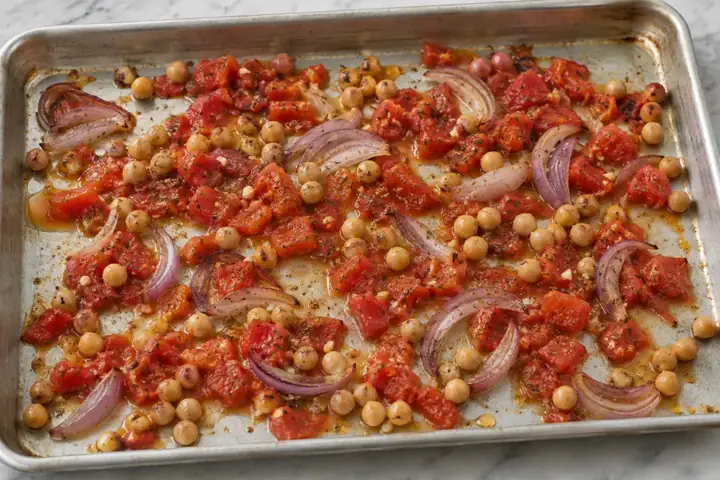
- Roast the base until it bubbles and begins thickening around the edges.
- Nestle cod into the hot mixture only for the final stage, using fillets of similar thickness.
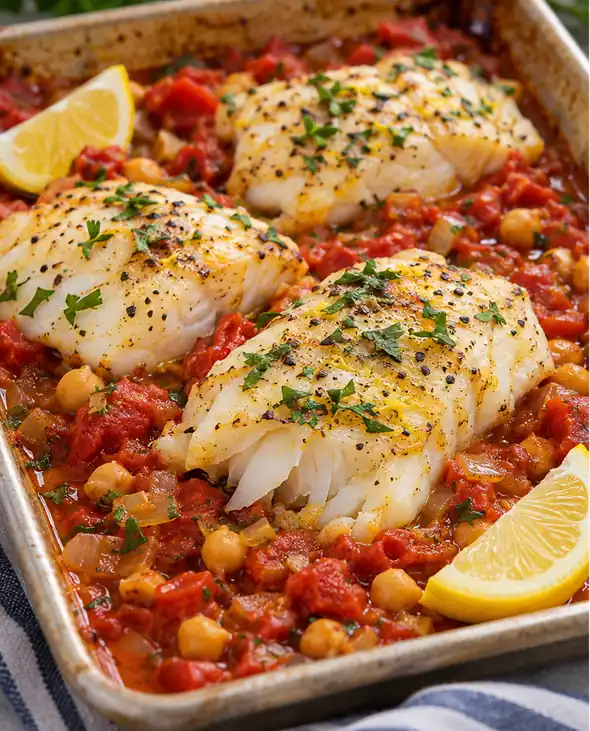
Check the center of the thickest cod portion with a thin-tip food thermometer: it should reach 145°F (63°C). The flesh should also be opaque and separate easily into moist flakes. If the tomato base still looks thin, move the cod to a plate and return the pan briefly rather than drying the fish while waiting for the sauce.
Start with the fish thickness
Choose four similarly sized pieces of cod, preferably about 1 inch thick. Thin tail portions can cook several minutes before thick center cuts. If the package contains mixed sizes, keep track of the thin pieces and remove them as soon as they reach their cooking endpoint.
Yield: 4 servings. Prep: 10 minutes. Cook: 30–35 minutes. Total: about 45 minutes. Oven: 425°F / 220°C. Use an 18-by-13-inch rimmed metal sheet with a secure rim, a colander, paper towels, a thin spatula, and a thin-tip food thermometer.
Pantry ingredients and fresh additions
- 1 can diced tomatoes, 14.5 ounces, drained; reserve ¼ cup juice
- 1 can chickpeas, 15 ounces, drained and rinsed
- ½ medium red onion, cut into wedges about ¼ inch thick
- 2 tablespoons olive oil, divided
- 2 medium garlic cloves, finely chopped
- ¾ teaspoon dried oregano
- ½ teaspoon sweet paprika
- ½ teaspoon fine salt, divided, plus more to taste
- ¼ teaspoon black pepper, divided
- 4 thawed cod portions, 5 ounces each and approximately 1 inch thick
- 1 teaspoon finely grated lemon zest
- 1 tablespoon lemon juice, plus wedges for serving
- 2 tablespoons chopped parsley
- ¼ cup sliced pitted olives, optional
Drain the tomatoes over a bowl so you can keep a small amount of their juice. A full can of liquid would create a much wetter meal on a shallow sheet. Chickpeas should be rinsed and drained, but they do not need the intensive drying used for crunchy roasted snacks.
Olives are optional and add salt as well as flavor. If using them, taste the finished vegetables before adding any more salt. Fire-roasted diced tomatoes can replace plain tomatoes for a smoky note. Crushed tomatoes spread differently and contain more sauce, so they are not the closest substitution for the measured drained dice.
Cooking sheet pan cod with canned tomatoes and chickpeas
- Heat the oven and check the sheet. Heat to 425°F with a rack in the middle. Use a rimmed sheet large enough to hold the food in a shallow layer. If lining with foil, use a continuous layer without holes. The oil mixed with the food in the following steps coats its contact surfaces. Avoid a completely flat tray that could spill hot liquid.
- Build the tomato base. Combine drained tomatoes, chickpeas, onion, 1½ tablespoons oil, garlic, oregano, paprika, ¼ teaspoon salt, and ⅛ teaspoon pepper directly on the sheet or in a bowl first. Spread across the pan without mounding everything in the middle.
- Roast before adding fish. Roast for 18–20 minutes, stirring after about 12 minutes. The onion should soften and the tomato edges begin to concentrate. If the pan looks completely dry and garlic is catching, stir in 1–2 tablespoons reserved tomato juice; do not automatically add all the liquid.
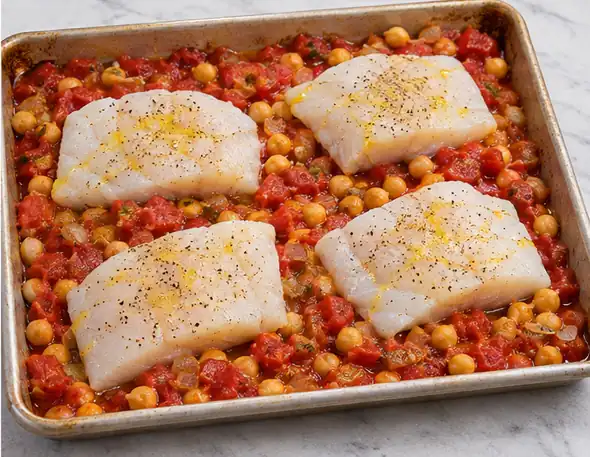
- Prepare the cod. Pat the fish dry on both sides, checking gently for pin bones. Brush with the remaining ½ tablespoon oil and season with the remaining salt and pepper. Sprinkle with lemon zest. Keep utensils used for raw fish separate from the tools you will use to serve cooked food.
- Nestle the portions into the pan. Make four shallow spaces in the tomato mixture. Put a cod portion in each, keeping the pieces separate. Spoon a little tomato around the sides, not a thick layer over the tops. Return the sheet to the oven carefully so juices stay within the rim.
- Check before the fish dries. Begin checking thin portions after 8 minutes and thicker portions after 10. Insert a thin thermometer into the center from the side. Continue in short intervals until the fish reaches 145°F / 63°C. A 1-inch portion may take approximately 10–15 minutes, but thickness and oven behavior decide the finish.
- Adjust the base if necessary. Remove finished fish with a thin spatula to clean plates. If the tomato mixture is wetter than you want, return the sheet to the oven for a few minutes without the fish. If it is too dry, stir in a little hot water or reserved juice that has been heated thoroughly.
- Finish and serve. Fold parsley, lemon juice, and optional olives through the hot tomato-chickpea mixture. Taste for seasoning. Spoon beside or beneath the fish, taking care not to break the portions. Add bread, couscous, or rice if desired and offer lemon wedges separately.
Three checks that matter more than the timer
Tomatoes: Their flavor should become more concentrated during the first roast, with a little moisture still present. If all the liquid disappears early, add a spoonful rather than flooding the pan. If the tomatoes seem soupy, spread them more widely and let the first stage run a few minutes longer.
Onion: Thin wedges should be flexible before the fish is added. A thick chunk that is still hard at that point may stay crunchy because the fish stage is relatively short. Cut the onion more thinly next time, or give the base a little extra roasting time before proceeding.
Cod: The center needs to reach 145°F. The FoodSafety.gov temperature chart provides this fish guideline. Opaque flesh and easy flaking are useful supporting cues, but a thick portion can have cooked outer layers while its center still needs time. Check several pieces if sizes differ.
Make the dinner suit your cupboard
Haddock or pollock can replace cod when cut into similar portions. Their texture may be more delicate, so lift them carefully. Salmon also cooks to the same safe minimum but has a richer flavor and different thickness; use its temperature rather than transferring the cod time unquestioningly.
White beans can replace chickpeas, producing a softer, creamier base. Stir them gently so they do not break down too much. For a more robust flavor, add ¼ teaspoon crushed red pepper to the tomatoes, or offer pepper flakes at the table so each person can control the heat.
If you have fresh cherry tomatoes, halve about 1½ cups and use them in place of the drained canned dice. Their water content differs, so watch the first roasting stage. Do not add a large quantity of extra vegetables without increasing pan space; the mixture can become crowded and wet.
A practical serving plan
Put bread on the table for soaking up the juices, or prepare couscous while the tomato base roasts. A salad of cucumber, parsley, and lemon gives a cool contrast without requiring another hot pan. For a lighter plate, increase the salad portion and serve the cod directly over the chickpeas.
For young eaters or anyone cautious about fish bones, inspect each cooked portion again as you flake it for serving. Even fish sold as boneless can occasionally contain a pin bone. Serve olives separately if their salty flavor would make the plate less appealing to someone.
Storage and reheating without rough handling
Transfer leftovers into shallow containers and refrigerate within 2 hours, or within 1 hour above 90°F. Keep at 40°F or below and use within 3–4 days under USDA leftover guidance. Fish is generally more pleasant earlier within that window. Store bread or salad separately.
Reheat the cod gently with some tomato mixture in a covered oven-safe dish or microwave-safe bowl. Check that the center reaches 165°F, the recommended reheating endpoint for leftovers. A little added water helps protect the fish as it warms. Avoid repeatedly stirring intact portions; lift and spoon around them instead.
If delicate fish is difficult to move, the guide to keeping cod fillets from falling apart provides additional handling and doneness context.
Frequently asked questions
Can I start with frozen cod?
Thaw it safely in the refrigerator for this recipe. Follow the product’s instructions, especially directions for vacuum-packed fish. Frozen portions release more water and need a different schedule, so the stated timing does not apply.
Why not add the fish at the beginning?
The tomatoes and onion benefit from a longer roasting stage. Small cod portions cook much faster and would likely dry out if they stayed in the oven for the full vegetable time.
Can I use a glass baking dish?
A shallow oven-safe dish can contain the food, but it changes evaporation and heating. Expect a saucier result and follow the dish manufacturer’s temperature and thermal-shock guidance. The listed times were formulated for a metal sheet.
Are the chickpeas supposed to be crunchy?
No. They remain tender in the tomato juices. If you want crunchy chickpeas as a garnish, prepare them separately and add them after the fish is plated.
How do I stop the cod from falling apart?
Use a thin, wide spatula, slide it fully beneath the portion, and move the fish only when needed. Frequent turning breaks its natural flakes. This recipe bakes the cod without flipping.
Can I prepare the base ahead?
Yes. Roast and cool it promptly, then refrigerate. Reheat the base thoroughly to 165°F before adding fresh fish for its cooking stage. Sheet pan cod with canned tomatoes and chickpeas works best when the fish is cooked close to serving. Made it? Rate this recipe and share how thick your cod portions were.
Sheet Pan Cod with Canned Tomatoes and Chickpeas
Ingredients
Equipment
Method
- Heat the oven and check the sheet. Heat to 425°F with a rack in the middle. Use a rimmed sheet large enough to hold the food in a shallow layer. If lining with foil, use a continuous layer without holes. The oil mixed with the food in the following steps coats its contact surfaces. Avoid a completely flat tray that could spill hot liquid.
- Build the tomato base. Combine drained tomatoes, chickpeas, onion, 1½ tablespoons oil, garlic, oregano, paprika, ¼ teaspoon salt, and ⅛ teaspoon pepper directly on the sheet or in a bowl first. Spread across the pan without mounding everything in the middle.
- Roast before adding fish. Roast for 18–20 minutes, stirring after about 12 minutes. The onion should soften and the tomato edges begin to concentrate. If the pan looks completely dry and garlic is catching, stir in 1–2 tablespoons reserved tomato juice; do not automatically add all the liquid.
- Prepare the cod. Pat the fish dry on both sides, checking gently for pin bones. Brush with the remaining ½ tablespoon oil and season with the remaining salt and pepper. Sprinkle with lemon zest. Keep utensils used for raw fish separate from the tools you will use to serve cooked food.
- Nestle the portions into the pan. Make four shallow spaces in the tomato mixture. Put a cod portion in each, keeping the pieces separate. Spoon a little tomato around the sides, not a thick layer over the tops. Return the sheet to the oven carefully so juices stay within the rim.
- Check before the fish dries. Begin checking thin portions after 8 minutes and thicker portions after 10. Insert a thin thermometer into the center from the side. Continue in short intervals until the fish reaches 145°F / 63°C. A 1-inch portion may take approximately 10–15 minutes, but thickness and oven behavior decide the finish.
- Adjust the base if necessary. Remove finished fish with a thin spatula to clean plates. If the tomato mixture is wetter than you want, return the sheet to the oven for a few minutes without the fish. If it is too dry, stir in a little hot water or reserved juice that has been heated thoroughly.
- Finish and serve. Fold parsley, lemon juice, and optional olives through the hot tomato-chickpea mixture. Taste for seasoning. Spoon beside or beneath the fish, taking care not to break the portions. Add bread, couscous, or rice if desired and offer lemon wedges separately.