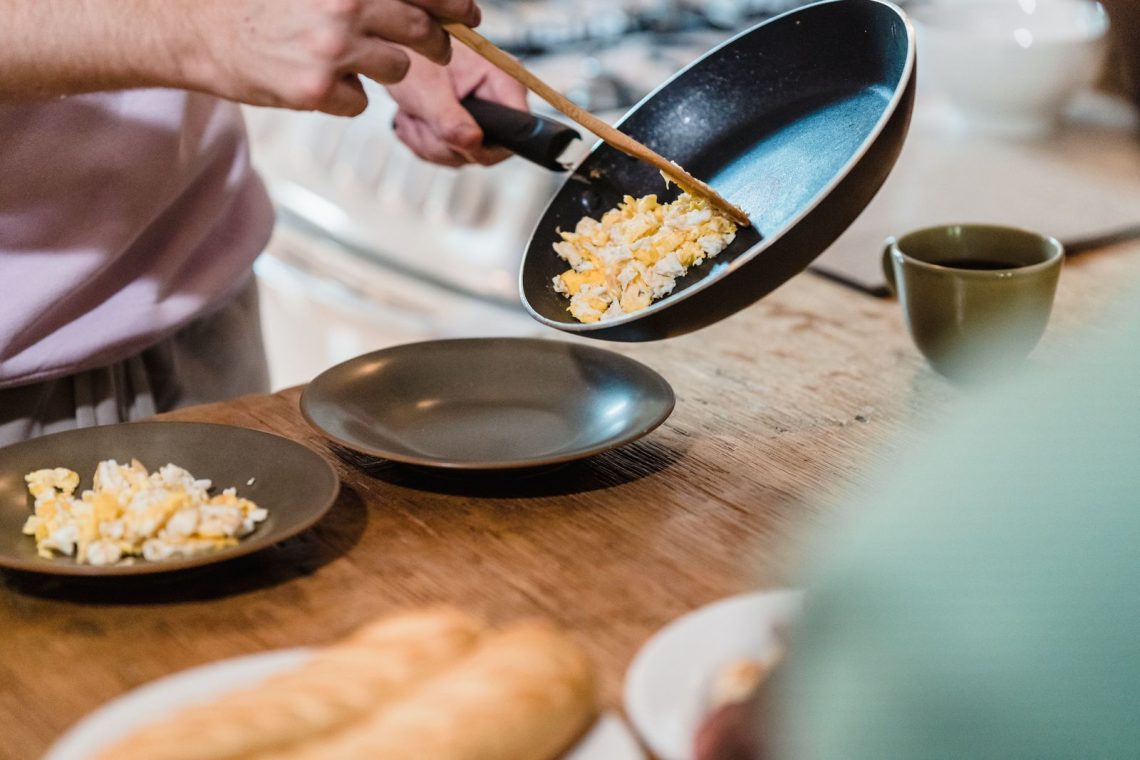
You finally get the last batch of eggs out of the pan, turn around, and the first batch is lukewarm and rubbery. If you’ve ever wondered how to keep scrambled eggs warm without turning them into a dry, squeaky mess, the answer comes down to two things: holding them hot enough to be safe, and cooking them so they can handle the wait.
This guide covers every method that works at home, from a 10-minute hold for the family to a two-hour brunch buffet, plus the cooking tricks that keep held eggs soft and a printable recipe for creamy scrambled eggs for a crowd.
This post contains Amazon affiliate links. As an Amazon Associate I earn from qualifying purchases.
How to keep scrambled eggs warm
Cook the eggs until just set, keep them covered in a preheated slow cooker, low oven or chafing dish at 140°F or warmer, stir gently now and then, and serve them within about two hours.
- Hold at 140°F+Use a thermometer: some warmers run cooler than you’d think.
- Undercook slightlyPull them soft and moist; they keep firming while held.
- Add a little dairyCream cheese, sour cream or butter keeps them creamy.
- Watch the clockBest within about 2 hours, then refrigerate leftovers.
The temperature that keeps scrambled eggs warm and safe
Eggs are a perishable food, so “warm” has a specific meaning here. The FDA’s guidance for serving safe buffets says hot foods should be held at an internal temperature of 140°F or warmer, in chafing dishes, slow cookers or warming trays. Between 40°F and 140°F is the “danger zone,” where bacteria multiply quickly.
Two details catch people out:
- Some warmers aren’t hot enough. The FDA notes that some warmers only hold food at 110°F to 120°F, so check yours before you rely on it. An instant-read thermometer (paid link) settles it in seconds.
- The 2-hour rule. Cooked egg dishes shouldn’t sit at room temperature for more than 2 hours, or 1 hour when it’s above 90°F, such as at an outdoor brunch. If the eggs have dropped below 140°F for longer than that, throw them out.
Cook the eggs fully first, too. The USDA’s egg safety guidance says egg dishes should reach 160°F, and scrambled eggs should have no runny, liquid egg left. “Soft” means moist curds, not wet ones.
8 ways to keep scrambled eggs warm (and when to use each)
The best method depends on how many people you’re feeding and how long the eggs need to wait. Here’s the short version:
| Method | Best for | Realistic hold |
|---|---|---|
| Warm plates + lid | 1 to 4 people, eggs served right away | 10 to 15 minutes |
| Covered pan off the heat | Finishing toast, bacon or a second batch | 5 to 10 minutes |
| Low oven (200°F) | Family breakfast, staggered batches | Up to about 30 minutes |
| Slow cooker | Brunches, holidays, late risers | Up to about 2 hours |
| Chafing dish | Buffets and parties | Up to about 2 hours |
| Warming tray or buffet server | Countertop buffets | About 1 hour (check the temperature) |
| Water bath / double boiler | Small batches with no gadgets | About 30 minutes |
| Insulated food jar | Lunch boxes, tailgates, camping | 2 to 3 hours |
Hold times are for texture, assuming the eggs stay at 140°F or warmer. Every method dries eggs out eventually.
Serve on warm plates with a lid
Cold plates pull heat out of eggs fast. Warm the plates in a 200°F oven for a few minutes, or run them under hot water and dry them. Then cover the plated eggs with an upturned bowl or a lid until everyone sits down.
Leave them in the pan, covered, off the heat
Slide the pan off the burner the moment the eggs are just set and put a lid on. The pan’s stored heat keeps them warm while you finish the toast. Don’t leave them on a low burner, which keeps cooking them.
Hold them in a low oven
Heat the oven to 200°F and transfer the eggs to an oven-safe dish. Cover the dish tightly with foil or a lid so the surface doesn’t dry. Stir once after 15 minutes. The FDA also suggests keeping hot buffet dishes in an oven set at 200°F to 250°F until they go out.
Use a slow cooker on Warm
This is the best hands-off method for a brunch. Preheat the slow cooker (paid link) on Warm for 20 minutes, add the hot cooked eggs, cover, and stir gently every 20 to 30 minutes. Check the temperature after the first half hour: if Warm reads under 140°F, switch to Low.
Set up a chafing dish
A chafing dish (paid link) uses a pan of hot water under the food pan, which is gentler than direct heat. Fill the water pan about an inch deep with hot (not cold) water, light the fuel 15 minutes ahead, then add the eggs and keep the lid closed between servings.
Use a warming tray or buffet server
An electric buffet server (paid link) is handy on a counter, but these are the warmers most likely to run cool. Put the eggs in a covered dish and test them with a thermometer before guests arrive.
Improvise a water bath
No gadgets? Set a heatproof bowl of eggs over a saucepan of barely simmering water, like a double boiler, and cover the bowl. The steam keeps the eggs hot without frying the bottom. Stir now and then.
Pack them in an insulated food jar
For lunch boxes, tailgates or camping, fill an insulated food jar (paid link) with boiling water, close it for 5 minutes, pour the water out, then pack the hot eggs and seal it right away. A full jar stays hotter than a half-empty one.
How to cook scrambled eggs so they stay soft while warm
The real secret to keeping scrambled eggs warm is cooking them for the wait. Eggs held in heat keep losing moisture, so eggs that are perfect in the pan are overdone 30 minutes later. These habits make the biggest difference:
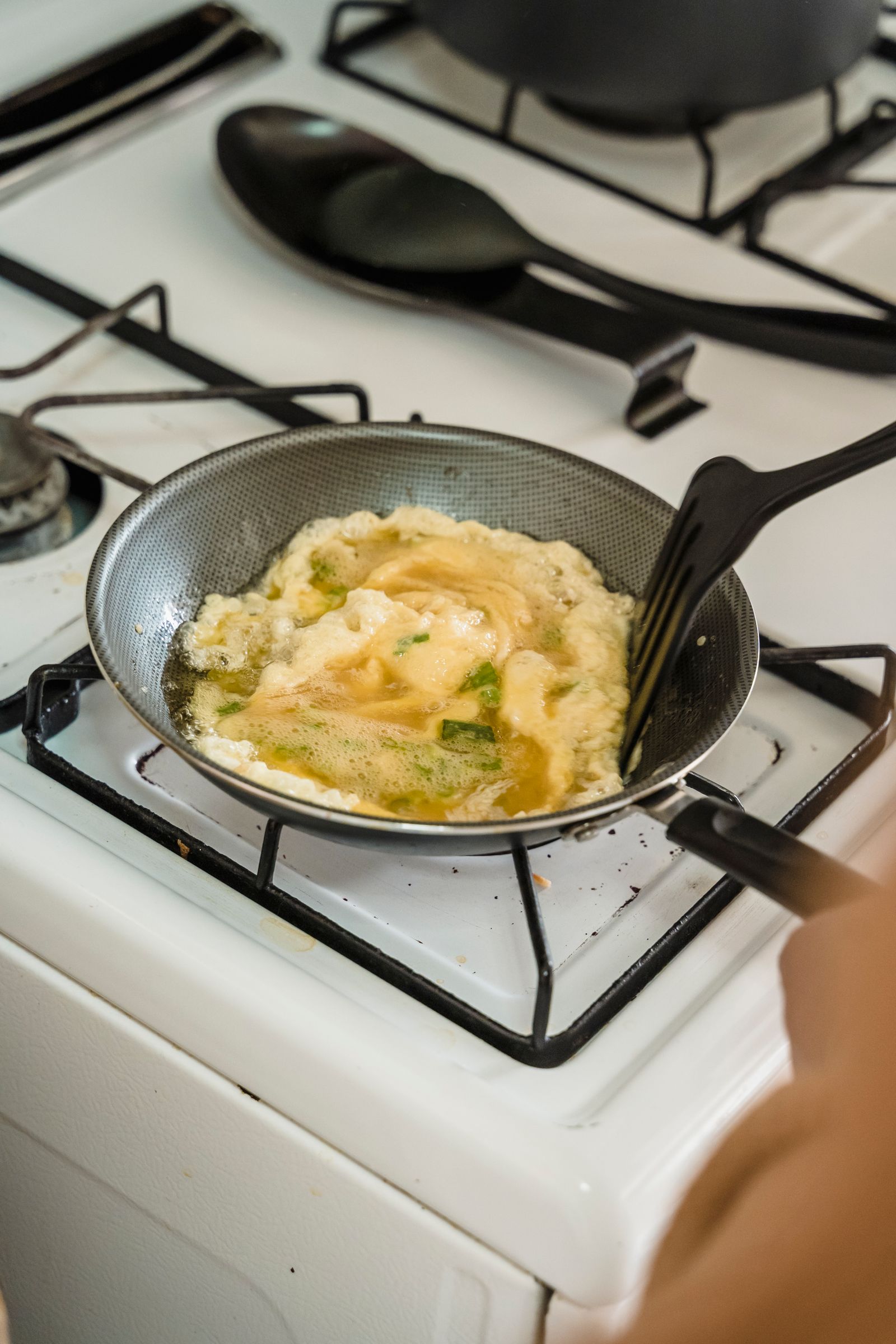
- Cook low and slow. Medium-low heat and slow stirring give larger, softer curds that hold moisture better than small, fast-cooked ones.
- Stop at just-set. Take them off when there’s no runny egg left but the curds still look moist. Carry-over heat and the warmer finish the job.
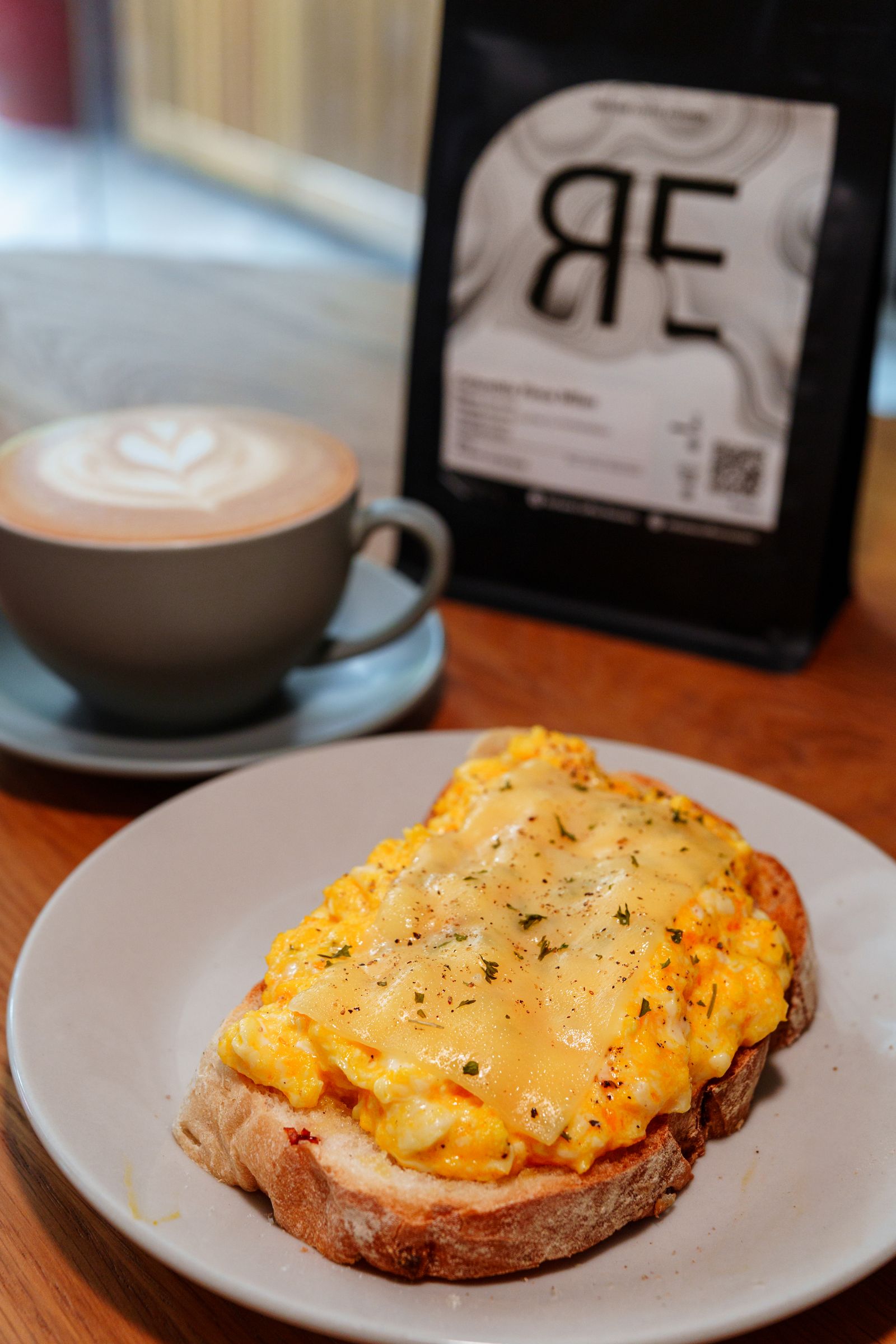
- Add dairy. About 2 tablespoons of milk or half-and-half per 4 eggs, plus a little cream cheese or sour cream folded in at the end, keeps held eggs creamy. Fat coats the proteins so they don’t squeeze out water as quickly.
- Cook in batches. A crowded pan steams the eggs and cooks them unevenly. For 24 eggs, two batches in a 12-inch nonstick skillet (paid link) work well.
- Keep warm milk handy. A spoonful of warm milk stirred in while holding brings back creaminess if the eggs start to look dry.
- Add toppings at serving time. Cheese melted on top turns greasy after an hour, and herbs wilt. Add them on the plate.
A brunch game plan: hot scrambled eggs at 10 a.m.
Here’s how to time scrambled eggs for a crowd so they go out hot and creamy. Make the sheet pan bacon for a crowd in the oven while you cook the eggs on the stove.
9:15 Turn on the slow cooker (Warm) or light the chafing dish. Warm the serving plates.
9:25 Whisk the eggs with milk, salt and pepper. Soften the cream cheese.
9:30 Cook the first batch on medium-low until just set. Fold in cream cheese and move it to the warmer.
9:40 Cook the second batch the same way. Stir both batches together and check they’re at 140°F or warmer.
10:00 Serve. Stir every 20 to 30 minutes and loosen with warm milk as needed.
About 11:30 Wrap up the buffet. Refrigerate leftovers within 2 hours of when they last held 140°F.
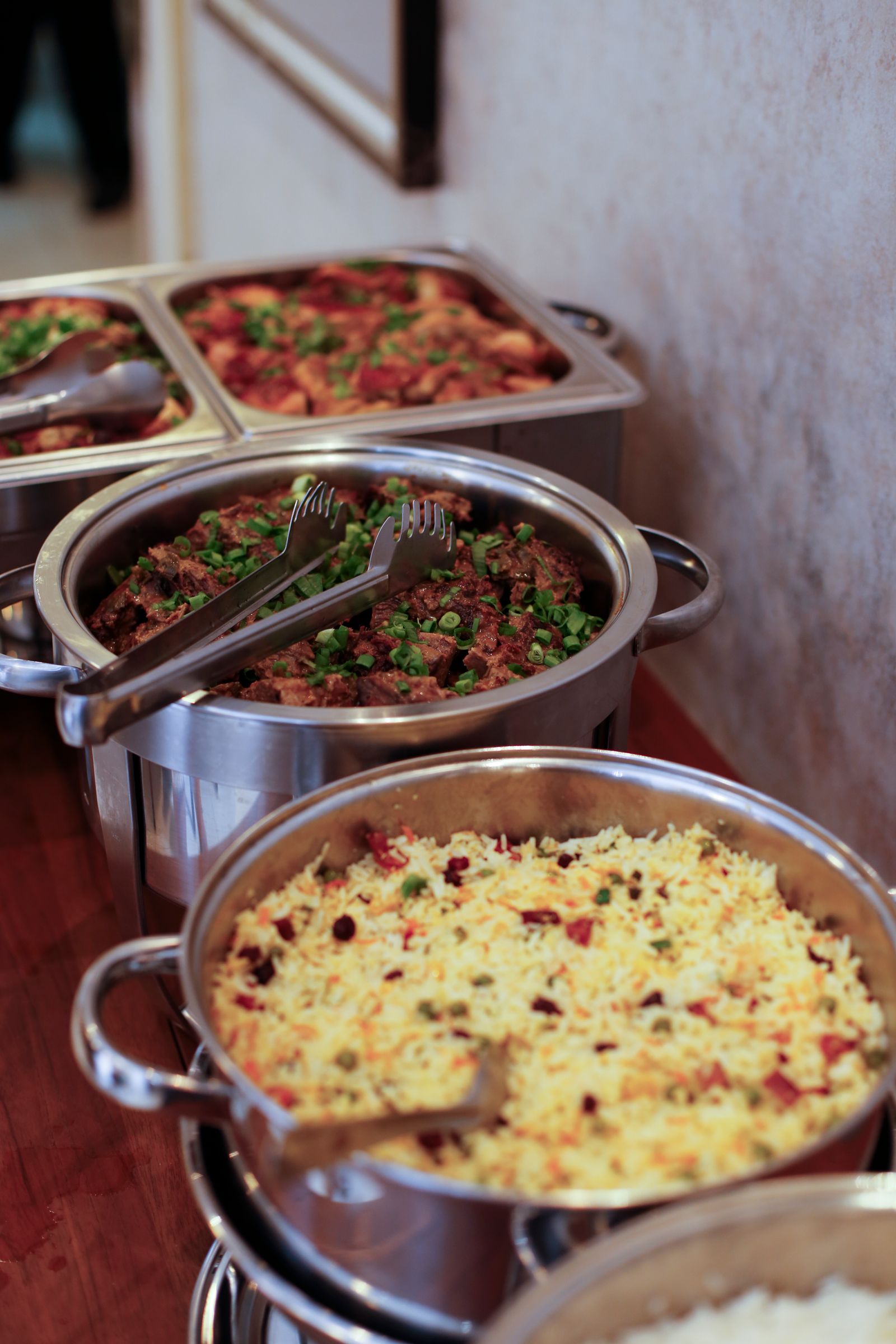
Buffet tip: Instead of one huge pan, put out a smaller dish and keep the rest hot in the slow cooker or a 200°F oven. Replace the dish when it gets low rather than adding fresh eggs on top of eggs that have been sitting out. Late guests get eggs as good as the early ones.
Mistakes that ruin warm scrambled eggs
Do
- Preheat the warmer before the eggs go in
- Check the temperature with a thermometer
- Keep a lid on between servings
- Stir gently from the bottom now and then
- Use a fresh dish rather than topping up
Don’t
- Hold eggs on a stovetop burner
- Reheat cold eggs in a slow cooker or chafing dish
- Cook the eggs dry “so they’ll last”
- Leave them uncovered under a fan or open window
- Keep them going past about 2 hours
Using a slow cooker or chafing dish to reheat cold eggs is a common mistake. They heat food too slowly, so the eggs spend too long in the danger zone. Always put eggs in the warmer hot, straight from the pan.
What to do with leftover scrambled eggs
Refrigerate leftover scrambled eggs within 2 hours, in a shallow covered container, and eat them within 3 to 4 days. When you reheat them, bring them to 165°F: a covered microwave bowl with a splash of milk, stirred every 20 seconds, is fastest.
Better still, turn them into something new. Leftover eggs are perfect rolled into egg, black bean and pepper breakfast burritos. If you’d rather skip the keep-warm problem altogether next time, a make-ahead broccoli and sun-dried tomato egg bake holds on a buffet beautifully.
How to keep scrambled eggs warm: FAQs
How long can you keep scrambled eggs warm?
For safety, as long as they stay at 140°F or warmer. For texture, about 2 hours in a slow cooker or chafing dish, or about 30 minutes in a low oven. After that, they turn dry and rubbery even when they’re still safe.
What temperature should scrambled eggs be kept at?
Hold them at 140°F or warmer. Check with an instant-read thermometer, because some warmers only reach 110°F to 120°F.
Can you keep scrambled eggs warm in a slow cooker?
Yes. Preheat it on Warm, add the hot cooked eggs, cover and stir every 20 to 30 minutes. If the Warm setting reads below 140°F, use Low. Don’t cook raw eggs in it for a crowd or use it to reheat cold eggs.
How do you keep scrambled eggs warm in the oven?
Put them in an oven-safe dish, cover tightly with foil, and hold them at 200°F. Stir once after about 15 minutes and serve within about 30 minutes for the best texture.
How do restaurants keep scrambled eggs warm?
Mostly with steam tables and chafing dishes that use hot water under the food pan, plus warmed plates. Buffets also cook eggs in smaller batches and swap in fresh pans often rather than holding one big batch for hours.
How do you keep scrambled eggs from drying out?
Cook them slowly until just set, add a little milk and cream cheese or sour cream, keep them covered, and stir in a spoonful of warm milk if they start to look dry.
Why do scrambled eggs turn green in a warmer?
The USDA notes that scrambled eggs held on a steam table too long can turn greenish. It’s a sign they’ve been kept hot for too long. Hold smaller batches and swap in fresh pans more often.
Can you make scrambled eggs ahead of time and reheat them?
You can. Cool them quickly, refrigerate within 2 hours and reheat to 165°F before serving. Freshly cooked eggs held warm taste better, but reheated eggs work for burritos and breakfast bowls.
How many eggs do I need for a crowd?
Plan on about 2 large eggs per adult when scrambled eggs are one of several dishes, and 3 if they’re the main event. The recipe below uses 24 eggs for about 12 servings.
The bottom line on keeping scrambled eggs warm
Keeping scrambled eggs warm is really about two habits: hold them at 140°F or warmer, and cook them soft enough to survive the wait. For a quick family breakfast, warm plates and a lid are all you need. For a brunch, a preheated slow cooker or chafing dish, a little cream cheese and a gentle stir every half hour will keep them creamy for up to about two hours. The printable recipe is right below.
Printable recipe: creamy scrambled eggs for a crowd
Use the Print Recipe button in the card for a clean page with just the ingredients, steps and notes.
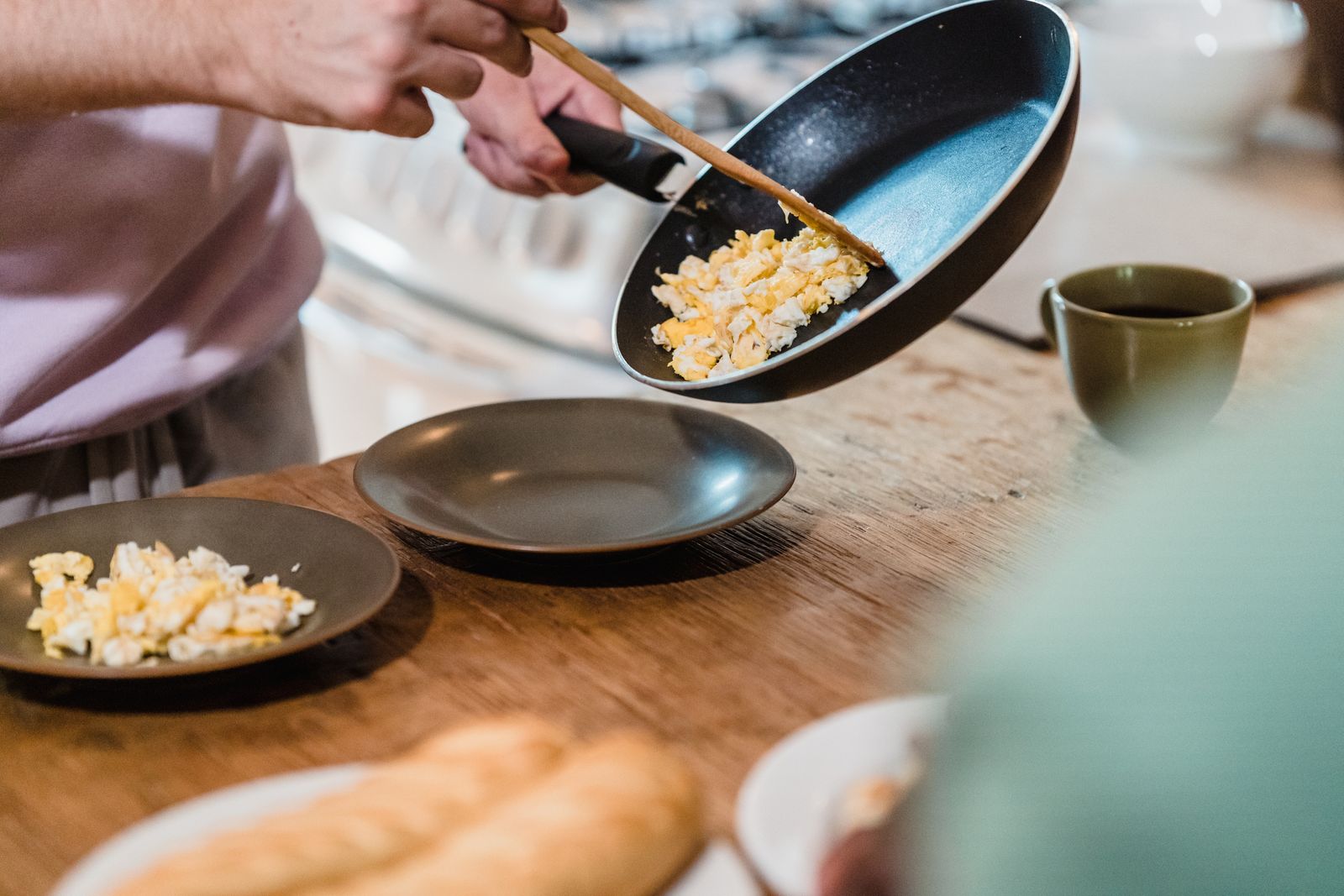
Creamy Scrambled Eggs for a Crowd (Keep-Warm Method)
Ingredients
Equipment
Method
- Turn the slow cooker to Warm (or Low if your Warm setting runs cool) at least 20 minutes ahead, or heat the oven to 200°F with an oven-safe dish inside. Warm the serving plates too if you can.
- Whisk the eggs, 1 cup milk, salt and pepper in a large bowl until no streaks of white remain.
- Melt 2 tablespoons butter in the skillet over medium-low heat. Add half the egg mixture and stir slowly, pushing the curds from the edges to the center, until the eggs are set with no runny liquid but still soft and moist, 6-8 minutes. Don't cook them dry; they keep firming while they're held.
- Off the heat, fold in half the cream cheese until it melts into the eggs. Transfer to the preheated slow cooker or dish and cover. Repeat with the remaining butter, eggs and cream cheese.
- Stir the batches together and check with an instant-read thermometer: the eggs should read 140°F or warmer. If not, turn the slow cooker to Low or raise the oven to 225-250°F.
- Keep covered. Every 20-30 minutes, stir gently from the bottom and add a spoonful of warm milk if the eggs look dry. Serve within about 2 hours for the best texture, topped with chives.