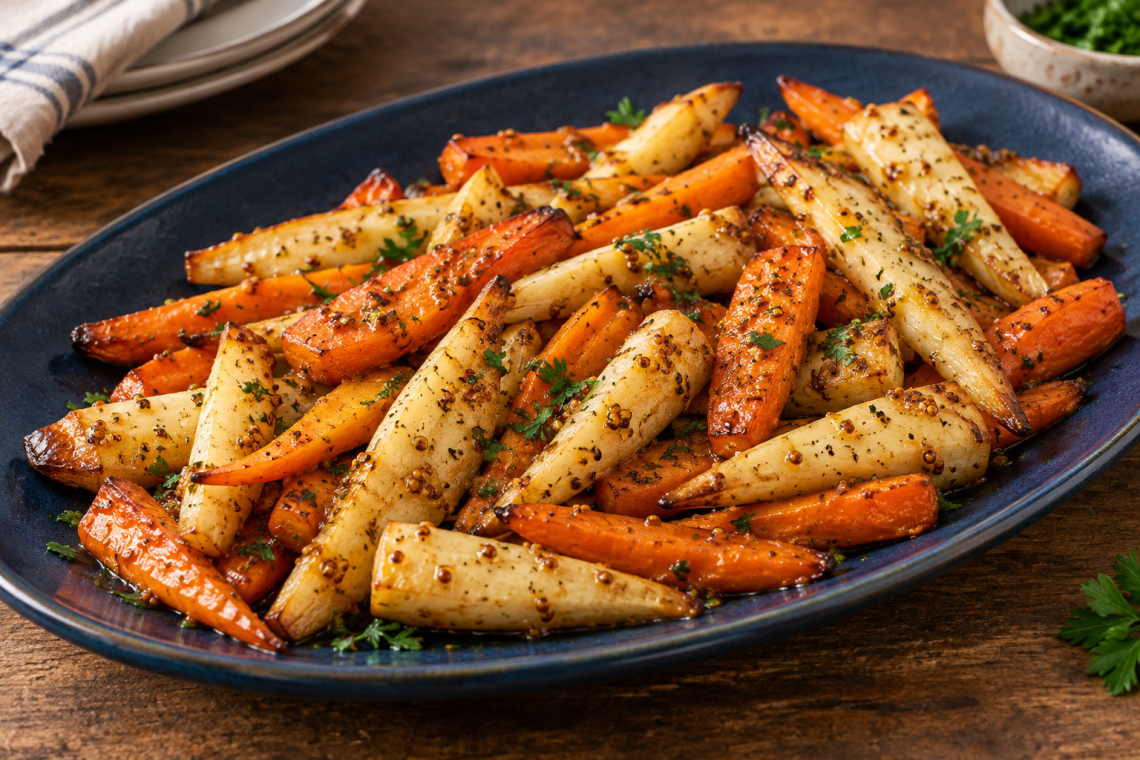
These oven roasted carrots and parsnips with maple mustard bring together golden edges, tender centers, and a lightly tangy finish. The carrots supply familiar sweetness; the parsnips add an earthy, almost nutty flavor. A small amount of maple syrup makes the vegetables glossy without turning this savory side into a sticky dessert.
The method has two distinct stages: roast the roots with oil and thyme first, then add the maple-mustard mixture when they are almost tender. That order gives the vegetables time to cook before the sugary coating reaches the hot pan. Below, you will find clear cutting instructions, a practical pan guide, a doneness check, and solutions for the problems that can happen along the way.
Serve them with a simple weeknight main or make a larger batch for a holiday table. The printable recipe at the end keeps the quantities and essential steps together when you are ready to cook.
Ingredients and what each one does
For the vegetables
- ¾ pound carrots, scrubbed or peeled
- ¾ pound parsnips, peeled and trimmed
- 2 tablespoons olive oil, divided between the pan and vegetables
- ½ teaspoon fine salt
- ¼ teaspoon black pepper
- ½ teaspoon dried thyme
For the maple-mustard finish
- 1 tablespoon pure maple syrup
- 1 tablespoon whole-grain mustard or Dijon mustard
- 1 teaspoon apple cider vinegar
- 1 teaspoon water
- 1 tablespoon chopped parsley, optional, for serving
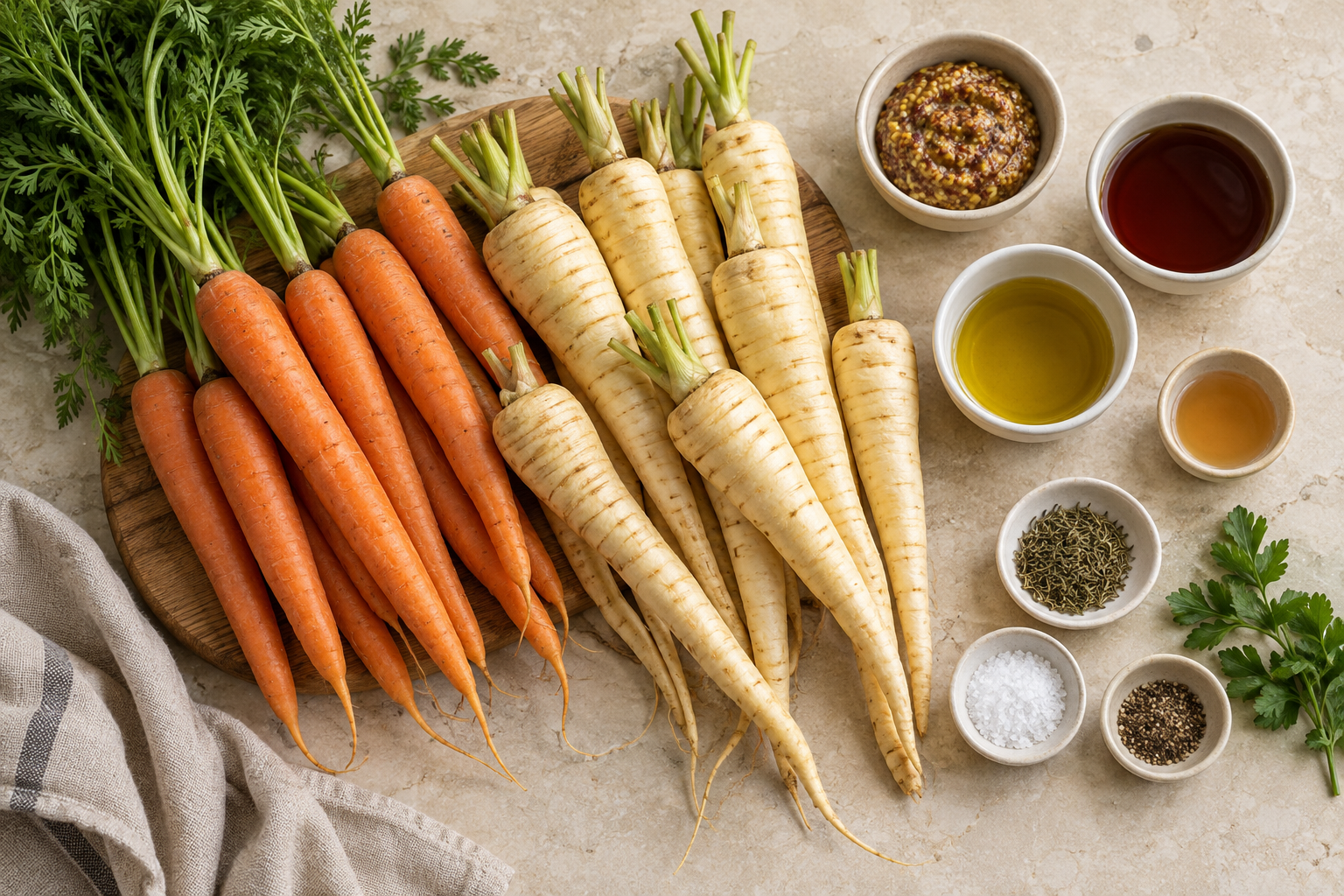
Choose roots that are easy to cut evenly
Look for firm carrots and parsnips without soft, slimy, or badly shriveled areas. Medium parsnips are convenient because their thick ends need less trimming than very large roots. Curved vegetables are fine: you will cut them into shorter sections before making batons, so they do not need to be perfectly straight.
A bag of narrow carrots and a few very wide parsnips can still cook together. The preparation matters more than their original size. Think about the thickest part of the finished pieces, rather than trying to match every vegetable from the grocery store. Remove damaged areas before measuring out the amount you plan to roast.
Understand the glaze before changing it
Pure maple syrup contributes sweetness and maple flavor. Mustard supplies a savory, tangy counterpoint, while the small amount of vinegar brightens the finish. The teaspoon of water loosens the mixture so it spreads over the vegetables; it is not intended to create a sauce in the bottom of the pan.
Whole-grain mustard leaves visible seeds and a textured coating. Dijon makes a smoother glaze and can taste sharper, depending on the brand. Neither option requires a different cooking method. Stir the mustard before measuring if liquid has separated in the jar, then taste the finished glaze with a clean spoon.
Use prepared mustard from a jar, not dry mustard powder. The powder is concentrated and lacks the liquid and seasoning already present in Dijon or whole-grain mustard, so a tablespoon-for-tablespoon swap would change this small glaze substantially.
Fine salt is specified because the same teaspoon measure of different coarse salts can contain different amounts of salt. If you substitute a coarse variety, start conservatively and adjust the cooked vegetables at the table. Keep the measured maple syrup modest on your first batch; adding more sugar changes how quickly the coating darkens.
Prepare the carrots and parsnips for even cooking
Wash the vegetables before peeling or cutting. Carrots can be scrubbed thoroughly and left unpeeled if their skins are thin and sound. Peel the parsnips for a smoother result, then trim the tops and damaged ends. Dry the vegetables before seasoning so the oil coats their surfaces instead of sliding over excess water.
Use thickness as your cutting guide
Aim for pieces about ½ inch thick at their widest point and generally 2–3 inches long. Cut a long root across into manageable sections. Split a broad section lengthwise, place the flat face on the board, and cut it into quarters or narrower batons. Leave slender tips longer, or keep them whole when they are already the right thickness.
You do not need identical rectangles. A slightly curved carrot baton and a straight parsnip piece can cook at a similar pace if their thickest parts match. Avoid turning every narrow tip into a tiny piece simply to make all the lengths equal; those small fragments can dry out before the broad pieces soften.
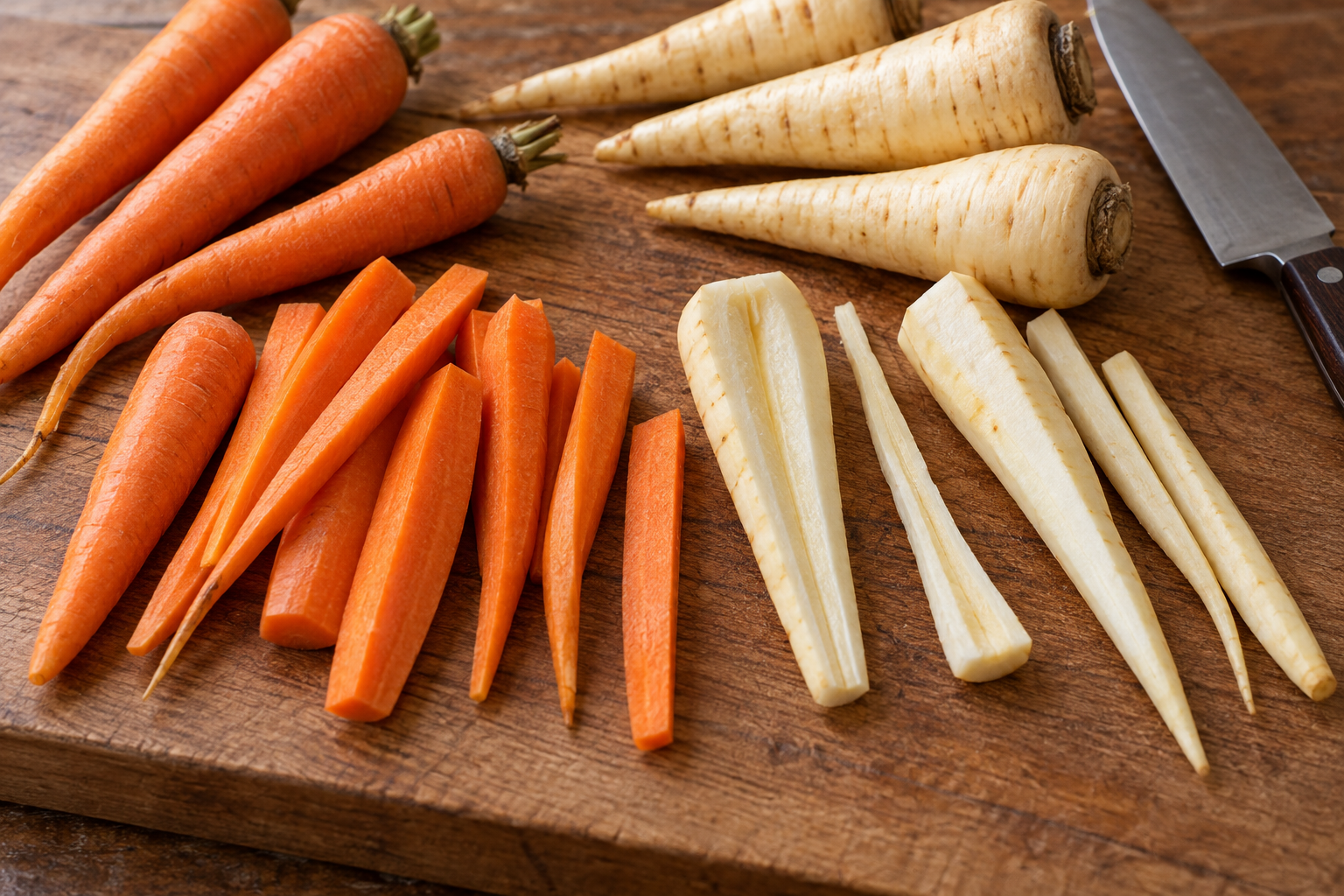
Remove a genuinely woody parsnip core
Split a large parsnip and inspect its center. If there is a noticeably hard, fibrous strip, cut it out carefully while the piece rests on its flat side. Small, tender parsnips do not automatically need coring. Illinois Extension’s guide to parsnips explains why woody cores in larger roots are worth removing.
Do this before tossing with oil. Once the vegetables are roasted, a fibrous strip is harder to trim neatly, and cooking the whole tray longer may soften the surrounding flesh without improving that tough center.
Set up the pan so the vegetables can brown
For the 1½ pounds of vegetables in this recipe, use an 18-by-13-inch rimmed metal sheet. Spread the pieces in one layer with visible gaps. A deep casserole dish holds the vegetables in a smaller footprint and restricts airflow around them, making it harder to get the same browned edges.
The oil should leave a thin sheen on the vegetables and the cooking surface. Use a little of the measured 2 tablespoons to lightly grease the sheet, then toss the roots with the remainder. Check the mixing bowl for oil left at the bottom and scrape that onto the vegetables before reaching for more.
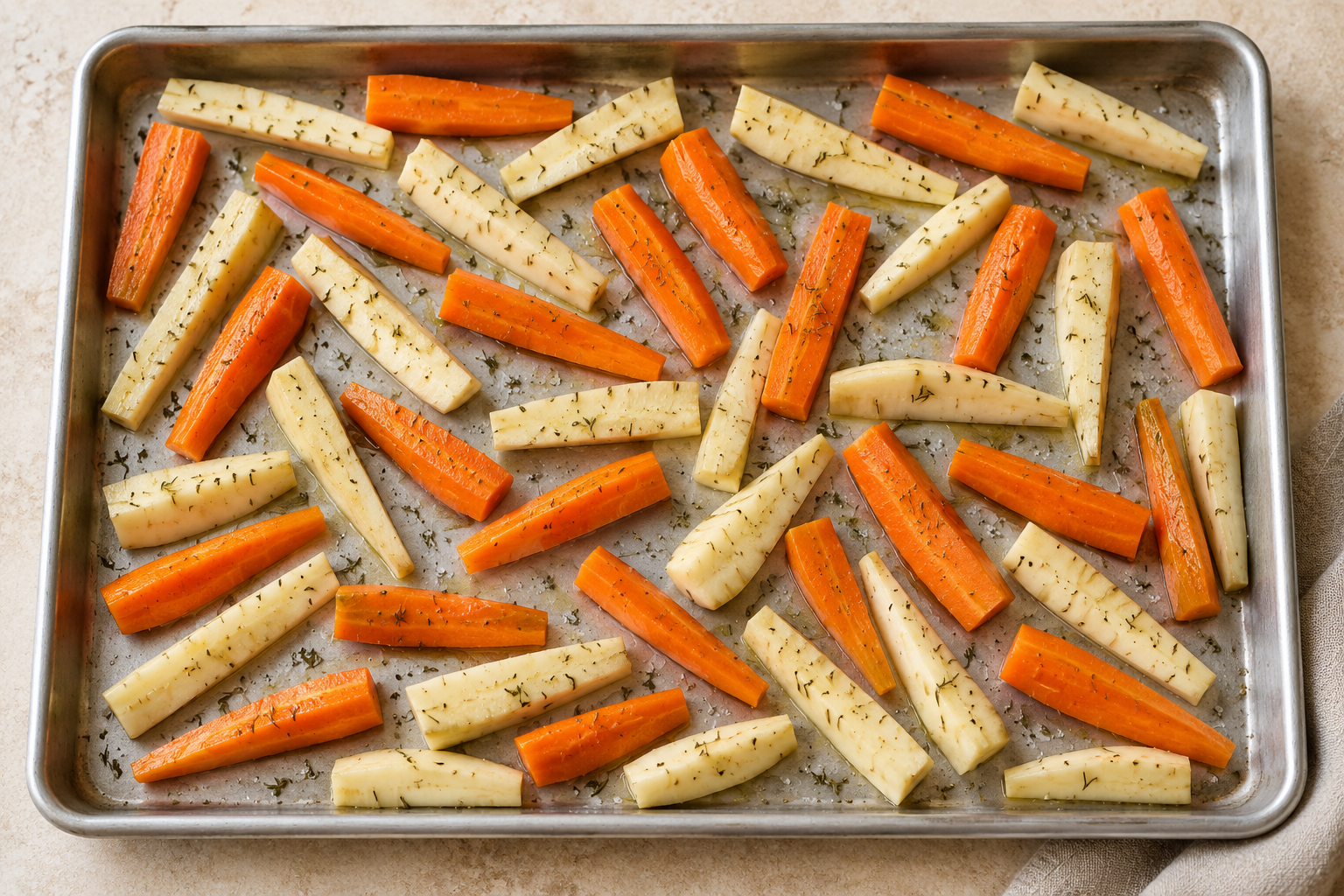
Arrange a broad cut side against the metal where possible. Keep the narrow tips visible, so you can easily find and remove any that finish early. If the pieces overlap after spreading them out, divide the batch between two sheets. More space is more helpful here than raising the oven temperature to compensate for crowding.
Parchment can simplify cleanup, but check that its package allows 425°F and keep it clear of heating elements. Expect some difference in bottom browning compared with direct contact with metal. A dark sheet may color the bottoms sooner than a light one, so examine the underside of a piece when you turn the vegetables.
Use the center oven rack for one sheet. With two sheets, leave room for air to circulate and swap their rack positions when turning the vegetables. Watch each tray separately: the one closer to a heating element may be ready first.
How to make oven roasted carrots and parsnips with maple mustard
Heat the oven and season the roots
Heat the oven to 425°F / 220°C with a rack in the center. Lightly oil the sheet with a little of the measured olive oil. Put the dry, cut carrots and parsnips in the large bowl and toss with the remaining oil, fine salt, pepper, and dried thyme. Turn the pieces over in the bowl until their surfaces are lightly coated.
Spread out and begin roasting
Arrange the vegetables in a single layer on the sheet. Roast for 15 minutes before turning them. Use a thin spatula to lift and flip the pieces, gently releasing any that have caught against the metal. Separate pieces that have drifted into a pile, and rotate the pan front to back if one end is browning faster.
Give the centers time to soften
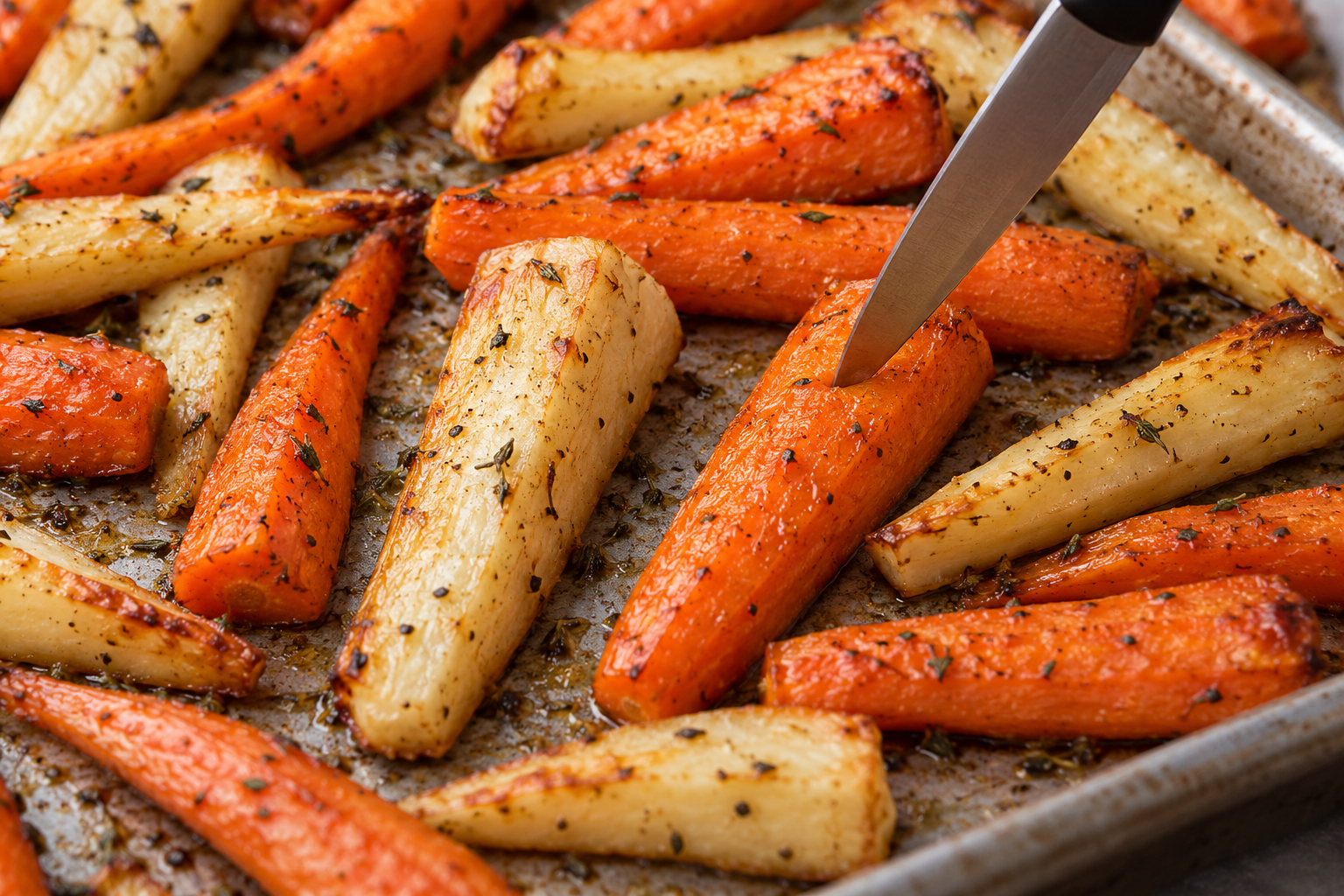
Roast for another 8–12 minutes, then check one thick carrot and one thick parsnip with the tip of a small knife. At this stage, the knife should enter with only slight resistance. If either center is still firm or crunchy, continue roasting in 5-minute intervals before adding the glaze. Remove any narrow pieces that are already tender and return them for the final coating.

Test a thick piece of each vegetable. The centers should be almost tender before you add the glaze. Mix the glaze while the vegetables cook
Stir the maple syrup, mustard, cider vinegar, and water together in the small bowl. Scrape around the sides so the syrup is fully mixed in. A small taste should have both sweetness and tang. Remember that this concentrated mixture will be distributed over the entire tray, so it does not need to taste like a mild sauce on its own. If you are unsure, dab a little onto one cooked carrot piece and let it cool briefly before tasting. That gives a better sense of the balance than tasting only the mustard mixture.
Coat the vegetables, then finish briefly
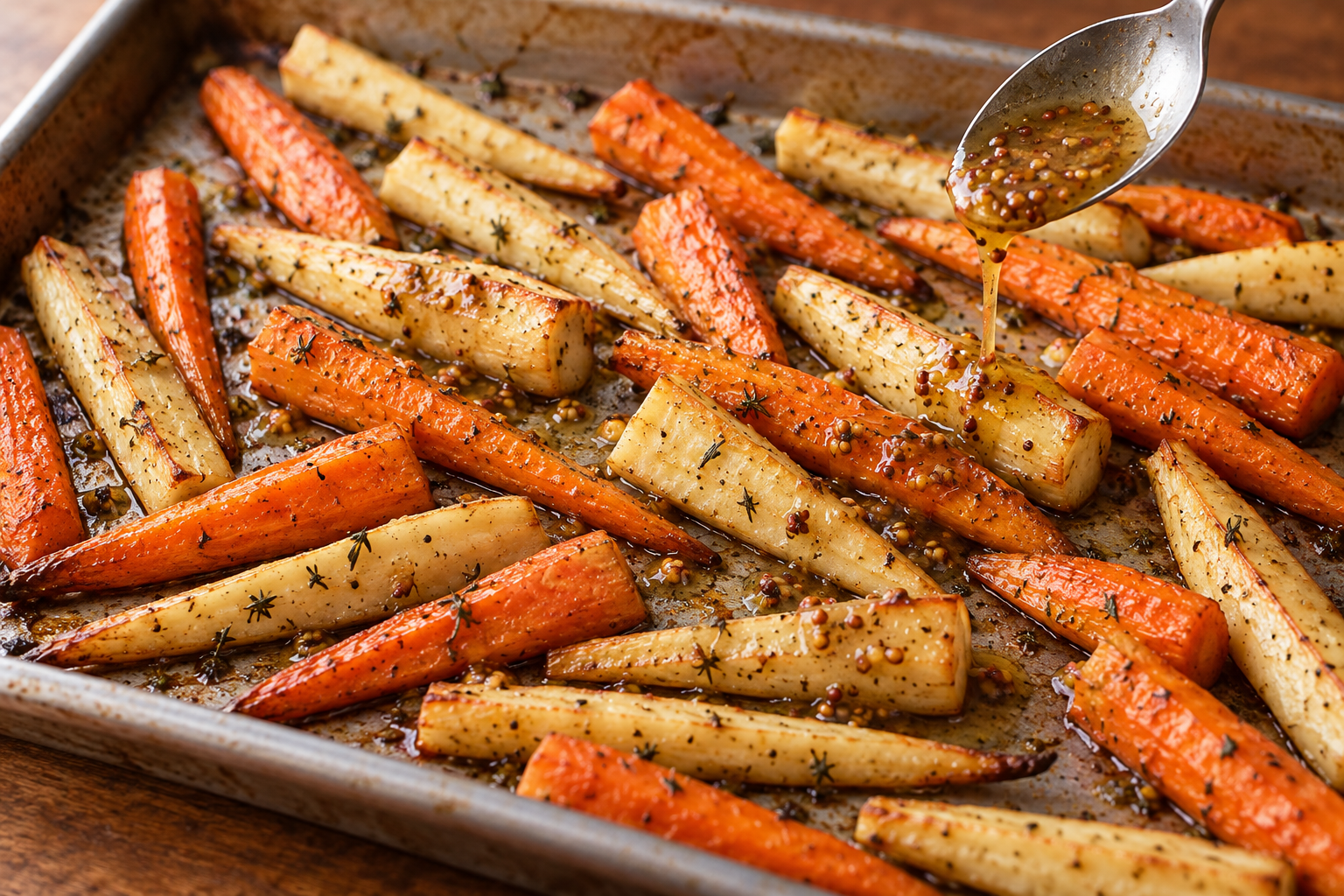
Take the pan out and drizzle the glaze directly over the nearly tender vegetables. Lift and turn gently with the spatula to share the coating, then spread everything back into one layer. Return to the oven for 4–6 minutes, checking closely. Look for a glossy, lightly tacky coating rather than dark syrup bubbling around empty areas of the pan.
Spoon the glaze over the vegetables, toss gently, and return the tray for a brief 4–6-minute finish. Check, transfer, and serve
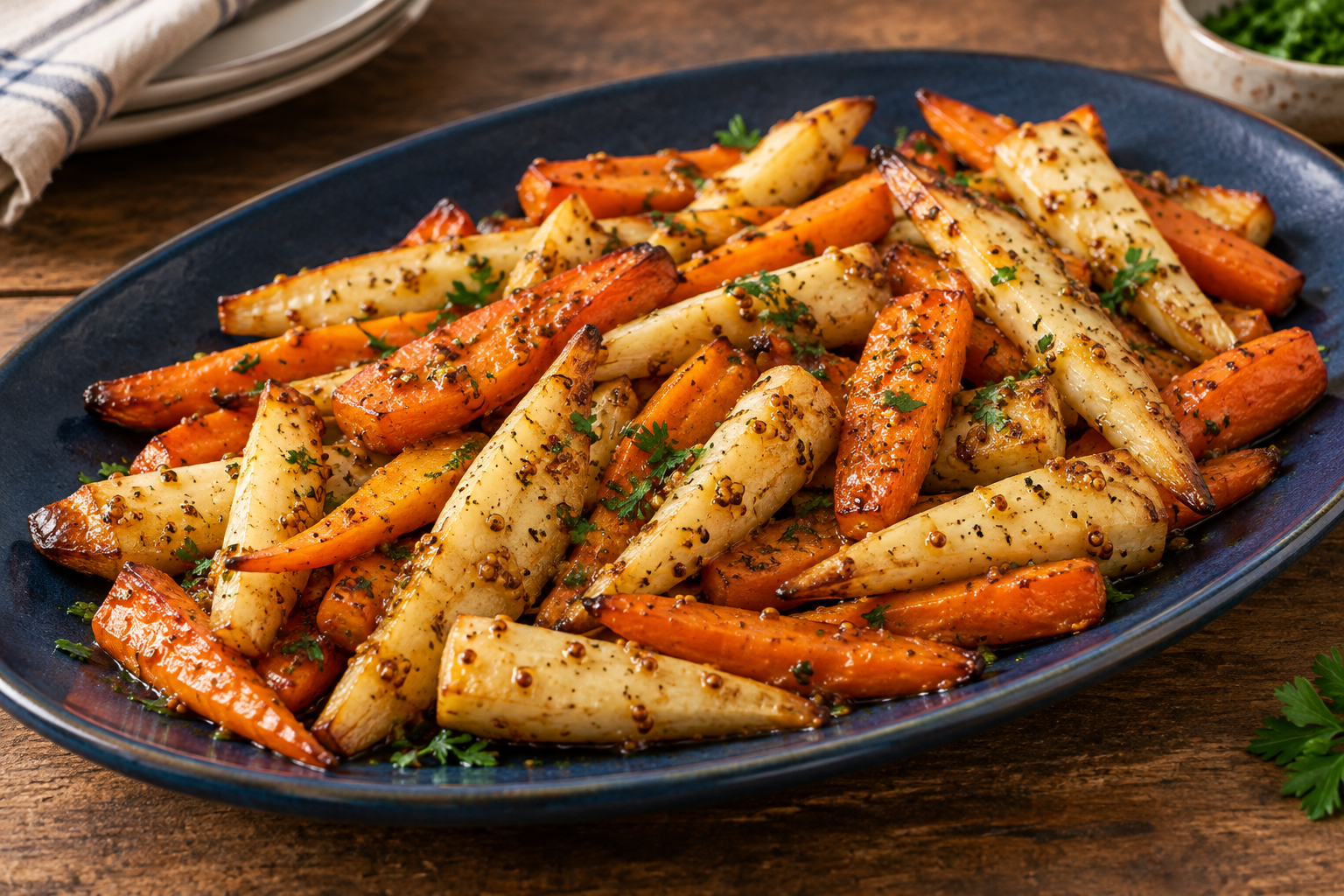
The finished vegetables should be fork-tender, with some browned edges and enough structure to lift without falling apart. Transfer them promptly to a serving dish. Bring along soft, flavorful glaze, but leave bitter scorched patches behind. Add the optional parsley just before serving for a fresh finish.
Fix common roasting problems
Most uneven results come from moisture, piece size, or moving to the glaze stage too early. Use the table to decide what the vegetables need right now; a longer roasting time is not the answer to every problem.
| What you notice | What to do |
|---|---|
| Pale vegetables with liquid around them | Separate crowded pieces onto a second sheet if needed. Let surface moisture cook away before glazing. For the next batch, dry the roots thoroughly and use a shallow metal pan. |
| Dark edges but hard centers | Check whether the pieces are much thicker than ½ inch. Move the tray away from the strongest heat and loosely cover while the centers soften; uncover before adding the glaze. |
| Thin tips are done first | Lift them onto a plate and keep roasting the larger pieces. Return the finished tips when tossing with the glaze so they receive the same seasoning. |
| Glaze is burning on the sheet | Remove the tray and transfer the vegetables away from the scorched areas. Do not stir burned syrup back through the dish. Next time, drizzle over the roots and shorten the final stage. |
| The vegetables taste too sweet | Taste a piece with a few drops of cider vinegar before adjusting the whole dish. At the next cook, try 2 teaspoons maple syrup while keeping the mustard and vinegar unchanged. |
| The coating looks thicker than expected | Check that the glaze was mixed with its teaspoon of water and spread thinly. Do not add more syrup for shine; the aim is a light coating, not a pool of sauce. |
Make the side dish fit your table
For a less sweet version, use 2 teaspoons maple syrup. For a stronger mustard character, choose Dijon, but taste your brand first: heat and saltiness vary. If you are cooking for people who prefer a milder finish, offer extra mustard separately instead of making the entire tray more assertive.
All carrots or all parsnips can replace the mixture; keep the total vegetable weight at 1½ pounds. All carrots give a more uniformly sweet result, while all parsnips emphasize their earthy flavor. Rainbow carrots add color, but thick roots still need the same careful cutting. Different colors are not a reason to skip checking tenderness.
Fresh thyme can replace dried thyme at about 1½ teaspoons. For a rosemary variation, start with ¼ teaspoon finely crushed dried rosemary. Large dried rosemary needles can feel tough against the soft vegetables, so crush them before adding. Parsley is optional and belongs at the end rather than on the pan for the full roast.
If mustard is unavailable, use the maple syrup with 2 teaspoons cider vinegar and the measured water, adding the mixture late as written. The result loses some savory sharpness and will not have the same mustard flavor. Treat this as a variation rather than expecting an identical dish.
For a bright serving variation, add a little finely grated orange zest after roasting. Start with a small pinch on one portion to decide whether you like it. Keep extra liquid off the hot tray; you can adjust the finished vegetables more carefully in the serving dish.
Adjust the batch without crowding the oven
For two side servings, halve every ingredient and use a smaller rimmed sheet with enough room to spread the pieces out. Keep their thickness the same. A smaller batch does not need half the cooking time: each carrot or parsnip piece still has to soften through its center.
For eight side servings, double the ingredients and use two large sheets. Mix the vegetables with oil and seasonings in batches if your bowl is small, then divide the glaze between the trays. This prevents one sheet from receiving most of the mustard while the other gets mostly syrup.
Set two timers if the sheets go into the oven at different times. Swap the upper and lower trays when turning the vegetables, and remove finished portions as needed. If your oven cannot comfortably hold both sheets with room around them, cook in batches and use the reheating approach below before serving.
Plan dinner around the roasting time
Start the vegetables while you prepare a quick stovetop main, then mix the glaze and set out the serving dish during the first roast. After turning the roots, finish a salad or another cold side. When the vegetables are nearly tender, give the final glazing stage your attention; it is short enough that walking away to start another task can mean missing the ideal finish.
For a shared oven, compare temperatures before cooking. A main dish that needs a much cooler oven changes the vegetable schedule. You can roast the vegetables first and reheat them later, or allow more time at the lower temperature and use the knife check. Do not assume the 425°F timing applies unchanged.
These oven roasted carrots and parsnips with maple mustard pair well with roast chicken, baked fish, or skillet pork chops with apples and cabbage. With the pork-and-apple combination, keep the vegetable glaze light so the meal does not become too sweet.
For a meatless plate, serve them beside lentils, white beans, or a simply dressed grain dish. A crisp green salad adds contrast to the tender roots. Use a broad serving platter if possible: spreading the vegetables out shows their browned sides and avoids compressing them into a deep, steamy mound.
Make ahead, store, and reheat
Prepare the ingredients one day ahead
Peel and cut the vegetables up to one day ahead. To limit discoloration on the cut parsnips, cover them with cold water and a little lemon juice in a covered container and refrigerate; Illinois Extension recommends this approach to reduce oxidation. Refrigerate the prepared carrots in a separate covered container. Drain the parsnips and dry both vegetables thoroughly before seasoning.
Mix the glaze separately and refrigerate it in a small covered jar or bowl. Keep the oil and seasonings for cooking time. This separates the knife work from the final meal preparation without putting wet vegetables straight onto the roasting pan.
Store leftovers promptly
Follow USDA leftover guidance: refrigerate in shallow containers within 2 hours, or within 1 hour when the surrounding temperature is above 90°F. Keep the refrigerator at 40°F or below and use refrigerated leftovers within 3–4 days. Do not leave the whole serving platter on the counter until it feels completely cold.
Reheat gently, then check the center
Spread the refrigerated vegetables in a shallow oven-safe dish and cover loosely so the already-cooked glaze does not darken too quickly. Reheat at 350°F, checking the center of the portion with a food thermometer; leftovers should reach 165°F. Timing depends on the amount, starting temperature, and dish, so do not use surface warmth as the only check.
Uncover near the end if you want the edges a little drier. For a small portion, a microwave-safe dish with a vented cover is practical; stir or rearrange midway and check several spots for even heating. Expect a softer result than freshly roasted vegetables, and add fresh parsley after reheating if desired.
Questions before you start
Can I use bagged baby carrots?
Yes, but dry them thoroughly and halve unusually thick pieces lengthwise. Their short length does not guarantee a quick cook. Compare their thickness with the parsnip pieces and test one before glazing, just as you would with cut whole carrots.
Should I boil the vegetables first?
This method starts with raw roots, so boiling is not required. Precooking changes their moisture and timing, making the written roasting schedule less useful. For your first batch, use the specified size and check tenderness during the initial roasting stage.
Can I use frozen carrots or parsnips?
Fresh vegetables are the basis of this recipe. Frozen pieces can release more moisture and vary in size or prior cooking, so their texture and timing will differ. Follow the package’s roasting guidance where provided, and wait for the centers to become nearly tender before adding the glaze.
Is the finish supposed to be crisp?
Expect tender roots with browned edges and a light glaze, not a uniformly crunchy coating. The moisture in the maple-mustard mixture softens some surface crispness. Serve promptly, and avoid piling a cover tightly over the platter if preserving those edges is your priority.
For a dependable tray of oven roasted carrots and parsnips with maple mustard, give the vegetables room to brown, check the thickest centers, and finish with a thin coating of glaze. The recipe below brings the measurements and method together for easy printing.
Printable maple mustard carrots and parsnips recipe
Use the recipe card to print the ingredients and instructions. After cooking, you can leave a star rating and share how you served the vegetables in the comments.
Oven Roasted Carrots and Parsnips with Maple Mustard
Ingredients
Equipment
Method
- Position a rack in the center of the oven and heat to 425°F (220°C). Lightly oil the baking sheet with a little of the measured oil.
- Cut the carrots and parsnips into pieces about 1/2 inch thick at their widest point. Quarter thick tops or cut them into narrower batons; leave naturally thin tips a little longer.
- Pat the vegetables dry. Toss with the remaining oil, salt, pepper and thyme. Spread in a single layer with space between pieces and a broad cut side against the pan where possible.
- Roast for 15 minutes. Turn with a thin spatula, separate crowded pieces and rotate the sheet if one side browns faster. Roast for another 8 to 12 minutes.
- Pierce one thick carrot and one thick parsnip with a small knife. They should be nearly tender with only slight resistance. If either is hard, continue in 5-minute intervals before glazing.
- Stir the maple syrup, mustard, apple cider vinegar and water together in a small bowl.
- Drizzle the glaze directly over the nearly tender vegetables and toss gently. Return to the oven for 4 to 6 minutes, until the coating looks glossy and lightly tacky rather than burned.
- Remove when the vegetables are fork-tender. Transfer promptly to a serving dish, leaving any bitter scorched glaze on the pan. Sprinkle with parsley if using and serve warm.