ONE-SKILLET SUPPER
Skillet pork chops with apples and cabbage turn four everyday pork chops, half a head of cabbage, and two crisp apples into a complete family supper in one pan. The chops are browned first, then finished gently over cabbage and apples in a cider-Dijon pan sauce. The result should be juicy pork with tender-crisp cabbage, softened apple wedges, and enough savory-sweet liquid to spoon over every serving.
This skillet pork chops with apples and cabbage recipe is designed for four 1-inch bone-in chops in a covered 12-inch skillet. The thickness matters more than the clock: begin checking the pork early and remove each chop when its center reaches 145°F, then let it rest for at least three minutes. That temperature-based approach keeps the vegetables moving toward tenderness without sacrificing the pork.
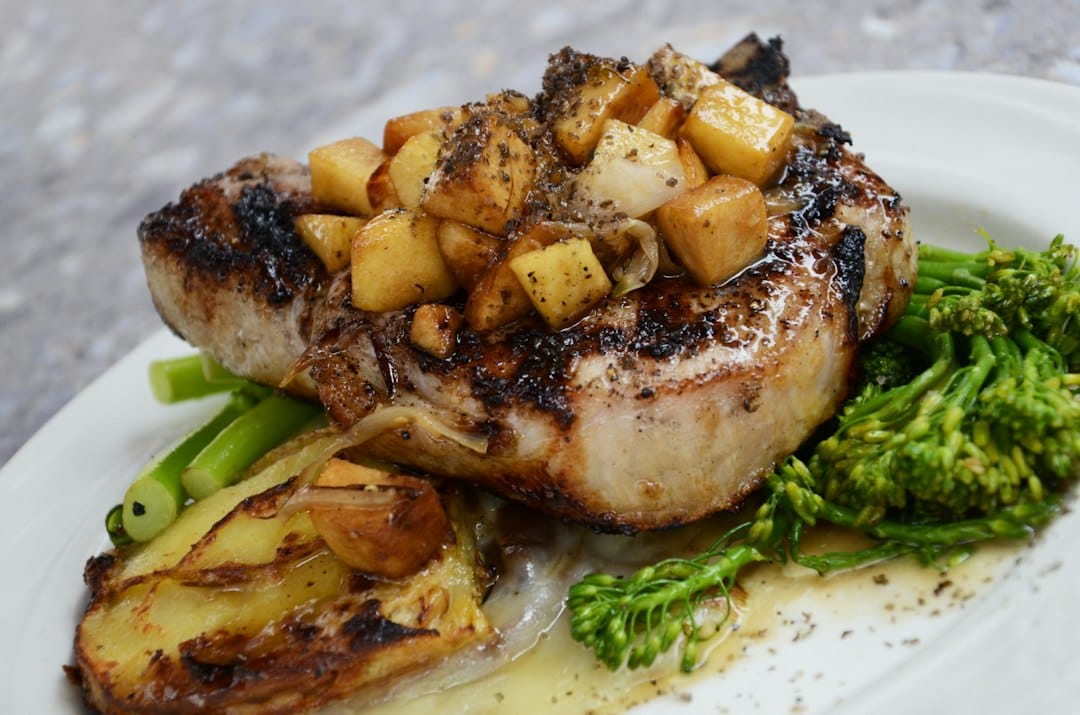
The featured pork-chop photograph shows a different plated dish, offered as serving inspiration; follow this recipe for the cabbage and apple mixture.
Recipe at a Glance
- Yield: 4 servings, one pork chop plus about 1 1/2 cups cabbage and apples per serving
- Prep time: 20 minutes
- Cook time: about 30 to 40 minutes
- Total time: about 50 to 60 minutes
- Pan: Covered 12-inch heavy skillet or 4- to 5-quart braiser
- Pork doneness: 145°F in the thickest portion, followed by at least a 3-minute rest
Ingredients
- 4 bone-in center-cut pork chops, each about 1 inch thick and 7 to 9 ounces
- 1 1/4 teaspoons fine sea salt, divided
- 3/4 teaspoon ground black pepper, divided
- 1 tablespoon neutral high-heat oil, such as avocado or canola oil
- 1 medium yellow onion, about 8 ounces, halved and sliced 1/4 inch thick
- 2 medium firm apples, about 12 ounces total, cored and cut into 1/2-inch wedges
- 1 1/2 pounds green cabbage, cored and sliced into 1/2-inch ribbons
- 2 medium garlic cloves, minced
- 1 teaspoon dried thyme
- 1/2 teaspoon caraway seeds, optional
- 3/4 cup low-sodium chicken broth
- 2 tablespoons apple cider vinegar
- 1 tablespoon Dijon mustard
- 1 tablespoon pure maple syrup
- 1 tablespoon chopped fresh parsley, optional, for serving
Choose the Right Pork Chops
Use chops that are close to the same thickness so they finish together. One-inch bone-in center-cut chops give you enough time to build a browned exterior before the middle is done. Very thin chops can overcook before the cabbage softens, and extra-thick chops may need more covered cooking time than the vegetables.
Boneless chops can work, but they are usually leaner and often thinner. If yours are about 3/4 inch thick, sear them for only 2 to 3 minutes on the first side and about 2 minutes on the second. When they return to the skillet, begin checking their temperature after 2 minutes rather than waiting for the full covered range.
Pick Apples That Hold Their Shape
Choose a firm tart-sweet apple such as Honeycrisp, Braeburn, Pink Lady, or Granny Smith. Softer apples can collapse into the cabbage. Leave the peel on for structure and color, or peel the apples if your family prefers a softer texture. Keep the wedges about 1/2 inch thick so they soften without disappearing.
Measure the Cabbage by Weight
Cabbage heads vary widely. One and a half pounds after removing the core is a dependable amount for a 12-inch skillet. Slice the leaves into roughly 1/2-inch ribbons. Fine shreds wilt too quickly, while large wedges need much longer and prevent the pork chops from sitting evenly in the pan.
Equipment
- 12-inch heavy skillet with a tight-fitting lid, or a 4- to 5-quart braiser
- Instant-read digital food thermometer
- Cutting board and chef’s knife
- Tongs
- Small bowl or 2-cup liquid measuring cup
- Wooden spoon or heatproof spatula
- Large plate for the seared pork chops
A thermometer is essential because pork color is not a dependable doneness test. For a detailed explanation of probe placement and carryover heat, see our guide to knowing when pork chops are done without drying them out.
How to Make Skillet Pork Chops with Apples and Cabbage
- Season the pork. Pat the chops dry with paper towels. Season both sides with 3/4 teaspoon of the salt and 1/2 teaspoon of the pepper. Let the chops stand for 15 minutes while you slice the vegetables and mix the sauce. Do not leave raw pork at room temperature longer than needed for preparation.
- Mix the cooking liquid. Whisk the broth, apple cider vinegar, Dijon mustard, and maple syrup in a small bowl until the mustard is evenly dispersed. Set it beside the stove.
- Heat the skillet. Place the empty skillet over medium-high heat for about 2 minutes. Add the oil and swirl to coat the bottom. The oil should shimmer but not smoke heavily.
- Brown the chops. Add the pork chops in a single layer. Sear without moving them for 3 to 4 minutes, until the first side is deeply golden and releases easily. Turn and brown the second side for 2 to 3 minutes. Transfer the chops to a clean plate. They will not be fully cooked yet.
- Start the onions and apples. Reduce the heat to medium. Add the onion and cook for 3 minutes, stirring and scraping up the browned bits. Add the apple wedges and cook for 2 minutes, turning them once. They should pick up a little color while remaining firm.
- Wilt the cabbage. Add about half of the cabbage, stir for 1 minute, then add the rest. Sprinkle in the garlic, thyme, optional caraway, remaining 1/2 teaspoon salt, and remaining 1/4 teaspoon pepper. Cook for 4 minutes, turning the mixture from the bottom, until the cabbage loses some volume.
- Steam the vegetables. Pour in the broth mixture and scrape the pan. Bring it to a gentle simmer, cover, and cook for 7 to 9 minutes. Stir once halfway through. The cabbage should be partly tender but still have some bite.
- Return the pork. Nestle the chops and any juices from the plate into the cabbage. Cover and reduce the heat to medium-low. Cook for 5 to 10 minutes, checking the smallest chop at 5 minutes. Insert the thermometer sideways into the thickest meaty section without touching bone. Remove each chop as soon as it reaches 145°F.
- Rest and finish the pan. Place the chops on a clean serving plate and rest them for at least 3 minutes. If the cabbage is firmer than you like, cover the skillet and cook it for 2 to 4 minutes more. If the pan contains excess liquid, simmer uncovered for 2 to 3 minutes, stirring, until the sauce lightly coats the cabbage.
- Taste and serve. Taste the cabbage before adding more salt because the pork juices and broth contribute seasoning. Return the chops to the skillet or divide the cabbage and apples among four plates. Spoon the pan juices over the pork and add parsley if desired.
Use two plates and keep the cooking sequence moving
Set out one plate for the temporarily removed, partially cooked chops and a separate clean plate for the finished pork. Once a plate has held undercooked meat or its juices, it should not receive the ready-to-eat chops until it has been washed. Use clean utensils for the final transfer, too.
Prepare the vegetables and whisk the sauce before searing. The pause while the cabbage starts cooking is part of this dinner’s cooking sequence, not a make-ahead stopping point. Do not brown the chops, refrigerate them partially cooked, and plan to finish them another day. USDA’s pork guidance specifically warns against partial cooking followed by refrigeration and later finishing.
Give each chop its own finishing check
Four chops can differ in shape even when they are described as one inch thick. Keep track of the smaller pieces as they return to the skillet, and begin checking them first. Avoid overlapping the meaty portions; each should be accessible to the thermometer without digging through the cabbage.
When a chop reaches 145°F in its thickest meaty area, transfer it to the clean finishing plate and allow at least three minutes of rest. Do not leave it simmering only because another chop needs longer. Finish the cabbage separately if necessary and spoon the hot pan sauce over the rested pork at serving.
This arrangement also keeps the counter clearer: the raw-meat preparation area stays separate from the clean plate, serving utensils, and finished vegetables.
Troubleshooting
| What you notice | What to do |
|---|---|
| The Pork Chops Are Browning Too Fast | Turn the heat down to medium and move the pan briefly off the burner. A dark golden crust is useful; blackened fond will make the sauce bitter. If the skillet has burnt patches, carefully wipe them out after moving the pork to its plate, then add a fresh teaspoon of oil before cooking the onion. |
| The Pork Is Done Before the Cabbage | This is normal when chops are thinner than one inch. Remove the pork at 145°F, give it the full three-minute rest, and loosely cover it. Continue simmering the cabbage until the thick ribs are tender. Spoon hot sauce over the pork at serving instead of returning it to the heat. |
| The Cabbage Is Watery | Remove the cooked pork and simmer the vegetables uncovered over medium heat for 2 to 5 minutes. Stir often as the liquid reduces. Do not add flour or cornstarch at the beginning; thickening too early makes it harder for the cabbage to steam evenly. |
| The Pan Looks Dry | Different lids release different amounts of steam. If the skillet becomes dry before the cabbage is tender, add broth 2 tablespoons at a time. The bottom should remain moist, but the vegetables should not float. Check that the heat is at a gentle simmer rather than a rapid boil. |
| The Sauce Tastes Too Sharp or Too Sweet | If the apples are very tart, the vinegar may stand out. Stir in an additional teaspoon of maple syrup after cooking. If the apples are especially sweet, add 1 teaspoon of cider vinegar. Make these corrections only after the cabbage has reduced because evaporation concentrates both sweetness and acidity. |
Substitutions and Their Limits
- Boneless pork chops: Use four chops 3/4 to 1 inch thick and start checking much earlier. Do not apply the bone-in timing without a thermometer.
- Red cabbage: It may need 5 to 8 additional minutes and will tint the apples and sauce purple. Its flavor is slightly earthier, but the measured liquid can stay the same.
- Pears: Firm Bosc or Anjou pears can replace the apples. Add ripe pears with the second half of the cabbage so they do not break down.
- Vegetable broth: It can replace chicken broth, although the finished sauce will taste lighter. Keep it low sodium so you can season after reduction.
- Honey: Use 2 teaspoons in place of the tablespoon of maple syrup. Honey tastes sweeter and can darken more quickly on the skillet surface.
- Fresh thyme: Use 1 tablespoon of fresh leaves instead of 1 teaspoon dried thyme.
- Very thin chops: Chops thinner than 1/2 inch are not a direct substitute. Sear them quickly, cook the vegetables completely, then warm the chops on top only long enough to reach 145°F.
Serving Ideas
The pork, cabbage, and apples make a substantial plate on their own. For hungrier families, add boiled baby potatoes, mashed potatoes, crusty bread, or cooked barley to catch the pan juices. Keep the starch simply seasoned so it does not compete with the cider-Dijon sauce.
For a brighter table, offer crisp quick-pickled onions in a small bowl and let each person add a few. If you are serving a larger group and want another green vegetable, roasted asparagus with Parmesan can cook separately while the skillet finishes.
If you want to use the same apple-Dijon flavor idea with a different cut on another night, review the temperature principles in our pork tenderloin temperature guide; timing changes, but temperature and rest remain the dependable controls.
Storage and Reheating
Refrigerate leftovers within two hours of cooking in shallow, covered containers. Store the pork with some pan liquid so the surface does not dry out. Keep the cabbage and apples in the same container or separately, depending on how you plan to reheat them. Use refrigerated leftovers within 3 to 4 days.
For gentle stovetop reheating, place one chop and a portion of vegetables in a covered skillet with 1 to 2 tablespoons of broth. Warm over medium-low heat, turning the chop once, until the food reaches 165°F. In a microwave, cover the serving loosely, heat at reduced power in short intervals, stir the vegetables, and verify 165°F in the pork and several parts of the vegetables.
Freezing is possible, but the thawed apples and cabbage will be softer than the freshly cooked dish. For the best texture, treat this as a refrigerator-leftover recipe rather than a freezer meal.
Food-safety reference: USDA guidance for cooling, storing and reheating leftovers. Use the earlier deadline when an ingredient was prepared before this meal.
Practical Questions
Can I Use Apple Cider Instead of Broth?
Use no more than 1/2 cup unsweetened apple cider plus 1/4 cup broth. Replacing all the broth with cider can make the cabbage overly sweet, especially with sweet apples and maple syrup. If using cider, omit the maple syrup at first and add it only after tasting the finished sauce.
Should I Peel the Apples?
No. The peel helps the wedges keep their shape and adds color. Peel them if anyone at the table dislikes the texture, but cut peeled apples slightly thicker and handle them gently while stirring.
Can I Prepare Anything Ahead?
Slice the cabbage and onion up to one day ahead and refrigerate them in separate covered containers. Mix the sauce and refrigerate it as well. Cut the apples shortly before cooking so their surfaces do not brown and soften. Keep raw pork refrigerated and separate from produce and ready-to-eat foods.
Why Does the Recipe Give a Cooking Range?
Pork-chop thickness, starting temperature, bone shape, skillet material, burner output, and lid fit all affect the finish time. The 5-to-10-minute covered range is a checkpoint, not a promise. The reliable endpoint is 145°F in each chop followed by a three-minute rest.
Temperature reference: FoodSafety.gov safe minimum internal temperature chart. A thermometer confirms the safe endpoint; recipe times are estimates.