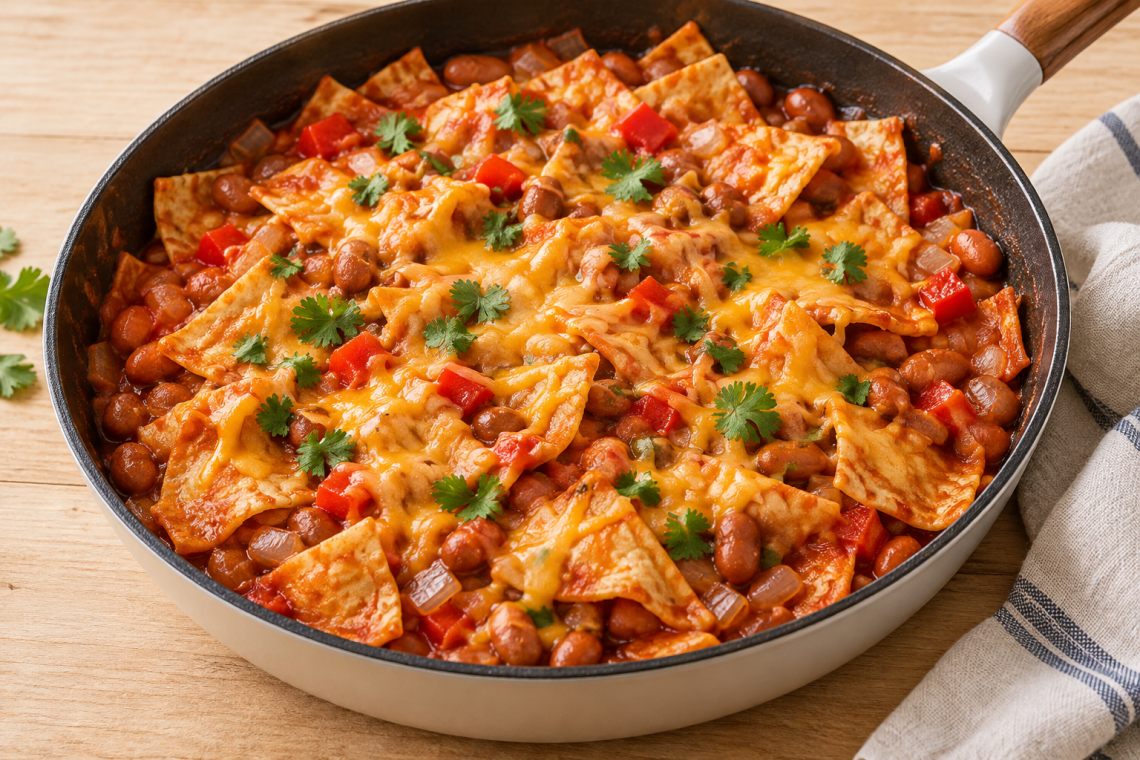
A pinto bean enchilada skillet for two turns one can of beans, a few corn tortillas, and a modest amount of cheese into a comfortable stovetop dinner. The tortillas soften in red enchilada sauce, taking on the layered texture of an enchilada casserole without rolling individual portions. A small skillet keeps the filling deep enough to stay saucy while the cheese melts under a lid.
This recipe is built around two generous servings. It uses cooked canned pinto beans and prepared enchilada sauce so you can concentrate on the details that matter most: softening the pepper, controlling salt, and adding the tortillas late enough that they remain recognizable. Expect tender tortilla pieces rather than crisp chips.
The fast path to a saucy, layered skillet
Build a flavorful base
Soften the onion and pepper before adding garlic, cumin, beans and sauce. This gives the vegetables time to lose their raw crunch without asking the tortillas to sit in the pan too long.
Keep the sauce slightly loose
Before the tortilla pieces go in, the mixture should look a little wetter than the finished dinner. The tortillas absorb liquid quickly, and the two-minute rest continues to tighten the skillet.
Fold instead of stirring
Use a broad spatula to lift sauce and beans over the tortilla pieces. A few gentle turns preserve visible layers; constant stirring turns the tortillas into a thickener.
Melt on low, then rest
Cover the pan only after the cheese is added, keep the heat low and uncover for the final rest. The pause lets the sauce settle while the cheese stays soft rather than oily.
Reader checkpoint: just before serving, a spoon drawn through the center should leave a path that slowly fills with sauce. If the path stays dry, fold in a tablespoon of warm water. If it closes immediately, let the skillet stand another minute before portioning.
Use this recipe guide
Move directly to the part you need, or follow the article in order for the full cooking method and texture checks.
Before opening the cans
Choose a 10-inch skillet with a lid. A much wider pan evaporates the sauce quickly, while a tiny saucepan makes it difficult to fold in the tortilla pieces without crushing them. A heavy stainless-steel or nonstick skillet both work. Since the cheese melts under cover on the stove, there is no need to use a broiler-safe handle or heat the oven.
Read the enchilada sauce label before seasoning. Some sauces are thin and mild; others are concentrated, spicy, and fairly salty. This formula begins with a modest amount of cumin and no added salt. You will taste after the beans have simmered. If you are making a vegetarian meal, confirm that the sauce contains vegetable ingredients rather than chicken stock.
Set up the skillet for the right finish
This dinner has a short ingredient list, so pan width, sauce consistency and tortilla timing have an outsized effect. Use these visual targets before relying on the clock.
| Decision | Best target | Why it helps |
|---|---|---|
| Pan | A 10-inch skillet with a fitted lid | The bean layer stays deep enough to remain saucy, while the vegetables still have room to soften evenly. |
| Tortilla pieces | About 1 inch across | Pieces this size soften around the edges without disappearing into the sauce after a few folds. |
| Sauce before tortillas | Loose enough to flow between the beans | The tortillas absorb liquid quickly. Starting slightly loose prevents the finished skillet from becoming dry or pasty. |
| Cheese stage | Low heat under a lid | Trapped steam melts the topping without forcing the bottom of the skillet to cook aggressively. |
| Final rest | Two minutes, uncovered | The sauce settles and clings while excess steam escapes, giving cleaner portions. |
If your enchilada sauce is very thick straight from the can, keep the optional water nearby. If it is thin, simmer the bean mixture uncovered for an extra minute before adding tortillas. Make that adjustment early; trying to correct the pan after the cheese melts is harder to do without overcooking the bottom.
Pinto bean enchilada skillet for two
Servings
2 generous
Prep
10 minutes
Cook
20 minutes
Rest
2 minutes
Total
32 minutes
Equipment: 10-inch lidded skillet, colander, knife, cutting board, measuring cup, broad spatula and cheese grater. Set the lid beside the stove before cooking so the final cheese-melting step is not delayed.
Measured ingredients
- 2 teaspoons olive oil
- 1/2 cup finely diced yellow onion
- 1/2 cup finely diced bell pepper, any color
- 1 garlic clove, minced
- 1/2 teaspoon ground cumin
- 1 can pinto beans, 15 ounces, drained and rinsed; about 1 1/2 cups drained
- 1 cup mild red enchilada sauce
- 1/4 cup water, plus 1–2 tablespoons only if needed
- 4 small corn tortillas, about 6 inches across, cut into 1-inch pieces
- 3/4 cup freshly grated Monterey Jack or mild cheddar, about 3 ounces
- 2 tablespoons chopped cilantro or thinly sliced scallion greens
- 2 teaspoons fresh lime juice
- Fine salt, only if needed after tasting
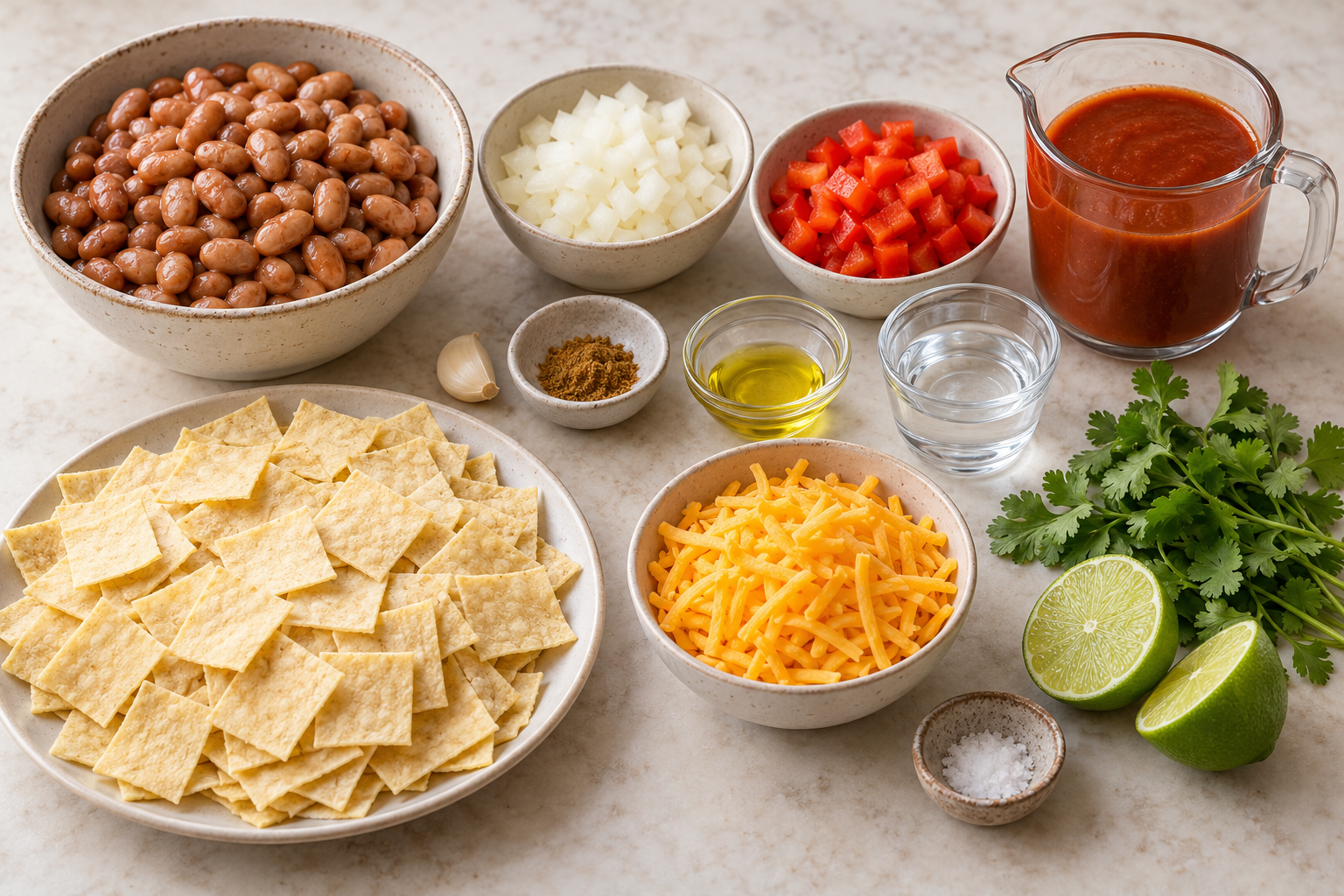
Arrange three small stations. Keep onion and pepper together for the first stage; put garlic and cumin beside the pan for their brief addition; leave tortillas and cheese farther back until needed. Measure the sauce and water before turning on the heat. This keeps the 30-second aromatic step from becoming a scramble for a measuring cup while the garlic darkens.
Cook the skillet step by step
- Prepare all the pieces first. Drain and rinse the beans, dice the vegetables, cut the tortillas, and grate the cheese. Keep the tortillas aside until the bean mixture is hot. Once they go in, the final steps move quickly.
- Soften the onion and pepper. Warm the oil in the skillet over medium heat. Add the onion and bell pepper. Cook for 6–8 minutes, stirring occasionally, until softened and no longer crunchy. Lower the heat if their edges brown before the centers soften.
- Add the aromatics. Stir in the garlic and cumin and cook for 30 seconds. The cumin should smell fragrant but should not turn black. Immediately add the drained beans, enchilada sauce, and 1/4 cup water, stirring gently to combine.
- Warm the beans and assess the sauce. Bring to a gentle simmer and cook uncovered for 4–5 minutes. Taste a cooled spoonful. Add a small pinch of salt only if the beans and sauce need it. The mixture should look a little looser than the final dish because the tortillas will absorb liquid.
- Fold in the tortillas. Scatter the tortilla pieces over the pan and turn them through the sauce with broad, gentle folds. Simmer for 2–3 minutes, until they soften but still have visible edges. If the pan looks dry, add water a tablespoon at a time.
- Melt the cheese under cover. Sprinkle the cheese evenly across the top. Reduce the heat to low, cover, and cook for 2–3 minutes, until the cheese melts and the sauce bubbles gently at the edges. Check that the bottom is not catching.
- Finish and serve. Take the skillet off the heat. Let it stand uncovered for 2 minutes, then scatter with cilantro or scallions and drizzle the lime juice across both portions. Divide with a broad spoon so each serving gets beans, tortilla pieces, and cheese.
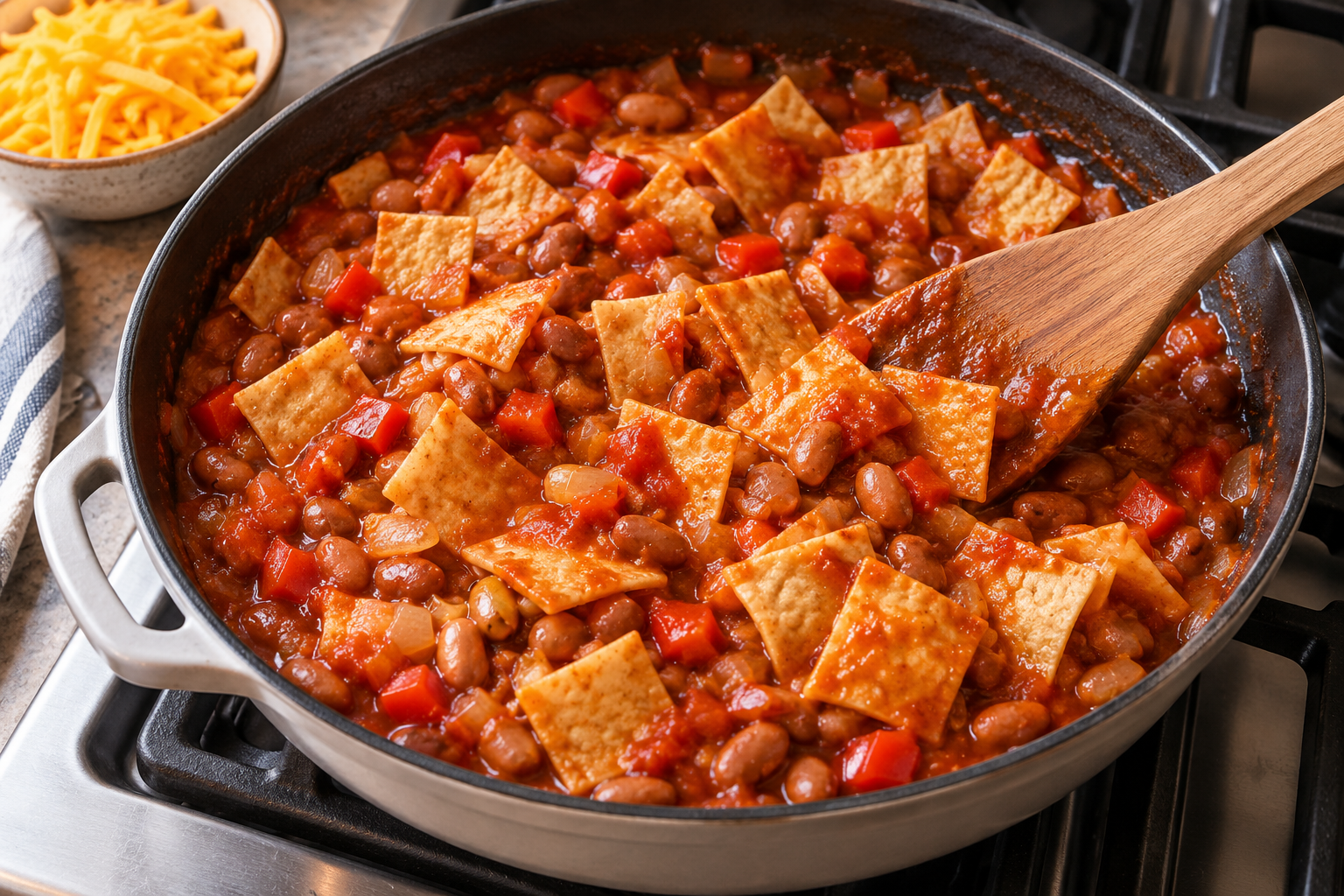
Use the spoon-path test at three stages
A timer tells you when to look, but the sauce tells you when to move to the next step. Drag a wooden spoon or heat-safe spatula through the center of the pan and watch how quickly the gap closes.
| Stage | What the path should do | Adjustment |
|---|---|---|
| After the beans simmer | The gap should fill immediately with sauce, but the liquid should lightly coat the spoon. | If it looks watery, simmer uncovered for 1–2 minutes. If it barely flows, add 1 tablespoon water. |
| After folding in tortillas | The path should close more slowly, with visible sauce still moving between beans and tortilla pieces. | If the pan looks dry, fold in water 1 tablespoon at a time instead of stirring hard. |
| After the uncovered rest | The path should remain visible briefly, while a spoonful holds together without looking stiff. | Serve promptly. A longer rest keeps thickening the tortilla layer. |
The best finish is spoonable, not sliceable: the components should hold together on the plate while a little sauce remains around the edges.
This check is especially useful when switching sauce brands or using tortillas that have been refrigerated. Both can change absorption enough that the same clock time produces a different result.
The tortilla texture is your main checkpoint
Fresh corn tortillas are pliable; older refrigerated ones can be firmer and absorb sauce differently. Both can work here, provided they are sound and show no mold. Cut them into pieces large enough to see after folding. Tiny shreds disappear into the sauce and make the dish feel thick and pasty.
Add tortillas to an already simmering bean mixture. Putting them into a cold pan at the beginning gives them the entire vegetable-cooking time to break apart. Once added, fold rather than stir vigorously. Lift sauce and beans from underneath and turn them over the tortilla pieces two or three times, then let the heat do the remaining work.
Do not chase crispness in this recipe. For a crunchy contrast, offer a few tortilla chips at the table instead. Flour tortillas produce a softer, sometimes gummy texture in the same sauce, so corn tortillas are the preferred choice for the measured formula. If flour tortillas are all you have, warm them separately and use the bean mixture as a filling.
Adjust heat, richness, and salt thoughtfully
Prepared sauce determines most of the spice level. A mild label is a better starting point for mixed preferences than diluting a very hot sauce after cooking. If someone wants more heat, offer sliced jalapeños or hot sauce with their serving. Small additions of chile can quickly overpower a two-person skillet.
Freshly grated cheese melts more evenly than very dry, finely shredded packaged cheese. Either can be used, but allow packaged shreds a little extra covered time if needed. Keep the burner low so the cheese melts gently while the underside stays moist. A layer of bubbling oil usually means the pan is too hot or has been cooking after the cheese finished melting.
Rinsing canned beans gives you more control over the sauce’s consistency and seasoning. Packing liquid varies from thin to starchy and strongly salted. Keeping that liquid would change the water measurement, so use well-drained beans for this version. Low-sodium beans are particularly useful when the enchilada sauce is assertively seasoned.
Ingredient choices that change the result
The recipe is flexible, but each swap changes moisture, structure or melting. Use these notes to predict the effect before changing several ingredients at once.
Enchilada sauce
A thin sauce needs a brief uncovered simmer before the tortillas enter. A thick sauce may need the full measured water plus another tablespoon. Taste smoky or spicy sauces before adding more cumin or chile.
Corn tortillas
Fresh, pliable tortillas keep clearer edges. Drier refrigerated tortillas absorb faster, so check the pan after the first minute. Flour tortillas become softer and more bread-like; they work better warmed separately and filled at the table.
Beans
Pinto beans give the creamiest bite. Black beans stay more distinct. Home-cooked beans can replace canned beans when you use about 1 1/2 cups, drain them well and avoid adding soft beans so early that they break apart.
Cheese
Monterey Jack gives a smooth, mild melt, while cheddar brings a sharper flavor and can release more visible oil if overheated. Pre-shredded cheese may need a little more covered time, so keep the burner low rather than turning up the heat.
Best testing rule: change one major component at a time. That makes it easy to tell whether the sauce, tortilla or cheese caused a texture difference and how to correct it on the next batch.
Useful variations
Black beans: An equal drained amount can replace pinto beans. Pinto beans are softer and make a creamier bite; black beans generally remain more distinct. Either way, do not mash the whole can, because the tortillas already contribute thickness.
Extra vegetables: Add 1/2 cup small zucchini cubes with the bell pepper, cooking off their released moisture before adding sauce. For spinach, fold in a loosely packed cup of chopped fresh leaves with the beans. Large additions can dilute seasoning and crowd the pan, so keep changes modest until you know the base recipe.
Less cheese: Use 1/2 cup if you prefer a lighter topping. A dairy-free melting alternative changes both flavor and melting behavior; follow its label and keep the final heat gentle. There is no need to add cream to compensate.
How to fix the most common problems
- The skillet seems dry before cheese goes on: Fold in 1 tablespoon water and pause. Add a second spoonful only if no loose sauce remains between the beans.
- The sauce is still watery: Give the beans another minute or two of uncovered simmering before adding tortillas. Avoid using extra tortilla pieces as an emergency thickener; they can make the final texture heavy.
- The tortillas turned mushy: Serve the dish with a spoon and a crunchy topping this time. Next time add them later, use larger pieces, and shorten the folding stage.
- The cheese has not melted: Check that the lid fits and steam is collecting inside. Keep the heat low and wait briefly instead of turning the burner high.
What to put beside it
A sharp cabbage salad, sliced cucumber, or plain avocado balances the rich sauce. Because the skillet already contains tortillas and beans, it does not need a second heavy component. If you are serving very hungry diners, a small portion of the site’s salsa rice with black beans and corn can be prepared as a separate meal or a modest accompaniment.
For another tortilla-based pantry dinner with a different texture, try white bean quesadillas without cheese. Keeping a few tortillas in the freezer makes both options easier to plan. Thaw only what you need and reseal the remaining package promptly to limit dry edges.
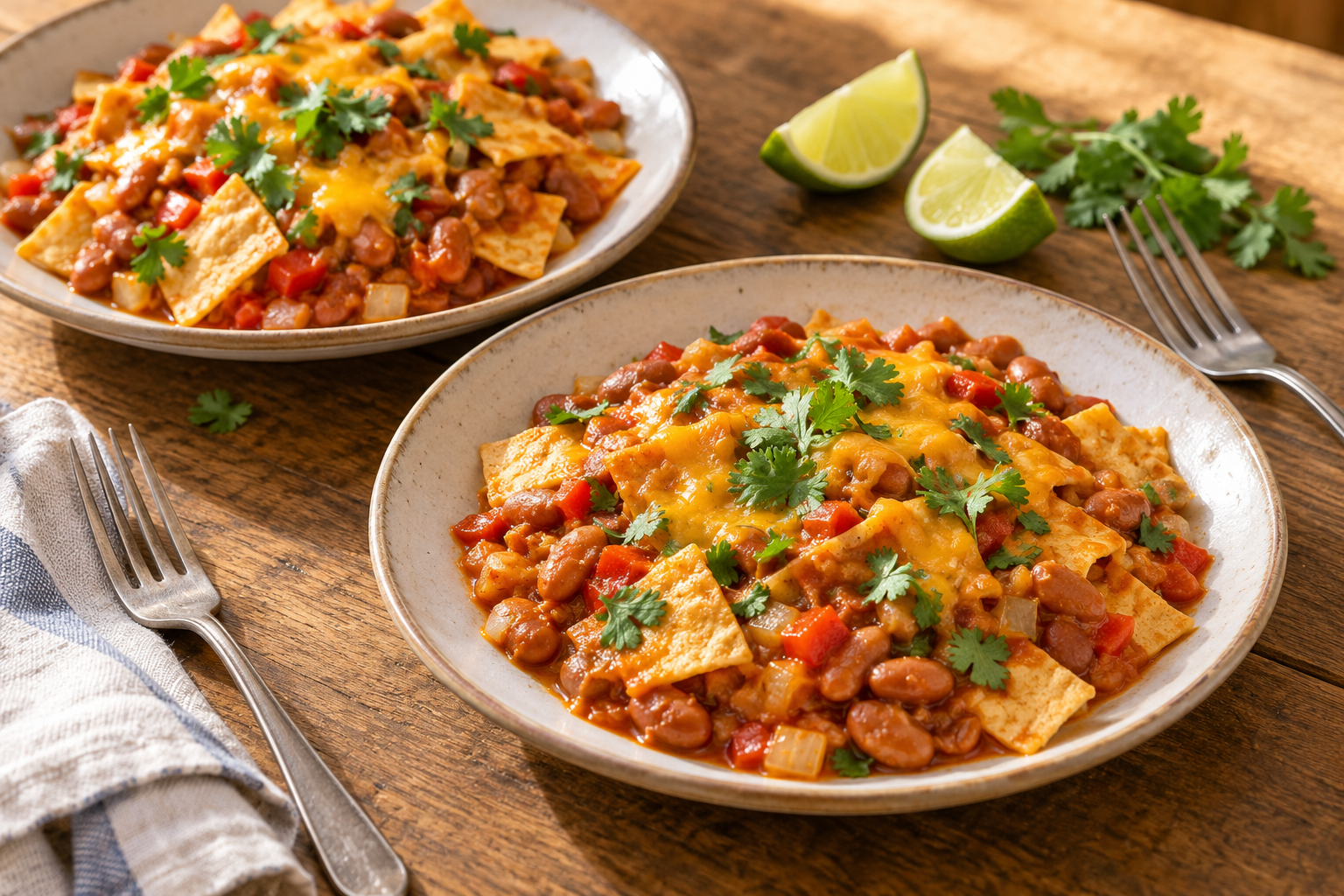
The best make-ahead plan keeps the tortillas separate
Prepare the components that benefit from advance work, but wait to combine the tortillas, sauce and cheese until you are ready to eat. That preserves the layered texture and makes reheating more predictable.
| Component | What can be done ahead | Finish at dinnertime |
|---|---|---|
| Onion and pepper | Dice, cover and refrigerate earlier in the day. | Add directly to the warm oil and allow a full softening stage. |
| Beans | Drain and rinse, then keep covered and cold if not using immediately. | Fold into the sauce gently so very soft beans stay whole. |
| Bean-and-sauce base | Cook through the uncovered simmer, then cool and refrigerate promptly. | Reheat the base first. Restore a slightly loose consistency before adding tortillas. |
| Tortillas | Cut into 1-inch pieces and keep them separate from moist ingredients. | Add only after the reheated sauce is bubbling gently. |
| Cheese and toppings | Grate or chop and refrigerate in separate covered containers. | Add cheese for the final covered melt; add lime and herbs after the heat is off. |
Not recommended: assembling the complete skillet hours in advance. The tortilla pieces continue absorbing sauce as they sit, so reheating an assembled pan often produces soft, indistinct layers. Keeping the base separate takes only a few extra minutes at serving time and gives a much fresher result.
Leftovers and advance preparation
For the best make-ahead texture, cook the bean-and-sauce mixture first and refrigerate it separately from the tortillas and cheese. Reheat the base thoroughly before finishing the dish. Fully assembled leftovers are still useful, but the tortillas soften further as they sit.
Following USDA guidance for leftovers, refrigerate promptly in shallow containers within 2 hours, or 1 hour above 90°F. Keep at 40°F or below and use within 3–4 days. Reheat to 165°F throughout; add a spoonful of water and cover to keep the edges from drying. In a microwave, stir gently partway through and check more than one spot.
Frequently asked questions
Can I make this with dry pinto beans?
Use dry beans only after cooking them fully in a separate pot. Measure about 1 1/2 cups cooked and drained beans. Dry beans cannot soften during this short skillet cooking time, and their required liquid would overwhelm the tortillas.
Does the cheese need to brown?
No. This is a covered stovetop finish, so the cheese will be melted rather than browned. If browned cheese matters to you, that would require a separate oven-safe broiler step and careful attention to the skillet’s handle and manufacturer’s limits.
Can I use green enchilada sauce?
Yes, an equal amount of prepared green sauce is a reasonable variation. Taste for salt and tang before adding lime, since some green sauces are already quite sharp. The color and overall flavor will change.
Can the recipe serve four?
Double the ingredients and use a wider, deep skillet with a matching lid. Check the sauce before adding the tortillas because a larger pan changes evaporation. Keep the same small tortilla pieces and fold in batches if necessary.
Can I freeze a pinto bean enchilada skillet for two?
Freeze the cooked bean base separately for the best texture, aiming to use it within 3 months for quality. Thaw in the refrigerator, reheat thoroughly, and add freshly cut tortillas and cheese. An assembled frozen portion is likely to reheat with softer tortillas.
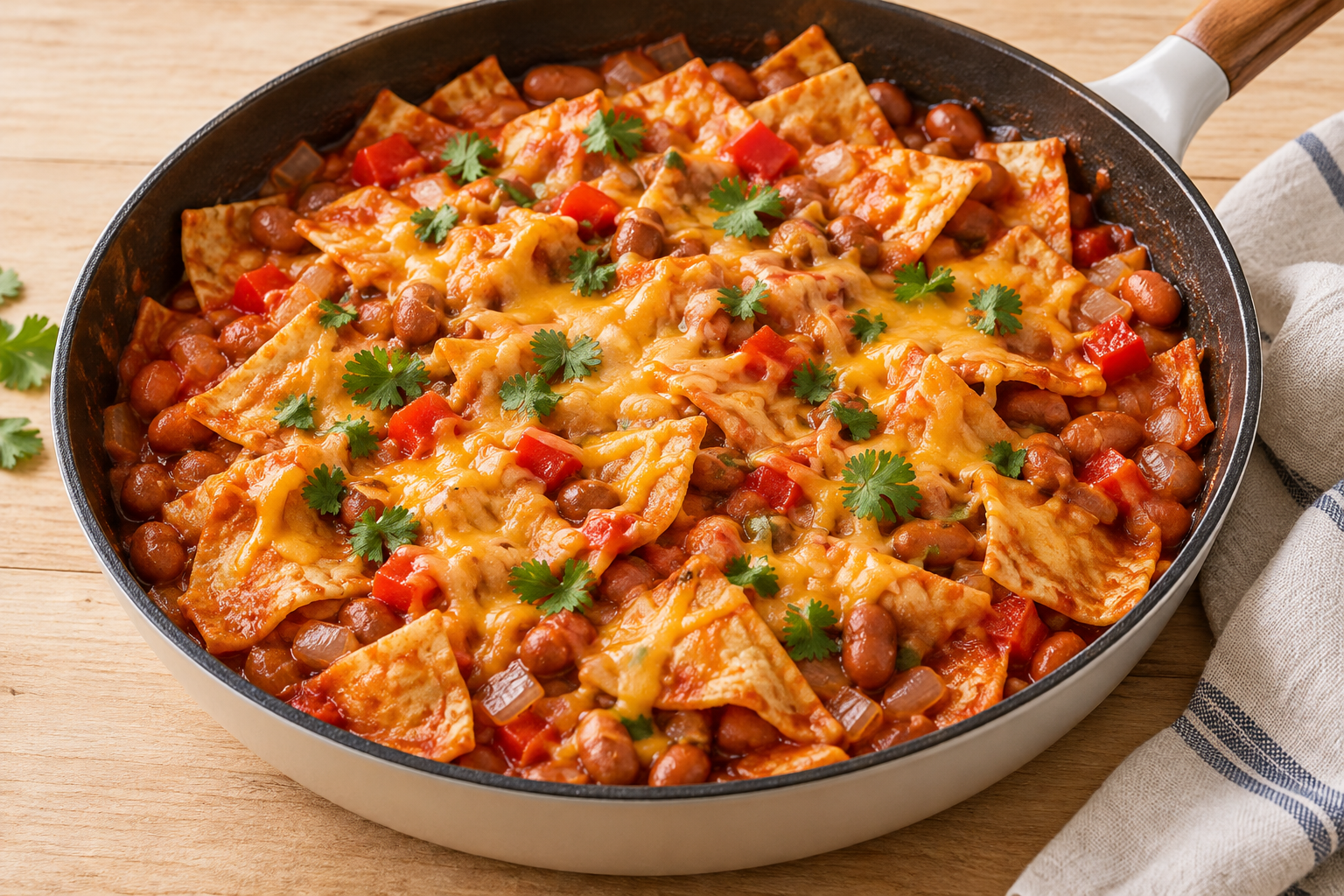
Pinto Bean Enchilada Skillet for Two
Ingredients
Equipment
Method
- Drain and rinse the beans, dice the onion and pepper, mince the garlic, cut the tortillas into 1-inch pieces, and grate the cheese. Keep the tortillas aside until the bean mixture is hot.
- Warm the olive oil in the skillet over medium heat. Add the onion and bell pepper and cook for 6–8 minutes, stirring occasionally, until softened and no longer crunchy. Lower the heat if the edges brown before the centers soften.
- Stir in the garlic and cumin for 30 seconds, just until fragrant. Add the drained beans, enchilada sauce, and 1/4 cup water and stir gently.
- Bring to a gentle simmer and cook uncovered for 4–5 minutes. Taste a cooled spoonful and add salt only if needed. The mixture should remain a little looser than the finished dish because the tortillas will absorb liquid.
- Scatter the tortilla pieces over the pan and fold them gently through the sauce. Simmer for 2–3 minutes, until softened but with visible edges. If no loose sauce remains, add water 1 tablespoon at a time.
- Sprinkle the cheese evenly over the skillet. Reduce the heat to low, cover, and cook for 2–3 minutes, until the cheese has melted and the sauce bubbles gently at the edges. Check that the bottom is not catching.
- Remove the skillet from the heat and rest uncovered for 2 minutes. Add the cilantro or scallions and lime juice, then divide so each serving gets beans, tortilla pieces, sauce, and cheese.