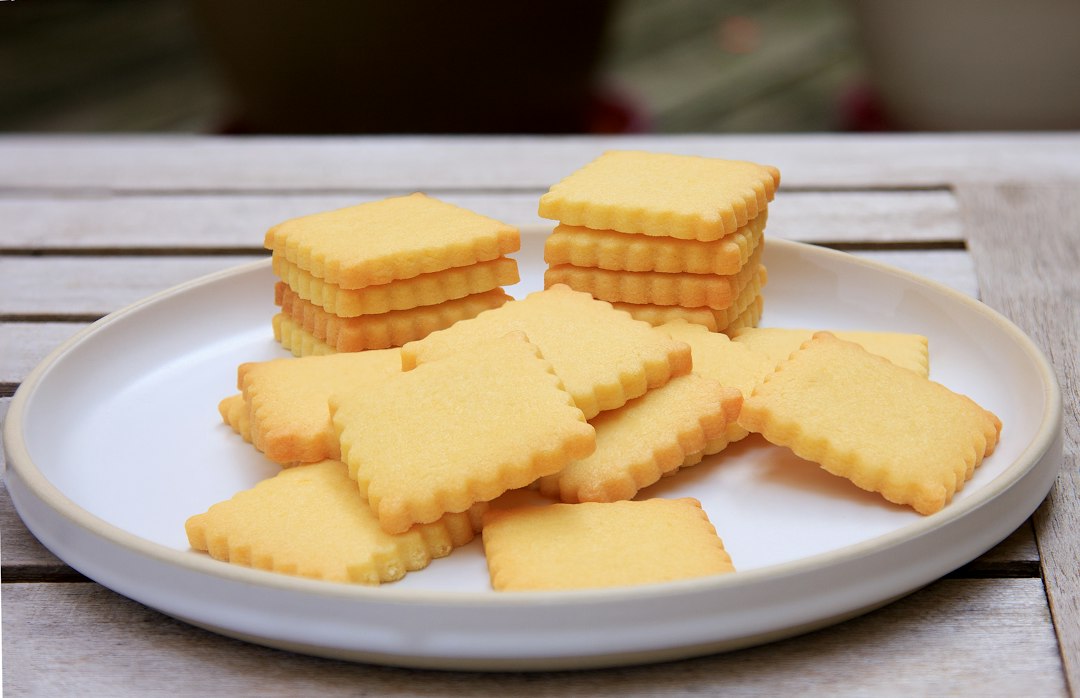
A single small log of small batch orange cornmeal shortbread gives you twelve crisp, buttery cookies without a full afternoon of rolling and cutting. Fine cornmeal adds a delicate sandy texture, while freshly grated orange zest gives the dough its flavor. There is no egg, and the cookies hold their simple round shape with a good chill.
The recipe is deliberately small. Accurate flour measurement, butter that is cool but workable, and slices of even thickness matter more than a mixer. The guide walks through crumbly dough, flattening logs, and the subtle color changes that tell you the cookies are baked.
Jump to the twelve-cookie recipe
Use butter temperature to control shortbread spread
Cream without whipping
Combine butter and sugar until smooth, but avoid beating in excessive air that changes the dense shortbread crumb.
Hydrate fine cornmeal
Mix evenly and let the shaped dough chill so the grain softens while the butter firms.
Rub orange zest into the sugar for even aroma. Bake until the edges color lightly, then cool before moving; warm shortbread is fragile and firms as the butter resets.
Get the butter to the right stage
The butter should give slightly when pressed but still feel cool. It should not look oily, shiny, or partly melted. A soft paste is easier to mix, but overly warm butter can make the dough greasy and cause the rounds to spread more in the oven.
If the butter is straight from the refrigerator, cut it into small pieces and allow a short time to soften. The guide to softening butter without melting it explains several controlled approaches. For this recipe, stop as soon as it can be pressed smoothly with a spatula.
Use plain fine cornmeal. Coarse meal can feel gritty in a cookie that contains very little water, and it will not soften like cornmeal simmered into porridge. The texture should be a fine crunch that blends into the shortbread rather than hard grains that dominate each bite.
Small batch orange cornmeal shortbread recipe
Yield: 12 small round cookies. Preparation: 20 minutes. Chilling: at least 60 minutes. Baking: 18–22 minutes. Cooling: 20 minutes. Total: about 2 hours.
Affiliate disclosure: As an Amazon Associate I earn from qualifying purchases. Paid links open Amazon search results.
Equipment: a mixing bowl, firm spatula, fine grater (paid link), parchment, ruler, sharp knife, and a light-colored rimmed baking sheet (paid link). A 9-by-13-inch quarter-sheet pan can hold the twelve small cookies when arranged with space between them.
Ingredients
- 4 tablespoons unsalted butter, 56 g, at cool room temperature
- 1/4 cup confectioners’ sugar, 28 g, lumps broken up
- 1 teaspoon finely grated orange zest
- 1/4 teaspoon vanilla extract
- 1/8 teaspoon fine salt
- 1/2 cup all-purpose flour, spooned and leveled, 60 g
- 2 tablespoons fine cornmeal, approximately 18 g
Mix and shape the log
- Blend butter and sugar. Press the butter and confectioners’ sugar together with the spatula until smooth and uniform. You are combining them, not trying to whip in a large amount of air. Scrape the bowl to collect any dry sugar.
- Add the flavorings. Mix in the orange zest, vanilla, and salt. Spread the mixture across the bowl once or twice to break up zest clumps, then gather it back together.
- Work in the dry ingredients. Add the flour and cornmeal. Fold and press gently until the mixture forms moist crumbs that hold when squeezed. It may look too dry initially; give the butter a chance to bind the flour before considering any adjustment.
- Compress, then roll. Tip the dough onto parchment and press it into a compact block. Roll and shape it into a log approximately 3 inches long and 2 inches in diameter. Smooth obvious cracks with light pressure, keeping the ends fairly flat.
- Chill until firm. Wrap the log snugly and refrigerate for at least 1 hour. Turn it once early in chilling if the bottom is flattening. The log should feel firm enough to slice without bending or squeezing out of shape.
- Heat the oven and slice. Preheat a conventional oven to 325°F (165°C). Line the baking sheet. Mark the chilled log into twelve equal pieces, approximately 1/4 inch thick, then cut straight down with a sharp knife. Rotate the log as necessary to maintain its round shape.
- Bake evenly spaced rounds. Set the slices about 1 inch apart. Bake for 18–22 minutes, until the edges and undersides are pale golden and the surfaces look dry. The centers should remain lighter than a deeply browned butter cookie.
- Let them firm up. Cool on the sheet for 10 minutes, then transfer carefully to a rack for another 10 minutes or until fully cool. Warm shortbread is fragile and reaches its crisp texture as it cools.
A crumbly dough can still be correct
Shortbread contains little free liquid. Its dough can move through a crumbly stage before the butter and flour come together. Press a small handful: if it forms a cohesive piece, the mixture is ready to shape even if the bowl still looks a little sandy.
If the crumbs refuse to hold, check the butter temperature and flour amount first. Very cold butter is harder to distribute, while too much flour makes the mixture genuinely dry. Let a cold bowl stand briefly and work it gently before adding anything.
King Arthur’s shortbread guidance provides useful background on this butter-rich dough style. The orange and cornmeal version here uses a small slice-and-bake log, so its shape and timing differ from a thicker pressed pan of shortbread.
Small measurements, noticeable differences
Use the gram amounts if a scale is available. In a recipe with only half a cup of wheat flour, an extra tablespoon changes the ratio substantially. The flour measuring guide explains how to avoid packing a dry cup.
Confectioners’ sugar helps create a fine texture. Granulated sugar has a different feel and does not replace it with an identical result. If the sugar is lumpy, break up or sift the measured amount before mixing so pockets do not remain in the dough.
Orange juice does not replace orange zest. Juice adds moisture but much less concentrated aroma, and extra liquid can change a dough intended to be short and crisp. Keep the juice for another use and measure only the finely grated peel here.
Keep the slices equal
A ruler is useful for a small log. Mark quarters, then divide each quarter into three slices. This gives twelve even cookies without repeatedly guessing at the thickness. Thin end scraps bake faster, so avoid trimming unless the ends are genuinely uneven.
If the log cracks during slicing, it may be very cold or too dry. Let it stand for a few minutes, then try again with a sharp knife. Small cracks in individual rounds can be pressed together gently before baking.
If the slices squash flat under the knife, return the dough to the refrigerator. Chilling is part of the shaping method, not simply a pause in the recipe. A firm log produces more consistent thickness and makes the bake easier to judge.
Flavor changes that stay close to the formula
Use lemon zest in the same amount for a different citrus flavor. A small pinch of ground cardamom can accompany orange, but keep it restrained; the batch is small enough that a heavy spice addition becomes dominant.
Salted butter can replace unsalted butter if you omit the added salt. A spread from a tub or a light butter blend has a different water content and is not the intended ingredient. For a dairy-free version, use a formula developed for the particular plant-based baking block you plan to use.
Do not add large nuts or chocolate chunks to this small log. They make thin slices harder to cut. If you want a garnish, a light drizzle of melted chocolate on fully cooled cookies is easier to control than changing the dough itself.
Serve and store the finished cookies
Serve with tea, coffee, or sliced fresh fruit. Two small cookies make a modest portion, and the fine cornmeal texture becomes clearer once they are completely cool. Store them without a moist topping so they stay crisp.
For a warm fruit dessert that uses a different pantry format, the peach cobbler recipe is another option. Keep its self-rising flour separate from the plain all-purpose flour used in these cookies.
Place cooled cookies in an airtight container at cool room temperature for up to 5 days for best quality. Freeze them well wrapped for up to a month. Thaw while still wrapped so condensation settles on the packaging rather than directly on the cookie surfaces.
Frequently asked questions
Why are my cookies spreading?
The dough may have been warm, the butter may have partly melted, or the flour may have been undermeasured. Chill the remaining log thoroughly and use a cool baking sheet for another batch. A hot sheet starts softening dough before it reaches the oven.
Can I use a cookie cutter?
This formula is arranged for slicing a log. Rolling and cutting can work as a separate experiment, but extra bench flour changes the texture. The log method uses all the dough without repeated rerolling.
Do the cookies need baking powder?
No. Shortbread relies on its butter, flour, and sugar structure and is meant to stay relatively compact. Adding baking powder would change the shape and crumb.
Can I keep the log overnight?
Yes, refrigerate the wrapped log overnight. If it is too hard to slice cleanly, let it stand briefly before cutting. Keep the dough covered so the surface does not dry.
Why do they feel soft when first baked?
Warm butter-rich cookies are fragile. Let them cool fully before deciding whether they are crisp enough. Use pale golden edges and dry-looking surfaces as the baking cues instead of waiting for them to feel hard in the oven.
Can I double the batch?
Yes. Make two logs with the same dimensions rather than one much thicker log. This preserves the slice size and timing for small batch orange cornmeal shortbread.
Small Batch Orange Cornmeal Shortbread
Ingredients
Equipment
Method
- Blend butter and sugar. Press the butter and confectioners' sugar together with the spatula until smooth and uniform. You are combining them, not trying to whip in a large amount of air. Scrape the bowl to collect any dry sugar.
- Add the flavorings. Mix in the orange zest, vanilla, and salt. Spread the mixture across the bowl once or twice to break up zest clumps, then gather it back together.
- Work in the dry ingredients. Add the flour and cornmeal. Fold and press gently until the mixture forms moist crumbs that hold when squeezed. It may look too dry initially; give the butter a chance to bind the flour before considering any adjustment.
- Compress, then roll. Tip the dough onto parchment and press it into a compact block. Roll and shape it into a log approximately 3 inches long and 2 inches in diameter. Smooth obvious cracks with light pressure, keeping the ends fairly flat.
- Chill until firm. Wrap the log snugly and refrigerate for at least 1 hour. Turn it once early in chilling if the bottom is flattening. The log should feel firm enough to slice without bending or squeezing out of shape.
- Heat the oven and slice. Preheat a conventional oven to 325°F (165°C). Line the baking sheet. Mark the chilled log into twelve equal pieces, approximately 1/4 inch thick, then cut straight down with a sharp knife. Rotate the log as necessary to maintain its round shape.
- Bake evenly spaced rounds. Set the slices about 1 inch apart. Bake for 18–22 minutes, until the edges and undersides are pale golden and the surfaces look dry. The centers should remain lighter than a deeply browned butter cookie.
- Let them firm up. Cool on the sheet for 10 minutes, then transfer carefully to a rack for another 10 minutes or until fully cool. Warm shortbread is fragile and reaches its crisp texture as it cools.