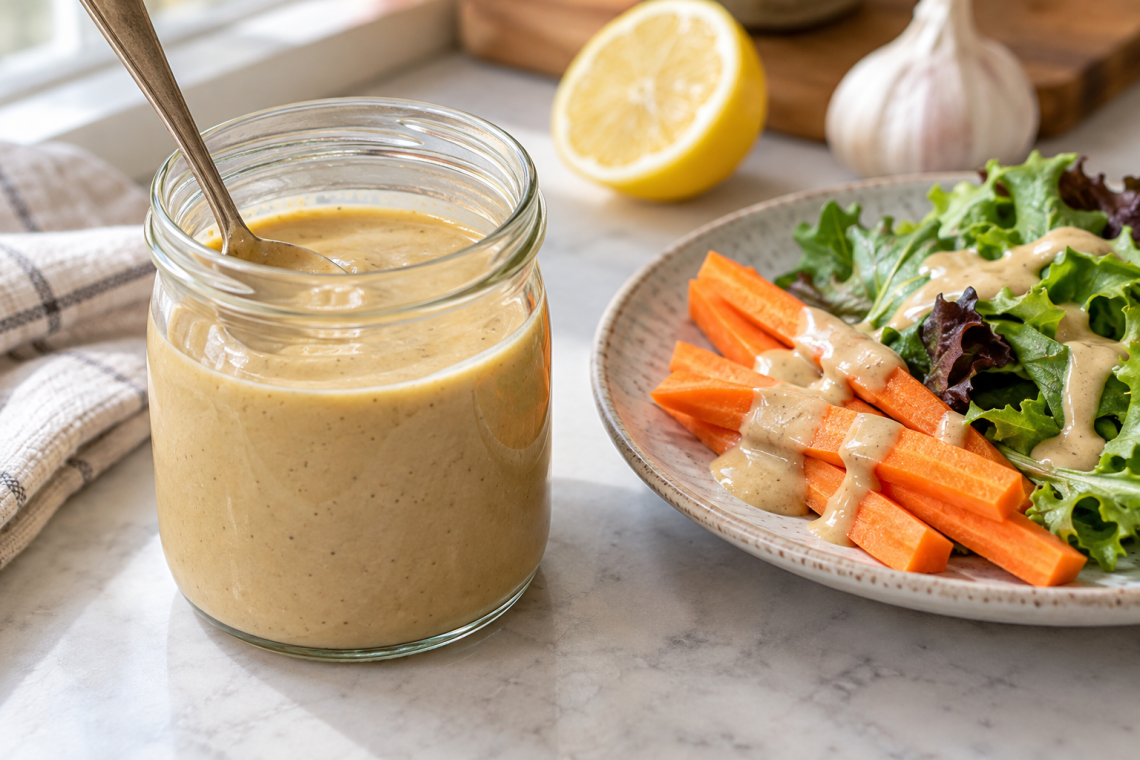
This creamy sunflower butter dressing without tahini turns a spoonful of smooth seed butter into a pourable dressing with lemon, cider vinegar, and Dijon. There is no blender step. The practical trick is to add water gradually, then wait a moment before deciding whether the dressing needs more. A thick-looking first stir does not mean the mixture has failed.
Affiliate disclosure: As an Amazon Associate I earn from qualifying purchases. Paid links open Amazon search results.
For this small dressing batch, a small whisk (paid link) helps mix the sunflower butter with the seasonings; measuring spoons (paid link) make the gradual water additions easier to repeat.
Make one small batch and choose its final thickness for the meal: thick enough to cling to carrot sticks, loose enough to coat a grain bowl, or thin enough to dress sturdy greens. The flavor is toasted and gently tangy. Unsweetened sunflower butter gives you the most control over the sweetness and salt.
Jump to printable recipe · Ingredients and equipment · Choose a thickness
Thin sunflower butter only after the base is smooth
- Stir the sunflower butter thoroughly before measuring so separated oil and solids are recombined.
- Whisk in acid and seasonings first, accepting that the mixture may tighten temporarily.
- Whisk in the measured room-temperature water in the stages below; add any extra water a teaspoon at a time until the dressing flows in a ribbon and coats a spoon.
- Let it stand briefly, then adjust again because seed-butter dressings continue thickening.
Taste after the texture is correct. Extra water softens salt and acidity, while a small amount of sweetness can round out bitterness without turning the dressing sugary.
Start with the texture you want
| Use | Final consistency | Starting amount to serve |
|---|---|---|
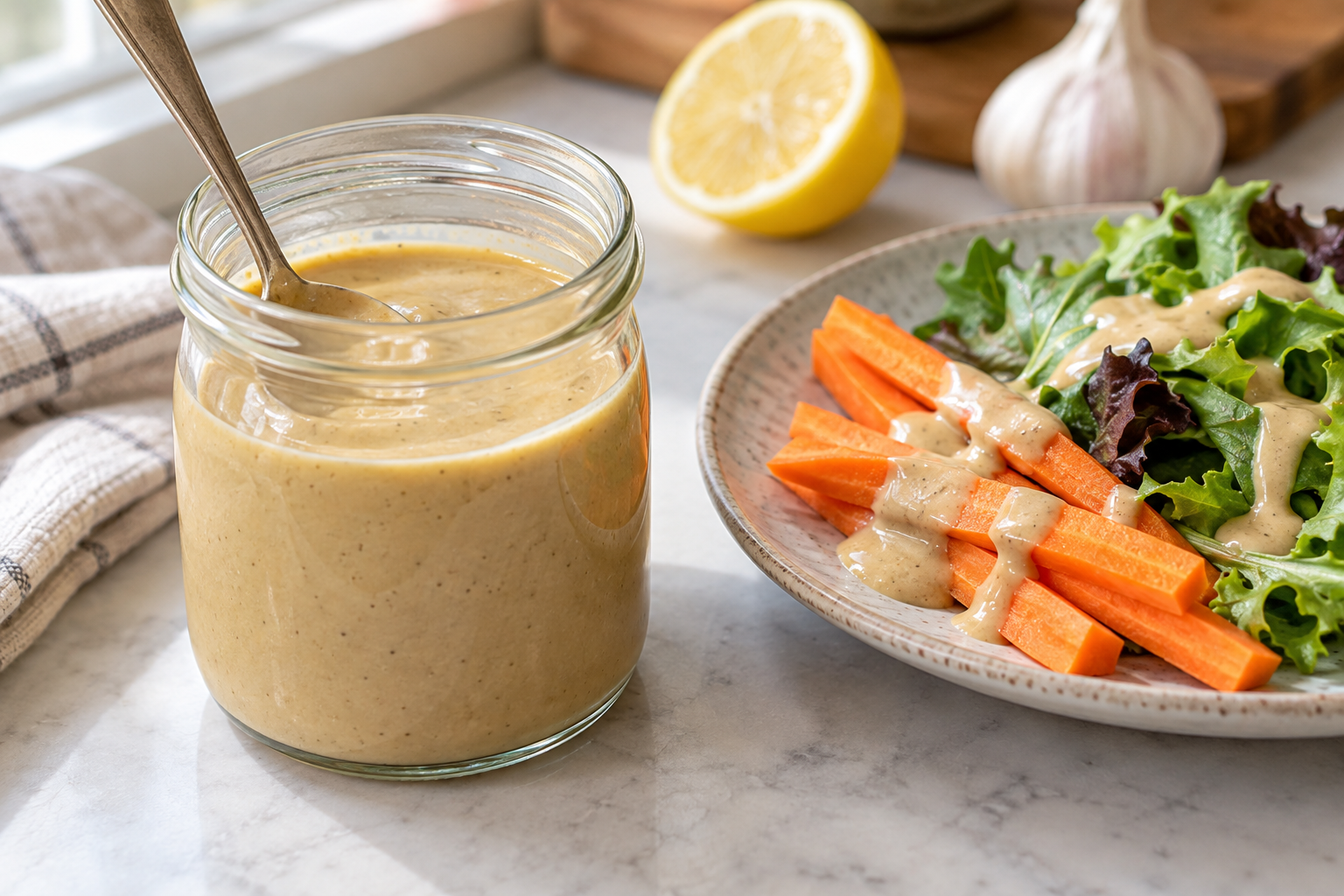
| Vegetable dip | Soft and spoonable, holding a rounded mound | 2 tablespoons beside a cup of vegetable sticks |
| Grain bowl sauce | Falls from a spoon in a broad ribbon | 2 tablespoons over a bowl; add more after tossing |
| Salad dressing | Runs easily and coats a leaf in a thin layer | 1 tablespoon per generous cup of sturdy greens |
All three begin with the same ingredients. Water is the main adjustment, so there is no need to keep increasing the vinegar until the dressing pours. A batch that tastes pleasantly tart while concentrated can become too sharp if acid is used as the only thinning liquid. Keep a teaspoon nearby and work in small additions.
Read the sunflower butter label first
Choose a smooth sunflower seed butter rather than a crunchy spread. Some jars contain added sugar or salt; others contain only roasted seeds. Stir the jar thoroughly before measuring so the oily top and firmer bottom are combined. Measuring only the dense lower layer is a common reason a dressing needs unexpectedly large amounts of water.
If your spread is sweetened, omit the measured maple syrup at first. If it is salted, hold back the extra salt until the end. Sunflower butter replaces tahini in this particular dressing, but that does not make every brand suitable for every food allergy. Check the labels of the seed butter, mustard, and other packaged ingredients for your own needs.
Creamy sunflower butter dressing without tahini
Makes: about ⅔ cup (roughly 10–11 tablespoons) before extra thinning water. Prep: 10 minutes. Cook: none. Total: 10 minutes.
Measure into the bowl
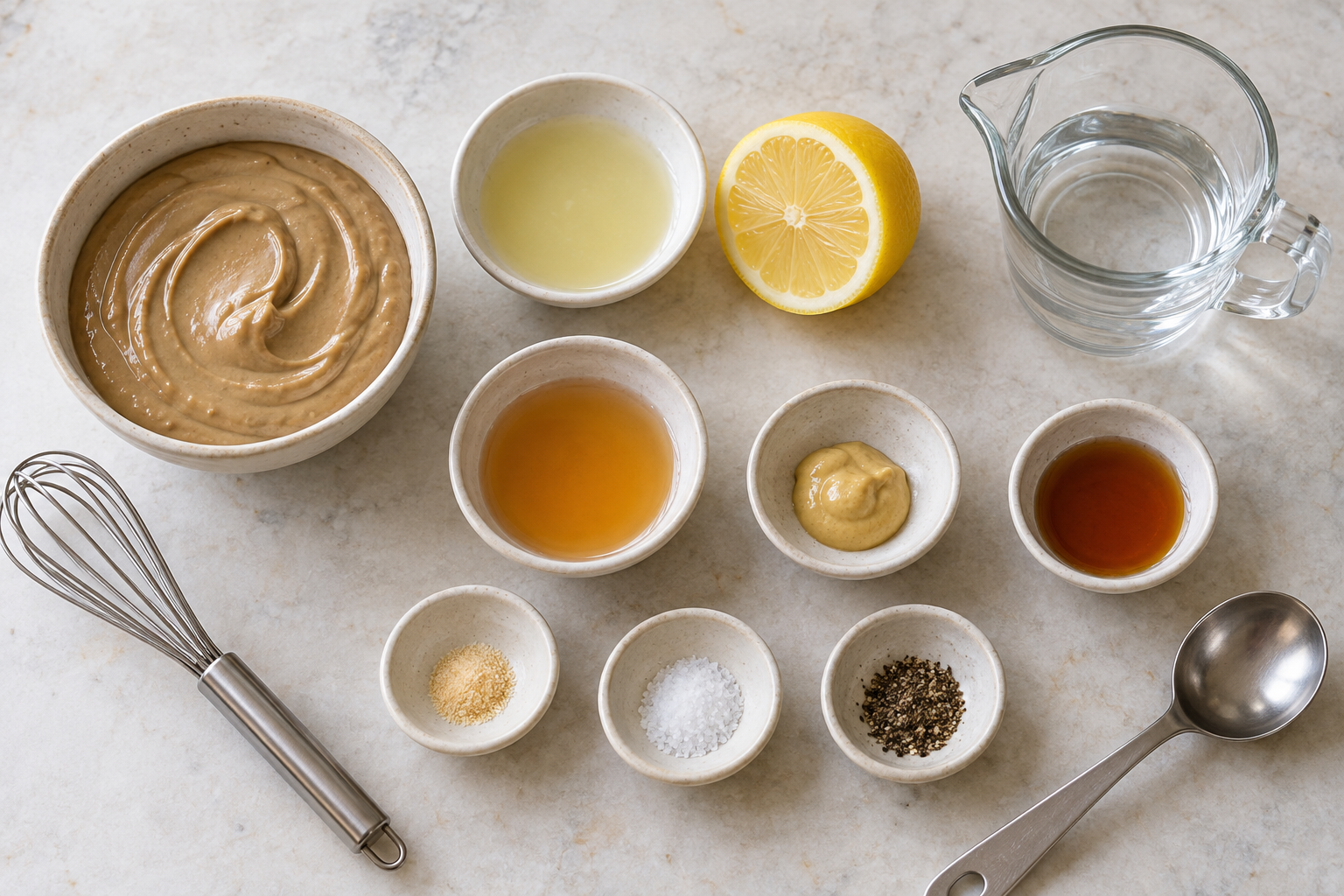
- ¼ cup smooth unsweetened sunflower butter, about 60 g
- 1 tablespoon fresh lemon juice
- 1 tablespoon apple cider vinegar
- 1 teaspoon Dijon mustard
- 1 teaspoon pure maple syrup; omit initially if the spread is sweetened
- ⅛ teaspoon garlic powder
- ¼ cup room-temperature water, plus up to 2 tablespoons as needed
- ⅛ teaspoon fine salt only if needed, plus a pinch of black pepper
Keep beside you
A small mixing bowl, a whisk or fork, measuring spoons, a ¼-cup measure, and a clean jar with a lid. A narrow mug makes whisking unnecessarily awkward; a bowl with a rounded bottom lets you work through the seed butter.
Use room-temperature water, not boiling water. You are loosening and mixing the spread, not cooking it. Have a piece of the actual salad or vegetable ready for the final taste.
Whisk in this order
- Stir the seed butter. Mix the contents of the sunflower butter jar first. Measure ¼ cup into the bowl and spread it around with the whisk. If the butter is very firm from refrigeration, let only the measured portion soften briefly before starting.
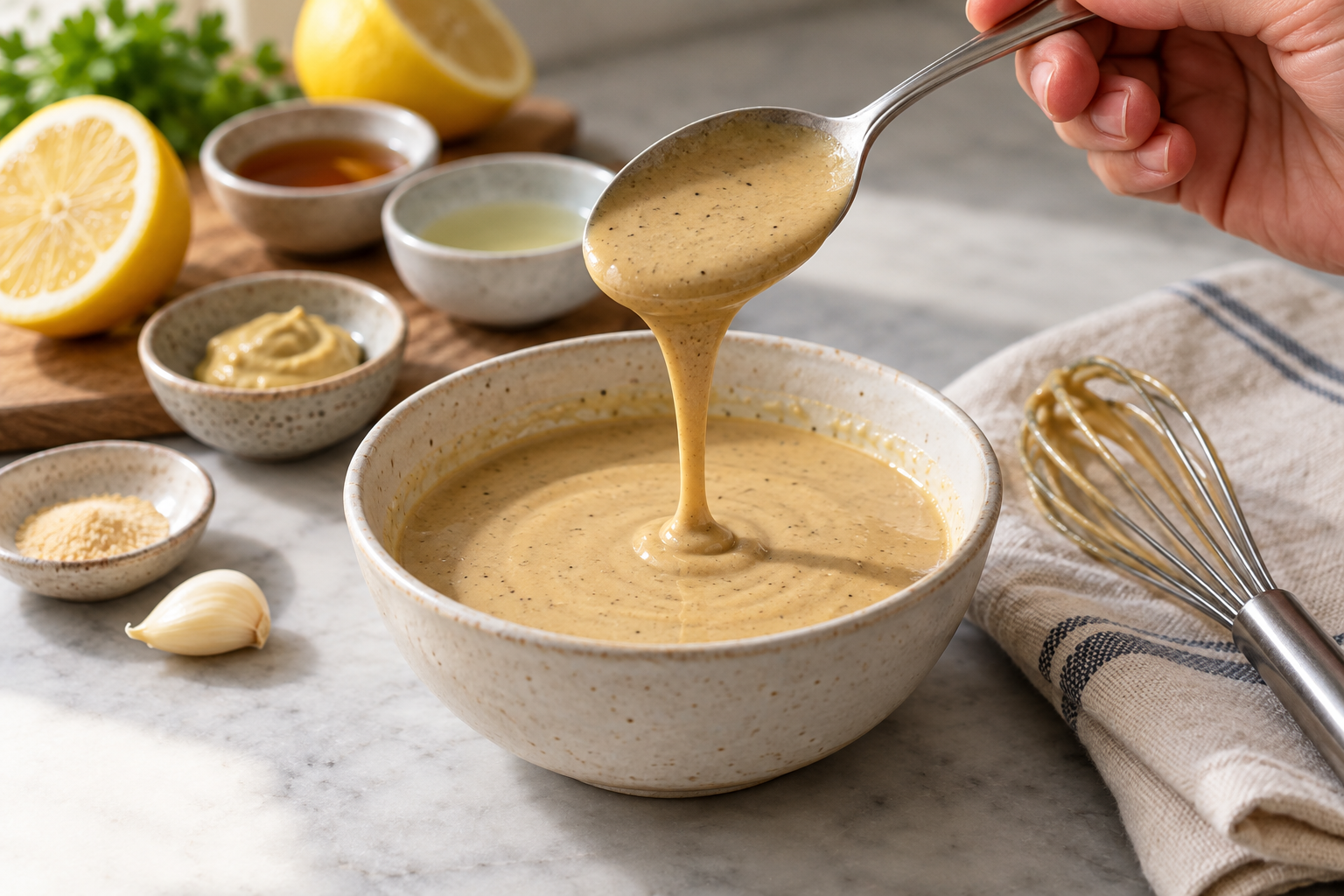
- Add the concentrated flavor. Whisk in the lemon juice, cider vinegar, mustard, maple syrup, and garlic powder. The mixture may tighten or look slightly uneven. Scrape the sides and keep the ingredients together rather than adding oil to rescue it.
- Loosen gradually. Add 2 tablespoons of the measured water and whisk until the streaks disappear. Add the remaining 2 tablespoons in two additions, whisking after each. The dressing should become smoother and lighter as the water is incorporated.
- Pause and assess. Let the bowl stand for about a minute. Lift a spoon and watch how the dressing falls. For a thinner dressing, add extra water 1 teaspoon at a time; you may need less than the full optional 2 tablespoons.
- Season against the meal. Dip in a piece of carrot, a leaf, or a spoonful of grain. Add salt only if needed and finish with pepper. If the dressing lacks brightness, add ½ teaspoon lemon juice, stir, and taste again.
- Use or store. Spoon onto the meal immediately, or transfer to a clean covered jar and refrigerate. Label the date. Stir before each use, then thin only the portion you need if it has thickened in the cold.
The small fixes that matter
The mixture looks stiff after the lemon: continue with the measured water and steady whisking. A seed-butter dressing can become temporarily thicker before it loosens. Do not throw in several tablespoons of oil; that changes the flavor and can leave the finished dressing greasy.
It tastes bitter: first taste the original sunflower butter. A strongly roasted spread will carry that character into the dressing. A small additional ½ teaspoon maple syrup may balance normal roasted bitterness. If the jar smells or tastes stale or rancid, start with a fresh product rather than trying to cover it with sweetener.
It became too thin: stir in 1 teaspoon sunflower butter at a time, working it smooth before adding more. This is easier than trying to reduce the dressing over heat, which is unnecessary for a cold sauce. Stop when it lightly coats the food instead of pooling underneath.
The dressing feels gritty: the texture may come from the spread itself. Thorough stirring and a minute of resting can help small dry pockets, but a coarse spread will not become completely silky just from adding more liquid. Choose a finer seed butter next time if a very smooth result matters.
Change the flavor while keeping the same balance
- Fresh herb version: stir in 1 tablespoon finely chopped dill or chives after the dressing is smooth. Chop the herbs small enough that they travel through a spoonful rather than collecting in a large clump.
- Ginger version: replace the garlic powder with ½ teaspoon finely grated fresh ginger. Keep the lemon and cider vinegar amounts unchanged at first, then taste before adding more acid.
- Smoky version: add ¼ teaspoon smoked paprika. Let the dressing stand for 5 minutes so the spice disperses, then check whether it needs another teaspoon of water.
Peanut butter or almond butter can make other good sauces, but they change the flavor and the relevant allergen considerations. This recipe is written for sunflower butter. Likewise, using tahini would remove the specific ingredient substitution that this batch is meant to solve.
Put the dressing on a meal, not just a tasting spoon
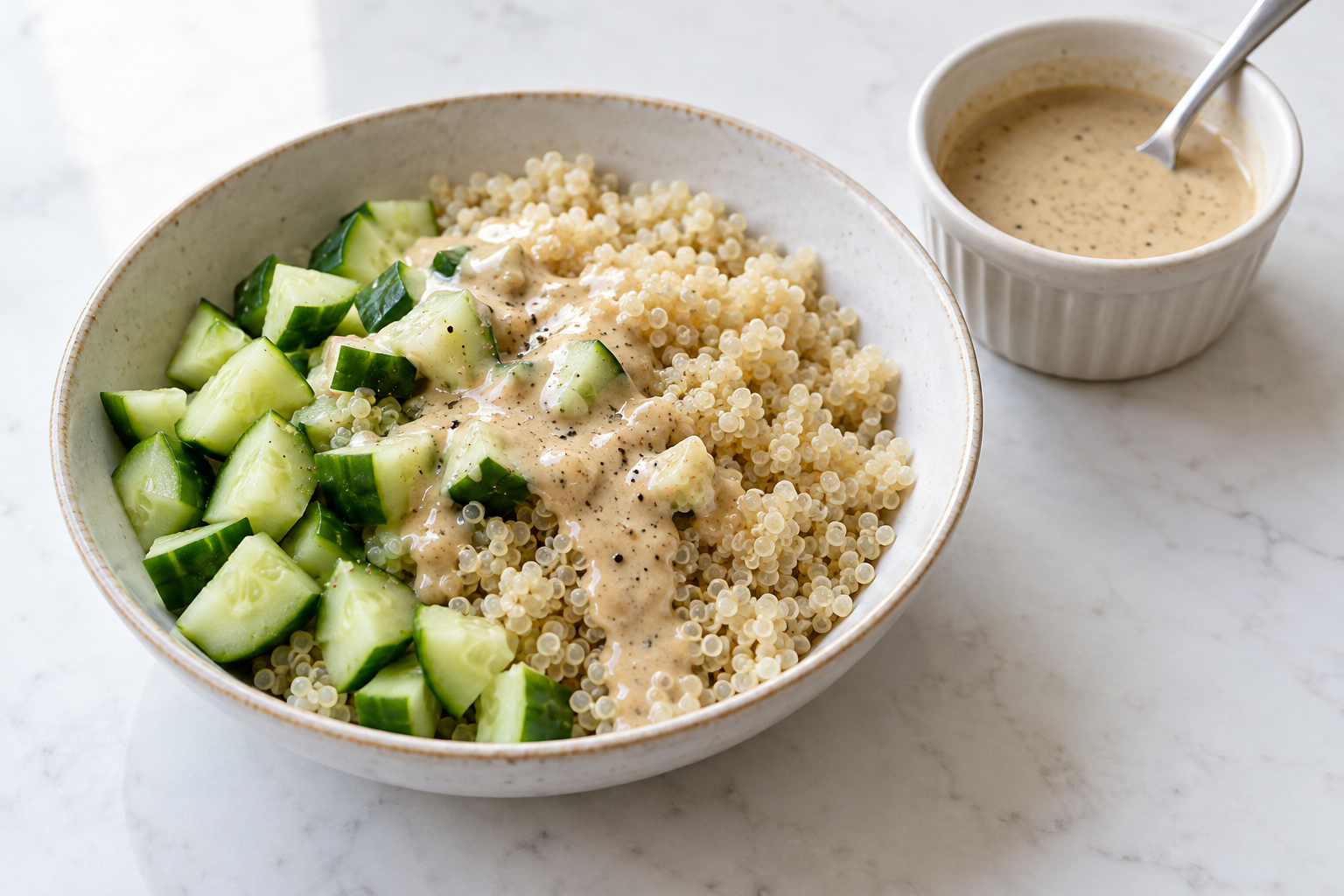
For a simple lunch, toss 2 tablespoons dressing with 1 cup cooked, cooled grain and a handful of chopped cucumber. Add the crunchy vegetables at the last minute so the dressing coats them without drawing out too much water. For a warm bowl, spoon the dressing over the top after the food leaves the heat rather than simmering it in the pan.
The quinoa, pea, and chickpea bowls provide a useful grain-and-bean base; use a modest amount of this dressing so the existing lemon does not become overwhelming. You can also drizzle it over roasted broccoli immediately before serving, leaving some crisp edges uncovered.
Refrigerate the finished mixture
Once water, lemon, and mustard are added, treat the dressing as a prepared perishable food rather than like the original jar of seed butter. Keep it covered at 40°F or below and use within 3–4 days. Follow FoodSafety.gov storage guidance for prompt refrigeration: within 2 hours, or 1 hour in temperatures above 90°F.
The dressing commonly thickens when cold. Spoon out a portion, stir in 1 teaspoon water, and check the texture before adding another. Avoid repeatedly warming the whole jar on the counter. Freezing is less useful for a batch this small because the texture can separate; fresh preparation gives you more predictable control.
Questions about making the dressing work
Can I use raw sunflower butter?
Yes, if it is smooth and fresh. The flavor will be milder and sometimes more grassy than a roasted spread. Start with the same amount and adjust the lemon at the end. The exact water requirement depends more on the spread’s texture than on the color of the label.
Do I need the maple syrup?
No. It balances the lemon and vinegar but does not provide the creamy texture. Leave it out if you prefer a sharper dressing or if the sunflower butter is already sweetened. Taste it with the actual meal before deciding whether the acidity needs softening.
Can I make creamy sunflower butter dressing without tahini ahead?
Yes. Make it up to 3 days ahead, keep it refrigerated, and stir before use. Add fresh herbs closer to serving if you want their brightest flavor. If an ingredient was already near the end of its safe storage window, use the finished dressing sooner.
Why use both lemon juice and cider vinegar?
Lemon provides a fresh citrus note, while cider vinegar gives a slightly rounder sharpness. If only one is available, use 2 tablespoons of that liquid as a starting point. Different brands vary, so finish by tasting instead of assuming the substitution will be identical.
Can I use this as a raw-meat marinade?
Set aside a separate portion if you want to experiment with it as a marinade. Do not return anything that has touched raw meat to the clean dressing jar or serve it as a cold sauce. The recipe’s main purpose is a finishing dressing for food that is ready to eat.
How do I make a smaller amount?
Halve the sunflower butter, lemon, vinegar, mustard, maple syrup, and water. Use a small pinch of garlic powder and add salt only after tasting. A fork works well for this tiny quantity. Keep optional thinning water separate and add it by the teaspoon.
Finish creamy sunflower butter dressing without tahini by matching its thickness to the food: spoonable for dipping, ribbon-like for bowls, and lightly flowing for salad leaves. Taste a dressed bite before making the last seasoning adjustment, then refrigerate the remaining batch promptly.
Whisk creamy sunflower butter dressing without tahini by hand
Creamy sunflower butter dressing without tahini is easiest to adjust when the measured water and optional extra water remain distinct. Put the quarter cup of water in a small jug and keep a teaspoon beside the bowl. This makes it clear when the original liquid has been incorporated and when you are making a final thickness adjustment for the meal rather than simply finishing the base recipe.
Reach the bottom of the sunflower butter jar
Before measuring, use a sturdy spoon to bring the firmer seed paste from the bottom through any oil at the top. Work slowly so oil does not spill over the rim. Check the bottom corners, where a dense layer can remain even after the upper half looks mixed. Measure the combined spread only once its consistency is reasonably even. If a refrigerated portion is too firm to work smoothly, soften just the measured amount briefly as the method describes rather than leaving the entire jar open while preparing the rest of dinner.
Use the bowl shape to keep ingredients together
Choose a small bowl with enough width for the whisk to move through the seed butter. Scrape the thick mixture down from the sides before adding the lemon, vinegar, mustard, syrup, and garlic powder. Whisk in short strokes through the center, then run the utensil around the edge to bring in any concentrated seasoning. If using a fork, press a small stiff patch against the bowl before stirring it back through. The initial texture can be tight, but all the measured ingredients should remain together rather than collecting in separate bands.
Incorporate each water addition fully
Add the first two tablespoons of room-temperature water and work until the visible watery streaks have disappeared. Then add the remaining measured water in the two stages specified. A small flexible spatula can help scrape thick dressing from the whisk or bowl wall between additions. Check beneath the mixture for an unmixed pocket before deciding it needs more liquid. Water at the edge and paste in the center indicate incomplete mixing, not necessarily an incorrect ratio. Finish the original additions before using the brief standing period to assess the dressing’s final flow.
Match the ribbon to a real piece of food
Lift a spoon after the pause and observe how the dressing leaves it. Then test the same small amount on a carrot piece, a leaf, or a spoonful of the grain you plan to serve. A dressing that looks attractively fluid in the bowl may slide straight off a smooth vegetable, while a thick dip may cling too heavily to delicate greens. Use the optional teaspoon additions to approach the desired coating gradually. Stir fully and repeat the food test before making another adjustment, especially near the point where the sauce begins to pour freely.
Portion before the final flavor adjustment
For a meal with several components, spoon dressing onto a small serving first and toss or spread it as intended. Taste that combination before changing the whole batch’s salt, sweetness, or lemon. A salty grain mixture or tart vegetable accompaniment changes how the dressing tastes in use. When transferring the remainder to its clean jar, scrape the bowl thoroughly and leave room to stir later. If a refrigerated portion thickens, loosen that portion separately as directed instead of repeatedly adding water to the full batch whenever someone wants a different consistency.
Printable dressing recipe
Use the card’s Print control for the measured ingredients, mixing order and storage notes.
Creamy Sunflower Butter Dressing Without Tahini
Ingredients
Equipment
Method
- Stir the seed butter. Mix the contents of the sunflower butter jar first. Measure ¼ cup into the bowl and spread it around with the whisk. If the butter is very firm from refrigeration, let only the measured portion soften briefly before starting.
- Add the concentrated flavor. Whisk in the lemon juice, cider vinegar, mustard, maple syrup, and garlic powder. The mixture may tighten or look slightly uneven. Scrape the sides and keep the ingredients together rather than adding oil to rescue it.
- Loosen gradually. Add 2 tablespoons of the measured water and whisk until the streaks disappear. Add the remaining 2 tablespoons in two additions, whisking after each. The dressing should become smoother and lighter as the water is incorporated.
- Pause and assess. Let the bowl stand for about a minute. Lift a spoon and watch how the dressing falls. For a thinner dressing, add extra water 1 teaspoon at a time; you may need less than the full optional 2 tablespoons.
- Season against the meal. Dip in a piece of carrot, a leaf, or a spoonful of grain. Add salt only if needed and finish with pepper. If the dressing lacks brightness, add ½ teaspoon lemon juice, stir, and taste again.
- Use or store. Spoon onto the meal immediately, or transfer to a clean covered jar and refrigerate. Label the date. Stir before each use, then thin only the portion you need if it has thickened in the cold.