Quick Recipe Overview: Eight wedges of green cabbage, seasoned with coriander and lemon zest, roast at 425°F for 20 minutes until their edges char, then 1 1/2 pounds of salmon join them on the same pan for 10–18 minutes, until the thickest piece reaches 145°F. A cool sauce of Greek yogurt, lemon juice and fresh dill goes on at the table. Serves 4 in under an hour.
Best method: give the cabbage a head start, then add the fish so both finish at the same time.
| Prep | Cook | Total | Serves | Oven | Fish done at |
|---|---|---|---|---|---|
| 15 min | 30–38 min | about 53 min | 4 | 425°F | 145°F |
Sheet Pan Salmon and Charred Cabbage
Sheet pan salmon with roasted cabbage and dill yogurt is a one-pan dinner for 4: 1 1/2 pounds of salmon, a small head of green cabbage and a quick 3-ingredient yogurt sauce. The cabbage roasts at 425°F until sweet and browned at the edges, and the salmon cooks right alongside it for the last 10–18 minutes.
It is ideal for weeknights when you want a real dinner with little cleanup. Cabbage is inexpensive, keeps for weeks in the fridge and, when roasted, loses its raw sharpness and turns nutty and tender. Rich salmon and a tangy dill sauce round it out.
Equipment
- Large rimmed sheet pan (about 18 x 13 inches) so the wedges are not crowded.
- Parchment paper for easy cleanup and to keep salmon skin from sticking.
- Instant-read thermometer, the most reliable way to know when salmon is done.
- Wide, thin fish spatula for lifting fillets and wedges cleanly.
- Chef’s knife, microplane and small bowl for the cabbage, zest and sauce.
Ingredients and Substitutions
| Ingredient | Amount | Notes and swaps |
|---|---|---|
| Salmon fillets | 1 1/2 lb, cut into 4 portions | Choose center-cut pieces of similar thickness (about 1 inch). Skin-on or skinless both work. Arctic char or steelhead trout are good swaps; thinner fillets cook faster. |
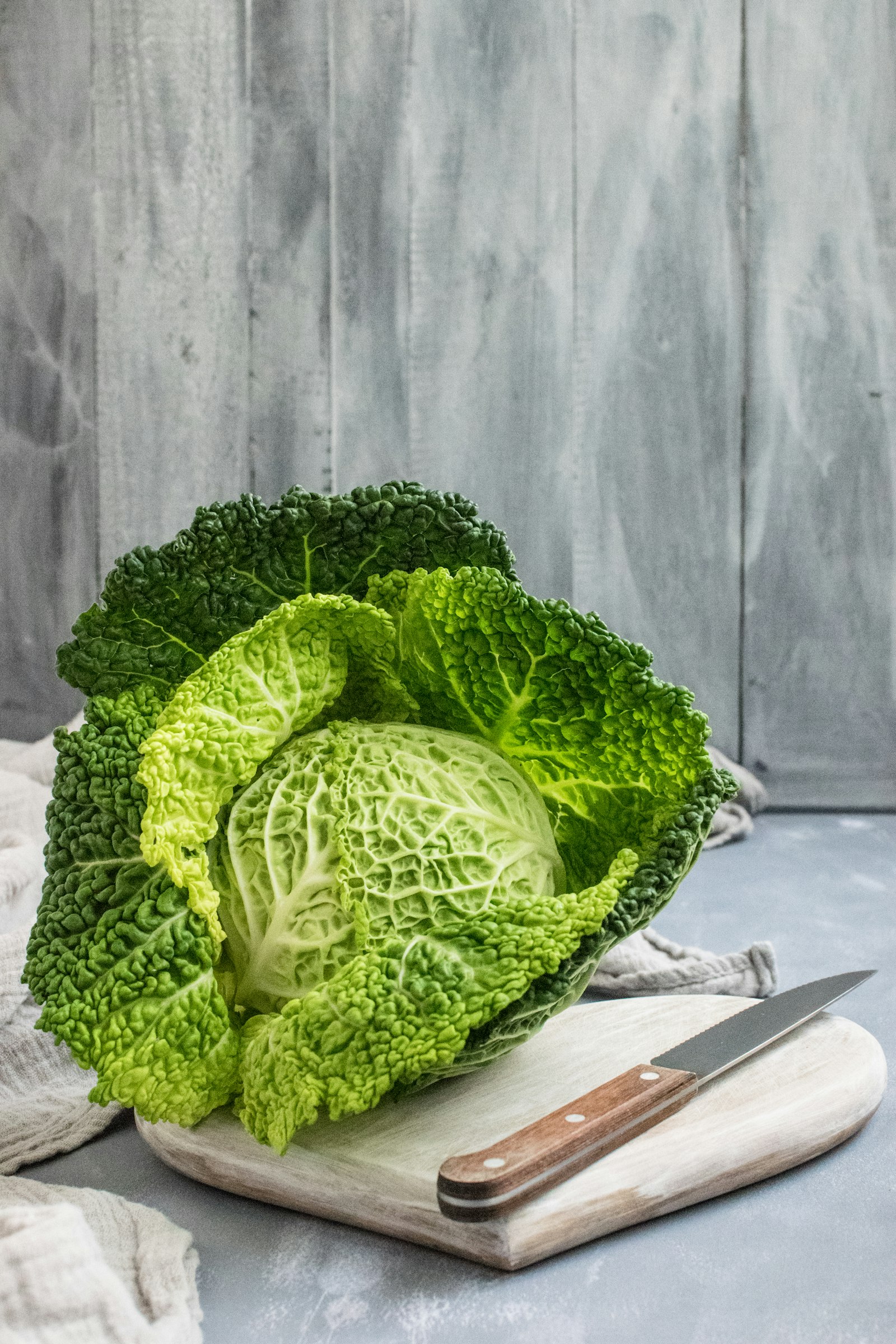
| Green cabbage | 1 small head, cut into 8 wedges through the core | Savoy cabbage is more tender and cooks a little faster; red cabbage works but can bleed color onto the fish. |
| Ground coriander | 1 teaspoon | Warm, citrusy spice that suits both cabbage and salmon. Caraway or fennel seed are classic cabbage partners too. |
| Lemon zest | 1 teaspoon | From about 1 lemon; use the juice in the sauce. |
| Plain Greek yogurt | 1/2 cup | Whole-milk or 2%. Sour cream or a plant-based yogurt can stand in. |
| Lemon juice | 1 tablespoon | Fresh is best. |
| Fresh dill, chopped | 2 tablespoons | Or 2 teaspoons dried dill; parsley or chives also work. |
| Olive oil | 2 tablespoons, divided | 1 for the cabbage, 1 for the salmon. |
| Fine salt | 1/2 teaspoon, divided | Add a pinch to the sauce to taste. |
| Black pepper | 1/4 teaspoon |
Allergens: Contains fish (salmon) and milk (yogurt). Naturally gluten-free, egg-free and nut-free. For dairy-free, use an unsweetened plant-based yogurt in the sauce.
Why It Works
Keep the core on every wedge. Cut the cabbage in half through the root, then into quarters, then each quarter in half, always slicing through the core. That little wedge of core holds the leaves together, so they roast as a unit and you can flip them without the layers falling apart.
Cabbage needs a head start. Dense cabbage takes longer to become tender than salmon takes to cook. Roasting it alone for 20 minutes lets its natural sugars caramelize on the cut faces. When the fish goes in, the cabbage finishes softening while the salmon cooks.
Thickness matters more than weight. A 1-inch-thick fillet cooks evenly in the 10–18 minute window; a thin tail end cooks much faster. Fold thin tails underneath, and place thicker pieces toward the outer edges of the pan where heat is strongest.
A cold sauce on hot food. Dill yogurt keeps its fresh flavor and creamy texture only if it never sees the oven. Spoon it on at serving time.
Step-by-Step Method
- Heat the oven (about 15 minutes). Set a rack in the center and heat to 425°F. Line the sheet pan with parchment. Take the salmon out of the fridge while you prep.
- Cut and season the cabbage (5 minutes). Remove any loose outer leaves and cut the head into 8 wedges through the core. Toss gently with 1 tablespoon oil, half the salt and pepper, the coriander and lemon zest. Lay the wedges cut side down in one layer with space between them. Cue: no wedges overlap.
- Roast the cabbage (20 minutes). Roast, flipping once halfway if the undersides darken quickly. Cue: deep golden-brown edges and a knife slides into the thick part with only slight resistance.
- Make the sauce (3 minutes). While the cabbage roasts, stir the yogurt, lemon juice, dill and a pinch of salt. Refrigerate. Cue: thick and spoonable; thin with a teaspoon of water if needed.
- Add the salmon (2 minutes). Pat the salmon dry, rub with the remaining oil, salt and pepper. Slide the cabbage aside to make room and place the fillets skin side down, thicker ones near the edges.
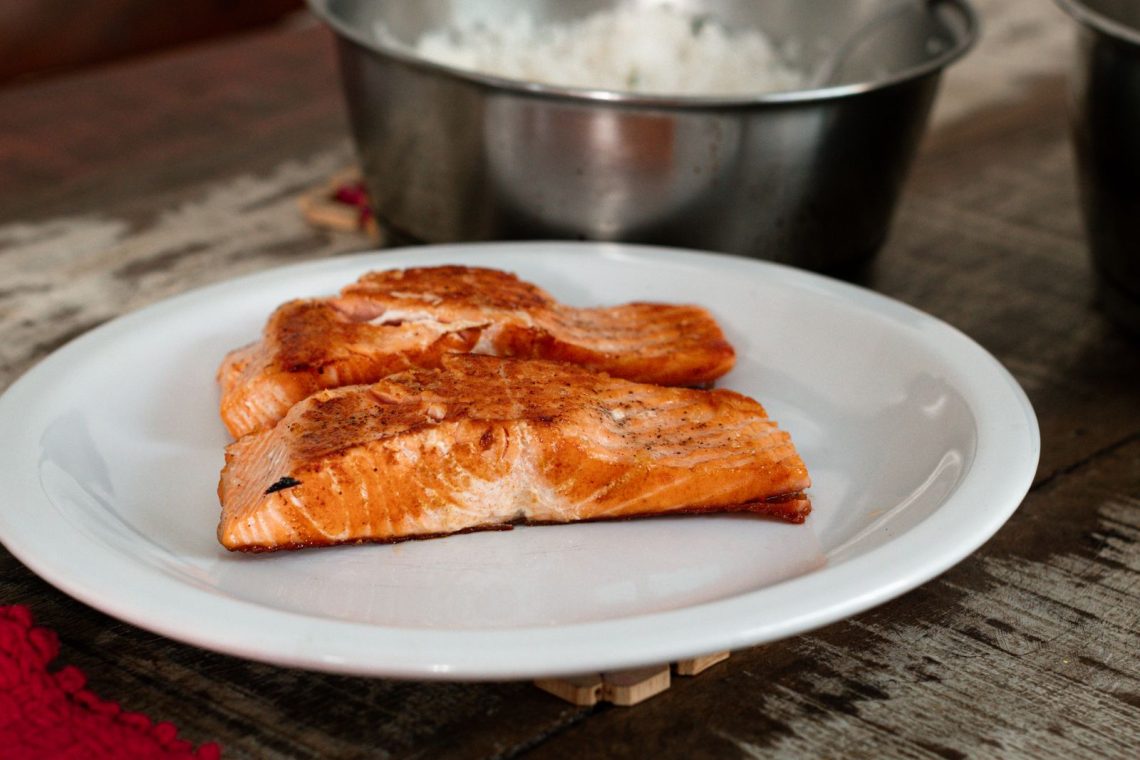
- Roast until done (10–18 minutes). Begin checking at 10 minutes. Cue: the thickest part reads 145°F on an instant-read thermometer inserted from the side, and the flesh is opaque and separates easily with a fork. Remove any pieces that are done early.
- Serve (2 minutes). Plate 2 cabbage wedges and 1 salmon portion per person, and spoon dill yogurt over the top or alongside.
Timeline tip: Make the dill yogurt and cut the cabbage up to a day ahead (wrap wedges tightly). Start potatoes or rice when the cabbage goes in, and everything lands on the table together.
Food safety: fish and leftovers. Cook salmon to a minimum internal temperature of 145°F, until the flesh is opaque and separates easily with a fork (FoodSafety.gov; FDA seafood safety). Thaw frozen salmon in the refrigerator, not on the counter. Use a separate board for raw fish. Refrigerate leftovers within 2 hours (1 hour above 90°F), eat within 3–4 days, and reheat to 165°F (USDA FSIS leftovers).
Troubleshooting
| Problem | Likely cause | Fix |
|---|---|---|
| Cabbage wedges fall apart | Core cut away | Slice through the core so each wedge keeps a piece of it. |
| Cabbage is pale and steamed | Crowded pan or wet leaves | Dry the cabbage and space wedges out; use two pans if needed. |
| Cabbage still firm when salmon is done | Wedges too thick | Remove the salmon, return the cabbage for 5 more minutes. |
| Salmon dry or chalky | Overcooked | Check early and pull at 145°F; thin pieces finish first. |
| White beads (albumin) on salmon | Cooking too fast or too long | Harmless; pull the fish promptly next time. |
| Skin sticks to the pan | No parchment | Use parchment, or slide a thin spatula between flesh and skin. |
| Sauce is runny | Thin yogurt or too much juice | Use Greek yogurt and add lemon juice gradually. |
What to Serve With It
Boiled baby potatoes tossed with butter and extra dill are the classic partner, and rice or crusty bread also work. For a second vegetable, try skillet radishes with frozen peas. If you enjoy this dinner, try oat crusted salmon with horseradish yogurt or salmon parchment packets with leeks and mustard.
Variations: swap coriander for caraway seeds; brush the cabbage with a teaspoon of Dijon before roasting; add grated cucumber to the yogurt for a tzatziki-style sauce; or finish with capers and lemon wedges.
Make-Ahead, Storage and Reheating
- Leftovers: refrigerate salmon and cabbage in shallow covered containers within 2 hours; use within 3–4 days.
- Sauce: keep the dill yogurt separately in the fridge and use within a few days.
- Reheating: warm salmon and cabbage covered in a 275–300°F oven, or eat the salmon cold flaked over greens. If reheating, bring it to 165°F.
- Freezing: cooked salmon can be frozen but is best fresh; roasted cabbage softens when frozen.
Frequently Asked Questions
What temperature should salmon be cooked to?
145°F in the thickest part, per FoodSafety.gov. The flesh should be opaque and flake easily.
Can I use frozen salmon?
Thaw it in the refrigerator overnight first and pat it dry. This recipe is written for thawed fish; cooking from frozen changes the timing and adds water to the pan.
Should I leave the skin on?
Either way works. Skin-on fillets are a little more forgiving; the skin protects the bottom from overcooking.
How do I keep cabbage wedges from falling apart?
Cut through the core so each wedge holds a piece of it, and flip gently with a wide spatula.
Can I use red cabbage?
Yes. It roasts the same way, though it may tint the salmon slightly where they touch.
Can I make the dill yogurt ahead?
Yes, up to a day or two in a covered container in the fridge. Stir before serving.
How do I know the cabbage is done?
The cut faces are browned and a knife slides into the thickest part easily.
Is this recipe gluten-free?
Yes, all the ingredients are naturally gluten-free; check spice labels if you are highly sensitive.
Recommended Tools
- Instant-read thermometer, for perfect 145°F salmon
- Rimmed half-sheet pan, roomy enough for fish and 8 wedges
- Slotted fish spatula, for lifting fillets intact
- Precut parchment sheets
As an Amazon Associate I earn from qualifying purchases.
Final Thoughts
Roast the cabbage first, add the salmon, check with a thermometer and save the dill yogurt for the table. It is a balanced, colorful dinner from one pan, with very little to wash up.
Sheet Pan Salmon with Roasted Cabbage and Dill Yogurt
Prep: 15 min · Cook: 30–38 min · Total: about 53 min · Serves: 4 · Oven: 425°F
Ingredients
- 1 1/2 lb salmon fillets, cut into 4 portions
- 1 small green cabbage, cut into 8 wedges through the core
- 1 teaspoon ground coriander
- 1 teaspoon lemon zest
- 1/2 cup plain Greek yogurt
- 1 tablespoon lemon juice
- 2 tablespoons chopped fresh dill
- 2 tablespoons olive oil, divided
- 1/2 teaspoon fine salt, divided
- 1/4 teaspoon black pepper
Instructions
- Heat oven to 425°F and line a large rimmed sheet pan with parchment.
- Toss cabbage wedges with 1 tablespoon oil, half the salt and pepper, coriander and lemon zest. Roast in one layer 20 minutes, flipping once if needed.
- Mix yogurt, lemon juice, dill and a pinch of salt; refrigerate.
- Pat salmon dry; rub with remaining oil, salt and pepper. Nestle among the cabbage.
- Roast 10–18 minutes, until the thickest salmon reaches 145°F and flakes easily.
- Serve with the dill yogurt.
Notes
Refrigerate leftovers within 2 hours and use within 3–4 days; reheat to 165°F. Keep the sauce separate.