
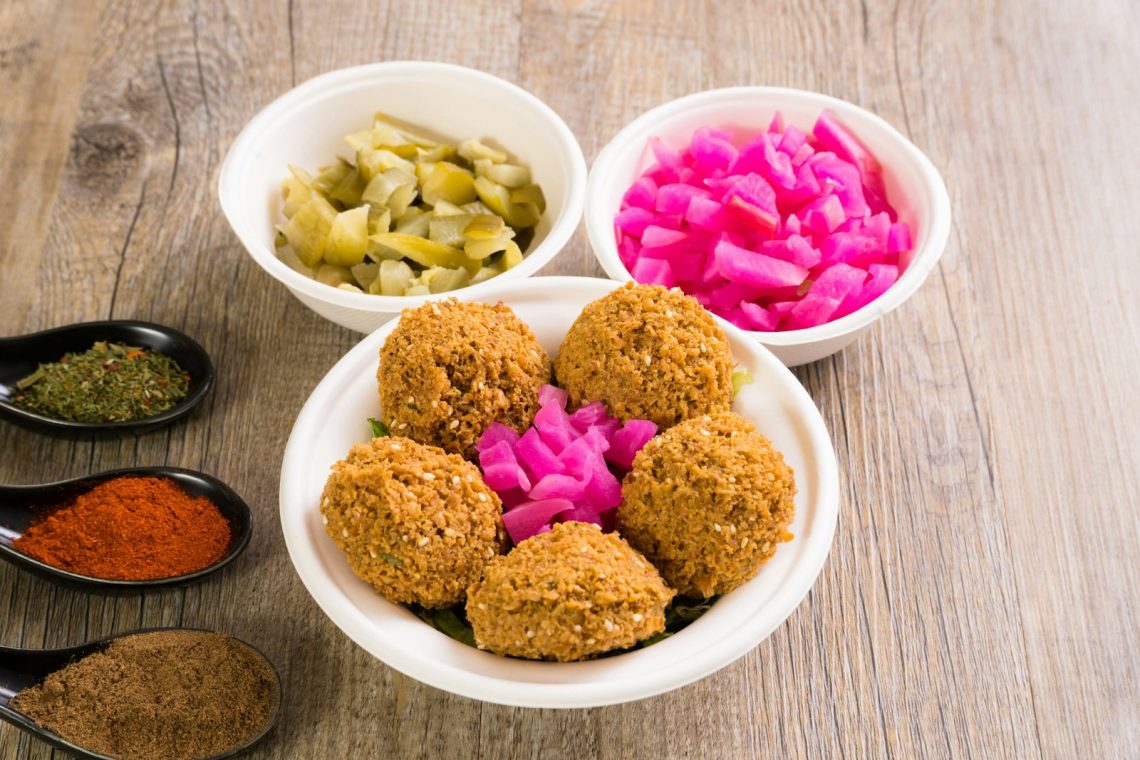
Baked falafel from soaked chickpeas depends on a different starting point from a canned-chickpea patty. The chickpeas are soaked, drained, and ground before cooking, which gives the mixture a coarse structure that can become tender inside while the outside browns. Herbs, garlic, cumin, and coriander supply the flavor; a little chickpea flour helps the patties hold their shape.
The oven version is shaped into small flattened patties rather than large balls. That shape gives the centers time to cook while both broad surfaces develop color against an oiled pan. Plan the soak the day before, then allow a short chill after grinding. The hands-on work is manageable, but this is not a recipe to start from dry chickpeas at the last minute.
Why soaked dried chickpeas matter
Canned chickpeas are already cooked and much softer than soaked dried chickpeas. Substituting them in this formula can produce a wet mixture that needs different binders and handling. Use dried chickpeas for the written method and soak them in plenty of water in the refrigerator. They expand substantially, so choose a bowl with room above the original level.
After soaking, drain, rinse, and dry the chickpeas well. Surface water makes the mixture harder to shape. The chickpeas should be plump enough to cut with a knife, but they remain uncooked at this stage. The baking step must cook them fully. Do not taste the raw mixture, and do not substitute dried kidney beans or another pulse into this chickpea-specific method.
Grind to a coarse, even texture
A food processor is the most practical tool because it can chop the chickpeas finely without adding liquid. Pulse in short bursts, scrape the bowl, and continue until the mixture resembles damp coarse sand. A few larger chickpea pieces can make patties crumble, but processing to a smooth paste removes the texture that makes falafel appealing.
Herbs should be washed and dried before adding. Wet parsley or cilantro brings extra water that is easy to overlook. Use mostly leaves and tender stems, discarding woody stems. Onion also contributes moisture, so keep the amount measured rather than adding a whole large onion. The mixture will look loose in the processor; test a spoonful by pressing it firmly before deciding it needs more liquid.
Bind and chill baked falafel from soaked chickpeas
Chickpea flour absorbs some moisture and supports the shape without adding an egg. Start with the measured two tablespoons, then give the mixture a chance to rest. The short refrigerator chill helps it firm and makes shaping easier. Adding large amounts of flour immediately can make the baked centers dense.
After chilling, press a portion between your hands. It should hold as a compact patty without shedding many crumbs. If it is dry and sandy, a teaspoon or two of water can help. If it feels wet and sticky, the optional tablespoon of flour is a controlled adjustment. Shape all twelve patties to similar thickness. Thick balls are less reliable in this oven method because the outside can brown before the center cooks through.
Use the pan to develop a crust
A heavy rimmed sheet pan gives useful contact heat. Brush it with oil rather than relying on a very dry nonstick surface. The oil helps the underside brown and makes turning easier. Leave space between patties and do not move them repeatedly during the first stage, because a crust needs time to form.
Slide a thin spatula beneath a patty to check the underside. If it resists and looks pale, give it more time before turning. After flipping, continue until the second side colors and the center is fully cooked and tender. Break open one test patty if needed; it should not have a raw, gritty center. If the surfaces brown too quickly, lower the oven slightly and continue cooking rather than serving underdone patties.
Serve with contrasting textures
Falafel pairs well with cool chopped vegetables, lettuce, flatbread, and a spoonable tahini or yogurt sauce. Keep the sauce separate until serving so the crust does not soften prematurely. The recipe makes twelve small patties, enough for four portions of three when served with accompaniments.
Freshly baked falafel has the best surface texture. If cooking for a group, prepare the mixture ahead and keep it refrigerated, then shape and bake close to serving. Do not leave the uncooked mixture at room temperature for a long holding period. Leftovers are useful in salads or wraps, but they will be softer. A hot oven or toaster oven restores the exterior better than a covered microwave, though the centers must still heat thoroughly.
Cool and store safely
Refrigerate cooked patties promptly in a shallow container once portioned. Refrigerate leftovers in shallow containers within two hours, or one hour when the surrounding temperature is above 90°F. Keep the refrigerator at 40°F or colder and use cooked leftovers within three to four days. These limits follow USDA leftover guidance. Reheat cooked leftovers to 165°F, as advised by FoodSafety.gov. Freeze cooked falafel for up to two months for best quality. Thaw in the refrigerator and reheat in the oven until the centers are fully hot.
A useful final check
The outside should be brown and firm enough to lift, while the center remains tender rather than dry. A five-minute rest helps the patties settle. Baked falafel from soaked chickpeas works best when careful soaking, moderate shaping, and full cooking are treated as separate steps instead of rushed into one.
Frequently asked questions
Can I use canned chickpeas here?
Use a recipe specifically developed for canned chickpeas instead. Their soft, cooked texture changes the binding and moisture balance. Replacing soaked dried chickpeas cup-for-cup can make patties that collapse or become pasty, even if the flavoring is similar.
Why did my patties crack?
The mixture may be too dry, too coarse, or not pressed firmly enough. Test a small portion and add water only a teaspoon at a time if needed. Check that no large chickpea pieces remain and keep patties at the intended half-inch thickness.
Can I leave out cilantro?
Yes. Replace it with more parsley in the same measured volume. The flavor will be different but still herb-forward. Avoid removing all the herbs without adjustment, because they contribute both flavor and some moisture to the mixture.
Can I use an air fryer?
An air fryer changes airflow, browning, and cooking time, so this oven timing should not be copied directly. The written method is for a sheet pan. If adapting, use a small test batch and check full center doneness before serving the rest.
More useful recipes and cooking guides
- For another chickpea lunch idea, try Make-Ahead Chickpea Salad Pita Pockets Without Mayo.
- Explore additional pulse recipes in 15 Easy Bean and Lentil Recipes for Everyday Meals.
Crispy Baked Falafel from Soaked Chickpeas Recipe
Soaked dried chickpeas, herbs, and spices form small falafel patties that bake on an oiled pan until browned outside and tender inside.
Yield: 4 servings Prep: 25 minutes Cook: 35 minutes Total: 810 minutes (includes 750 minutes resting or soaking)
Ingredients
- 1 cup dried chickpeas — not canned, soaked as directed
- 1/2 small yellow onion — roughly chopped
- 2 cloves garlic
- 1/2 cup flat-leaf parsley leaves — loosely packed
- 1/4 cup cilantro leaves — loosely packed, or more parsley
- 1 teaspoon ground cumin
- 1 teaspoon ground coriander
- 3/4 teaspoon fine salt
- 1/4 teaspoon black pepper
- 2 tablespoons chickpea flour — plus 1 tablespoon only if needed
- 1/2 teaspoon baking powder
- 4 tablespoons olive oil — divided
- 1 tablespoon lemon juice
- 1 tablespoon water — only if mixture is too dry
Instructions
- Place dried chickpeas in a large bowl, cover with at least 3 inches of water, and refrigerate for 12–18 hours. Drain and rinse, then dry well on a clean towel. Do not cook the chickpeas before grinding for this recipe.
- In a food processor, pulse chickpeas, onion, garlic, herbs, cumin, coriander, salt, and pepper until finely chopped and sandy, scraping the bowl as needed. Do not puree into hummus. Add chickpea flour, baking powder, 1 tablespoon oil, and lemon juice; pulse just until mixed.
- Squeeze a spoonful. It should hold together when pressed. If dry and loose, add up to 1 tablespoon water; if very wet, add the optional tablespoon chickpea flour. Cover and refrigerate for 30 minutes.
- Heat oven to 425°F. Brush a heavy rimmed sheet pan with 2 tablespoons oil. Shape the mixture firmly into 12 patties about 2 inches wide and 1/2 inch thick. Place on the pan and brush tops with the remaining tablespoon oil.
- Bake for 15–18 minutes until the undersides are deeply golden. Turn carefully with a thin spatula and bake for 12–17 minutes more, until both sides are browned and centers are hot, tender, and fully cooked, with no raw gritty texture. Let stand for 5 minutes before serving. Do not taste the uncooked mixture.
Recipe notes
Allow 12–18 hours refrigerated soaking plus 30 minutes chilling. The total shown uses a 12-hour soak. Use dried chickpeas, not canned or other dried beans. Do not taste raw mixture. Bake until centers are fully cooked and tender.




