

Quick Recipe Overview
12 ounces of cremini mushrooms are browned hard, then simmered with onion, carrot, 3 cups fresh cabbage, 2 cups sauerkraut, a tart apple, a can of white beans, tomato paste, smoked paprika and caraway in 2 cups of broth for 20–25 minutes. The result is a thick, tangy, smoky stew for 4.
Best method: taste the sauerkraut before you start, brown the mushrooms in batches, and salt only at the end.
| Prep | 20 min | Cook | 45 min |
|---|---|---|---|
| Total | 65 min | Serves | 4 |
| Simmer | 20–25 min, partly covered | Diet | Vegetarian; vegan as written |

Vegetarian sauerkraut mushroom stew is a hearty, tangy one-pot meal: 12 ounces of browned cremini mushrooms, 2 cups of sauerkraut, fresh cabbage, apple and a can of white beans simmered with smoked paprika and caraway. It serves 4 in about an hour and is vegan as written.
It’s inspired by Central and Eastern European cabbage stews, but it isn’t meant to be one specific traditional recipe. It suits meatless dinners, cold-weather meal prep, and anyone with a jar of sauerkraut in the fridge who wants more than a hot dog topping.
Equipment
- Heavy pot or Dutch oven (4–5 quart): wide enough to brown the mushrooms without crowding.
- Fine-mesh strainer for draining the sauerkraut and beans.
- Wooden spoon to scrape up the browned bits.
- Chef’s knife and cutting board.
- Small bowl to hold the browned mushrooms.
Ingredients
| Ingredient | Amount | Why / swaps |
|---|---|---|
| Cremini mushrooms | 12 oz, thickly sliced | Meaty, savory base. White button or mixed mushrooms work. |
| Olive oil | 2 tbsp, divided | For browning and sautéing. |
| Yellow onion and carrot | 1 medium each, diced | Sweetness to balance the sour kraut. |
| Green cabbage | 3 cups, thinly sliced | Adds fresh texture next to the softer sauerkraut. Savoy works. |
| Sauerkraut | 2 cups, drained | The tangy backbone. Rinse only if it’s very salty or sour. Refrigerated kraut tastes fresher than shelf-stable. |
| Tart apple | 1 small, cored, diced | Softens the acidity. Granny Smith or Braeburn. |
| White beans | 1 can (15 oz), rinsed and drained | Protein and body. Cannellini, great northern or navy. |
| Low-sodium vegetable broth | 2 cups | Low-sodium, because sauerkraut is already salty. |
| Tomato paste | 1 tbsp | Depth and color. |
| Smoked paprika, caraway seeds | 1 tsp, ½ tsp | Smoky warmth and the classic sauerkraut spice. Use sweet paprika if you prefer. |
| Bay leaf, black pepper | 1, ¼ tsp | Background flavor. |
| Fine salt | ¼ tsp, only if needed | Taste first. |
| Parsley or dill | 2 tbsp, optional | Fresh finish. |
Allergens: free of the major allergens as written (no dairy, egg, wheat, soy, nuts or sesame), but check broth and sauerkraut labels. Some broths contain celery, soy or wheat. Bread served alongside usually contains wheat; a dollop of sour cream adds milk.
Why it works: balancing sour, smoky and sweet
Browning builds the savory base. Mushrooms are mostly water. In a crowded pot they steam and turn gray. In a hot pot with room, the water evaporates within a few minutes and the edges brown, which gives a vegetarian stew the depth that meat would usually provide. That’s why they’re browned first and set aside.
Acid needs a counterweight. Sauerkraut brands range from mild to very sour and salty. Tasting it first lets you decide whether to rinse it. The apple, carrot and caramelized tomato paste add sweetness, and the creamy beans soften the sharp edge.
Two kinds of cabbage. Fresh cabbage turns silky and sweet as it simmers, while sauerkraut brings tang and a softer texture. Together they taste more rounded than either one alone.
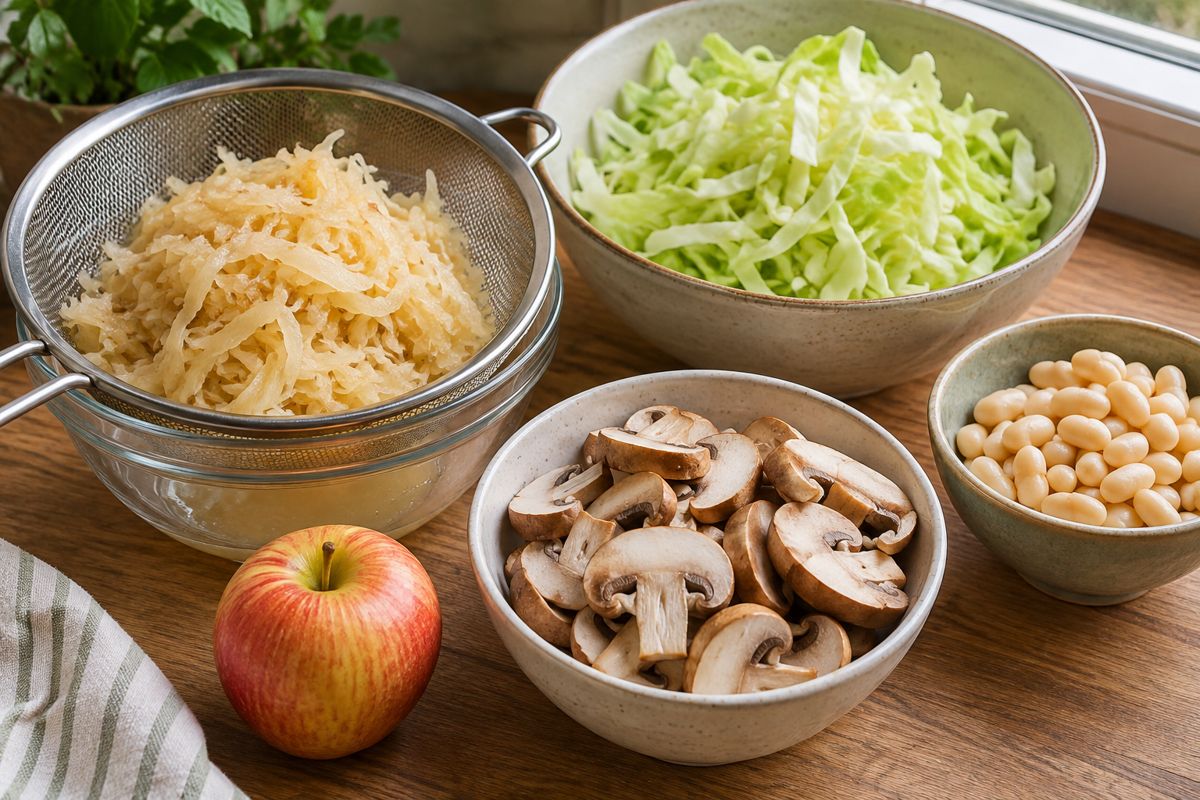
Step-by-step method
- Taste and drain the sauerkraut (2 min). Drain well. Rinse briefly only if it’s harsher than you like, then squeeze lightly. Cue: still moist, not wrung dry.
- Brown the mushrooms (7–9 min). Heat 1 tablespoon oil in the pot over medium-high heat. Add the mushrooms and stir only every couple of minutes. Cue: the released liquid has evaporated and the edges are deep golden. Move them to a bowl.
- Soften the onion and carrot (6–8 min). Add the remaining oil, onion and carrot over medium heat. Cue: the onion is translucent and the carrot has started to soften.
- Wilt the fresh cabbage (5 min). Stir in the cabbage. Cue: it collapses by about half and looks glossy.
- Toast the paste and spices (30 sec). Stir in the tomato paste, paprika and caraway. Cue: the paste darkens slightly and smells fragrant.
- Simmer (20–25 min). Return the mushrooms and add the sauerkraut, apple, beans, broth, bay leaf and pepper. Bring to a gentle simmer, partly cover, and stir occasionally. Add a splash of water if it gets too thick. Cue: the cabbage is tender, the apple is soft, and the stew is thick but still spoonable.
- Finish (2 min). Remove the bay leaf, taste, and add salt only if needed. Sprinkle with parsley or dill.
Make-ahead tip: this stew tastes even better the next day. Make it a day ahead, chill, and reheat with a splash of water or broth.

Food safety for leftovers
- Cool the stew quickly by dividing it into shallow containers, and refrigerate within 2 hours (1 hour above 90°F).
- Eat refrigerated leftovers within 3–4 days, and reheat to 165°F, bringing soups and stews to a rolling boil, as the USDA FSIS leftovers guide advises.
- See FoodSafety.gov cold storage charts for more storage times.
Troubleshooting
| Problem | Likely cause | Fix |
|---|---|---|
| Stew is too sour | Very tangy sauerkraut | Add a little grated apple or carrot, a pinch of sugar, or more beans and broth. Rinse the kraut next time. |
| Too salty | Salty kraut or regular broth | Add water and an extra handful of fresh cabbage or beans; don’t add more salt. |
| Mushrooms are rubbery and gray | Pan crowded, so they steamed | Brown them in two batches over medium-high heat. |
| Thin and watery | Too much broth, or simmered fully covered | Simmer uncovered 5–10 minutes, or mash some of the beans against the pot. |
| Too thick or catching on the bottom | Liquid evaporated | Stir in water a little at a time and lower the heat. |
| Tastes flat | Spices not toasted, or mushrooms underbrowned | Add a pinch more smoked paprika and some black pepper. Brown longer next time. |
What to serve with it
Serve with rye bread, boiled potatoes or buttered noodles. For a cabbage-themed feast, add our shortcut potato cabbage pierogi with wonton wrappers. If you like sauerkraut in a main dish, try the green lentil and sauerkraut stuffed peppers. For another mushroom-and-bean dinner, see the butter bean mushroom skillet without cream.
Make-ahead, storage and reheating
- Fridge: up to 3–4 days in a covered container. The flavor gets better on day two.
- Freezer: freezes well for 2–3 months. The apple and cabbage soften a bit more. Thaw in the refrigerator.
- Reheat: warm in a pot with a splash of water, stirring, until it boils and reaches 165°F. In the microwave, cover and stir halfway through.
Frequently asked questions
Should I rinse sauerkraut before cooking?
Taste it first. Rinse briefly only if it’s very salty or sour. Mild kraut can go in just drained, and it keeps more flavor that way.
Does cooking sauerkraut kill the probiotics?
Generally, yes. Simmering heats it well beyond the temperatures live cultures survive, so think of this stew as a flavorful dish rather than a probiotic source. To get live cultures, eat some raw refrigerated kraut on the side.
Can I use canned or jarred shelf-stable sauerkraut?
Yes. It’s often milder and softer. Taste it and add a splash of its brine or a squeeze of lemon if the stew needs more tang.
Can I make it with dried beans?
Yes. Use about 1½ cups of beans that you’ve already cooked until fully tender. Add them with the sauerkraut. Acidic sauerkraut can keep raw beans from softening, so don’t cook dried beans in the stew.
How do I make it creamier?
Mash a few of the beans into the liquid, or stir a dollop of sour cream or a plant-based alternative into each bowl.
Can I add sausage?
Yes, though it’s no longer vegetarian. Brown sliced fully cooked smoked sausage with the mushrooms and heat it through in the stew.
Is this stew vegan?
Yes, as written, if you use vegetable broth. Keep the garnish plant-based.
Recommended tools
- 5-quart Dutch oven: browns the mushrooms and simmers the stew in one pot.
- Fine-mesh strainer set: for draining kraut and beans.
- Glass meal-prep containers: shallow containers for quick cooling and lunches.
As an Amazon Associate I earn from qualifying purchases.
The takeaway
Brown the mushrooms well, taste the sauerkraut before deciding to rinse it, and let apple and beans balance the tang. You’ll get a cozy, smoky-sour stew that’s even better the next day.
Vegetarian Sauerkraut Mushroom Stew
Yield: 4 servings · Prep: 20 min · Cook: 45 min · Total: 65 min
Equipment
Heavy pot or Dutch oven, strainer, wooden spoon, knife and board
Ingredients
- 12 oz cremini mushrooms, thickly sliced
- 2 tbsp olive oil, divided
- 1 medium yellow onion, diced
- 1 medium carrot, diced small
- 3 cups green cabbage, thinly sliced
- 2 cups sauerkraut, drained (rinsed only if very salty or sour)
- 1 small tart apple, cored and diced
- 1 can (15 oz) white beans, rinsed and drained
- 2 cups low-sodium vegetable broth
- 1 tbsp tomato paste
- 1 tsp smoked paprika
- ½ tsp caraway seeds
- 1 bay leaf
- ¼ tsp black pepper
- ¼ tsp fine salt, only if needed
- 2 tbsp chopped parsley (optional)
Instructions
- Taste the sauerkraut. Drain well; rinse briefly only if too salty or sour, and squeeze lightly.
- Heat 1 tbsp oil in a heavy pot over medium-high. Cook mushrooms 7–9 minutes until their liquid evaporates and edges brown. Transfer to a bowl.
- Add remaining oil, onion and carrot; cook over medium heat 6–8 minutes. Add cabbage and cook 5 minutes. Stir in tomato paste, paprika and caraway for 30 seconds.
- Return mushrooms and add sauerkraut, apple, beans, broth, bay leaf and pepper. Simmer gently, partly covered, 20–25 minutes, stirring occasionally, until cabbage is tender. Add water if too thick.
- Remove bay leaf, taste and add salt only if needed. Serve hot with parsley and bread or potatoes.
Notes
Use cooked canned beans. Inspired by sauerkraut stew traditions rather than one regional recipe. Refrigerate leftovers within 2 hours; reheat to 165°F.




