Celery pineapple mint granita puts a green, savory note into a bright fruit ice. Pineapple remains the leading flavor, lime adds acidity, and mint supplies a fresh finish. Celery should make the dessert more interesting without making it taste like a glass of vegetable juice.
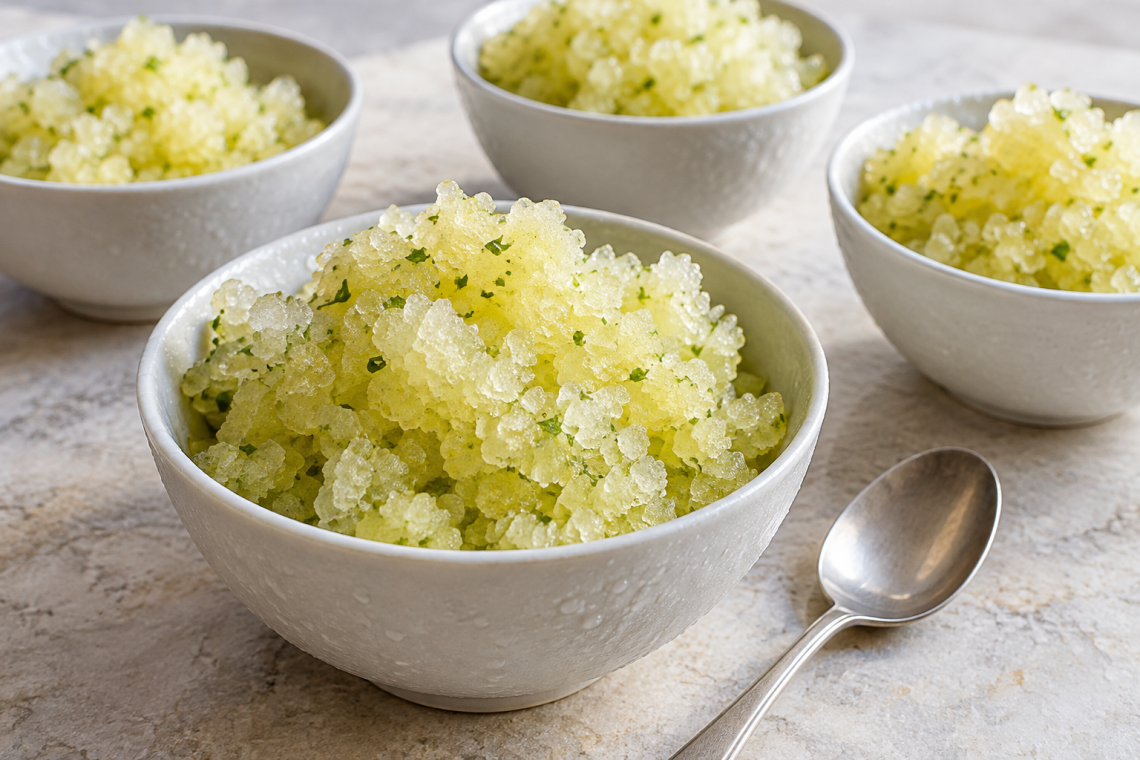
The texture is intentionally coarse and crystalline. A blender extracts the flavor, a strainer removes the toughest fibers, and a fork breaks the freezing mixture into loose ice. There is no need for a juicer or ice cream machine, but there is a need to return to the freezer several times.
The flavor balance starts with a smaller celery portion
The recipe uses three hundred grams of prepared pineapple and seventy-five grams of celery. That ratio keeps the sweet fruit in front. Adding an entire bunch of celery would change the dessert substantially, even if you added more sugar afterward.
Choose crisp celery ribs with a clean, mild aroma. Remove any tough outer strings and slice across the fibers before blending. Small crosswise pieces give the machine less work and make it easier to strain the mixture without leaving long threads behind.
Use flavorful ripe pineapple and remove its skin, eyes and hard core. The weight in the ingredient list refers to usable flesh. A fruit that tastes flat before blending will not become vivid just because it freezes. Taste a piece while preparing it, then keep the measured quantities consistent.
How to build celery pineapple mint granita without a juicer
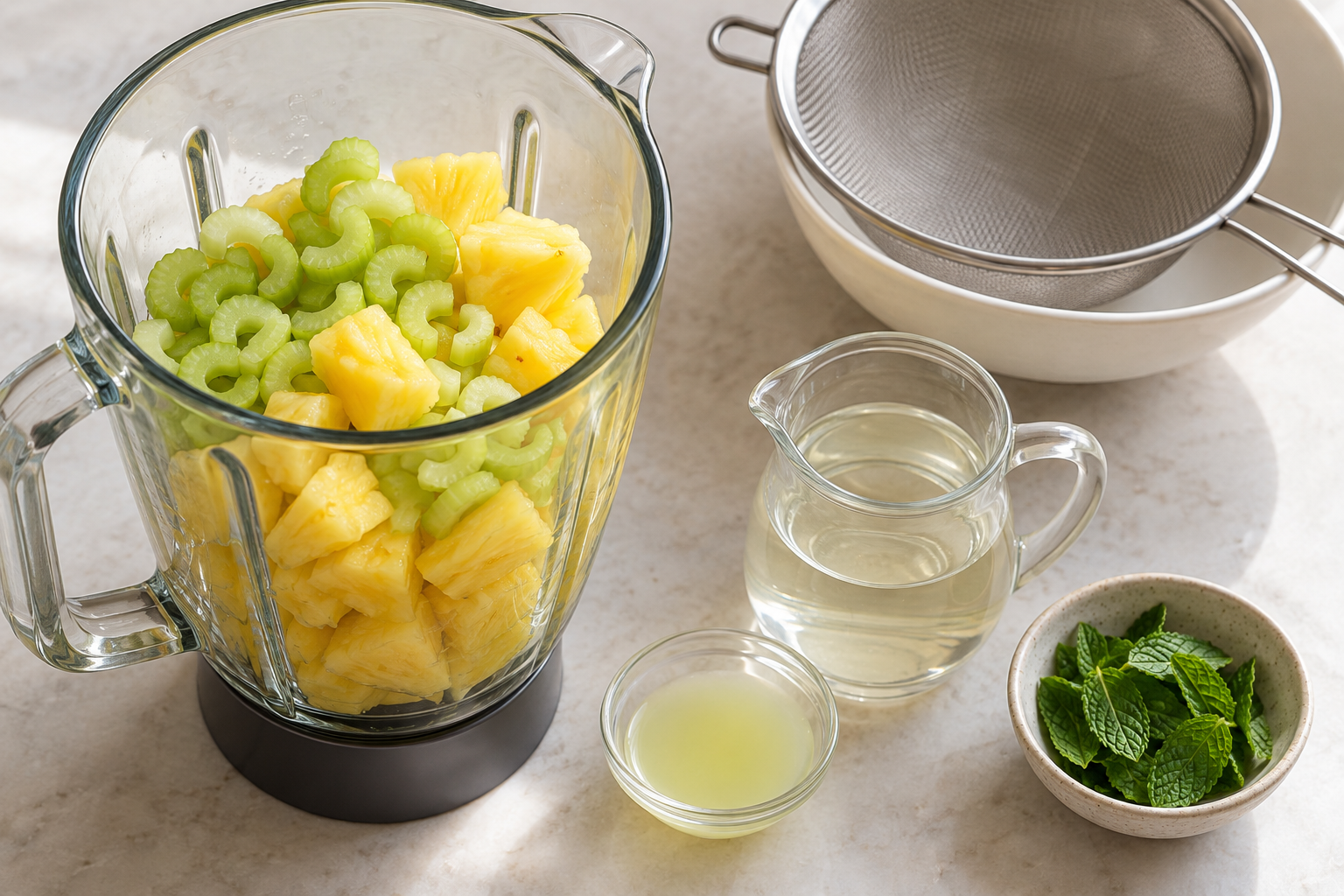
Dissolve, blend, then add the mint
Stir the granulated sugar into the measured water for a few minutes. It may not vanish instantly in cold water, but the blender will help finish the job. Check that there is no layer of gritty sugar at the bottom before moving on.
Blend the pineapple, celery, lime juice and sweetened water until the produce is very finely broken down. Pause to scrape if the blades spin under a clump. Follow your blender’s operating instructions and avoid filling above its marked limit. This small batch should not require packing the jar tightly.
Add the washed mint leaves near the end and pulse briefly. A little green flecking is fine. Large tough stems should be removed before blending, and a very large handful of leaves can shift the flavor toward toothpaste-like mintiness.
Strain firmly without adding more water
Set a fine-mesh strainer over a bowl and work the purée through it with a spatula. Press firmly enough to release liquid, but leave the coarse fibrous pulp behind. A coarse colander will not do the same job.
Do not rinse the pulp with extra water to increase the yield. That changes the sugar and flavor concentration, making the finished granita more likely to freeze hard and taste weak. The precise amount extracted will vary slightly with the fruit and strainer, so divide the finished dessert into four portions rather than promising a fixed scoop size.
Choose the pan for the layer, not the number of servings
An eight-inch square shallow metal pan gives the liquid room to freeze in a thin layer. Aim for no more than about half an inch of depth. If your pan is smaller and the mixture sits much deeper, use a second container or expect a longer freezing time.
Metal transfers cold efficiently and tolerates scraping with a fork more conveniently than many other materials. Use a freezer-safe pan with enough room above the liquid to cover it. Keep it flat so one corner does not become a thick block while another dries into a thin sheet.
A freezing schedule you can actually follow
- First check, around forty-five minutes: look for a rim of ice. If the whole pan is still liquid, give it more time rather than scraping nothing.
- First scrape: pull the icy edges into the liquid center and break up any sheets.
- Repeat every thirty to forty-five minutes: cover the pan between visits and scrape the full surface, including the corners.
- Final check, around three to four hours: the whole batch should look like loose crystals, with no liquid collecting underneath.
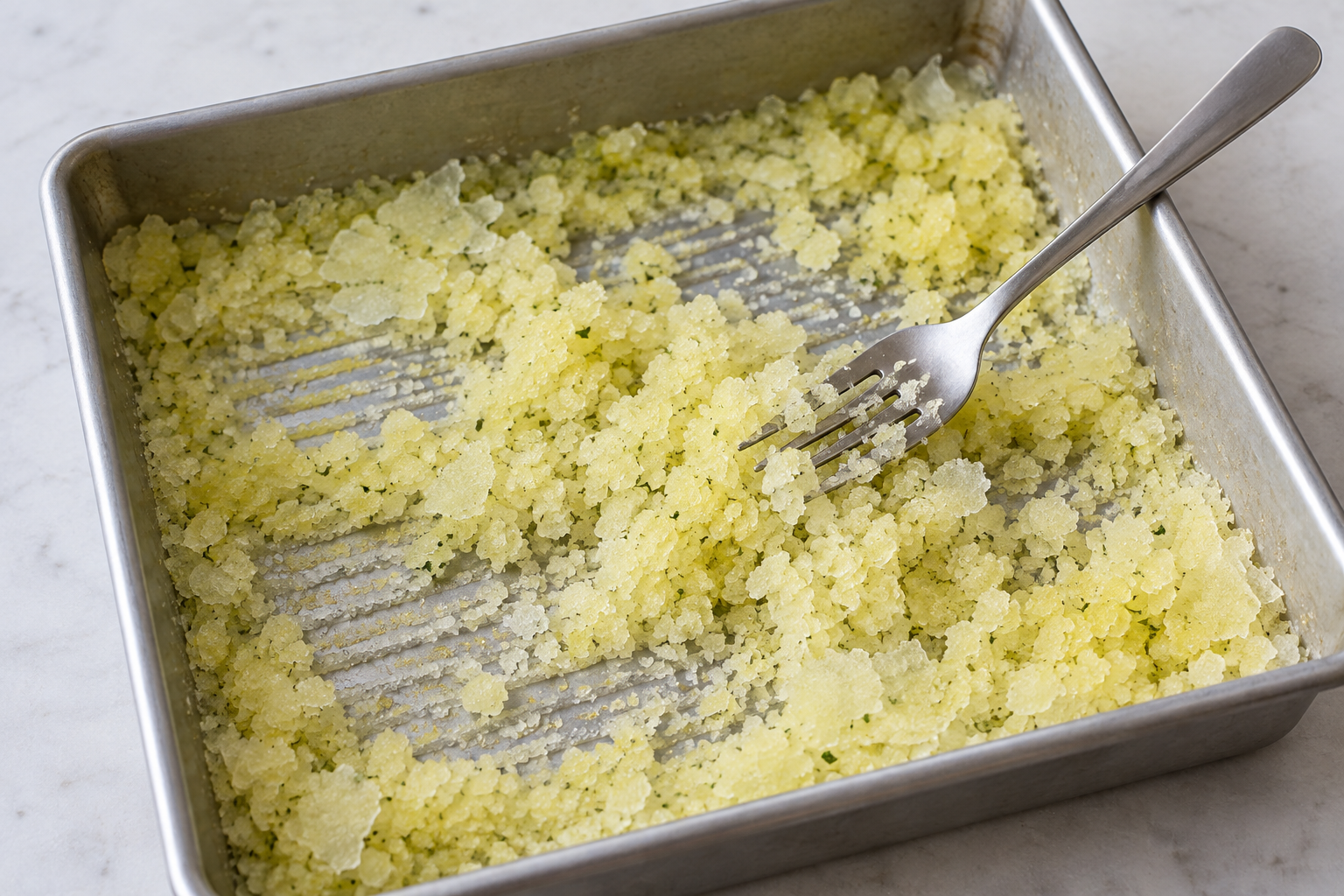
Freezers differ, and opening the door repeatedly can slow the process. The recipe’s four-hour freezing estimate is a planning guide. Let the actual texture decide when it is ready rather than serving a puddle because the clock says the time is up.
Understand the texture before changing the sugar
Sugar affects more than sweetness. Reducing it sharply makes a harder ice, while adding a large amount can keep the mixture slushy. The proposed quarter cup is measured for this fruit-and-water balance. Keep it steady for the first batch so you can judge the pineapple and celery clearly.
This dessert will not become creamy like churned ice cream. The pleasant texture comes from many small irregular crystals. A smooth purée before freezing and a coarse icy texture afterward are both part of the method, not contradictory goals.
When something looks wrong
| Problem | Likely cause | Useful response |
|---|---|---|
| Fibrous threads | Produce was not blended or strained finely enough | Strain the unfrozen base again before starting the freeze. |
| Hard solid sheet | Scraping intervals were missed | Let it soften briefly until a fork can scrape it, then break it into crystals. |
| Liquid center after several hours | The layer is too deep or the freezer is warm | Use a shallower layer and allow more time. |
| Weak flavor | Extra water or bland fruit | Keep to the measured liquid and choose more flavorful pineapple next time. |
Serving and storing the crystals
Chill four small bowls while the granita finishes freezing. Fluff the crystals once more, divide them gently and serve immediately. Pressing them firmly into a cup compresses the texture you worked to create.
Store extra portions covered at 0°F or below and aim to use them within one week for best texture. The USDA cold-storage guidance recommends that freezer temperature. Fresh produce still needs washing and clean preparation; freezing is not a substitute for those steps.
Four questions about variations
Can I use canned pineapple?
Canned fruit has a different texture and sweetness, particularly when packed in syrup. This formula uses fresh pineapple. A canned version needs its own liquid and sugar adjustment.
Can I use frozen pineapple chunks?
Thaw them safely in the refrigerator, then weigh the fruit and include its natural juices. Do not blend frozen chunks and assume the same straining method will work unchanged.
Can I leave out the mint?
Yes. The result will have a simpler pineapple-celery flavor. Keep the other measured ingredients the same.
Can I freeze it overnight?
Yes, but complete the scraping stages first. A fully frozen untouched block requires more work to break up than crystals already formed before storage.
For a clear-tasting celery pineapple mint granita, keep the celery modest, strain well and give the fork-scraping stage enough attention. The unusual ingredient should support the fruit rather than compete with it.
From strained fruit to loose crystals: a freezer guide
Granita is a useful dessert to make before a meal, provided you leave time for the scraping stages. Its texture comes from interrupting the freeze repeatedly. Moving one large sheet of ice around the pan is not the same as breaking that sheet into many small pieces, so look at what the fork is doing instead of counting visits alone.
Start with clean produce and a clean blender
Wash the pineapple exterior before cutting through it, even though the rind will be discarded. Rinse the celery and mint under running water and use clean utensils and a clean board. The FDA’s produce guidance advises washing produce before preparation and avoiding soap or detergent on food.
Inspect the blender jar, lid, and strainer before starting. Residue from a previous savory recipe can spoil a delicate frozen dessert. Follow the appliance’s cleaning and filling instructions, and turn it off before scraping around the blades. Freezing the finished liquid is a texture step, not a cleaning or cooking step.
Understand the liquid you are freezing
The strained base should be pourable, without long celery strands or hard pineapple fibers. Some fine cloudiness and tiny mint flecks are expected. A clear juice is not the goal. Press the mixture through the strainer in small portions so you can see whether coarse fibers are slipping around the edge.
Taste a small spoonful before freezing. It should be fruity and bright, with celery noticeable but restrained. If the fruit itself was bland, repeatedly adding water will dilute it further. For the first batch, keep the measured sugar and liquid quantities unchanged so you can assess the formula rather than a series of unrecorded additions.
Give the freezer an even starting layer
Set the empty pan on the chosen shelf first to make sure it fits flat. Use a cover that will not sag into the liquid. Do not balance the pan on soft freezer bags or tilt it against another container; a deep corner may remain wet long after the thin end freezes.
Use stainless steel or another pan suitable for acidic food and freezing. If the pan has a nonstick coating, follow its utensil guidance and avoid scratching it with a metal fork. A sturdy container with room to scrape is more useful than a fragile serving dish that looks attractive but is awkward to handle.
Read each stage instead of forcing the clock
- Thin icy edge: loosen the perimeter and pull it inward. The liquid middle will mix with those early crystals.
- Soft sheets: break them across their width with the fork, then rake through the small pieces. Redistribute them so the layer is even again.
- Mostly crystals: check the bottom and corners for a hidden puddle or a solid patch. Continue freezing if liquid remains.
- Ready to serve: lift a forkful. It should fall back as separate icy fragments rather than a wet lump or a solid shard.
Set the pan on a stable surface while scraping and return it promptly to the freezer. If the fork meets a rigid block, allow only enough softening to scrape safely. Do not drive the utensil forcefully into hard ice. A brief pause is preferable to a slipping fork or damaged pan.
Keep the serving texture through the meal
Chill the serving bowls before the last scrape. Use a spoon to lift the crystals loosely, and avoid pressing them into a dense scoop. Bring out only the portions being served. A large bowl left on the table warms faster than the covered batch kept in the freezer.
For a make-ahead dinner, complete the crystal-forming stage earlier in the day and keep the granita covered. Fluff it again just before portioning. Storage can make the crystals stick together, so an overnight batch may need more loosening than one served immediately. Keep fresh mint garnish separate until serving.
More FAQs about celery pineapple mint granita
Can I use a deep plastic storage box?
A deep layer freezes unevenly and is harder to scrape. Use the shallow pan for making the crystals, then transfer the finished granita to a covered freezer container if needed. Container capacity alone does not tell you whether the layer is thin enough.
Can I replace the sugar with a zero-calorie sweetener?
That is not a direct substitution in this recipe. Sugar affects the frozen texture as well as the taste. A sweetener that tastes equally sweet can still leave a much harder ice. A reduced-sugar version needs a separately developed balance.
Can I strain the mixture in advance?
If there is a short delay, keep the covered strained base refrigerated and stir before pouring it into the pan. Plan the freezing stage while you can return for the scheduled scrapes. Do not leave freshly cut produce or the blended base sitting on the counter while clearing freezer space.
Celery pineapple mint granita is ready when the whole pan has become loose, flavorful ice. Keep the serving bowls cold and the portions light, and let the fork do the work that an ice cream machine would not do for this particular texture.
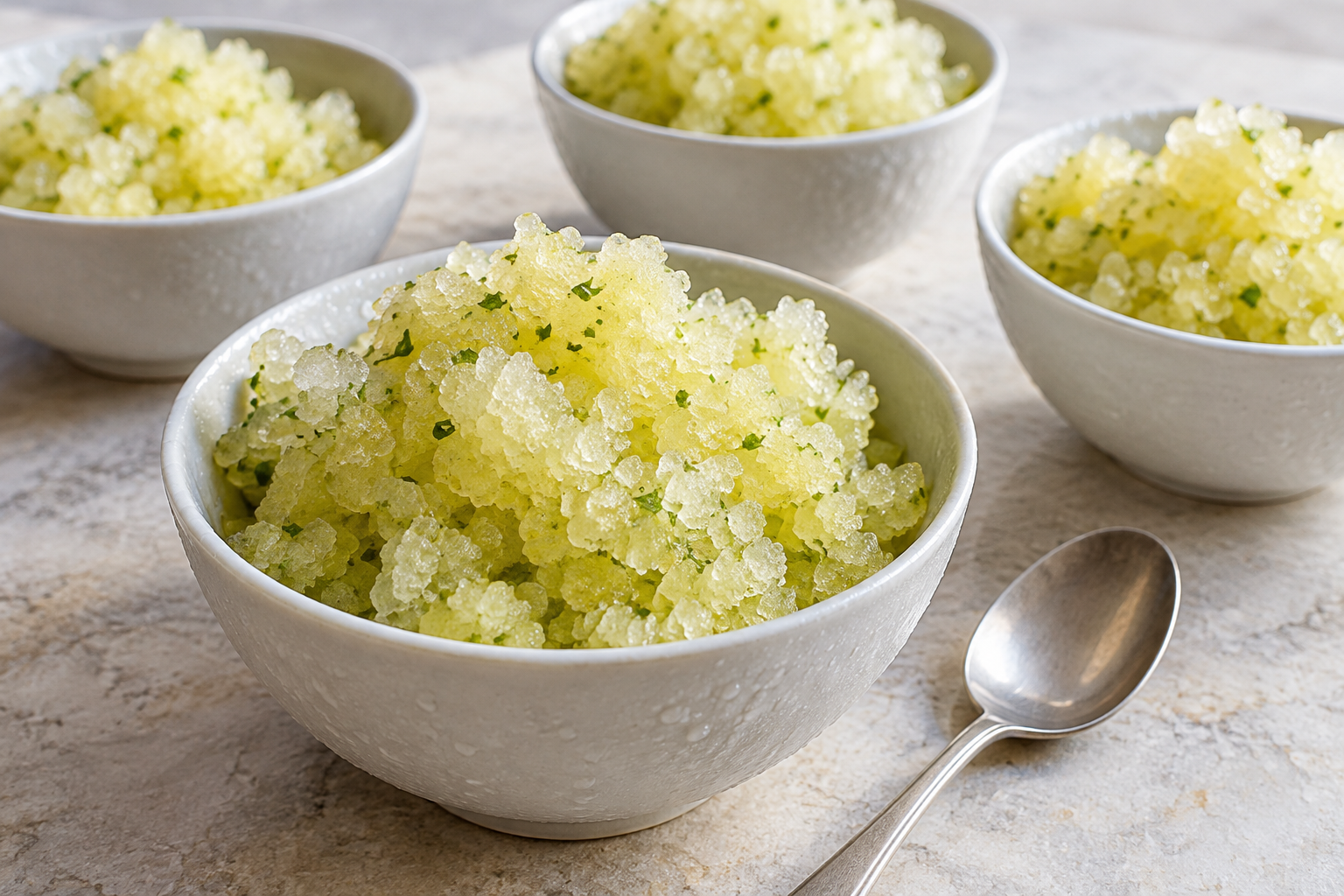
Celery Pineapple Mint Granita
Ingredients
Equipment
Method
- Make a flat space in the freezer for an 8-inch square shallow metal pan. Wash the produce. Cut the prepared pineapple into chunks and slice the celery thinly across its fibers.
- Stir the sugar into the measured water for 2–3 minutes to begin dissolving it. Add to the blender with the pineapple, celery and lime juice. Blend for 60–90 seconds, stopping and scraping as needed, until the produce is finely broken down and the sugar is dissolved. Add the mint and pulse briefly.
- Pour through a fine-mesh strainer into a bowl. Press firmly with a spatula to extract liquid while leaving the coarse celery and pineapple fibers behind. Do not add extra water to force more liquid through.
- Pour the strained base into the metal pan in a layer no deeper than about 1/2 inch. Cover and freeze flat for about 45 minutes, until ice begins forming around the edges.
- Scrape the icy edges toward the center with a fork and break up any frozen sheets. Cover and return to the freezer. Repeat every 30–45 minutes for approximately 3–4 hours total freezing, until the whole mixture is loose crystals with no liquid pool. Freezer temperature can change the timing.
- Fluff again just before serving and divide among four chilled small bowls. Transfer any extra to a covered freezer container promptly.